While the first 2 weeks of our travels had been a fantastic adventure, the multiple long bus journeys and constant moving had meant we were beginning to really fe the lure of the tranquility of the beaches on the Swahili coast. The pristine white sands, coconut tree backdrops and beautiful azure waters of the Kenyan beaches south of Mombasa and of Zanzibar in Tanzania did not disappoint! Collectively, this coast line in East Africa stretching from the Somalia border down to Mozambique is the birthplace of the Swahili language and a fascinating mix of cultures. The people are predominantly Muslim- a mark of the dominance of Omani Sultans who ruled these shores from Zanzibar for hundreds of years, making their fortunes trading slaves in exchange for spices with south Asia and the far east. The food is equally an interesting mix of African, Arabic and Indian with the added influence of a large south Asian population in the region. The area came under direct or indirect British administration in the 19th century, although the Sultan continued to rule out of his palace in Zanzibar.
Mombasa:
After returning to Nyeri on 19th December, we decided to treat ourselves to a flight to Mombasa the next day. We had planned to get the newly-built train but with the Christmas period in full swing and only one train a day operating, it was fully booked. We could not cope with the idea of another 9 hour bus ride… Disembarking from the plane, we immediately noticed the change in climate: far hotter and more humid than anywhere we had so far been. Ir turns out the high altitude keeps the inland regions relatively cool and less humid. Within walking out of the airport to find our Uber, George began streaming with sweat…
Our first choice of guesthouse in Mombasa turned out to be fully booked, but found a cheap room easily enough in big but ancient feeling hotel across the road. Despite being incredibly rustic and finding a few cockroaches to kill in our room, there was something oddly charming about the place that neither of us could put our finger on… perhaps it was the almost historically old feel of the place, or the fascinating views and sounds of the bustling streets of Mombasa and its many mosques from both our window and the terrace we managed to climb up to. That evening we ventured into the old town for a wander and had an excellent meal at a beautiful water-side Indian restaurant where a wedding celebration was also happening. The biryani and chai masala were superb 👌.
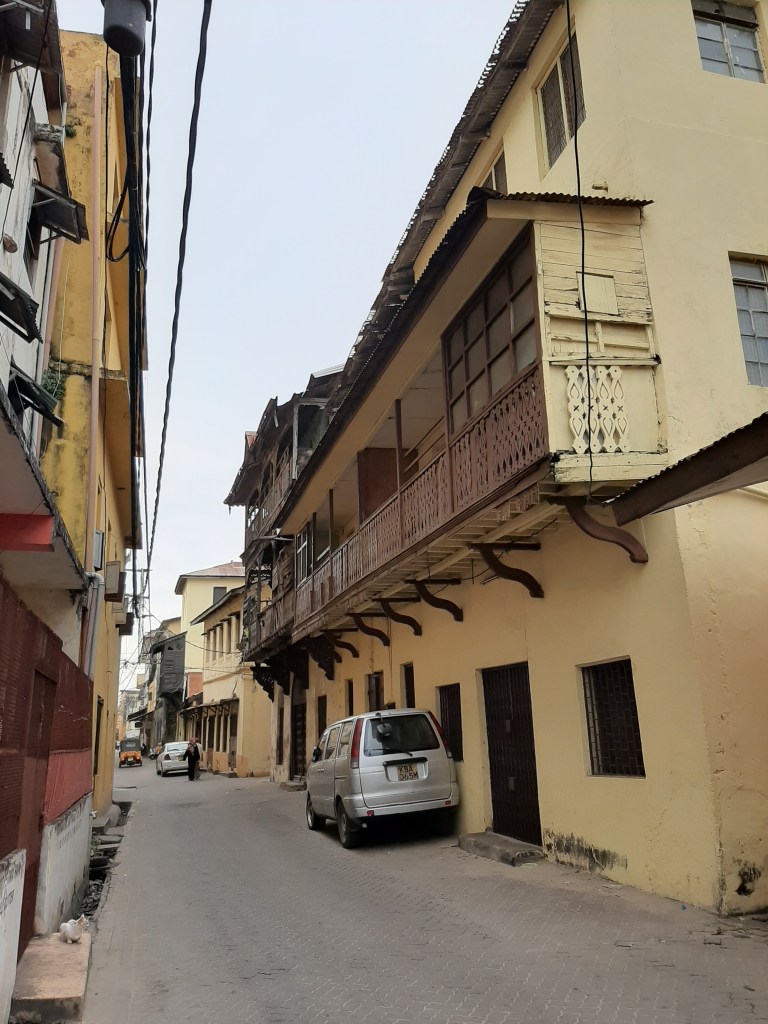
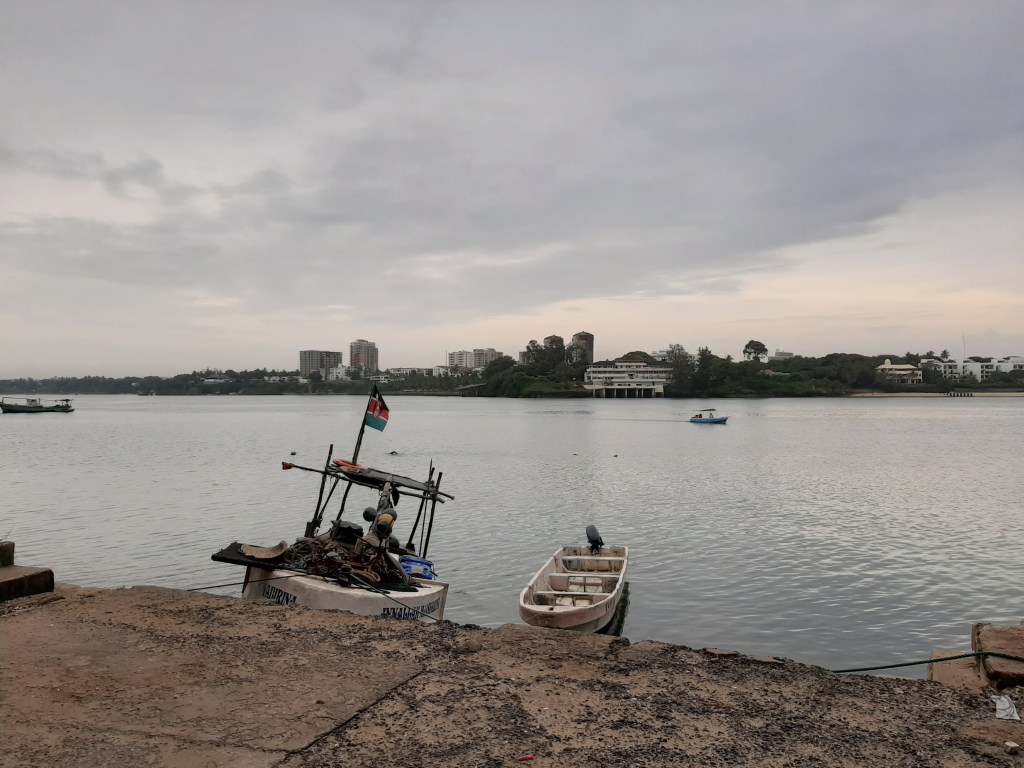
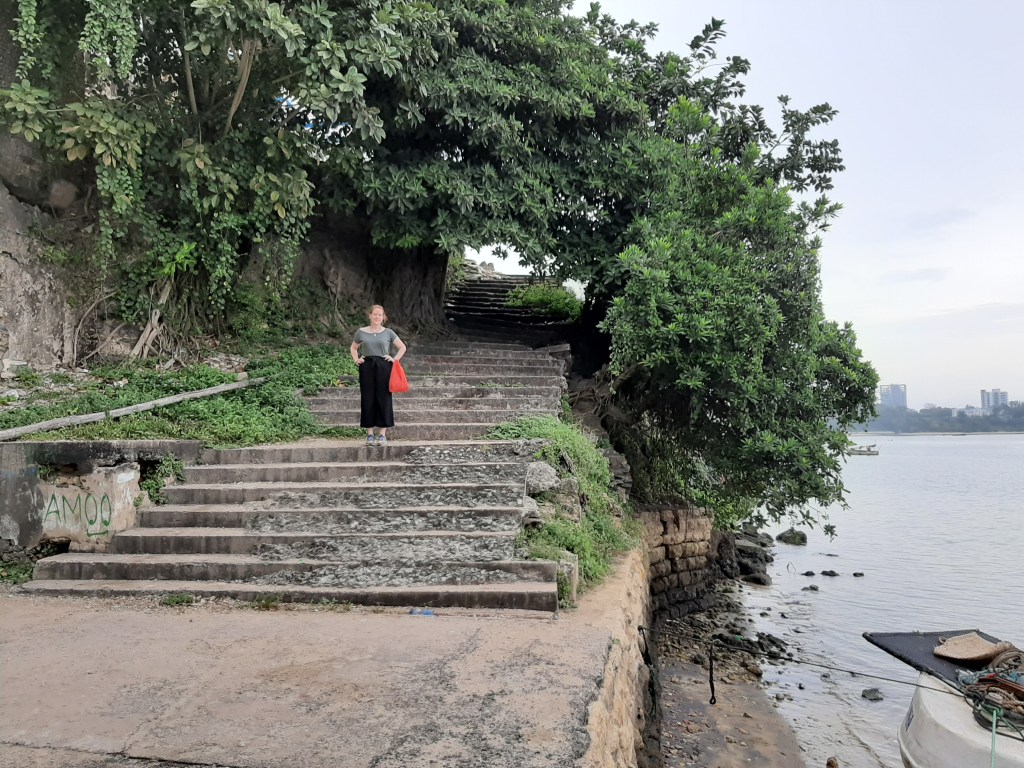
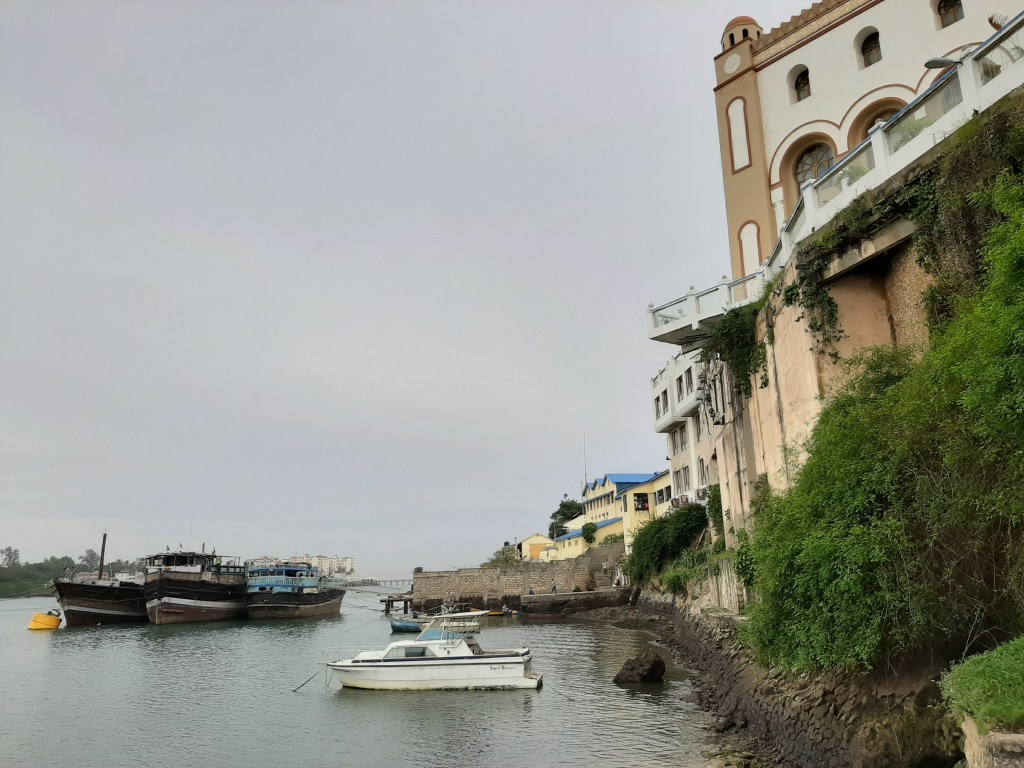
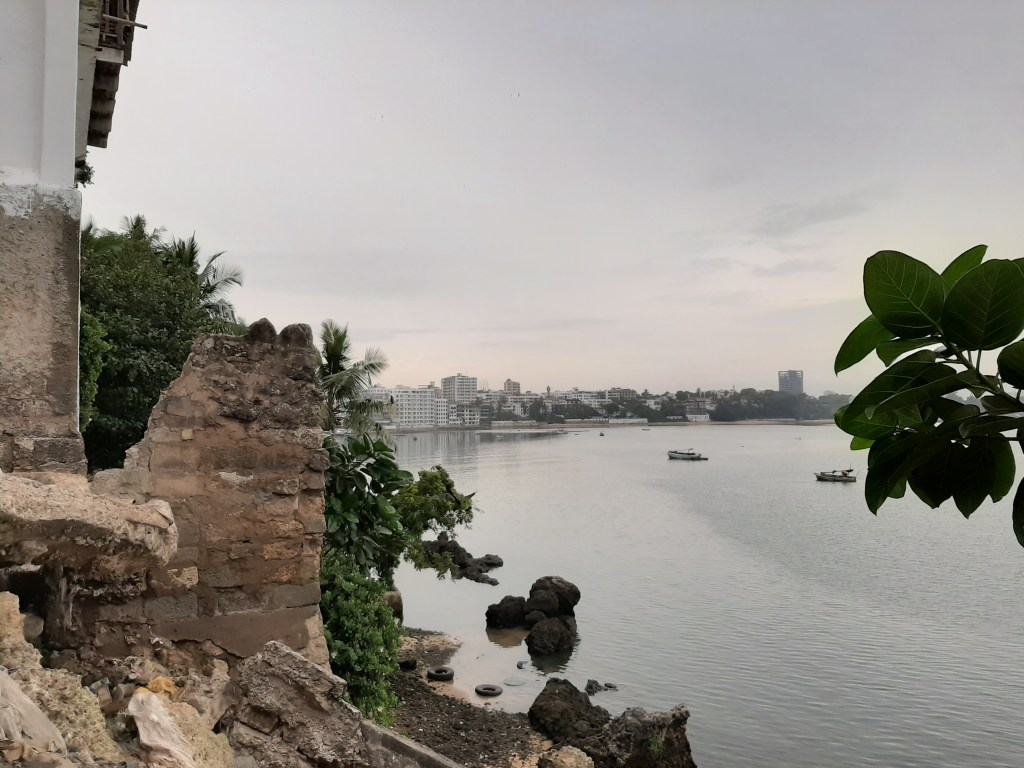
We woke up the next day (21st December) with a busy day ahead. We started with the Lonely Planet’s short walking tour of the old town, starting with the 17th century Portugese Fort Jesus. We enjoyed walking on the quiet if slightly dirty alleys with beautiful old buildings with ornate Arabic-influenced wooden carved balconies and doors. We also paused on the water front by the large building that used to be the British commissioner’s house – somewhat crumbling and dilapidated but a reminder of the city’s not so distant history as the hub of British colonial economic interests in the entire region. We ended our tour walking through the bustling spice market and back to our hotel.
Diani:
Next stop was the beach resort town of Diani, just 30 minutes or so south of Mombasa. But before we set off, we bought tickets for the onward journey from Diani down to the Tanzanian capital, Dar Es Salaam, en route to Zanzibar – our final stop in East Africa. Getting to Diani proved to be relatively straight forward though not without intrigue! As Mombasa is on an island, we took the free ferry across to the town of Likoni, on which we saw a glimpse of large container ships and the commercial shipping port that has been a key gateway to the region for so many years. Arriving in Likoni we had no real idea how we would get to Diani – as was often the case in East Africa, you knew you could not have the information before arriving, but also just had to trust there was a way (there always is!). Given the short distance, we were keen not to repeat our cramped Matatu experience with the long wait to leave and our big back-packs. In the end, we somehow ended up paying for a private Matatu ride in an old rust bucket of a van, whose seats had a tendency to heat up concerningly whenever the driver accelerated…
This was our first taste of an actual tourist resort-type destination in our trip so we weren’t quite sure what to expect. In the end, it was remarkably understated with a fairly relaxed feel. This is largely because the sheer size of the beach stretched on for so many kilometers that everything was pretty well spaced with no real “strip” to speak of. Tuk-tuks constantly stream up and down the coast road making it incredibly easy and cheap to move around. Our home for the next 2 nights was a cute, peaceful set of bungalow, self-catered apartments built in the traditional Swahili style of wood beamed ceilings and airy verandas, called “Frangipani Cottages”. The place is German-run and was positively luxurious and relaxing with a small swimming pool, our own patio and beautifully kept garden. Air conditioned rooms topped off what was a significant step up from anything we had so far stayed in. We were surprised at the massive range of good accommodation options and at the prices that were available at such short notice during peak Christmas season.
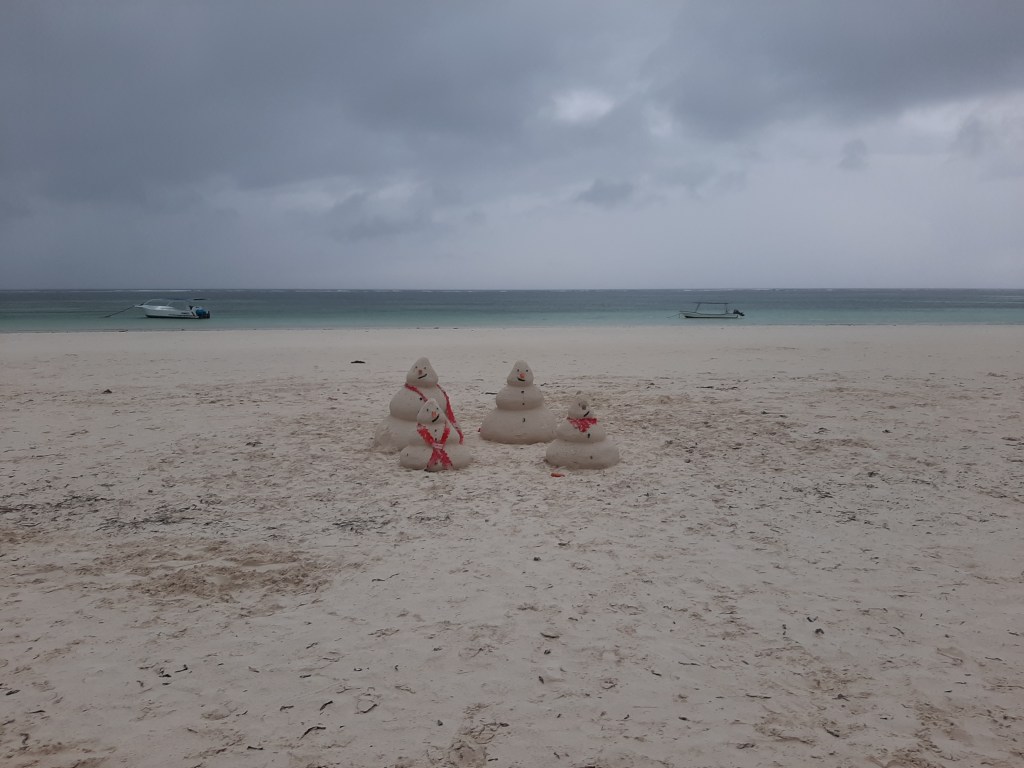
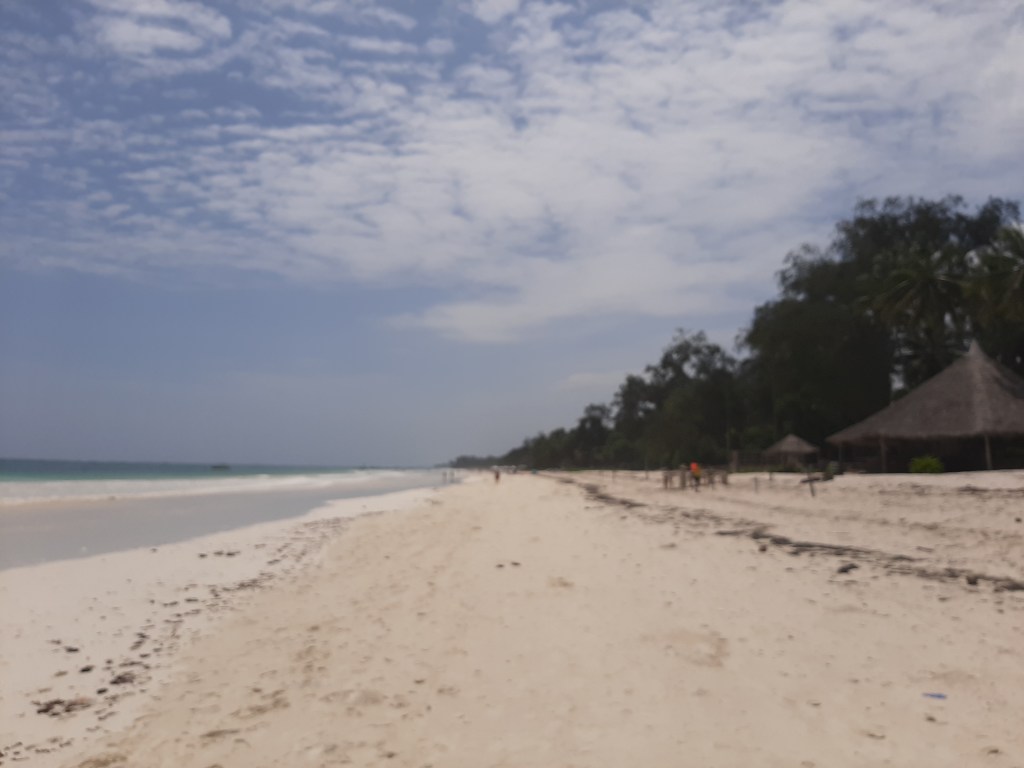
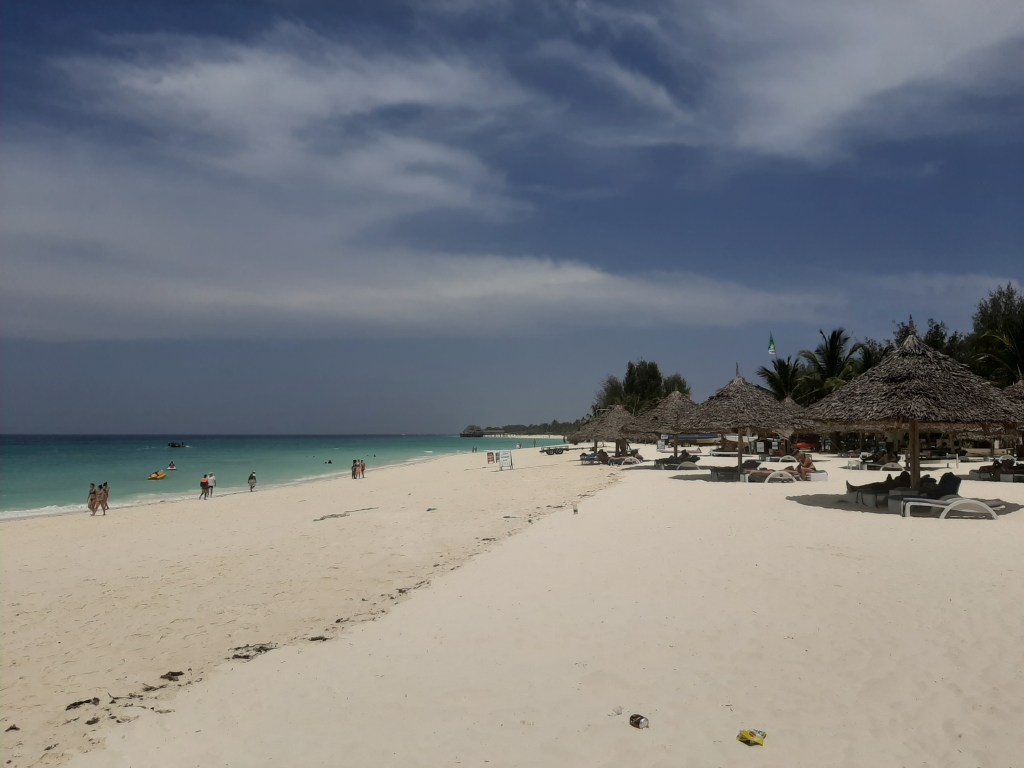
We arrived at our digs in Diani around mid lunch time on the 21st December. After a short rest and dip in the pool, it started raining and, unlike the rain we had thus far experienced in Africa, this time it didn’t stop. In fact it absolutely hammered it down for near enough 10 hours straight – not the welcome to tropical paradise we had hoped for… We managed to take refuge in our local Dutch-run bar/restaurant at first (Tiki Bar), and then seized the opportunity of a brief lull in the deluge to go for a walk on the beach. It is on the beach where Diani’s stunning beauty and understated feel really is: pristine white sands stretching on for miles in each direction, alluring turquoise waters and coconut tree forest lining the beach and keeping any developments well hidden. There are no rows of sunbeds or bars or restaurants. No roads, no pumping music, just sand, sea and trees.
We walked for a good 40 minutes to one of the hotspots in Diani: a beach restaurant called Nomad where there was a “Christmas market”. George was sceptical of anything Christmassy in this setting but the market proved to be really fantastic, with unique products being sold by various interesting cooperatives and charities. The rains resumed so we headed back to our side of town by tuk tuk where Katharine seized the opportunity for an hour of a reflexology foot massage while George got progressively grumpy about the never ending rain: “it does not rain all day on Greek beaches”.
The following day, thankfully, brought a return to sunshine and everything was better again. We spent the late morning on the beach at Bidi Badu – a laid back beach bar with a more rustic/ local feel (incl. more Kenyan toursts). After a swim and some sunning time we went for lunch at Nomad along the beach (the location of the previous day’s market) where we enjoyed a delicious meal (local fish and a Swahili coconut curry) – something of a treat on what was or first 2- day stay anywhere since Mwanza 10 days earlier!
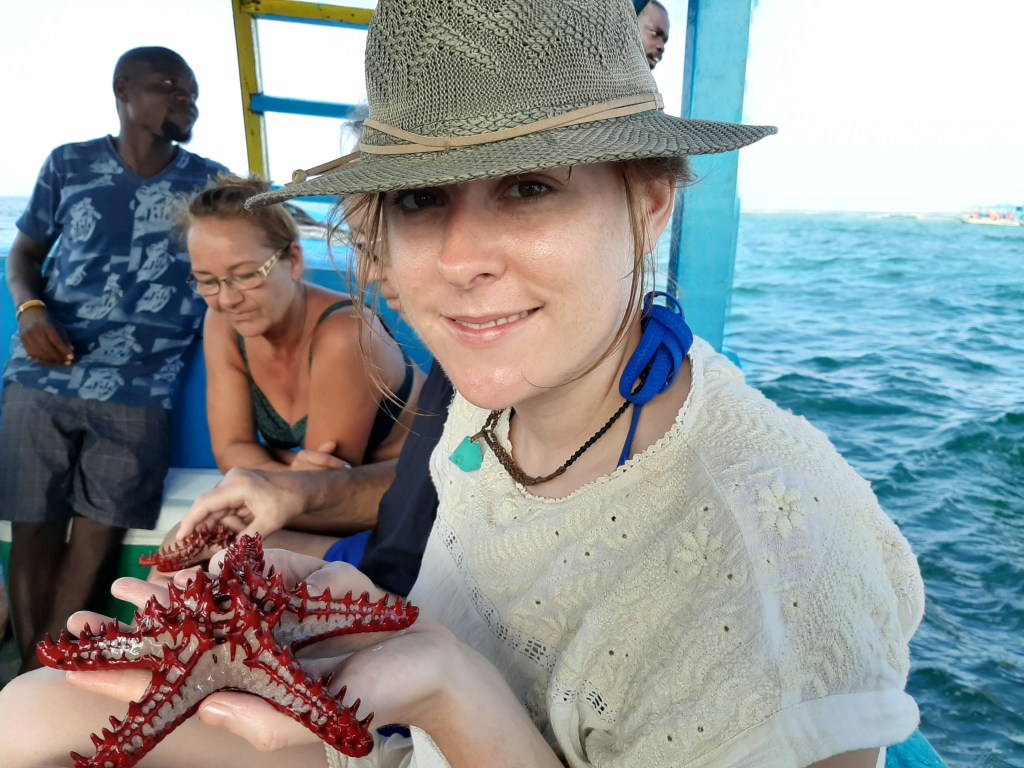
The afternoon we went on a boat trip to a nearby coral reef and sand bank (mid water), having been persuaded by Jamal – a local who found us on the beach the day before. It was a really enjoyable and fun trip although at first we were a little concerned we had walked into a tourist trap… The boat was late, when it arrived it was absolutely full such that a German man refused to get on with his daughter, and thre boat inexplicably took ages to set off – everything happens “pole pole, hakuna matata” (slowly slowly, no worries) in East Africa – especially on the beach! In the end, the locals ended up making something of a petting zoo out of the experience – with one diving to collect sea urchins, sea spiders (weird wriggly creatures we had never seen before) and star fish on board for people to hold. The snorkelling was also fun despite only moderate amounts and vibrancy of choral. George ended up being quite popular with a local shoal of fish, by swimming around with a tasty sea urchin one of our guides had smashed open to provide fish food! The trip finished with a stop on a sand bank that effectively created a tiny tidal island before heading back to shore.
With so many options available for tourists here, we were easily able to plan a full evenings entertainment, first enjoying a drink at a beach bar a little way away, with happy hour and live music playing what can best be described as “Kenyan big band / carnaval”. We later returned to our local, Tiki bar, for dinner where they had an all you can eat surf and turf deal on – the steak in particular was outstanding, and the prices were a delight!
All in all, our solitary full day in Diani was hugely enjoyable, but our time there was short lived, as we caught yet another crack of dawn bus the next morning (23rd December) down to Dar Es Salaam. This day was mostly a write off with us spending a good 10 hours on a bus which was more spacious and comfortable than others we had taken but any chance of sleeping was crushed by the Tanzanian government’s seeming love of huge speed bumps along the entire stretch of the road to Dar. There was a brief moment of hilarity and tragedy where the bus conductor (who was an absolute prick) pulled us into the border authorities chief officer’s office and insisted we bribe him to get us a quicker visa. They continued arguing in Swahili for a few moments before George waved his passport at them both highlighting that we already had Tanzanian visas from our recent visit… so back to the queue we went (we would have refused to pay anyway of course)!
Dar Es Salaam:
Our brief impression of Dar Es Salaam was better than we had expected and certainly more pleasant than Nairobi. Traffic was less manic, there is a real tropical feel to the place with plenty of greenery and coconut trees around. There even seemed to be proper bus stands! Knackered from our journey however, we wondered out to buy our boat tickets for the next day and managed to find a restaurant that seemed to cook every possible cuisine you can imagine. We had Chinese which proved a welcome break from Swahili curries and was really excellent!
Zanzibar:
On Christmas eve, we finally reached the final destination of our 3.5 weeks in East Africa. We arrived on a very smooth catamaran-type ferry, though not without some morning drama as George thought the tickets had been poached, only for Katharine to find them just in time. There is always something magical about arriving somewhere by boat, but something about Zanzibar made it feel extra special: first a cluster of tiny beautiful tropical islands along with isolated sand banks miles from any shoreline; then the town comes into view with a line of ornate arabic-style buildings and palaces, while on half of the sea front white sands and coconut trees appear to add a distinct tropical flavour to this historic town.
Disembarking at the port, we were surprised to have to queue again for passport control, it seems the Tanzanian federal system (at least nominally) empowers Zanzibar as its own country still: one more stamp for us! Over our 3 nights on the island, we stayed in “Ten to Ten” – a simple but fun hostel with staff who tried to be helpful but seemed somewhat overwhelmed and overworked constantly due to the Christmas peak business. Our room was tiny but clean when a mercifully powerful air conditioning unit that equipped us with a great chill spot (literally). When the sun was out, Zanzibar rivaled Mombasa as the hottest place on our trip so far.
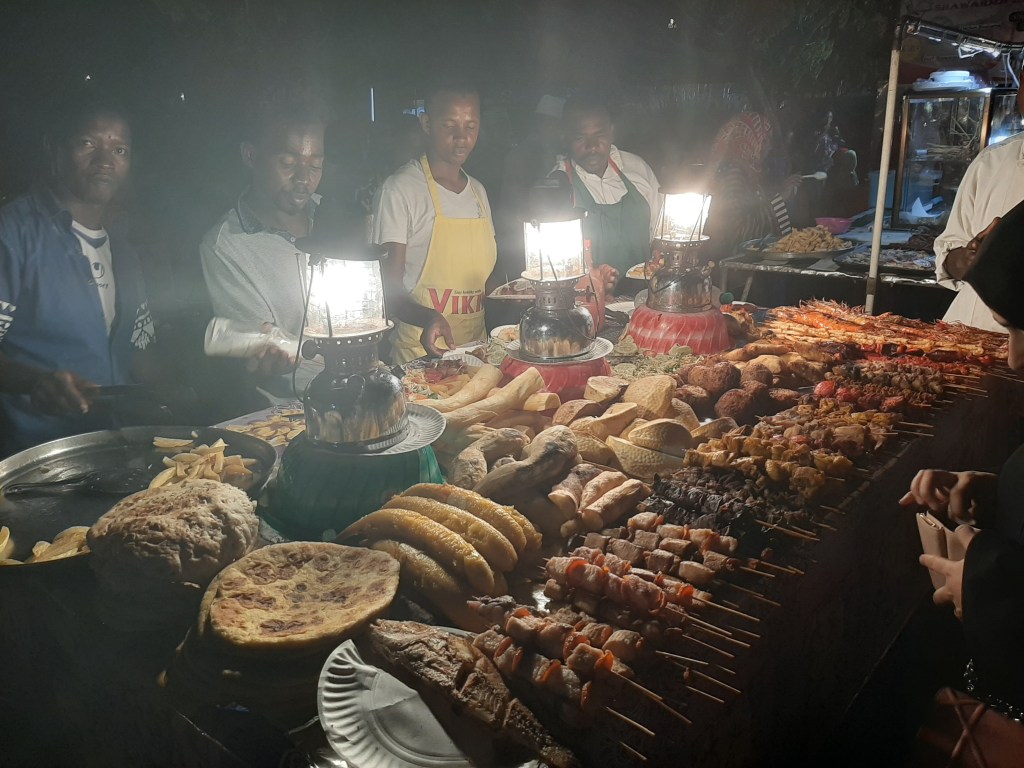
Having arrived mid morning on Christmas eve, we took the opportunity to have some “do nothing” time at a very pleasant beachside hotel nearby, in a renovated palatial-feeling old Omani building. This is a trick we have learned to perfect: stay in cheap accommodation but have no shame in turning up confidently to hang out in more palatial hotels and buying a token tea. Later, we went for a wander around the old town where we got ourselves lost in the fascinating and winding back alleyways. Along the way, we managed to find the Catholic and Protestant cathedrals (far more impressive buildings than the main mosque which seems odd for a very much Muslim-majority population), some cool shorts for George as a “Christmas present” and a refreshing beer with a sunset view at Mercury bar by the port. Importantly, we also managed to suss out the big “Christmas party/ dinner” being hosted by one of the hotels. Katharine was keen to capture something of a Christmas celebratory vibe, while George, having already done “Christmas” in Sri Lanka, was more sceptical. For Christmas eve dinner, we enjoyed a Zanzibari classic: barbeque fish from one of the myriad of street stalls on the water front (Forodhani). Although very much a street food experience, the vendor insisted on finding us a good bench by the sea brought us the food when ready and we paid at the end of our meal – all quite fun, surreal and very tasty.
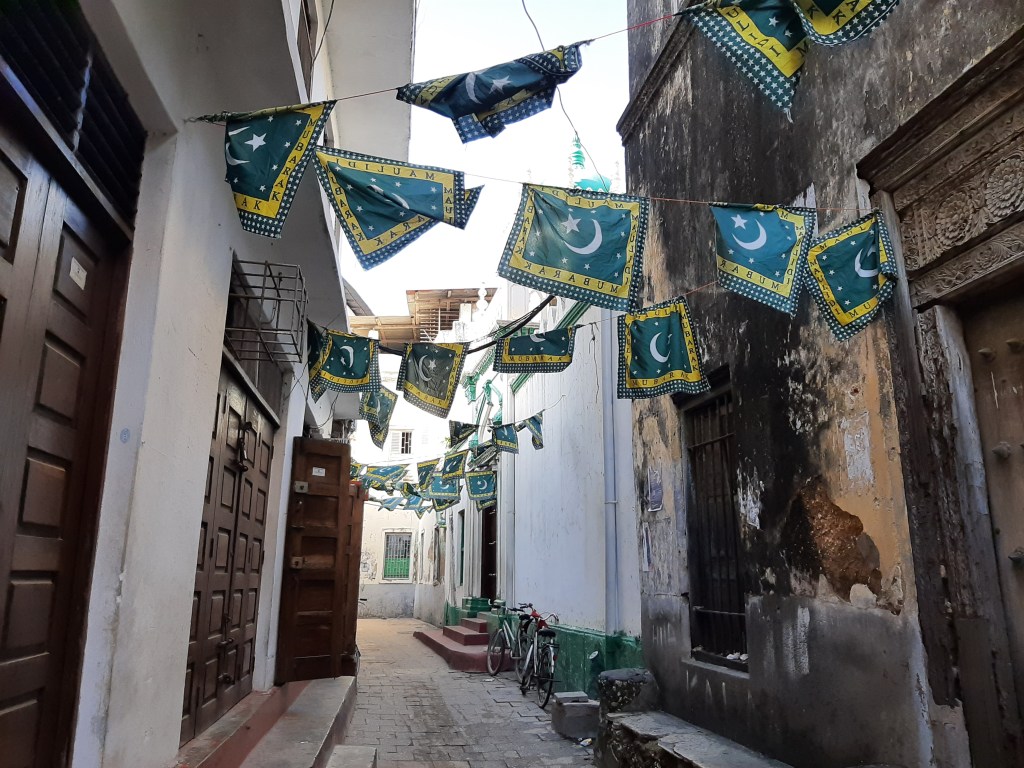
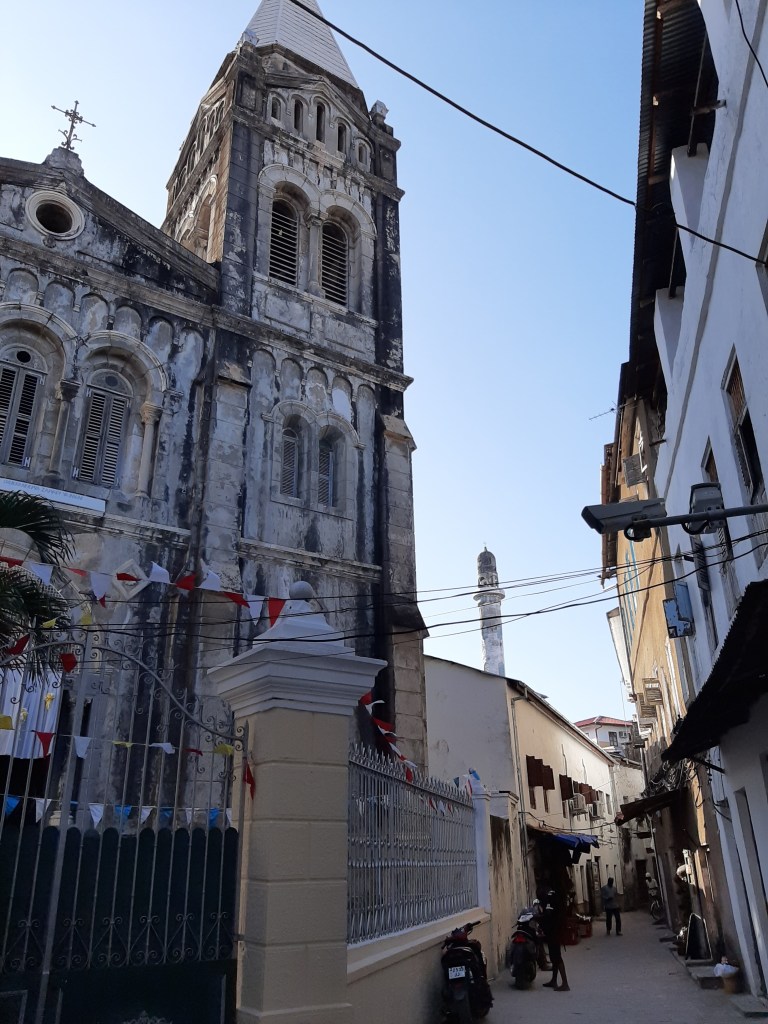
On Christmas morning we went to church which ended up being one of our most surreal yet warming experiences of the trip so far. We were on the front row in a tiny chapel next to the main Anglican cathedral, alongside 2 local families, an expat lady that looked old enough to have been in Zanzibar since colonial times (maye she had!) and a cluster of other tourists (from Sweden, Finland and the Netherlands). It really was a tiny affair and made you wonder about the efficacy of these English-speaking services (the Swahili one in the main cathedral was packed!). We were made to feel incredibly welcome, each of the tourists introducing where we were from and receiving very warm welcoms, and there was something comfortingly familiar about the Christmas hymns / carols we sang. The lady leading off the singing begun each hymn with a terrifying shriek, only to steadily go so flatter so loudly, she brought the entire congregation down several keys by the end of each! Kaharine was even asked to do the first reading! Returning from church we tucked into our frugal hostel breakfast of toast, margarine and tiny, tasteless frankfurters and exchanged the few gifts we had bought each other (none were a surprise of course!).
We had originally planned to hire a car and do a tour of the island, which we had been reassured the day before by the hostel would be possible despite it being Christmas day. Perhaps unsurprisingly, this turned out to be Tanzanian optimism: the local authorities that issue road permits to tourists were, of course, closed. So, instead, we settled for rescheduling for Boxing Day (not a bank holiday in Zanzibar) and organised a trip to “Prison Island” after having a delicious Indian curry for Christmas lunch.
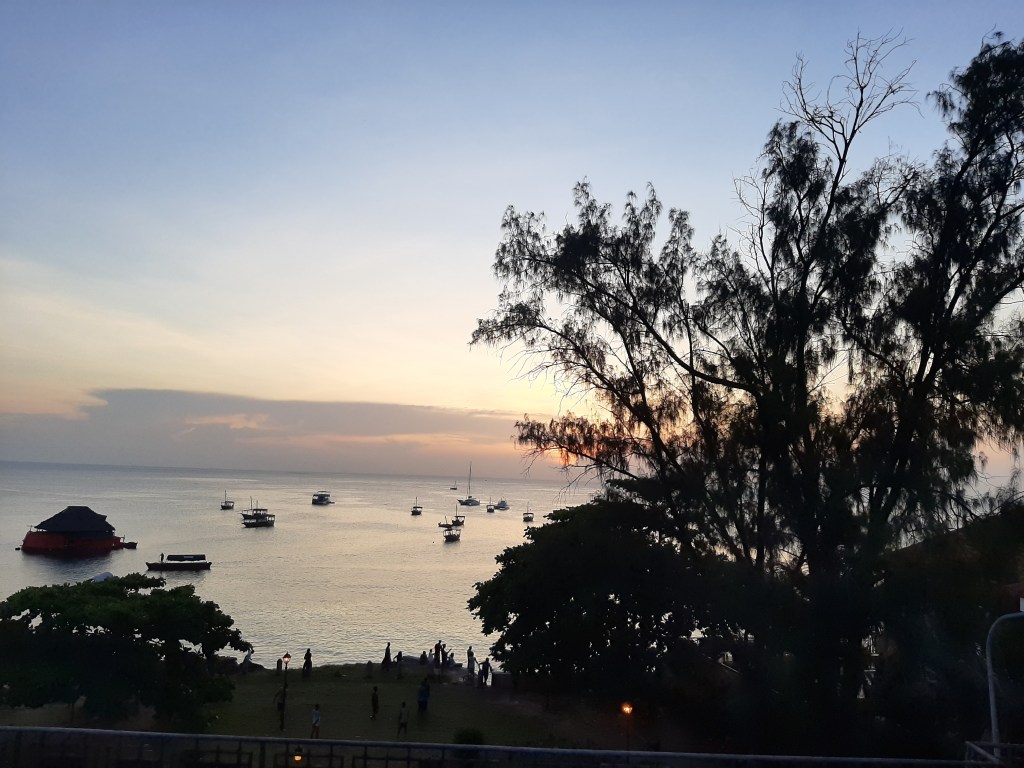
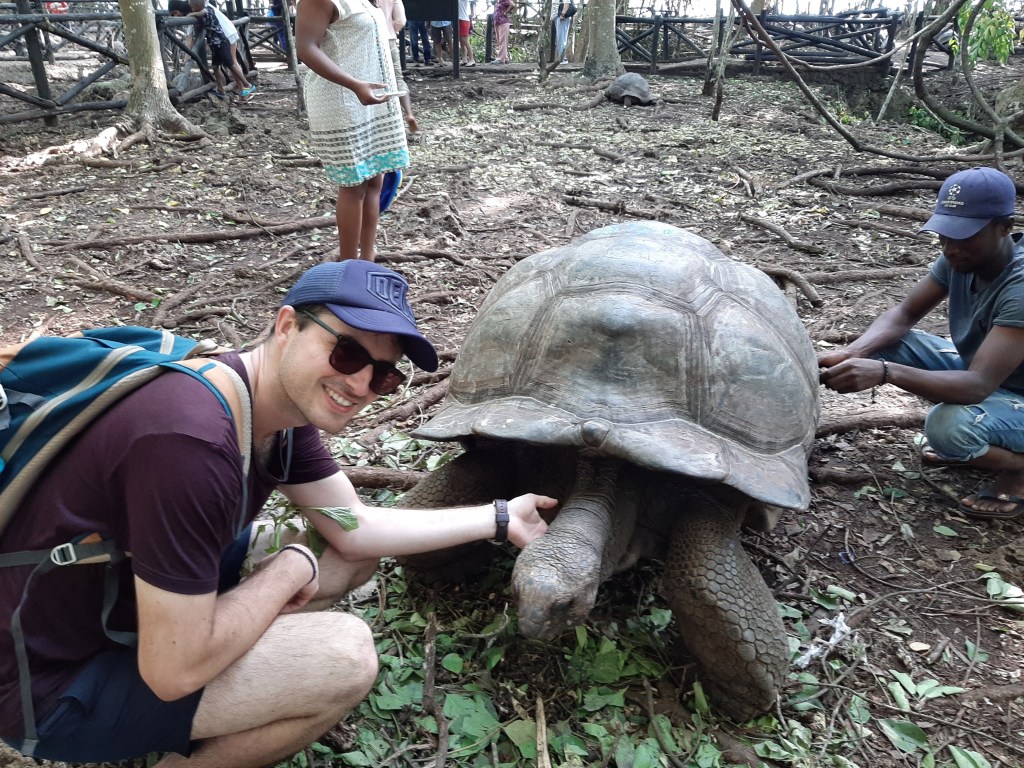
Prison island is a 30 minute boat ride off Zanzibar and got its name from the prison built on the island, albeit one that was only ever used as a quarantine colony for yellow fever and other unpleasant diseases. It has also, however, been a sanctuary for giant tortoises from the Seychelles that had been originally a gift from the British governor there in the 19th century. These amazing animals have multiplied like mad since and 2 of the original 4 are still alive and well (one 194 years old…!!!). In addition to feeding and petting (turns out they love neck massages) very old massive tortoises, we had a brief snorkel in the fun but unremarkable (mainly due to depth of choral) waters, and returned to Zanzibar. All in all it was a very enjoyable and quite different short trip, despite its popularity among tourists. We were joined on the trip by Michelle, a really warm and energetic young diplomat from Kenya working with the UN but enjoying some time off in Zanzibar. We took Michelle’s advice and headed to 6 Degrees South, a “sundowner” bar not far from our hostel. It did not disappoint as we enjoyed sipping cocktails overlooking the sun setting over the Indian Ocean – not a bad way to spend Christmas really.
Now time for our “traditional” Christmas experience…. We arrived at the Maru Maru hotel which really is a beautiful setting with a stunning rooftop terrace overlooking the old fortress. We were sat next to the band (which was really unfortunate as they were pretty poor, playing a mix of Tanzanian music and dubious generic western covers). We had a 3 course meal of which highlights included unintentionally raw and tiny Brussels sprouts, cold barbeque king prawns (the quality of our cheap BBQ the night before made this particularly painful) and tiny stale shop-made “Christmas pudding” (allegedly) cupcakes. At least the South African semi sweet wine was drinkable. Of course, the whole experience was horrifically overpriced. It was a fairly funny experience which despite George feeling vindicated for his initial scepticism, also somehow enjoyed purely because of how hilariously all the cliches of a “Christmas” in the tropics came off.
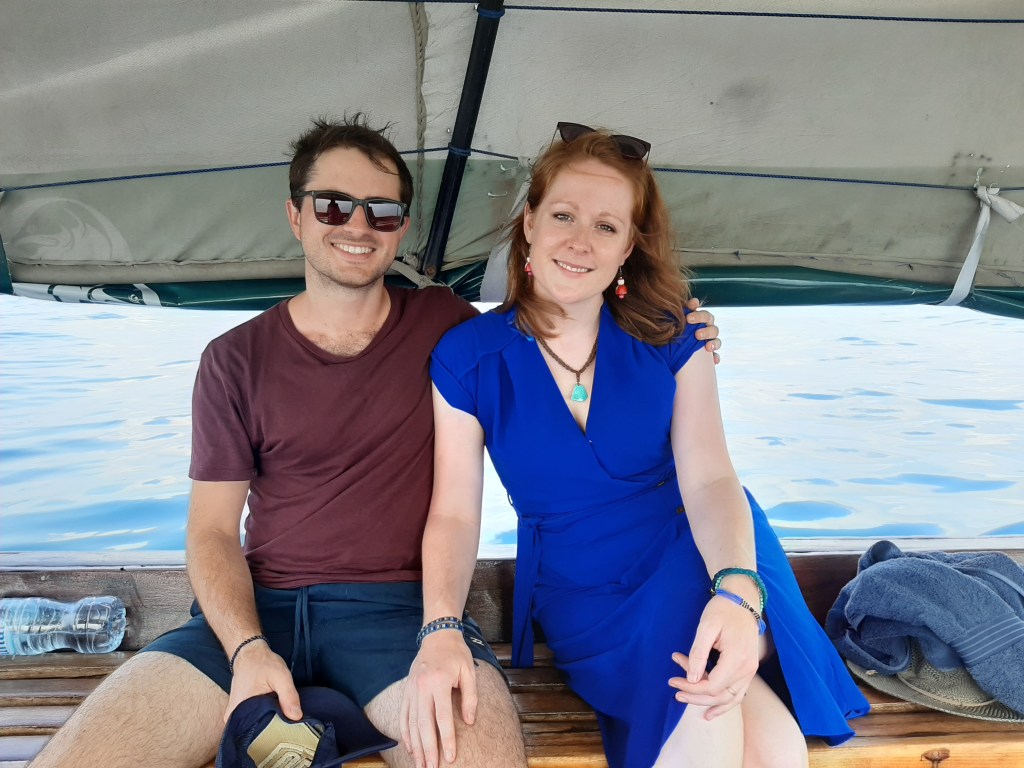
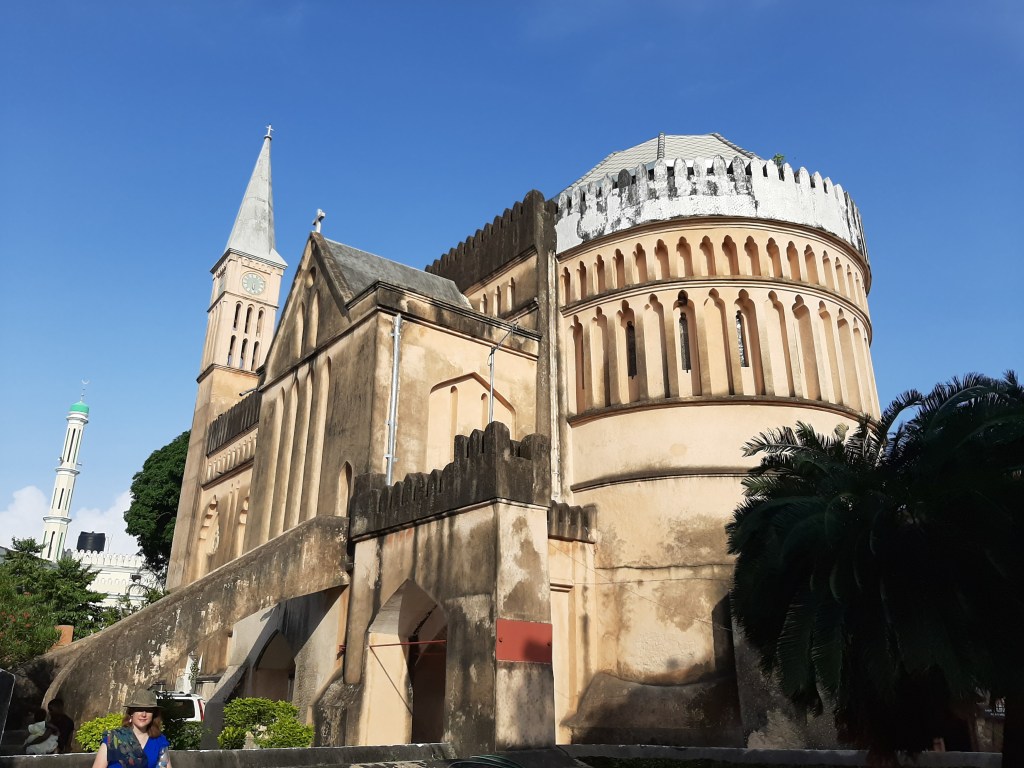
On Boxing day we actually managed to succeed in going on our self-driven tour of the island! The hire car was an old battered Nissan that was a 2-wheel drive SUV and had done a good 350,000 KMs. Driving out of Zanzibar town, we were grateful for the extra height as parts of the road were essentially more holes than tarmac. We were enjoying our new found freedom on the road when all of a sudden the car just stopped going… we had run out of petrol in the middle of nowhere, a 50 minute walk from the nearest town and petrol station. It turned out the fuel gauge was not working and the good folks at the car company had neglected to inform us the tank was empty. In the end, it turned out running out of petrol in Tanzania is probably easier to fix than it is anywhere in Europe… within 2 minutes of getting out of the car, we managed to flag down a Dalla Dalla (minibus) and get a very cheap ride to town, where we immediately found a man with empty water bottles, filled up 2 and within 2 minutes found another Dalla Dalla heading back. We were back on the road within 30 minutes!
On our half tour of the island, we had a real sense of both the astounding beauty of the white sandy beaches, lined with idyllic coconut trees and the lusciously green and mostly flat interior of the island. We also had a real sense of the sometimes shameful inequality with very poor villages being inhabited by exclusive 5-star and gated resorts. People will come to these little bits of paradise and be totally oblivious to some of the real Zanzibar are living next to and no wealth will enter the local economy due to their convenient all inclusive setups. We stopped at Kendwa beach on the northern tip of the island for lunch, which was probably the most epic beach but terrifyingly built up. We passed a huge resort filled only with Italians and the sound of an Italian children entertainer bellowing on a microphone (it gave us the chills). Next we stopped at Matemwe and Kinengwa beaches, the former having a really nice local feel to it with the finest white sand we had ever seen. Kinengwa had a more relaxed backpacker vibe to it. Lastly, Pongwe provided the starkest example of Zanzibar’s contradictions. On one end was a beach covered in litter in front of what felt like a very poor village. On the other side, a range of gated resorts with private beaches with no public access…
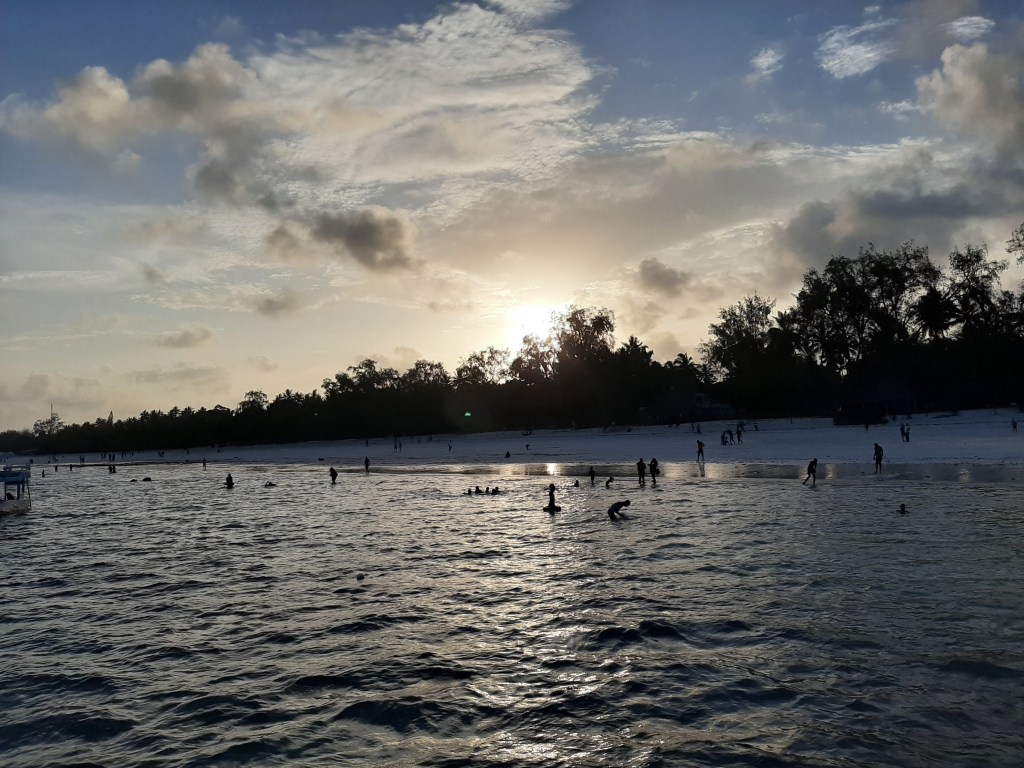
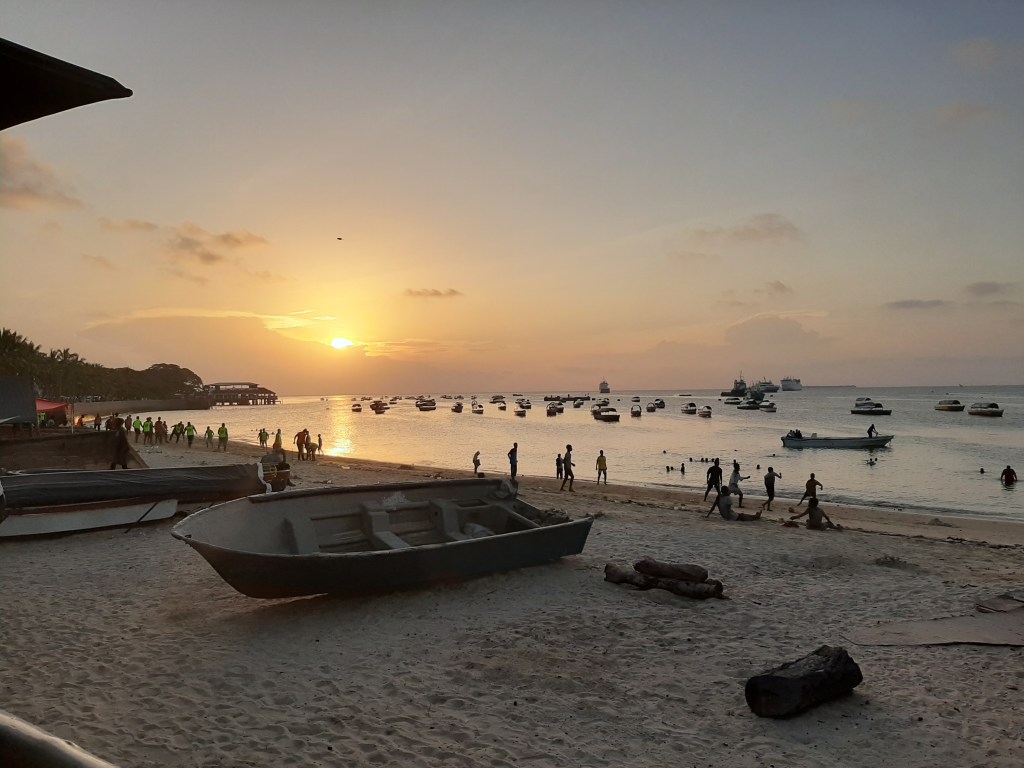
We returned to Stonetown (the old part of Zanzibar Town) as the sun was setting with a bittersweet taste in our mouths: we had ended on probably the worst of the beaches but had gained what we felt was a genuine and balanced view of the island and the way people live side by side in very stark contrast of wealth. That evening, we had a quick sunset dip in the sea by our hostel, where hundreds of locals were enjoying playing football or splashing about in the water; and had beers on the beach in the garden of a really incredible building that used to be the British Consulate in Zanzibar (bar now called Livingstone’s). For dinner, we headed to a rustic and local Zanzibari outdoor diner called Lukmaan which provided a good and very cheap flavour of Zanzibari cuisine.
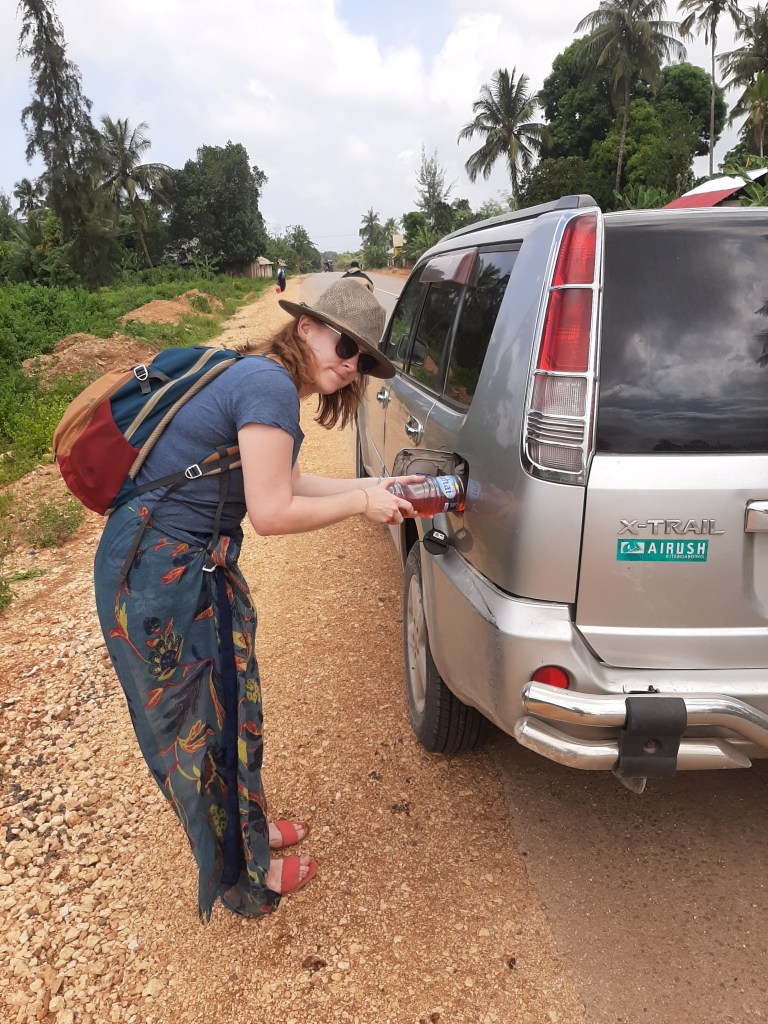
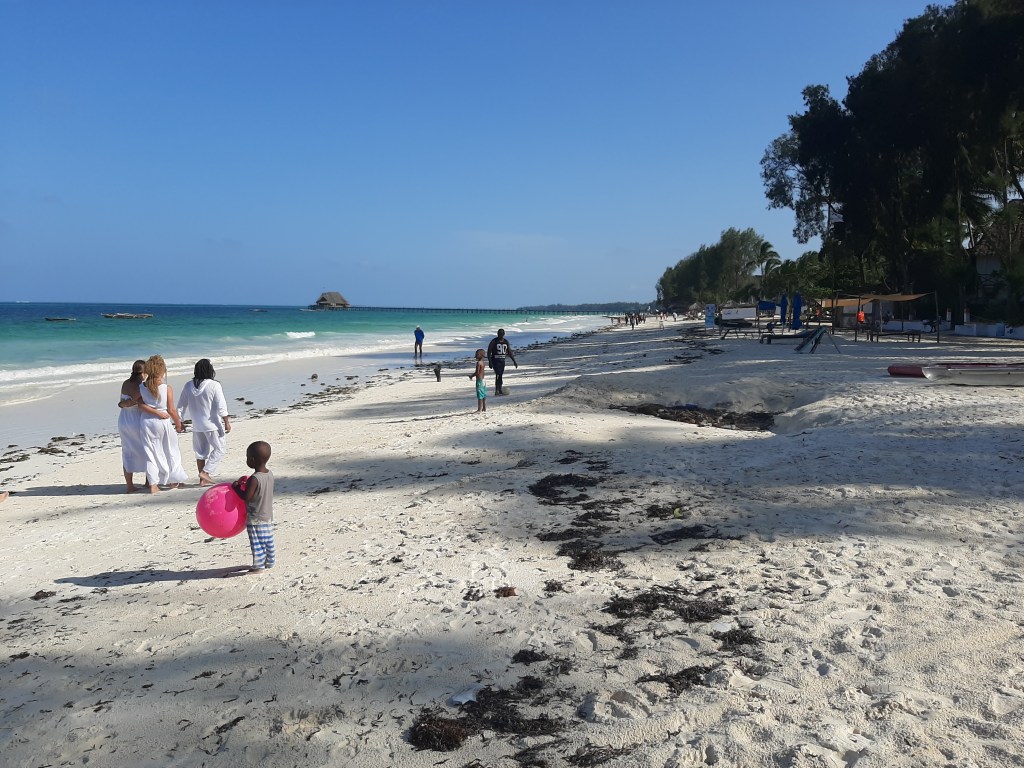
Zanzibar felt like a perfect ending for our time in East Africa. We started in Rwanda, thousands of kilometers to the west, in the heart of Africa and were now finishing on the sea in a real gem of an island, having seen a huge variety of terrains, people (and old friends!) along the way. Early on the 27th, we set off to the airport and towards our next chapter in the megamoon: our UAE 3-day stopover.
 tranetrottingthemegamoon.travel.blog