Pakse is the main city in the south of Laos and a necessary stop through on the route towards 4,000 Islands and Cambodia. We had read plenty on the natural beauty of national parks, huge areas of coffee plantations, waterfalls, etc. in this part of the country. Unfortunately, we just didnt have the time to see much of it! Determined to make the most of our being in this part of Laos, we had organised a 2 day excursion to an area of the Mekong river just north of Pakse, involving trekking, staying at a homestay in a local village, and a boat ride on day 2 to bring us most of the way back to Pakse. It would be just 2 nights in all in the Pakse area, before making our way down to the very south of Laos and 4,000 Islands.
In typical Laos sleeper bus fashion, our 1.30am bus dur to take us from Thakhek to Pakse was late… Apparently the bus broke down, and a replacement had been sent from Lak Sao (a town we had passed only the day before, several hundreds of kilometres away on the Thakhek Loop), but it was progressing slowly due to heavy rain in the area. So, we started the 13th of Feb, sat in the back of th truck / tuk tuk alongside a group of French and Dutch. Finally the bus turned up at around 3am. Mercifully, it was more spacious than the previous one so we managed to get some sleep. We were meant to be meeting our guide for our trekking / Mekong excursion we had booked with an organisation called “Green Discovery”, so made sure we gave them a heads up via whatsapp that we were running a bit late.
Somehow, we ended up making up time and arrived around 9am in Pakse. Lucky for us, the bus station is just a 2 minute walk away from the Green Discovery offices. Feeling unexpectedly OK given the journey we had just been on (not to mention the 450km of motorbiking over the past 3 days), we walked to the office and met our guide for the next two days: a middle aged chap with floppy hair called Sin Xai. We also met Mr. Singh (not a Sikh as far as we could tell!) – our driver. We headed to a local fancy cafe for breakfast – croque madame and some very tasty fruit smoothies – and then headed off north back the way we had arrived on the bus.
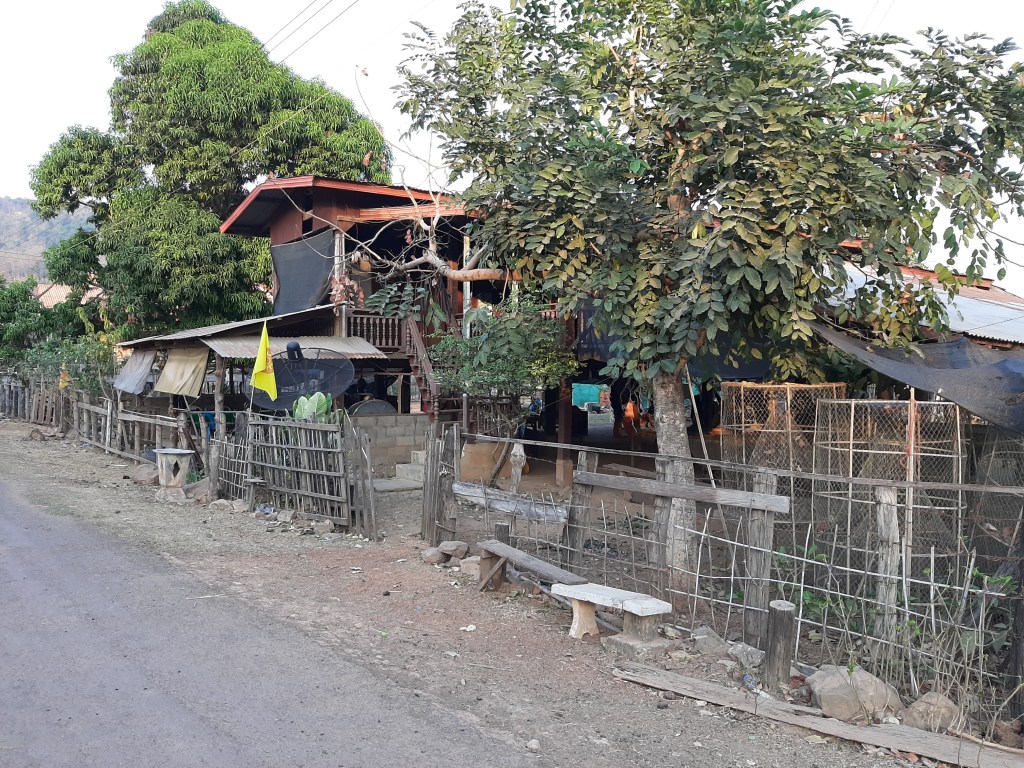
Our destination for the day was the village of Ban Mai Singsamphan on the Mekong. Despite being pretty near Pakse geographically, it took us a good 2.5 hours to get there. The road got very rough at some points and the car made crunching contact with the ground on one occasion – we were reassured there was “no problem” although both of us would have wanted to check it out had it been our vehicle! Upon arriving at the village, we quite quickly came to feel that we had picked the wrong activity for our time in the Pakse area… it was hot! Much, much hotter than Thakhkek and the rest of Laos and the terrain was so dry with the sun beating down on the parched earth and rock, clearly with no rain having fallen for months and months. George bought an emergency straw cowboy hat (the only hat the village sold) from one of the few very rustic duty free-style shops selling booze, cigarettes and tourist gifts, largely aimed at Thai tourists who hop across the river for cheap goodies and a short visit to Laos. Otherwise, the village felt like a very normal place (by Laos rural standards) with animals running around and basic wooden stilted houses being largely the order of the day.
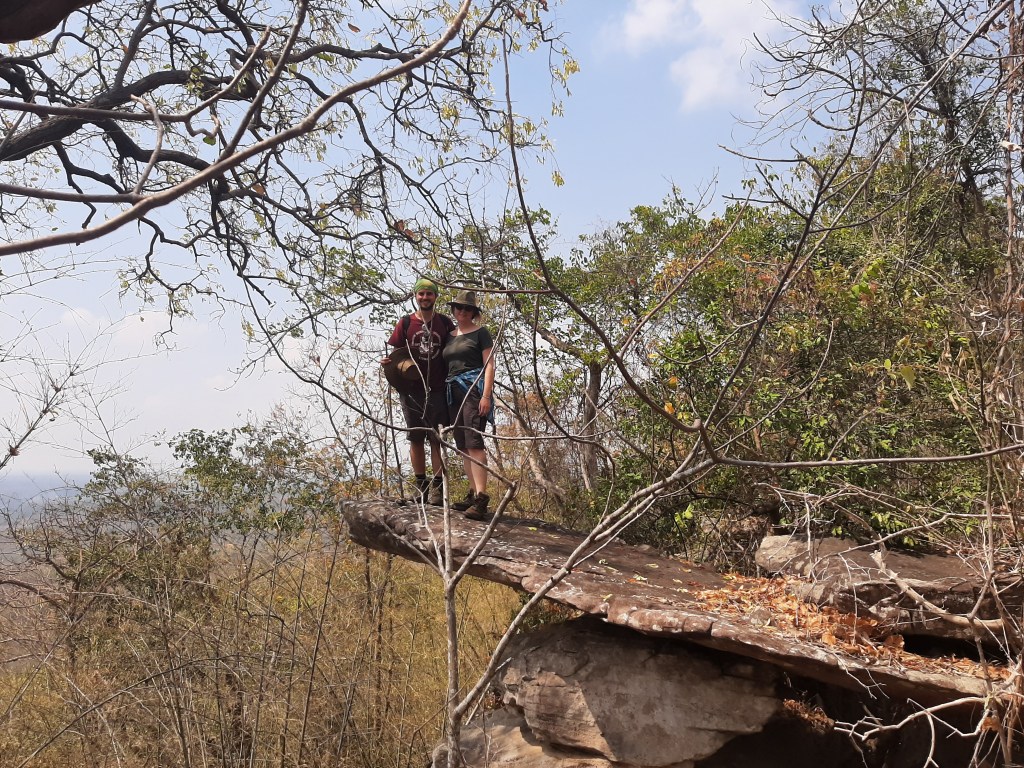
With George now looking slightly ridiculous but certainly more protected from the sun, we began our hike in the heat of the day around 12.00… We had a local guide, Mr. Lang leading us around these parts. Like Sin Xai, he was also middle aged with children. The path climbed steeply through the rocky and dry terrain with only limited shade, up to the top of the hill that overlooks the village. It was, thankfully, not a long climb.
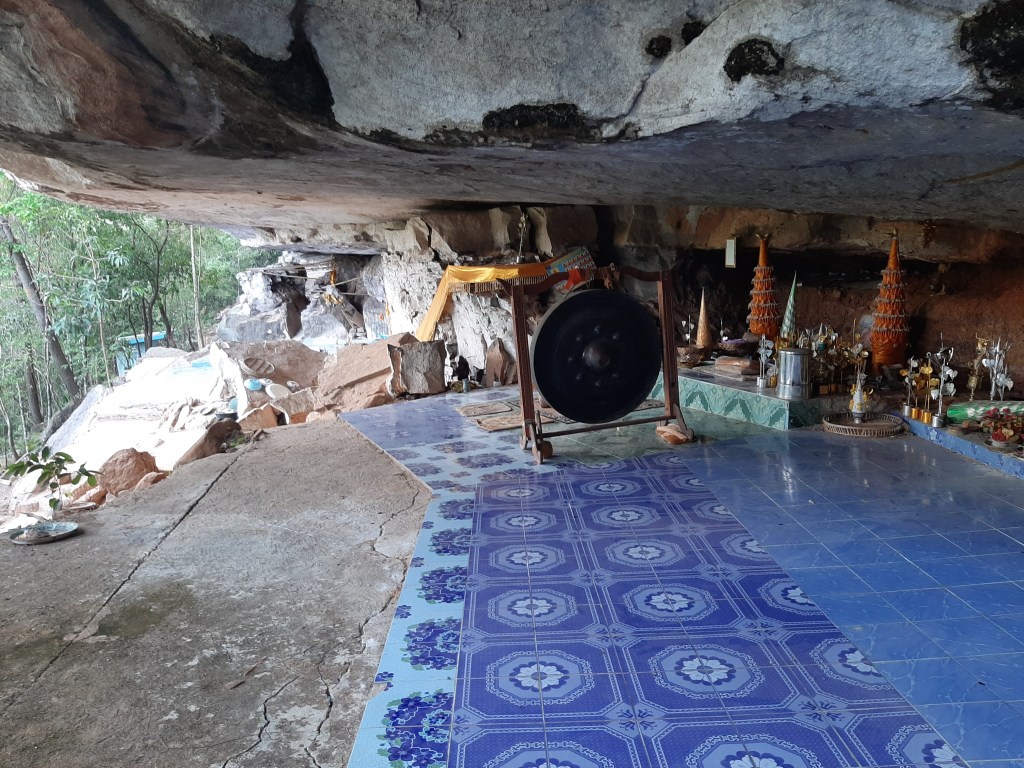
We reached our first stop / point of interest after an hour of walking: a small cave hidden in the north facing cliff on the far side of the hill we had walked up. We were relieved that the northern, shady side of the hill in combination with the cave itself provided some relative cool for us to rest. The cave itself was cute: only a small indent into the rock face that had been long ago created into a place of worship/ meditation. On the far end, simple bamboo sleeping mats were laid out, apparently used by Buddhist nuns from time to time. This combined with the thick jungle in this cooler side of the hill gave a proper ascetic / hermit feel to the space. We had our simple lunch of chicken, rustic fish and sticky rice and spent 15 minutes trying to meditate in this peaceful spot. Unfortunately, the cave also seemed to be popular among mosquitos and other local insects making it difficult for us!
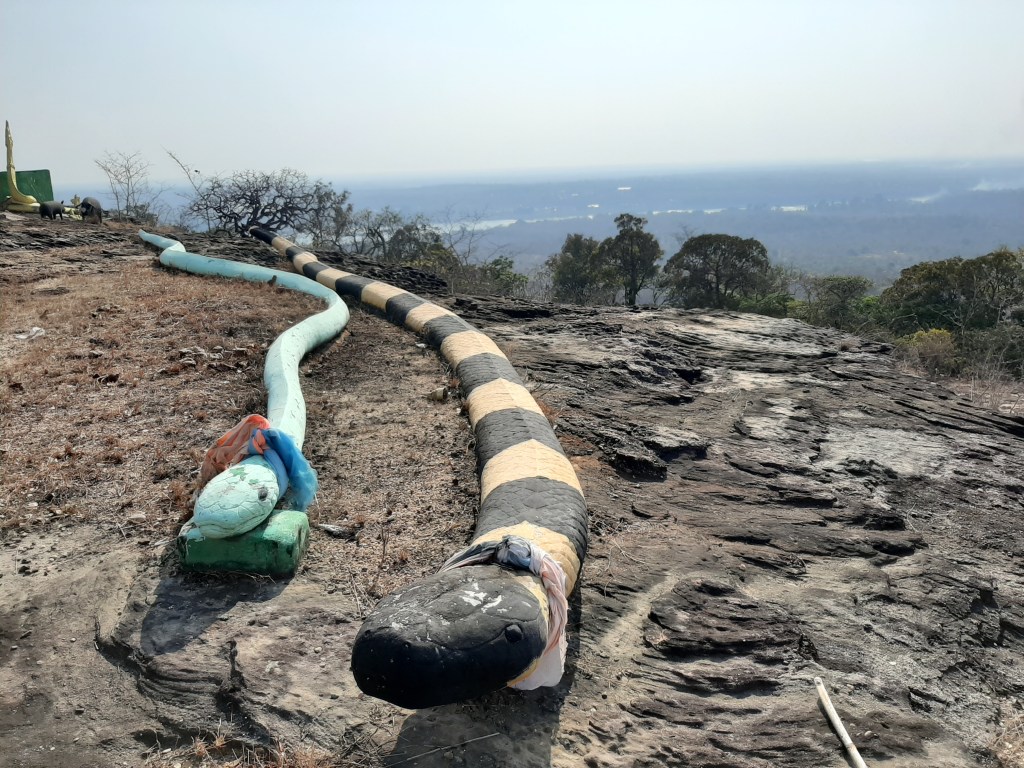
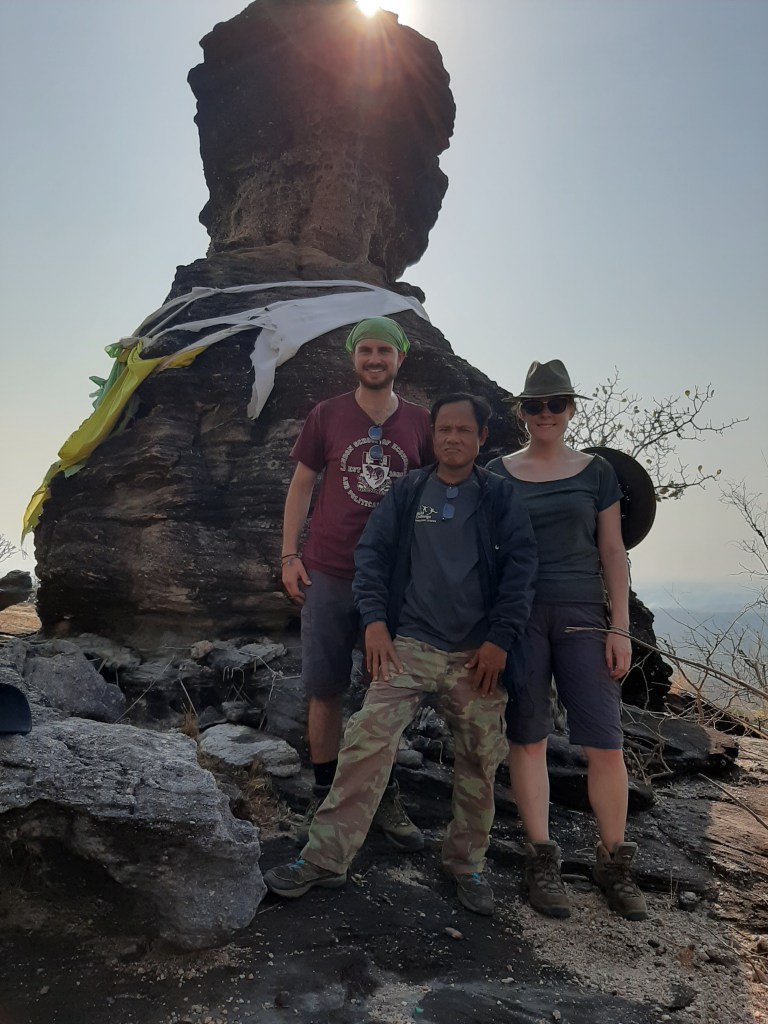
We moved on at around 2pm, back up the path we had come from and then along the ridge of the hill until we reached an opening that had local spiritual significance, with a small open temple having been built and a range of symbolic stone animals (pigs, elephants and snakes) taking guard in the surrounding area. The focal point here however, is a very peculiar-shaled rock and the impressive panoramic views down to the Mekong and beyond into Thailand. We took a good 20 minutes or so once again to cool off in the shade before braving the return trek back to the village.
By this point we had both grown quite annoyed by our guide Sin Xai. He was just overly keen and pushy, making unnecessary loud comments, being unnecessarily prescriptive about what we did where (what photos we take, where we sit, how we pose). His fun forcing wound us up over the next day and a half, as did the latent sexism that increasingly became apparent – likely a normal feature among Laotian men his age… Comments checking if Katharine was ok or tired were just constant and random and a lot of the chat focused on addressing George. Our lessons from Mr. Lang about local herbal medicines was interesting if also quite amusing, with the emphasis being on tiger balm and its use in mixing with whiskey to “make men strong” and “good for babies”, while the women’s equivalent was a special tea to help women giving birth.
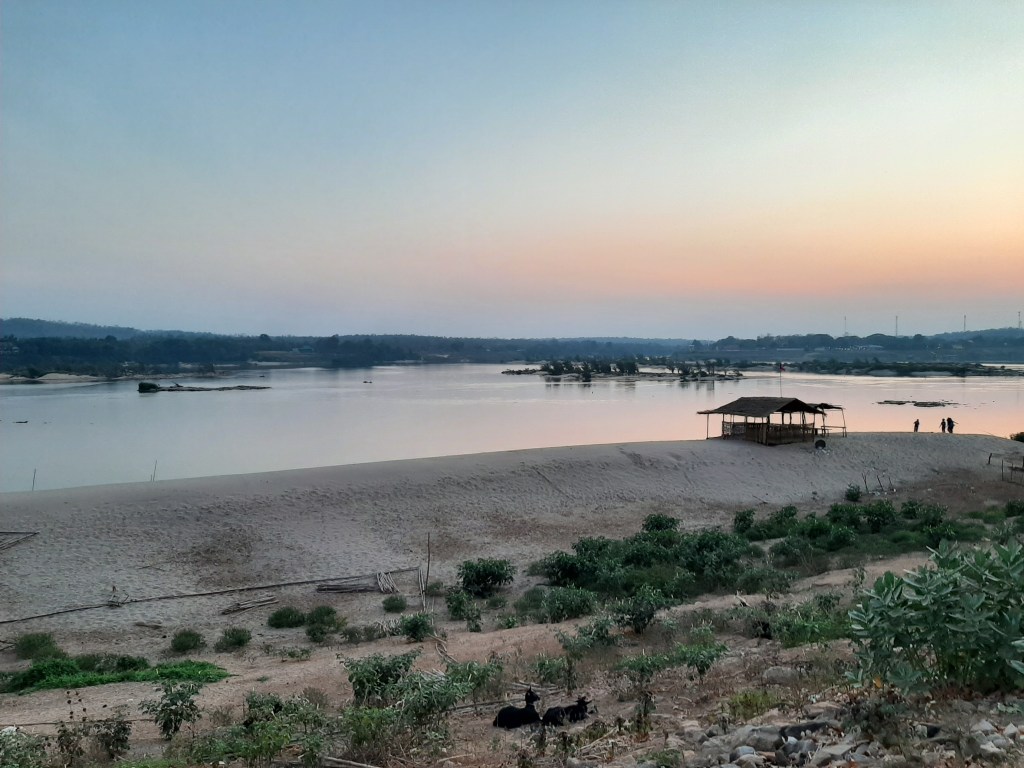
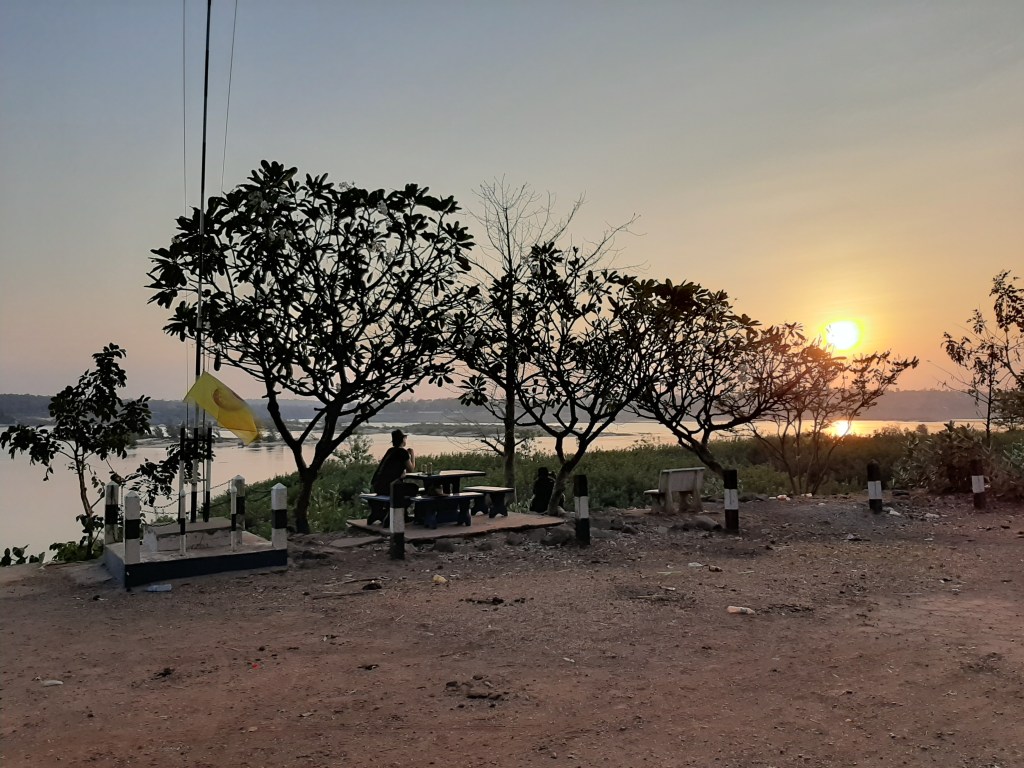
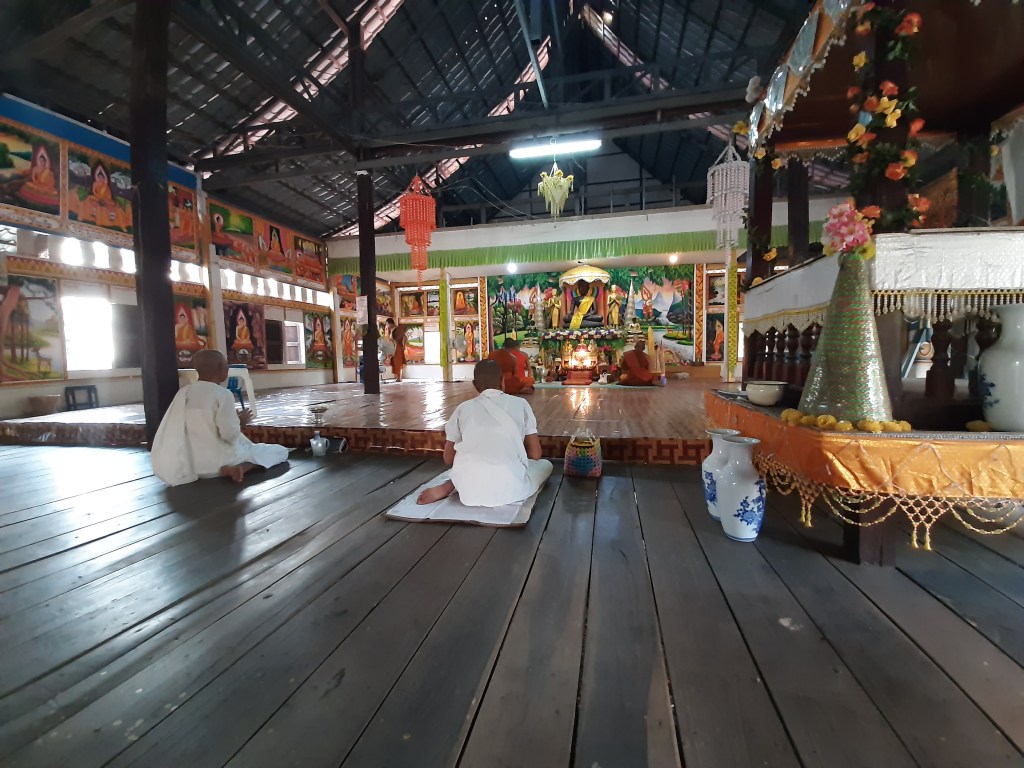
Walking back in the heat of the afternoon felt like an eternity. We eventually reached the village, back down the stony steps we had walked up, and headed straight to the nearest shop where we downed a big bottle of cold water. Sin Xai then took us on a bit of a tour of the village, with the main site being the temple which felt quite posh compared to the rest of the village, with spacious, well kept gardens, classic teak ornate temple buildings, a stupa and pleasant if simple monk / nun living quarters on the side. We sat inside (being careful to make sure our feet were pointing away from the Buddha as an important sign of respect) and observed the monk chanting that was going on. There were also two nuns paying their respects and joining I with the chanting. Like monks, nuns in Laos also have their heads but they wear white robes instead of saffron. It is clear there is a gender hierarchy in terms of levels of importance in Buddhist religious institutions and practice in Laos (and everywhere we expect – certainly also in Thailand, Katharine learnt). It was a nice experience which our guide Sin Xai did his best to make a little forced and weird for us – trying to make us “prey” in a specific way and filming us before sending the footage off to his work whatsapp group. It just felt like he wanted to show “look how great a time my white tourists are having” to his work peers… After our temple visit, we walked to a beautiful spot on the banks of the mighty Mekong. George grabbed some beers from the local shop and we sat and watched the sun setting over Thailand while local kids were running around playing on the riverside.
Our homestay for the night was meant to be part of the experience to provide “local interactions with an ethnic minority family”. Well, it turned out our host family were relatively wealthy Thais who had a proper brick and mortar western-style house. We suppose they technically were a minority in Laos but it was not quite the “authentic” experience we expected. The family were very welcoming in fairness. Showering was an interesting experience. We had done bucket showers in Nepal, but the water tank for the bucket had an inhabitant: a medium sized fish! We guessed he may have been out there to eat any insects or parasites that may turn up, keeping the water clean for human showers – certainly unexpected! (Katharine briefly thought she was meant to get in the tank with the fish – but eventually figured it out with the bucket!).
We had a simple meal of stir fried mushrooms veg. and rice. Sin Xai produced a plastic bottle with the fabled Tigerbalm Whiskey in it he had previously been talking about. We both thought it tasted like bad oily whiskey and George confirmed no obvious aphrodisiac results from drinking it but hey ho! We slept on mattresses on the floor of a big empty living room space (with pictures of the Thai king on the walls), inside what genuinely felt like a cute child-made den: a square mosquito net and a wider sheet surrounding us to provide some privacy.
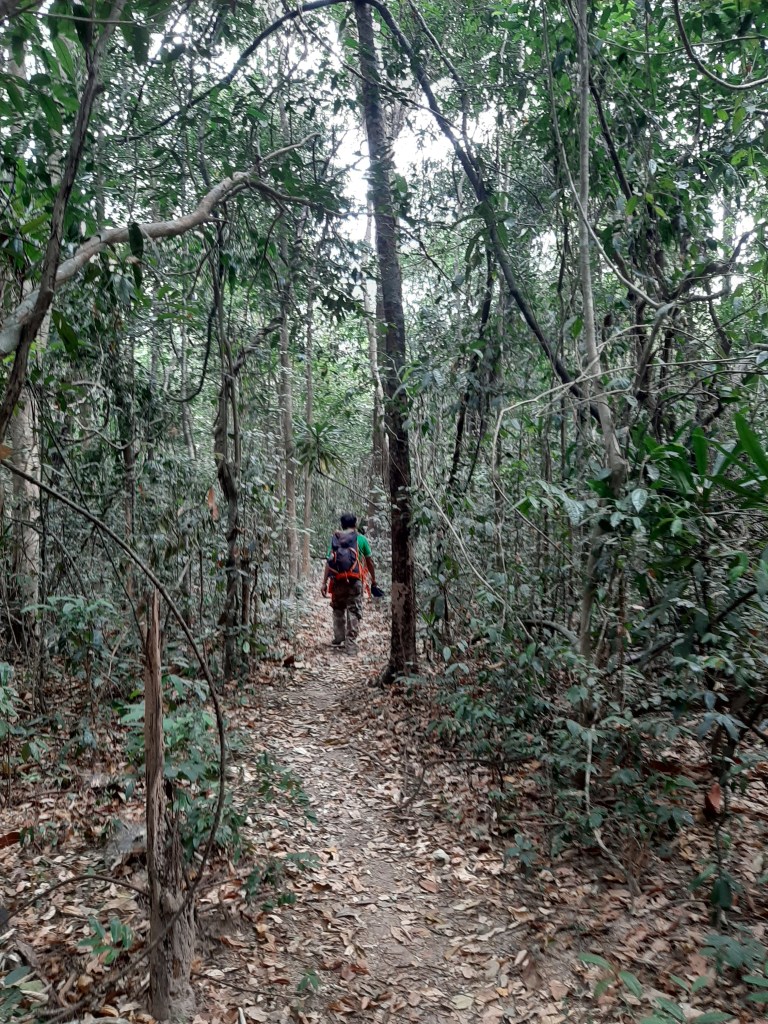
14th Feb provided us with a very different Valentine’s Day! We woke up in our den and set off early (around 8.30) to make as much ground as we could in the relative cool. We walked up the rocky slope as we had the previous day. This was where we learnt the Laoian term “Hon Lai”, meaning “very hot”… another one for our travel vocabulary to go with the Swahili “Pole pole” (slowly slowly). We reached the top of the hill and this time turned right into much thicker and greener forest which provided merciful shade for most of the morning. The masses of thick spider nests along the floor was the biggest feature here.
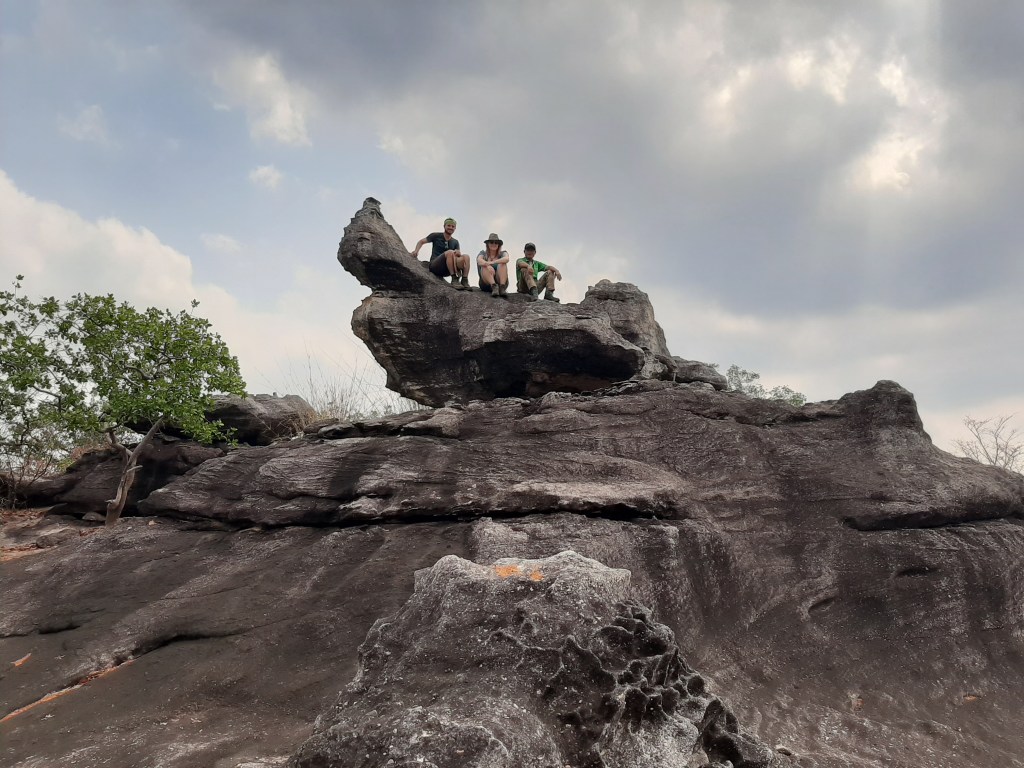
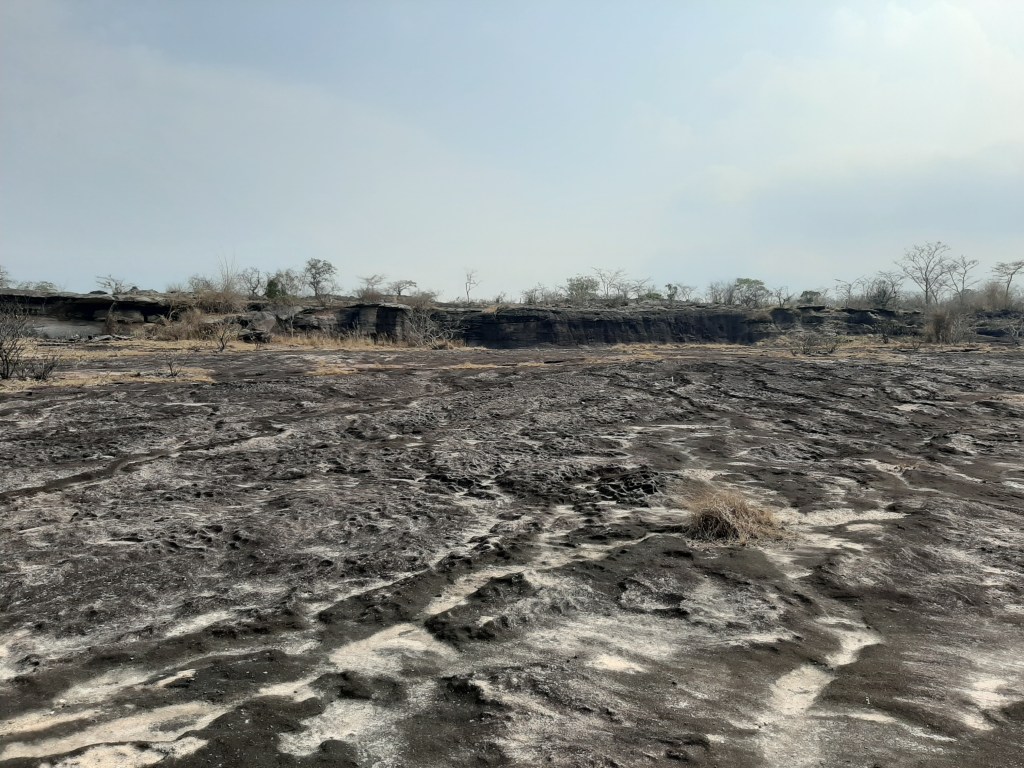
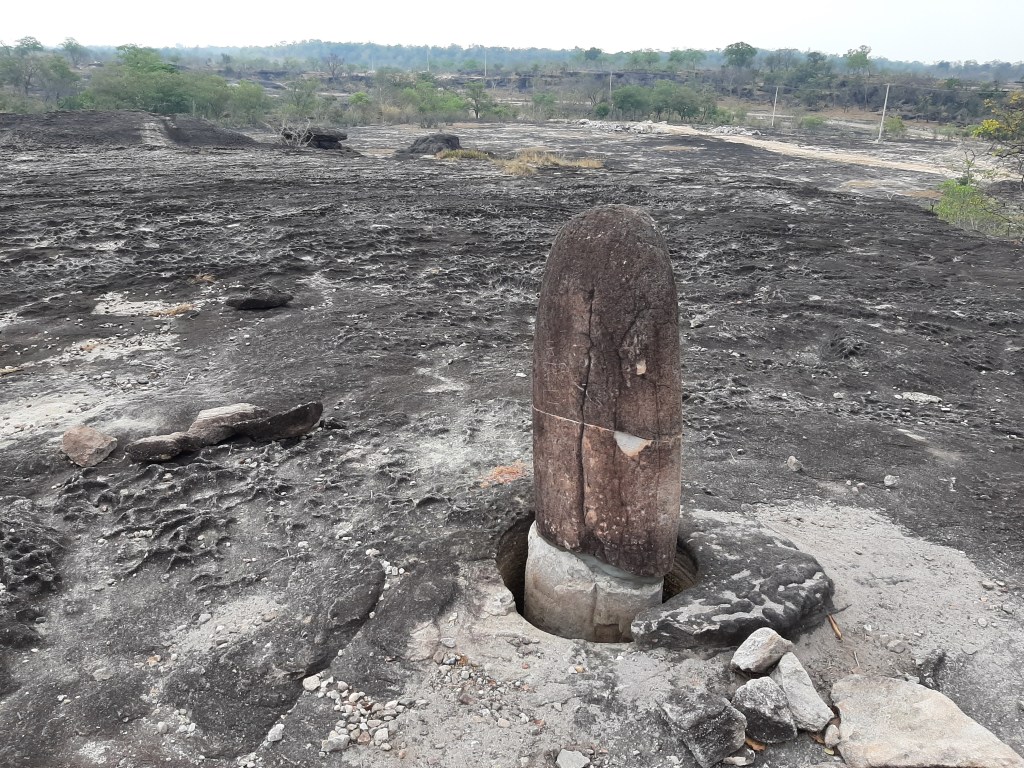
Eventually we run out of forest, and for the next 2 or 3 hours we walked through incredibly arid, parched land that felt like an almost other-worldly mix of endless ancient lava fields (now grey spiky stone) and dust. It was hot… The main points of interest in otherwise quite hot and samey terrain were a big “bird rock” that sort of looked a bit like a chicken but was meant to be a Geruda (Hindu Shiva’s transportation bird). We scrambled up for some photos, including some utterly hilarious/questionable posing from Sin Xai. Just before finally reaching the alluring waters of the Mekong, we also came to a Hindu phallic stone rock – which our guides were only able to tell us was “good for fertility”. We sat there for a few minutes and watched a single motorbike come up a trail that was not even discernable as a footpath. The man also joined us at the penis rock and, turned out to be a ice cream man – surreal! We bought some cheap and very tasty taro ice lollies that cooled us down sufficiently fke the last stretch of walking down to the river.
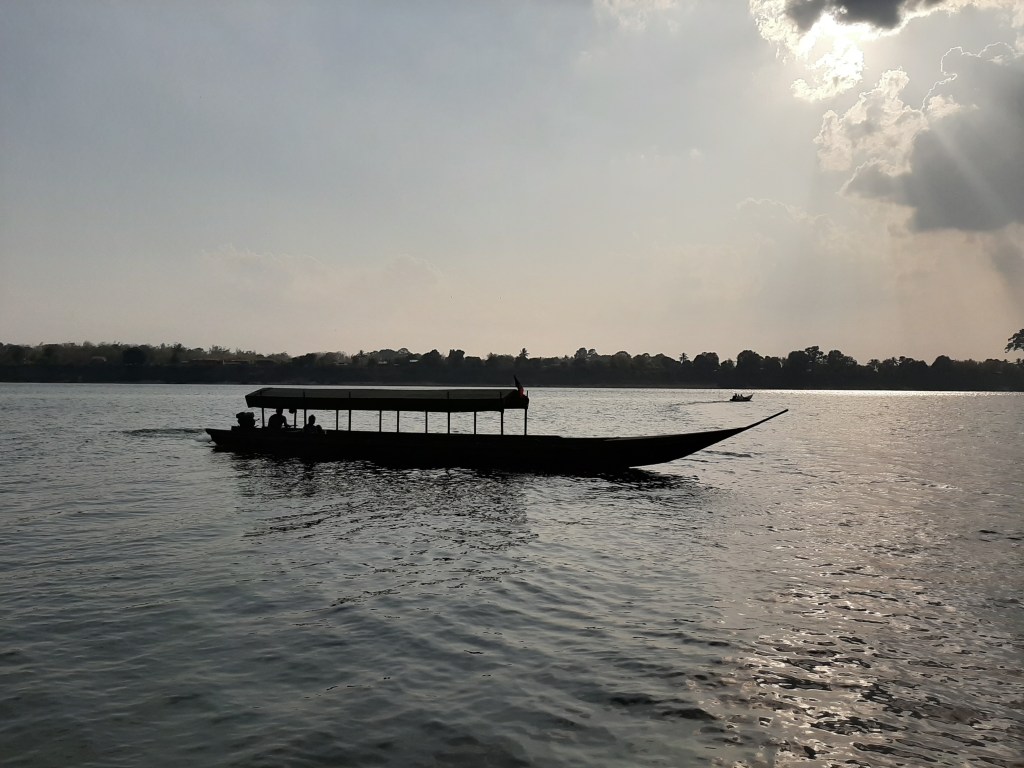
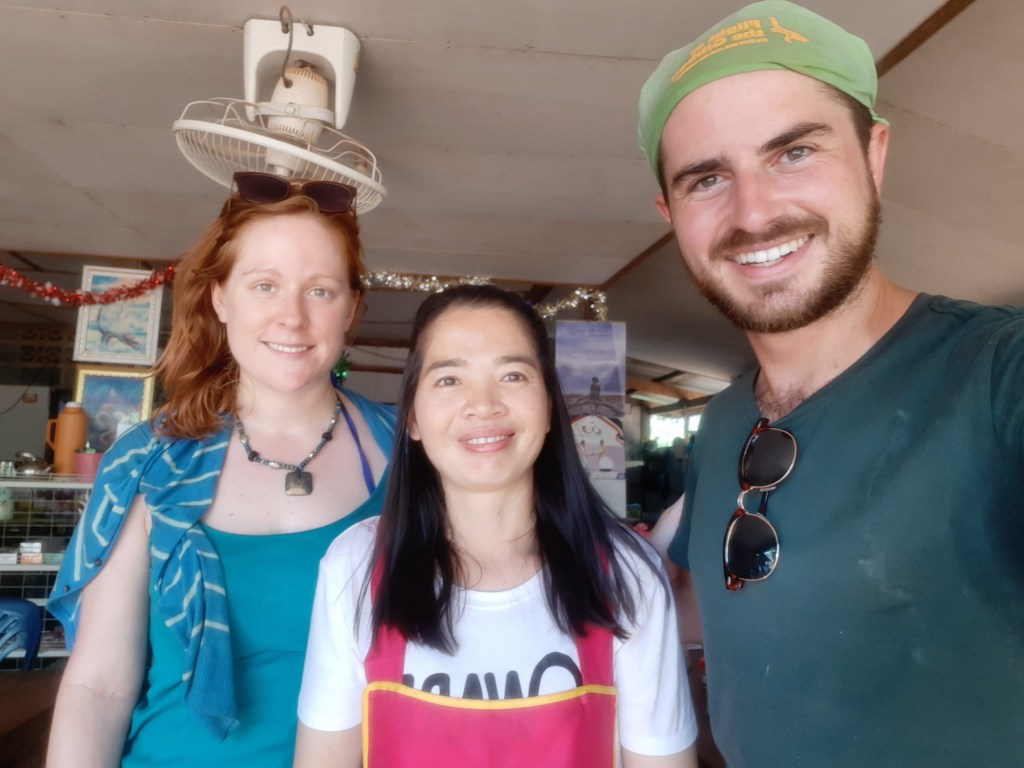
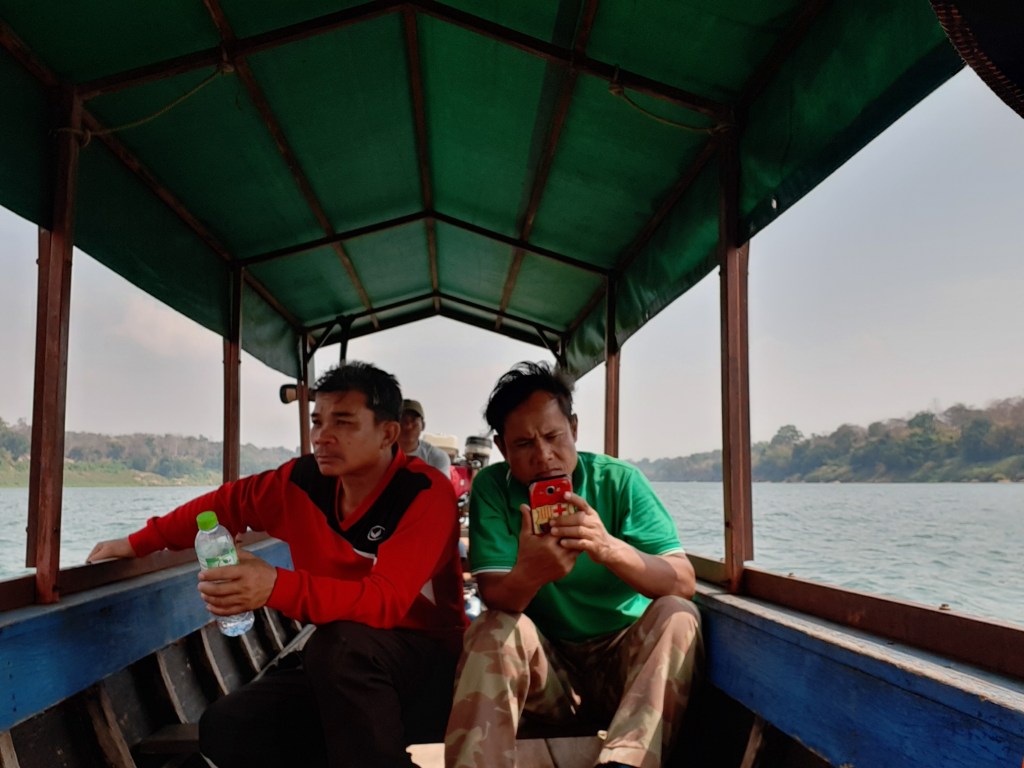
The scenery immediately beame much greener and cooler by the Mekong, and we sat in the cool shade while we waited for about 15 minutes for our boat to pick us up. Our boat was a good sized long-tail boat which thankfully had a food shade canopy. The boat took us 15 minutes up river to the small village of Sula. Sula seemed less charming and more isolated compared to Singsamphan village where we had stayed the night before. When we bought drinks from a local shop, we learned that Thai Baht was the main currency here, with the village far more connected economically with Thailand across the river than the rest of Laos. The young lady selling is the drinks was sweet and wanted to get selfies with us. Meanwhile, Sin Xai was up to his old tricks, being unnecessarily prescriptive about saying “sabaidee” (hello) and “korp jai” (thank you) to people … these were basics that we had very much picked up by now and we didn’t feel we needed a lesson in common human courtesies… He also ushered us to a group of locals and suggested we get a photo with them. This version of “local interactions” we had been promised did not seem right or balanced so we said hello but refused. Apparently the village had been set up by a pair of families some decades ago, and now has 100 odd people, 50% if whom are from an ethnic minority.
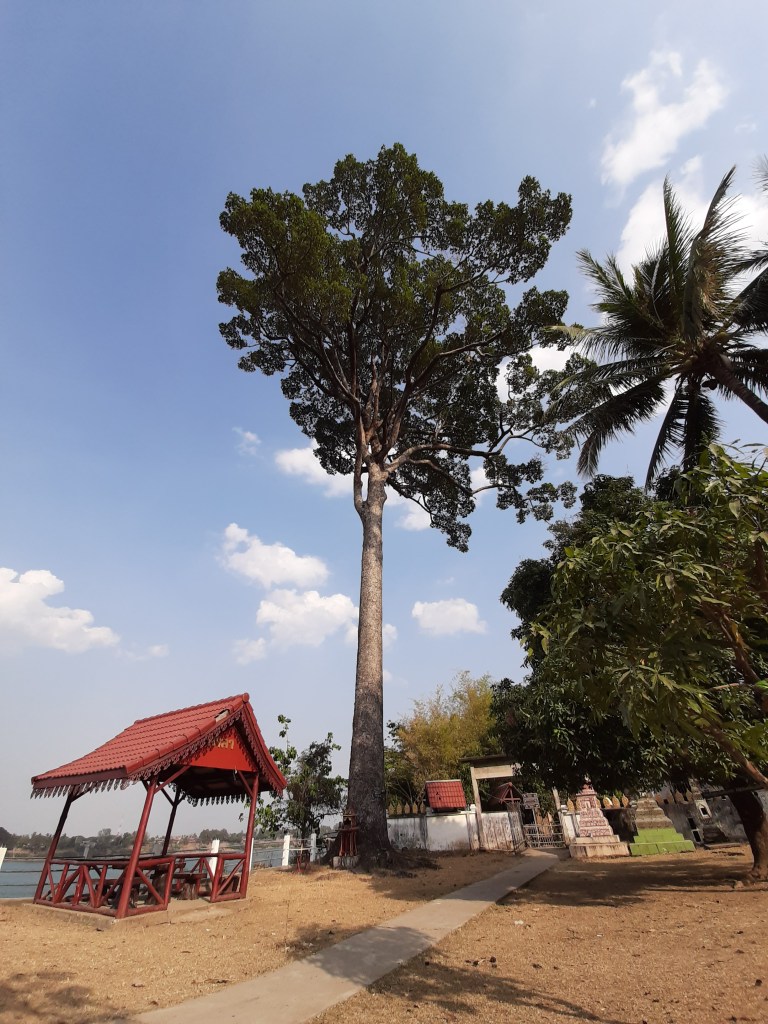
After our short visit to the village, we returned to the boat and set off southbound towards Pakse. We had lunch on the boat, which involved sticky rice, small river fish and boiled eggs. Passing Singsamphan village again, we dropped off (and tipped) our local guide, Mr. Lang who had been great, and picked up Katharine’s phone we had forgotten at the homestay. We also picked up the boat man’s wife and daughter who would keep him company for his long ride back to the village after leaving us in Pakse. We stopped at a little island in the middle of the river which had a sandy beach, providing a great spot for a dip. It was our first swim in this mighty river which we had been following down the length of Laos, and wow it was refreshing. The water was very clear and pleasant and just the right level of cooling from the heat we had picked up from the morning’s walking. The ride back to Pakse was very pleasant. We just enjoyed relaxing, reading and taking in the beautiful surrounding scenery. The journey back was around 2 hours in total, with a 30 minute stop at the small island of Don Kon where we walked around for a bit and visited a local weaving cooperative. The island has a simply enormous tree that can be seen for miles and miles and the locals claim is 500 years old.
We arrived in Pakse in the early evening and scouted out options for accommodation, settling on the simple, friendly and cheap Sabaidee 2 guesthouse instead of the far posher hotel we had been dropped off by. We had a lovely Valentine’s day evening together, first starting with “Panorama” rooftop bar where we shared an excellent bottle of red wine (it had been a while since we had drank wine!), and had some very tasty bruschetta and olive tapenade – luxury! The place was clearly full of couples (mostly local) and we were given chocolate hearts for free – clearly Valentine’s Day is a thing in Laos, at least among the more wealthy, western-oriented! We had dinner at what we thought looked like an American ranch-style restaurant. When we turned up, we discovered it was very much a local spot and enjoyed cheap beer and cheep noodle soups, stir fried morning glory with (lots of) garlic.
In all our stop in the Pakse area and trek around Singsamphan was good but definitely less of a highlight compared to what we had done in Laos to date. Having a different guide may well have made our experience different. Despite this and the heat, however, we definitely left Pakse feeling like we had sampled life like a local on the Mekong river. Our next stop would take us even further into tranquil river life: 4,000 Islands!
 tranetrottingthemegamoon.travel.blog