While George had been to Siem Reap on his last trip to Southeast Asia, the temples of Angkor are without exaggeration one of, if not the most impressive, vast and fascinating collections of archeological / historical monuments in the world. The scale and number of these vast structures is simply mind boggling. At its hay day in the 12th / 13th centuries, the Khmer civilisation controlled most of the areas around Cambodia, Laos, south Vietnam and Thailand, and the great walled city of Angkor Thom was home to 1 million people… There was never a chance of us missing them, especially given we could pass through en route to the Cambodian islands and Vietnam.
Our journey to Siem Reap in Cambodia was the longest and most disjointed of the megamoon. We set off from our bungalo in Don Det, Laos around 7.30am and arrived in Siem Reap 14 hours later, after one boat, one truck and two minivans. There is no straight through bus so travel companies have put together a patchwork of minibuses with several hours of waiting time in between. The Laos – Cambodia border was not without excitement… We first learned that there was an exit fee to the Laos authorities – only 2 dollars but still were pretty bemused by the notion of having to pay to exit a country! We also had a border official not keen on accepting our $100 bill for our visas because of a tiny tear in it (we had gotten new dollar notes in Pakse especially for Cambodia and their bizarre approach to the condition of US dollars). Thankfully his boss was happy to let us through, although ironically gave us dollars that others would later refuse!
Our first minibus took us to the town of Stung Treng on the Mekong. We ambled out and sat in a cafe for about an hour until our next minibus arrived that would take us to Siem Reap. During the stop over, we got chatting to two Greek lads we had overheard speaking Greek at the bus stop in Laos – a massive surprise to find them here! They were both Athenians of Kefalonian origin and called Dimitris and Adonis. George enjoyed having the opportunity to speak some Greek and they were genuinely nice lads and good company. They had begun in Thailand and traveled down the length of Laos. Their plan was to head back to the Thai islands via the tempes of Angkor. They both work as freelance tour guides (via Air BnB experiences).
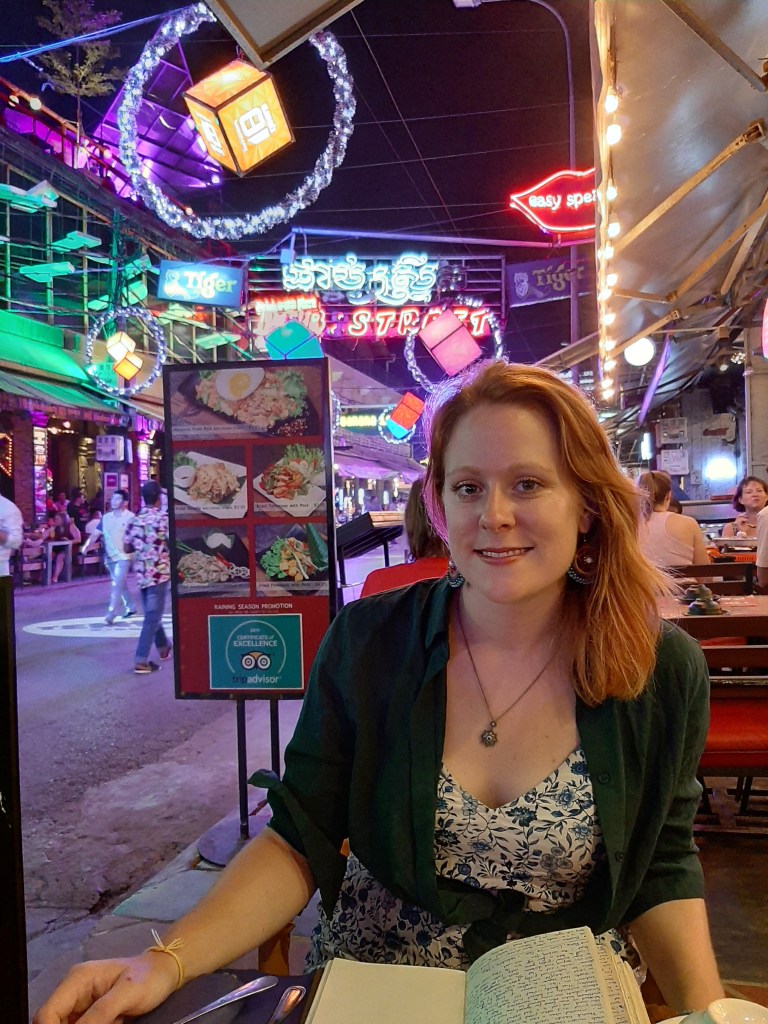
We finally arrived in Siem Reap and shared a tuk tuk to the centre of town with Dimitris and Adonis. It was somewhat surreal driving through the bright lights and busy streets of central Siem Reap, after being in peaceful Laos for so long! We exchanged numbers with the Greeks and were dropped off at Mad Monkey Hostel, where we were staying for the night. We also agreed with the tuk tuk driver, Rony, to take us touring around the temples the next day. Most tuk tuks in Cambodia (including Rony’s) are a normal motorbike with a wooden carriage attached to the back, giving them a horse and carriage type feel. Feeling famished, we finally got some food down us at a local noodle shop and plucked enough energy to go for a walk around the madness of Pub Street. Siem Reap has very much established itself as a party destination on the southeast Asian circuit. The entire centre of the town feels like a more low key version of Bankok’s Khao San road, with bars blasting music out onto the streets, lots of touts trying to get you to have their cheep or free shots, and bright lights. The centre of this madness is genuinely called “Pub Street” with the name brightly lit up in neon lighting above the streets to make sure everyone knows it.
We decided to spend 2 nights in Siem Reap to give us 2 full days for temple touring. After the second day, we would take a sleeper bus to the port city of Sihanoukville, en route to the islands. Unfortunately, our hostel was fully booked for our second night so we had to relocate to Onederz hostel down the road. We were met by our tuk tuk man Rony at around 9.45am, after we had made an unsuccessful and frustrating visit to Western Union to try and collect work travel expenses which Katharine had not been paid for months. We had exceptional eggs Benedict with smoked salmon for breakfast and finally headed off towards the temples. The plan was to go to a series of smaller, quieter and more intricate temples on day 1 before seeing the big hitters, including Angkor Wat itself, on day 2. Annoyingly, you can only buy 1 and 3 day passes for the temples so our visit was on the expensive side…
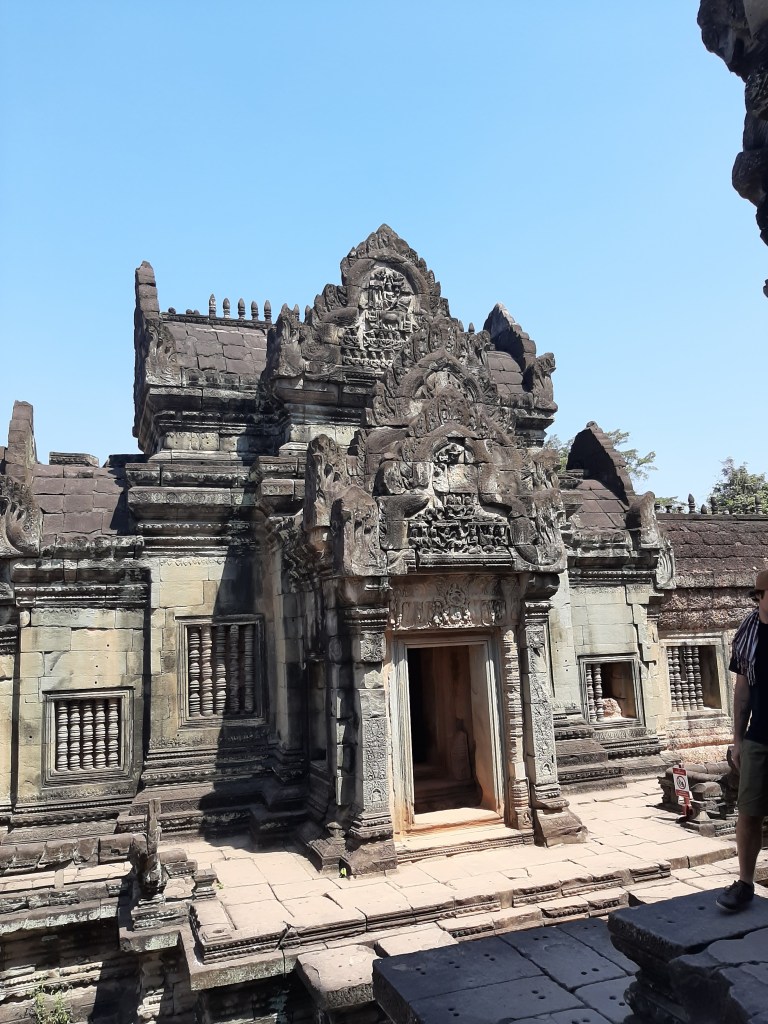
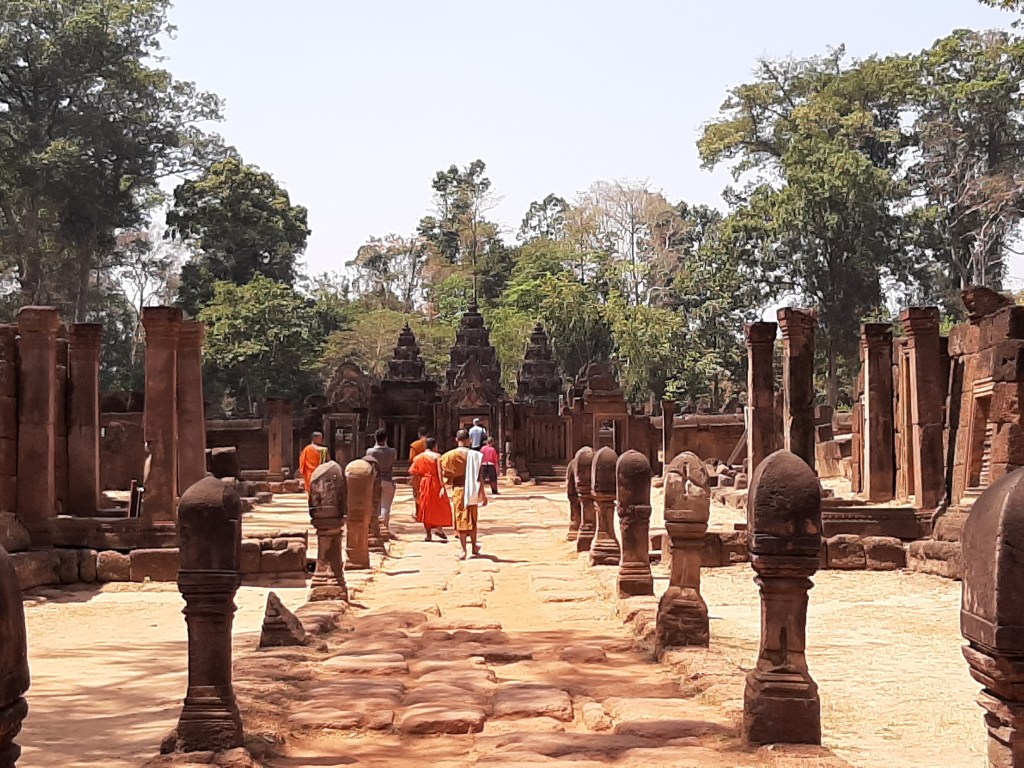
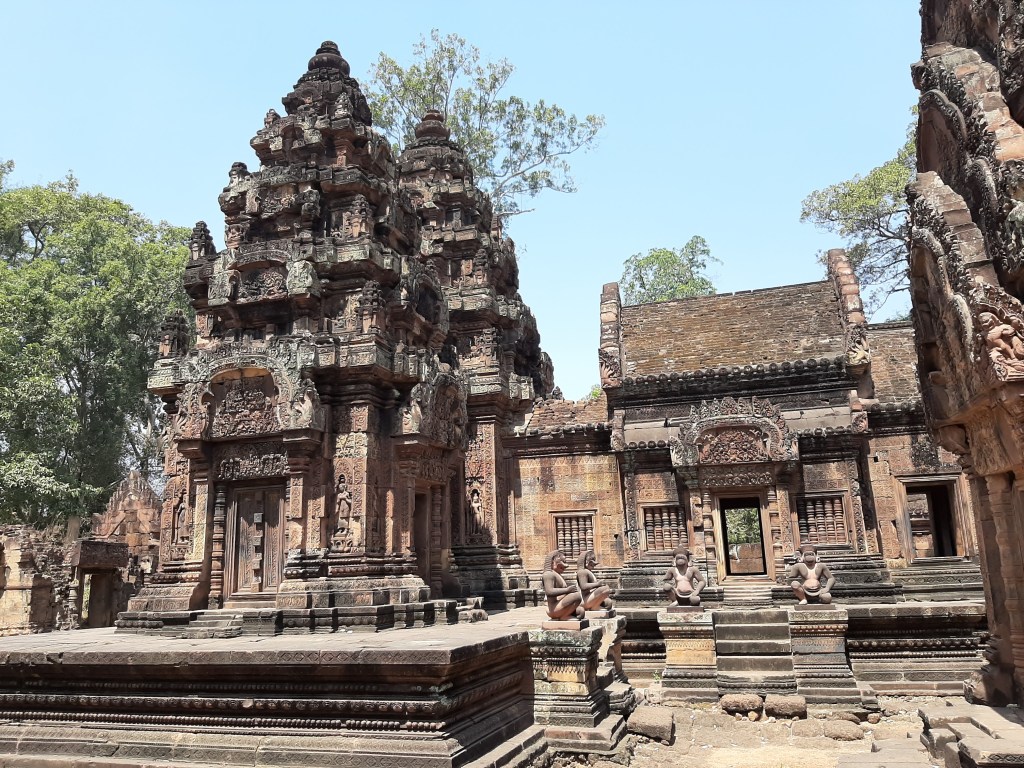
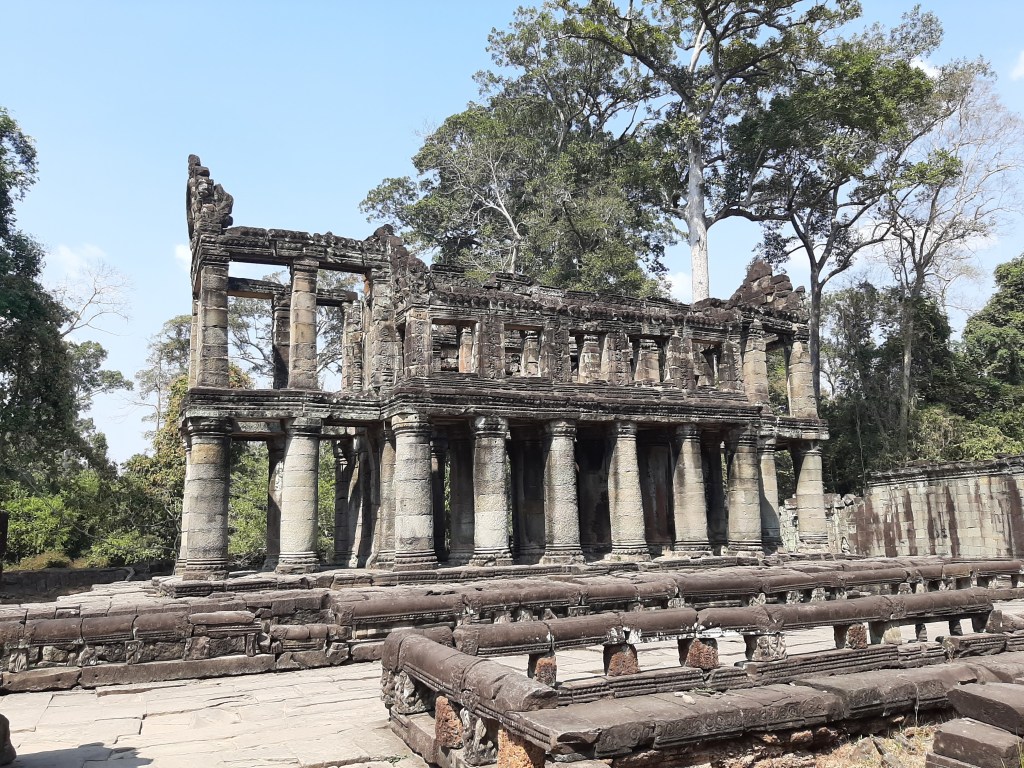
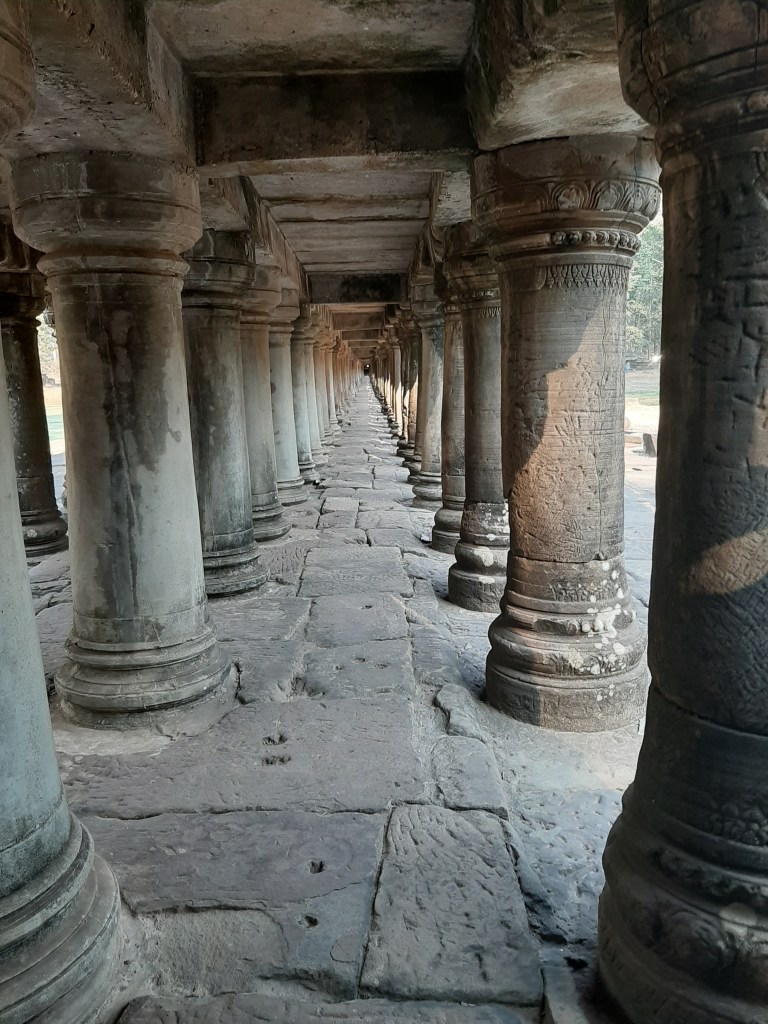
Our temple itinerary for day 1 was: Banteay Samre, Banteay Srei, Preah Khan, Neak Poan, Ta Som and Pre Rup. Our first stop was the temple of Banteay Samre, which was in decent condition and reminded us of some temples we had seen in Prambanan, Indonesia. It was built with a series of walls and trenches with steps going up and down them. The second temple was the furthest, a good 45 minute drive further, called Banteay Srei. This temple is the most intricate we saw due to it’s small size, picturesque location and incredibly detailed fine carvings into pinkish hue stone. We then made the long drive back to the main temple area and headed for the impressive Preah Khan. This was the biggest of the temple complexes we visited on day 1 with a large area of passage ways, converging on an alter in the geometric centre. We came across a tiny and old nun sitting in the middle who gave Katharine a blessing and a thread bracelet for a few Cambodian Riel – she was incredibly cute and warm. At the far side of the temple, we found a two storey structure that looked very much like a Greek temple with large round pillars that are not really the style in the Angkorian temples at all.
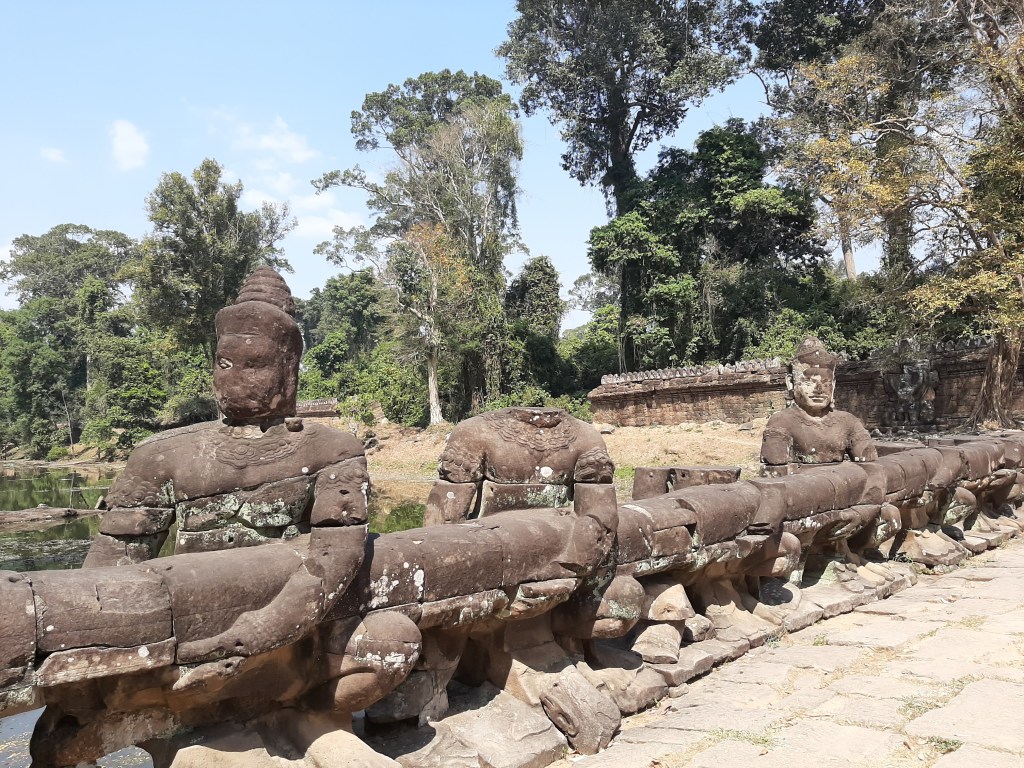
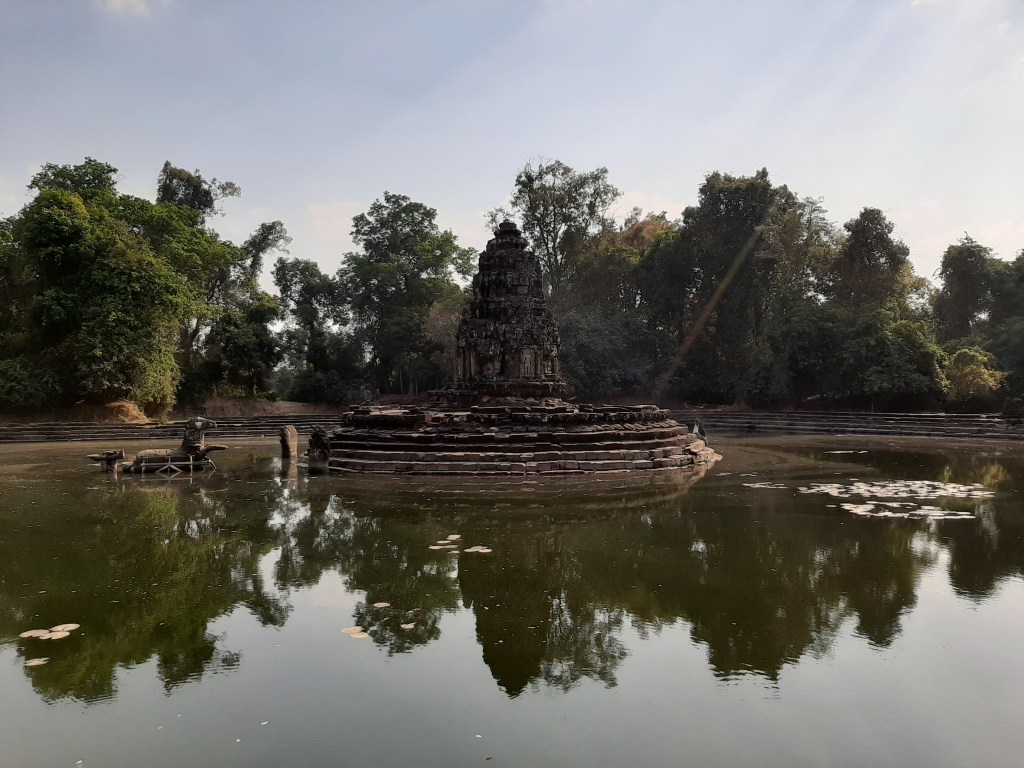
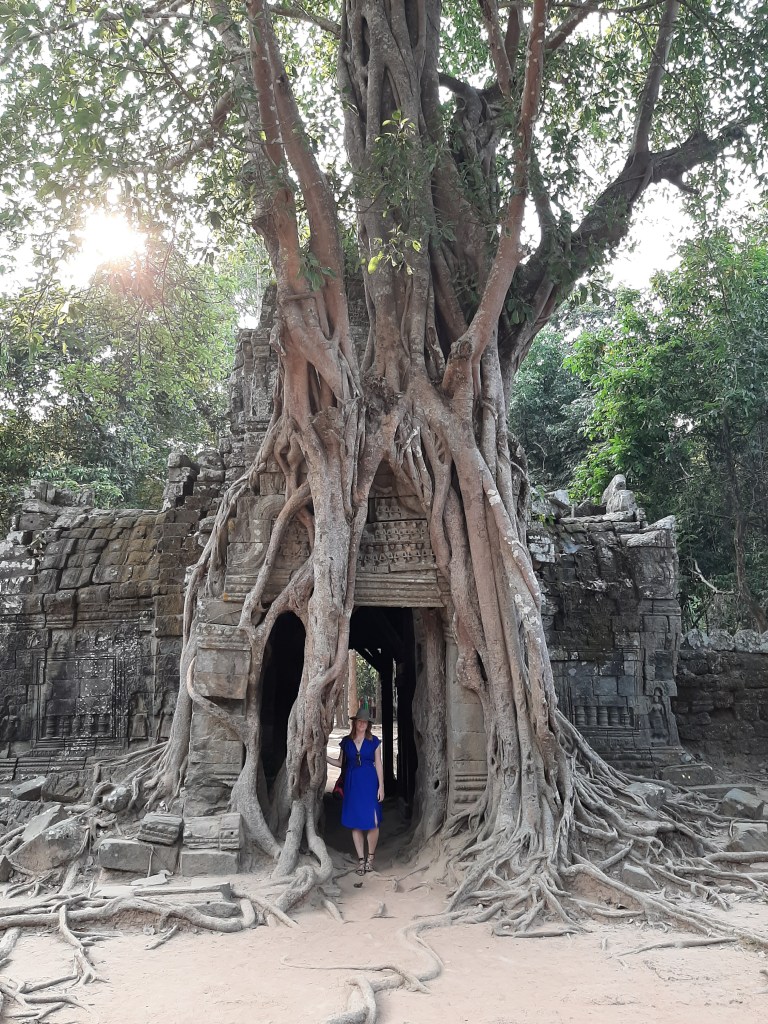
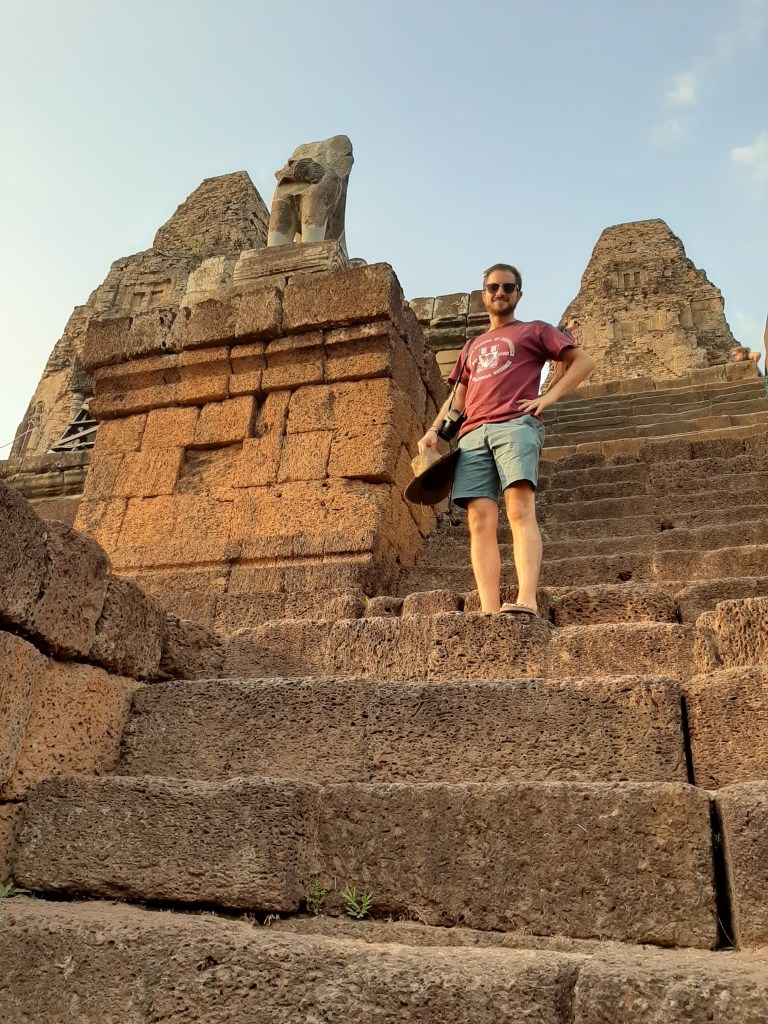
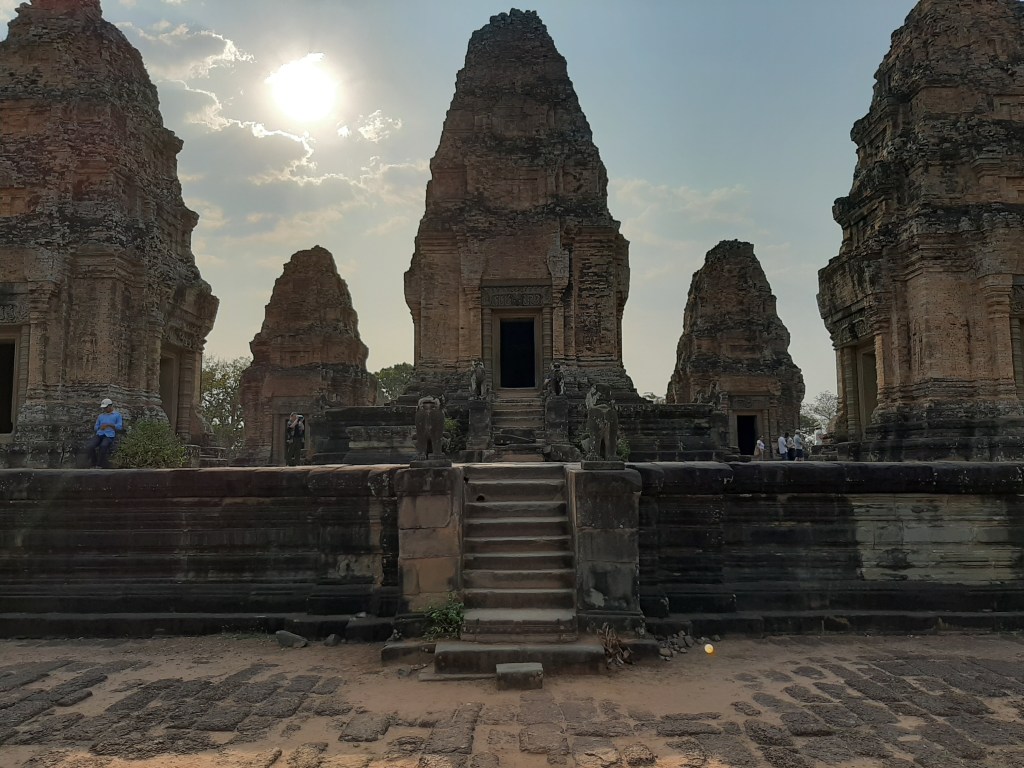
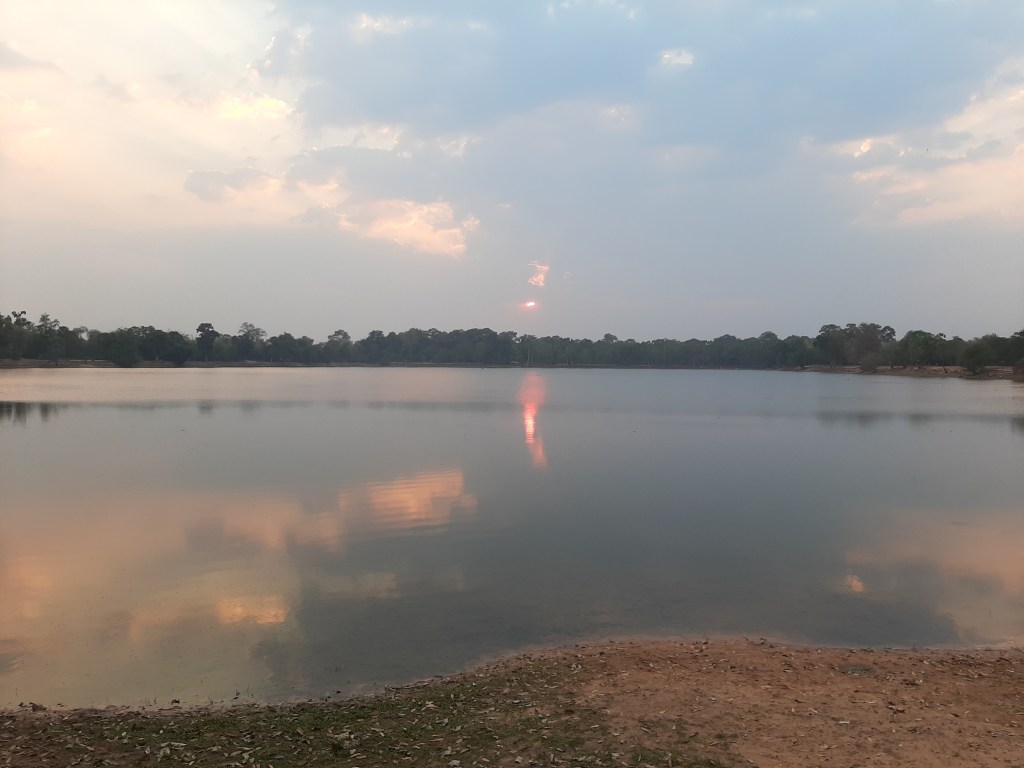
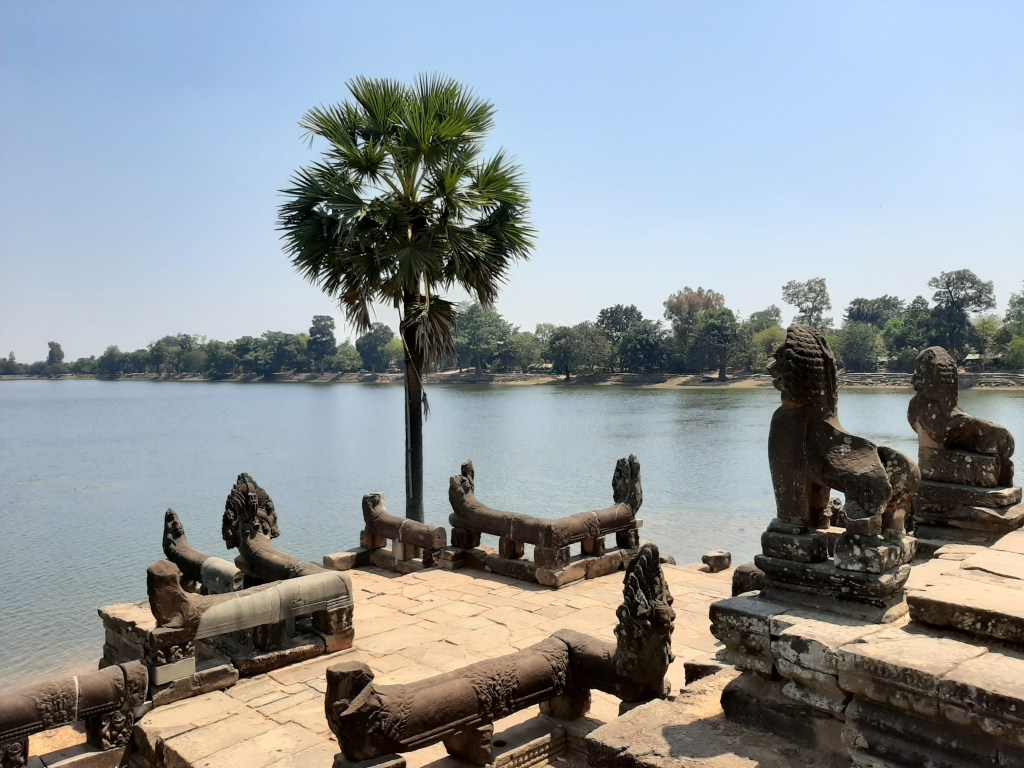
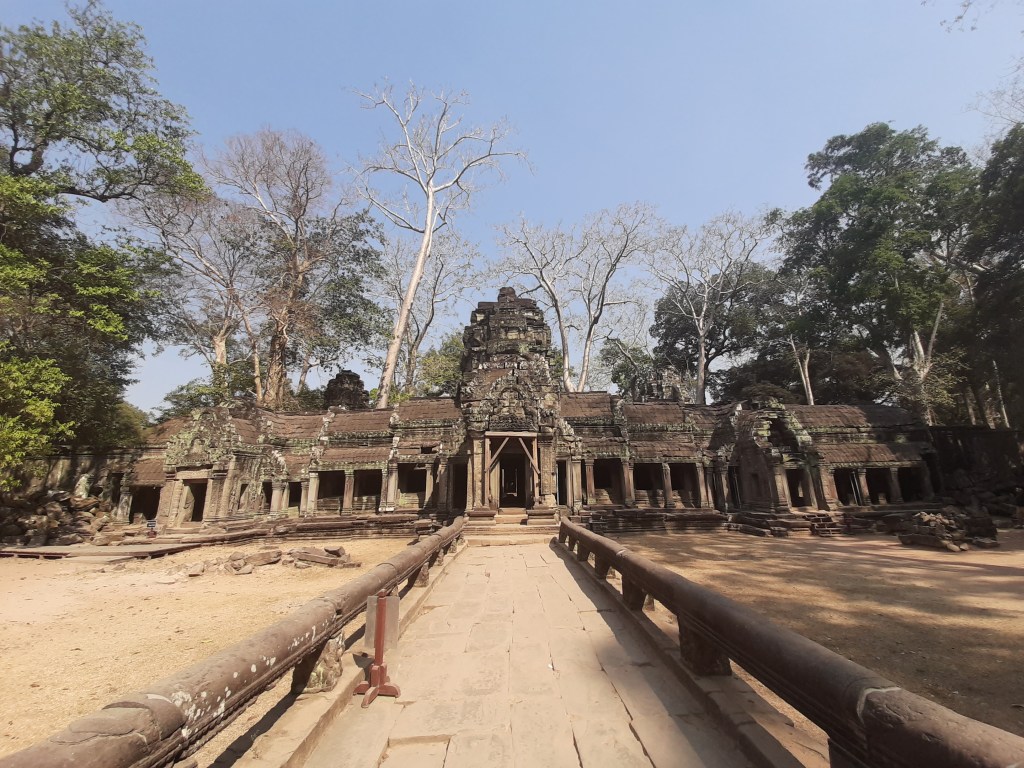
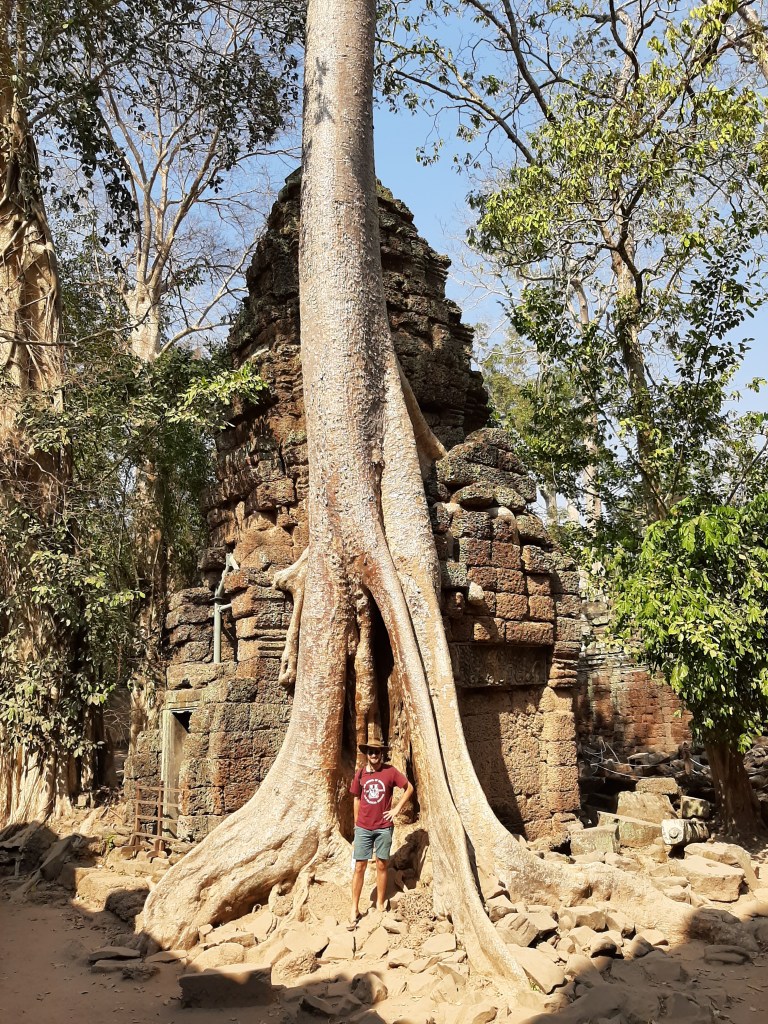
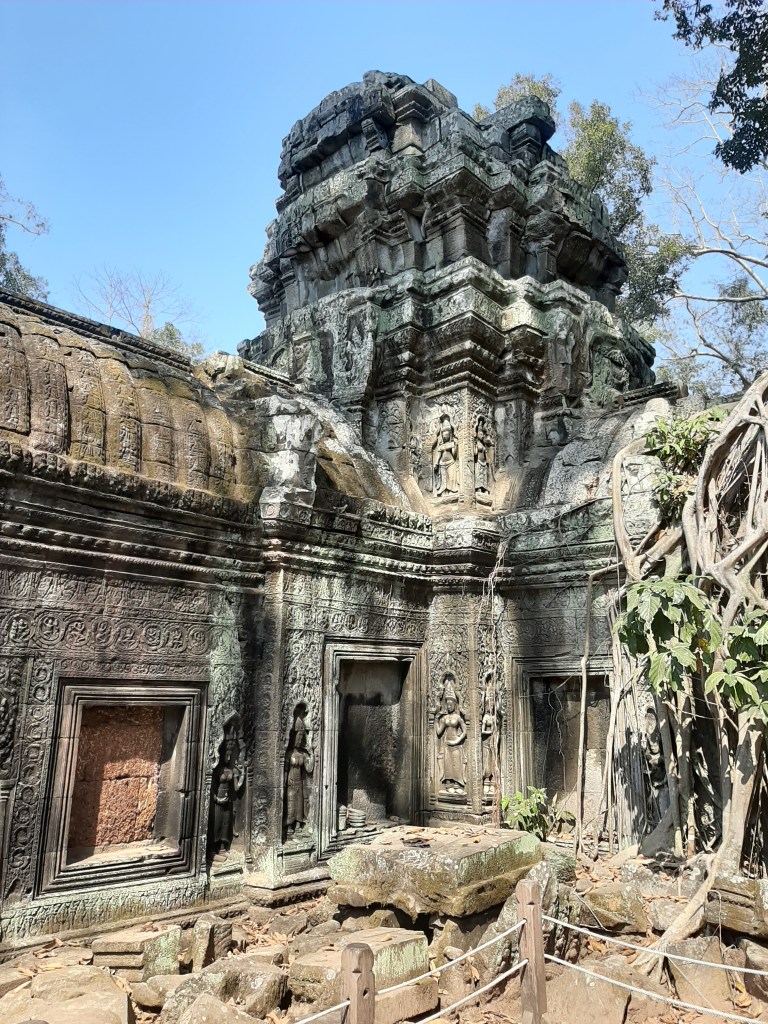
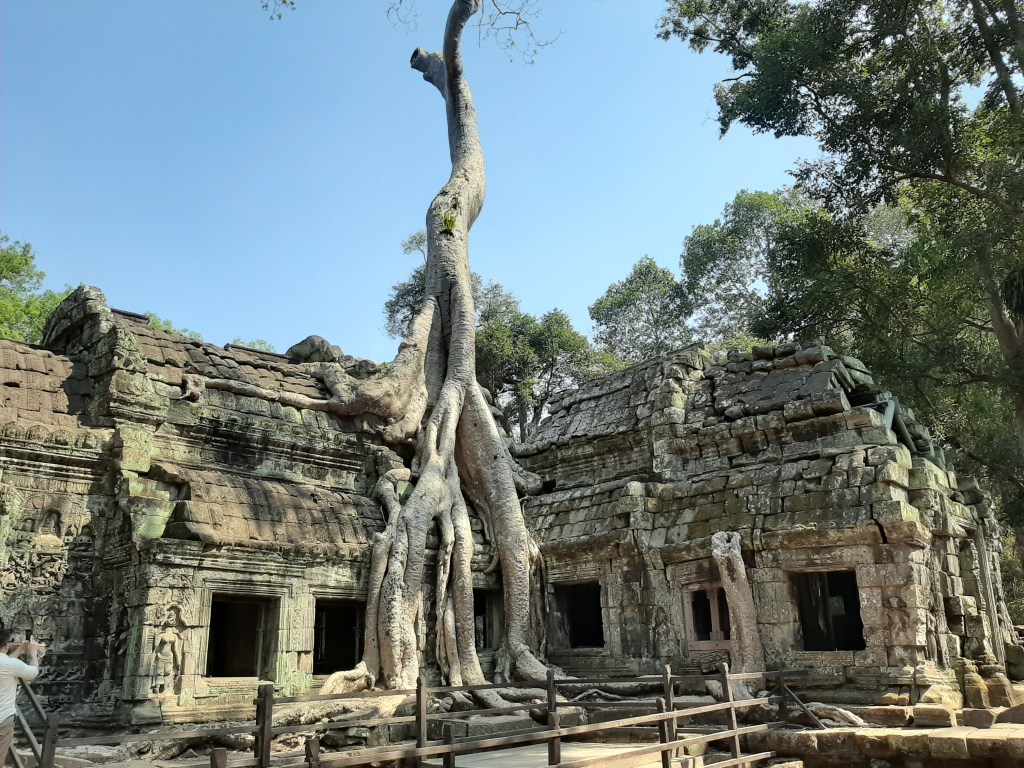
After Preah Khan, Rony took us for lunch at a spot with lots of pop up restaurants for tourists, inside the walled city of Angkor Thom. It was uninspiring and overpriced but kept us fed! Next on the tour was Neak Poan, which was very different to the other temples. Situated on a man made island in the centre of a massive reservoir, we walked across the causeway for a few hundred metres to find an ornate structure that was effectively a large fountain, with three pools surrounding the centre monument. Ta Som temple was small but very atmospheric, with the highlight being a huge tree growing through the walls and far entrance, providing Tomb Raider-type images of the temple covered in roots and being claimed by the jungle. By this point we were getting tired so we stopped for a drink and a chat with Rony outside the temple. Rony is an honest, hardworking man who speaks good English, and made a great tour driver. We learnt he had been through a difficult divorse and now found himself as the sole bread winner for his entire family and daughter despite work being much tougher than normal because of the coronavirus threat. Most of all, he seemed really down in self-confidence and feeling the pressures of life. We did our best to cheer him up and reassure him he was great st his job. From our perspective as visitors, the virus had been a positive impact as there was no actual disruption or real risk in Cambodia, but the lack of Chinese and scared Westerners made the temples super quiet compared to their usual cramptness in peak season. We finished the day with a brief visit to Pre Rup, which is built like a large almost Aztec-style pyramid, and then a stop for sunset by the eastern side of Srah Srang reservoir. On the way back to Siem Reap, the carriage of the tuk tuk got a flat tyre which made us feel even more bad for Rony. We were thankfully able to fix it pretty quickly and easily, as there was a street mechanic set up just 500 metres or so along the road back. We used the opportunity to buy ourselves a coke and also bought Rony one.
When we got back, we climbed onto the roof top bar at Mad Monkey hostel and used our free beer tokens given to us at check in. The roof has, incredibly, been turned into a beach bar with the whole floor covered in sand! We then moved into our new hostel and had a quick swim in the indoor pool that was deserted. After showering and winding down, we set off to sample the delights of Siem Reap for one only real night here. We had been in touch with the Greeks to meet up for a drink later, and even bumped into them on our way out for food! They had been on their own trip of some of the peripheral temples, albeit with a bit of a later start than us.
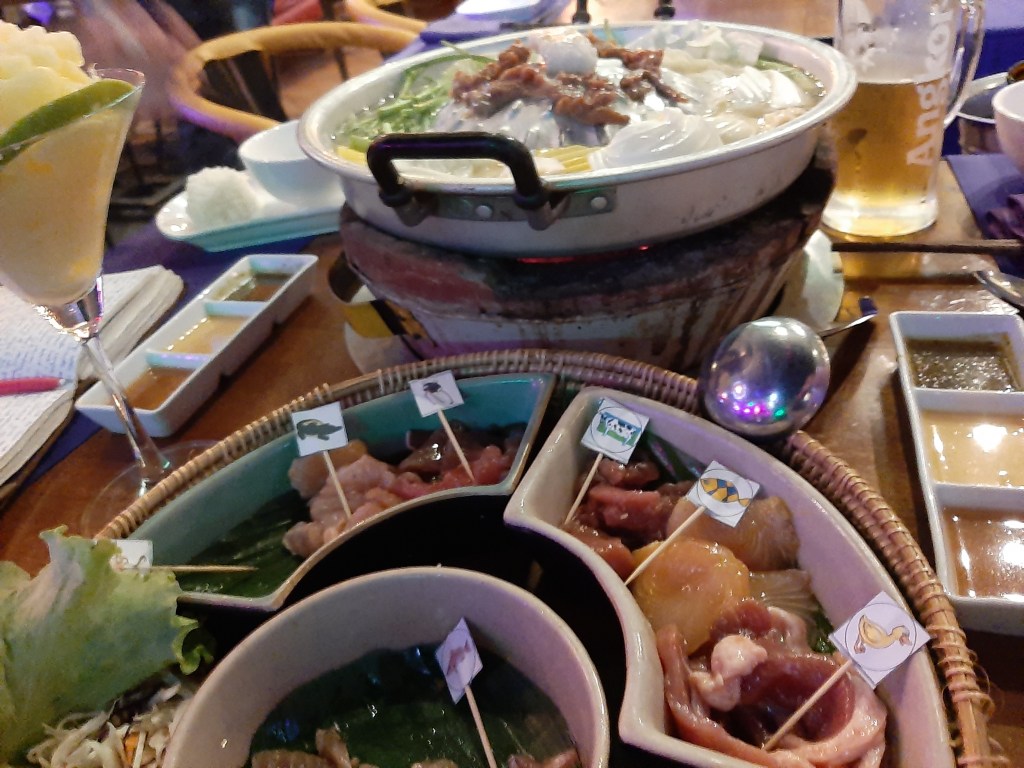
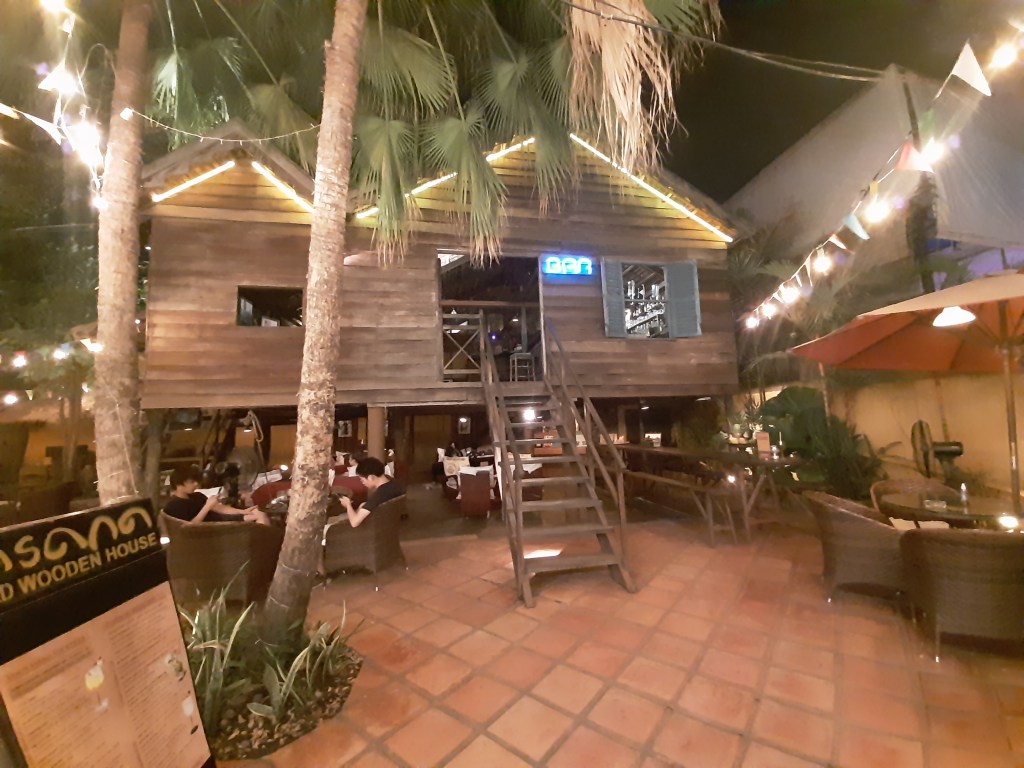
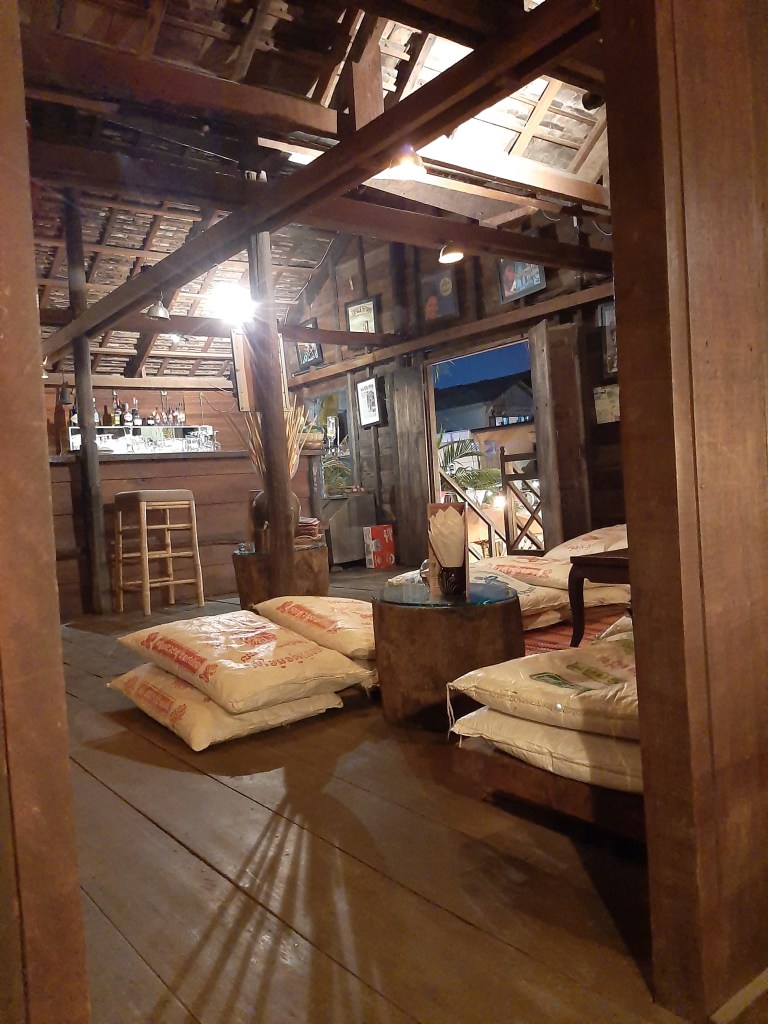
We had dinner at “Cambodian Barbecue”, which was the same sort of barbecue and hot pot combination we had also had in Laos. The prices and quantities were not as spectacular as they had been in Laos, but we did end up with a weird and wonderful variety of meat tasters, including crocodile, ostrich and kangaroo. While not really Khmer in the slightest, it was tasty. We then headed up to a bar that was within an old traditional Cambodian wooden stilted hut. Remarkably, this house had been there all along, preserved, and now used as a cool bar! We met Dimitris and Adonis here for a beer and exchanged stories of what we had seen in the day. The lads were quite tired so decided to head back. We hugged them and agreed it would be lovely to meet up whenever we were in Athens – it had been a genuinely lovely and very relaxed encounter with these two, and really lifted our spirits from the draining journey the day before. We decided to persevere with one more drink at Miss Wong’s cocktail bar: a place that looks like it has come out of 1920s Shanghai.
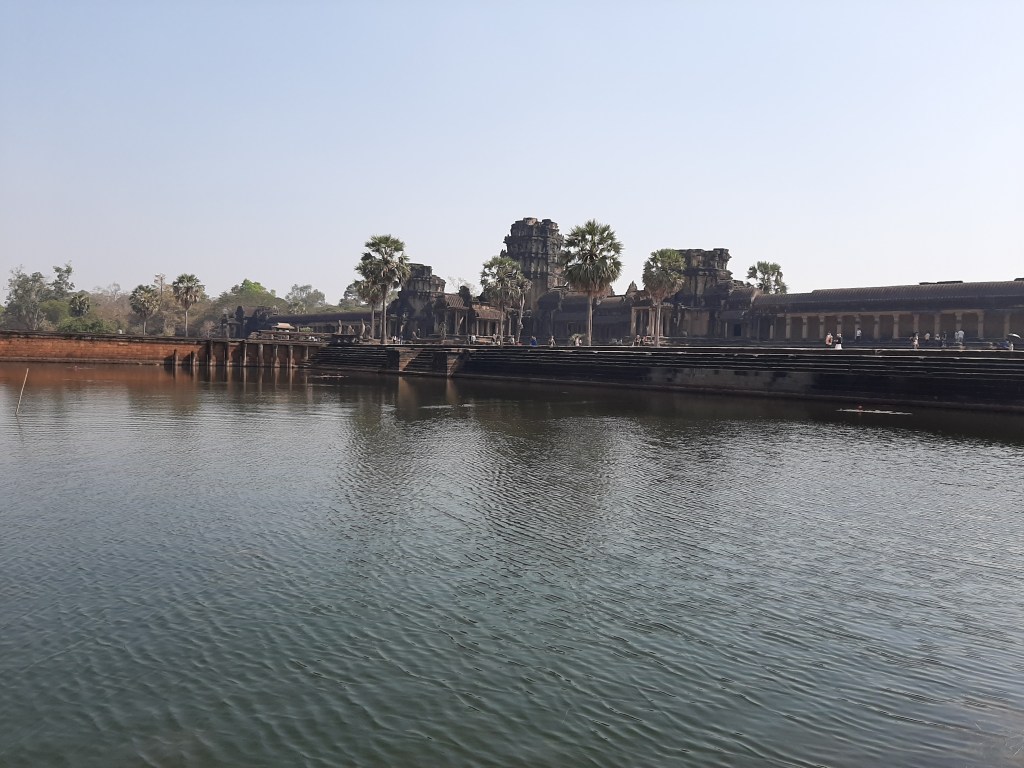
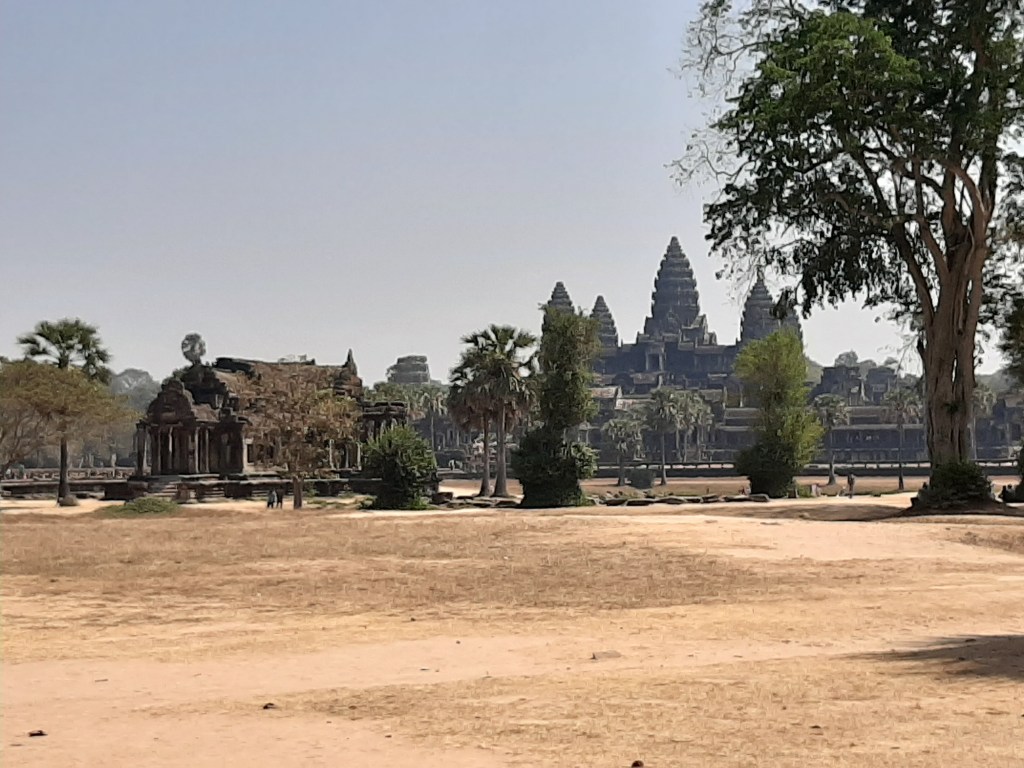
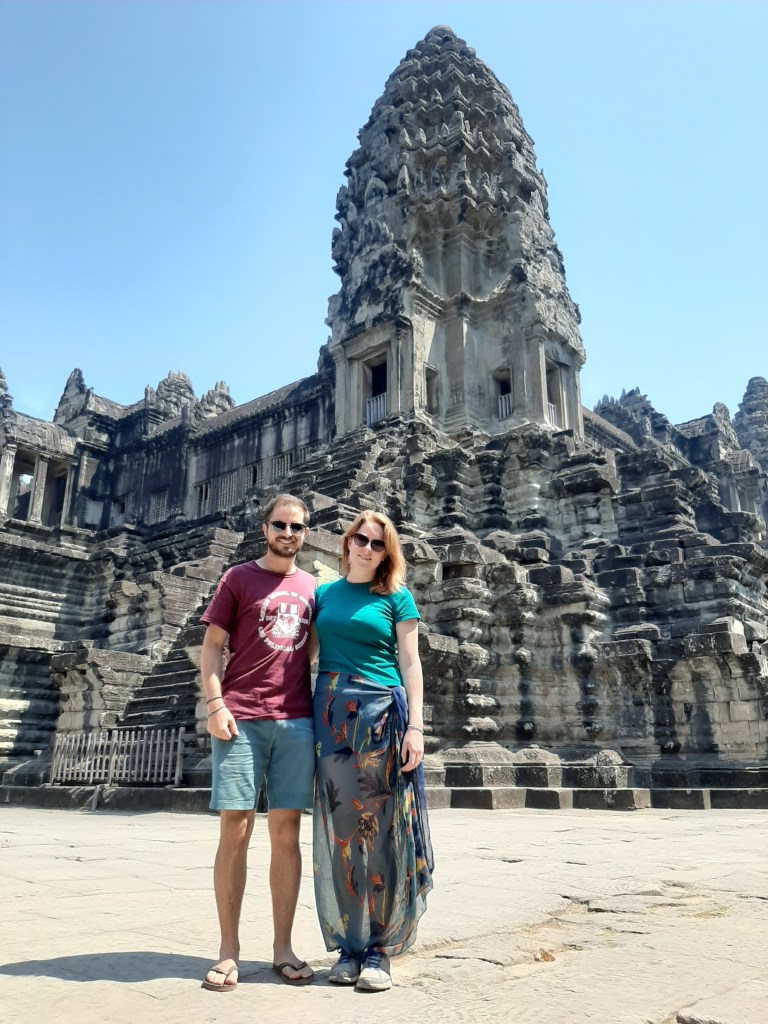
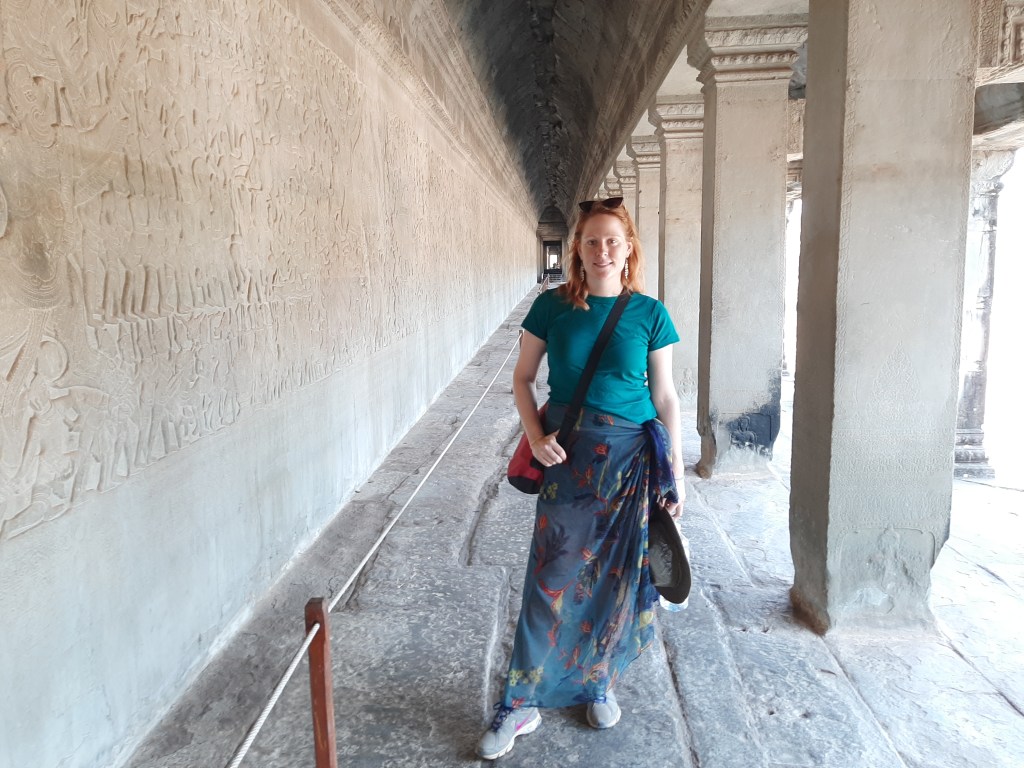
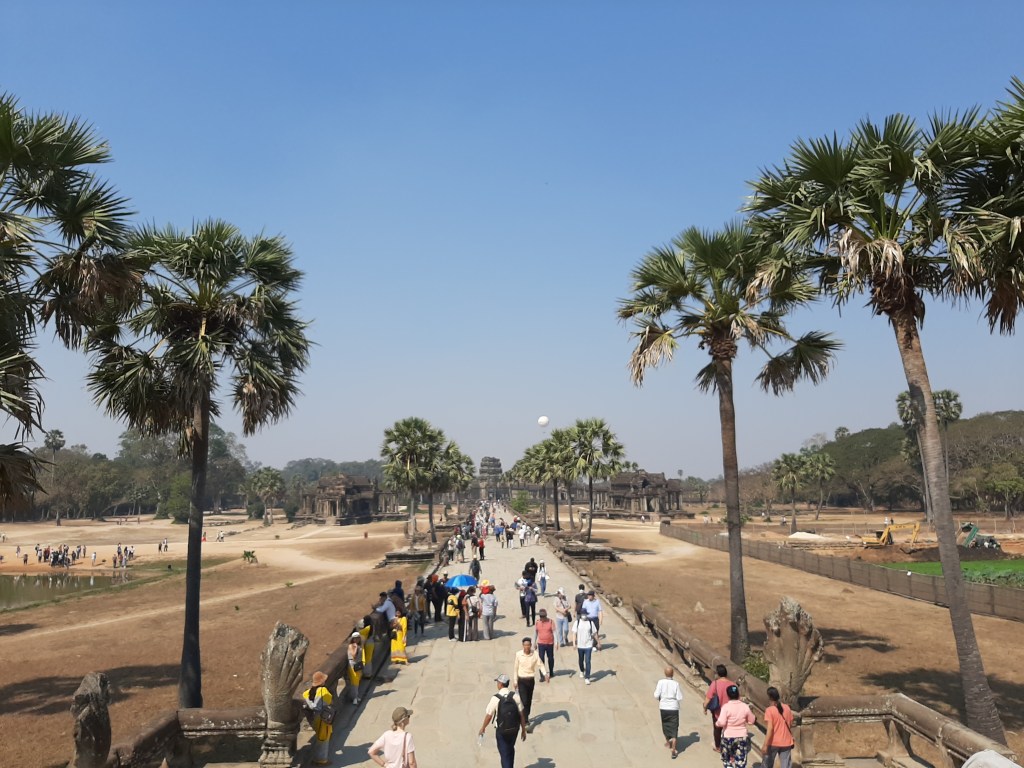
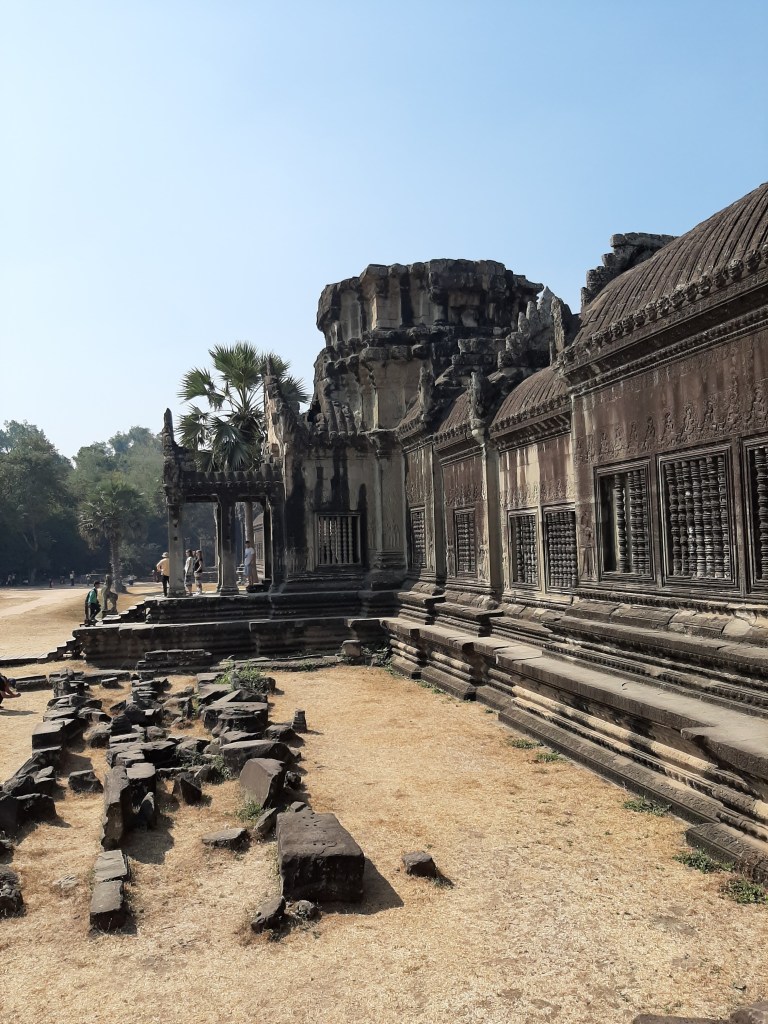
Day 2 in Siem Reap saw us resuming our touring with Rony to see the big hitters of the Khmer emspire: Angkor Wat, Banteay Kdei, Ta Promh, Bayon, Ba Phuom and Pnomh Bakeng. Rony parked and pointed us towards the entrance to Angkor Wat. Walking towards the great moat surrounding the temple, we reached the causeway and the temple suddenly came into view in the distance. It is one of the iconic and most memorable moments of anyone’s visit to Angkor Wat. The causeway was under repairs so visitors had to cross the moat on a temporary pontoon bridge. We reached the outer walls (impressive in and of themselves) and walked through to enter the temple complex. Only the Taj Mahal competes in terms of the spectacle of this incredible monument. Looking down the main path to Angkor Wat are gardens and 4 libraries – each an impressive structure in their own right. The stone road eventually leads up a staircase to a grand entrance. We spent a good 1.5 hours exploring the temple. We first did a circuit of the passageways inside the outer walls, taking in the intricate carvings on the walls with some help from the guide book to decipher the stories they depict. They all without fail depict some sort of bloody conflict with a host of gods and deities intervening, each an important Hindu story. In latter yeats, the temple was used as a Buddhist temple. We walked up to the inner part of the structure to find an array of stone Buddha statues. Reaching the 2nd floor within, we were faced with a reminder of the temple’s current use as a place of worship, as the inner most 3rd level was closed off for local pilgrims and worshipers – unlucky for us sadly as the views from the top are spectacular. At least we were able to enjoy Angkor Wat with uniquely small crowds given the usual hoards were driven away by the coronavirus.
We left the largest religious building in the world behind us and found Rony parked in a sea of tuk tuks. Our next stop was Banteay Kdei. The temple itself was not hugely memorable (certainly going after Angkor Wat would not have helped), but a platform with lion statues overlooking the Srah Srang reservoir provided a picturesque pit stop. We had a leisurely lunch at a nice restaurant called Khmer Cooking Empire on the north side of the same reservoir/ lake, including the iconic Cambodian dish, Lok Lak – peppery stir fried beef, fried egg and rice.
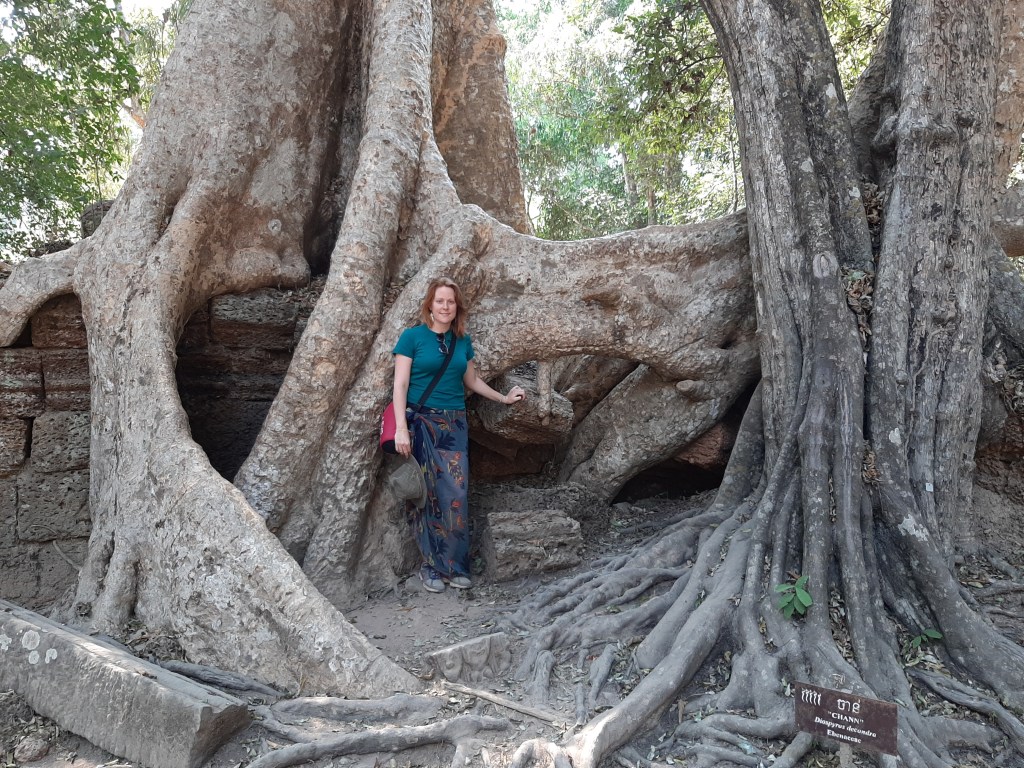
Feeling fed and energised, we drove to the nearby Ta Promh. Ta Promh is really where the imagination can begin to wild. Many of the temples of Angkor were in a desperate state of ruin, having been reclaimed by the jungle by the point of “rediscovery” by French explorers in the 19th century. With most having now been carefully restored and the jungle kept in check, Ta Promh provides the best view of this battle between nature and the man-made in Angkor, today. Huge tree roots can be found sprawling over, through and around every corner of the temple. Conjure an image of a “jungle temple” in your head, this is it – indeed, Ta Promh was famously used in the filming Tomb Raider with Angelina Jolie. Ta Promh is justifiably a popular temple. With the diminished crouds however, we were able get lost in the various passageways and really get a feel of this mystical place.
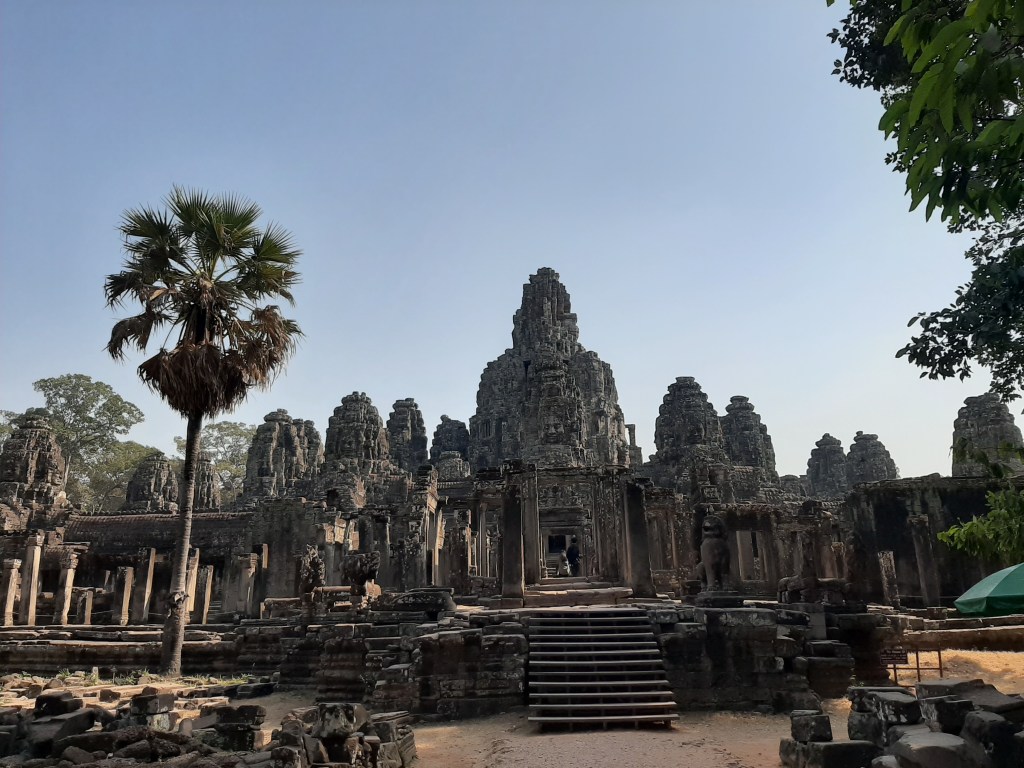
We next drove into the great walled city of Angkor Thom. Within the vast space inside this area where once 1 million people lived, is a collection of temples, a huge ceremonial parade ground, and swathes of dense jungle. Rony dropped us off at Bayon temple, another iconic temple with seemingly hundreds of human heads covered on towers facing in 4 direction. The faces mean that from a distance, the temple looks like a mound of rubble. We explored Bayon soaking up the slightly spooky feel with all these many faces looking down at you. Unfortunately, the top level was out of bounds for restoration work, so we had to satisfy ourselves with the stories of Khmer wars against the Chams (based in what is now Vietnam), in bloody depictions carved into the outer walls.
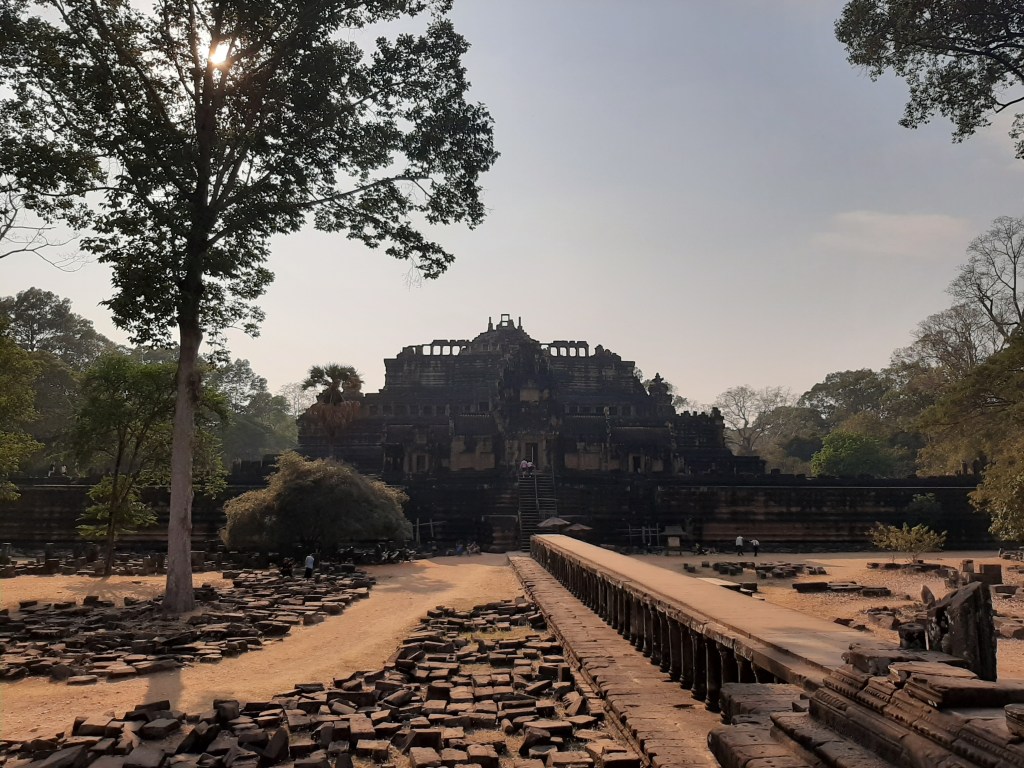
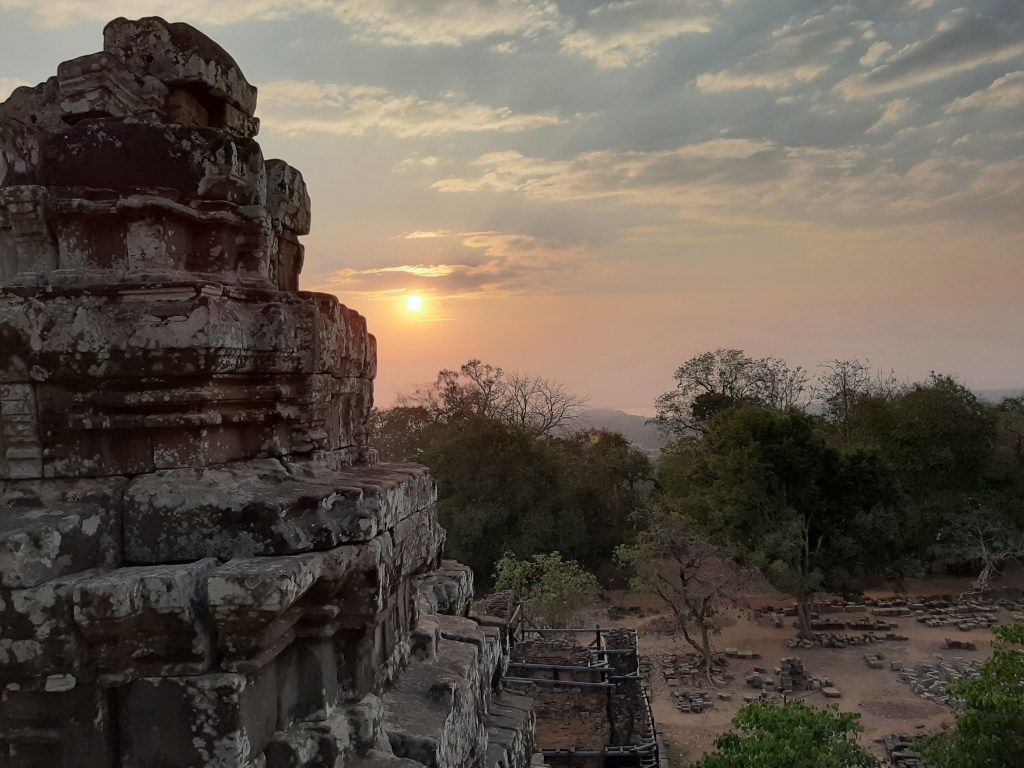
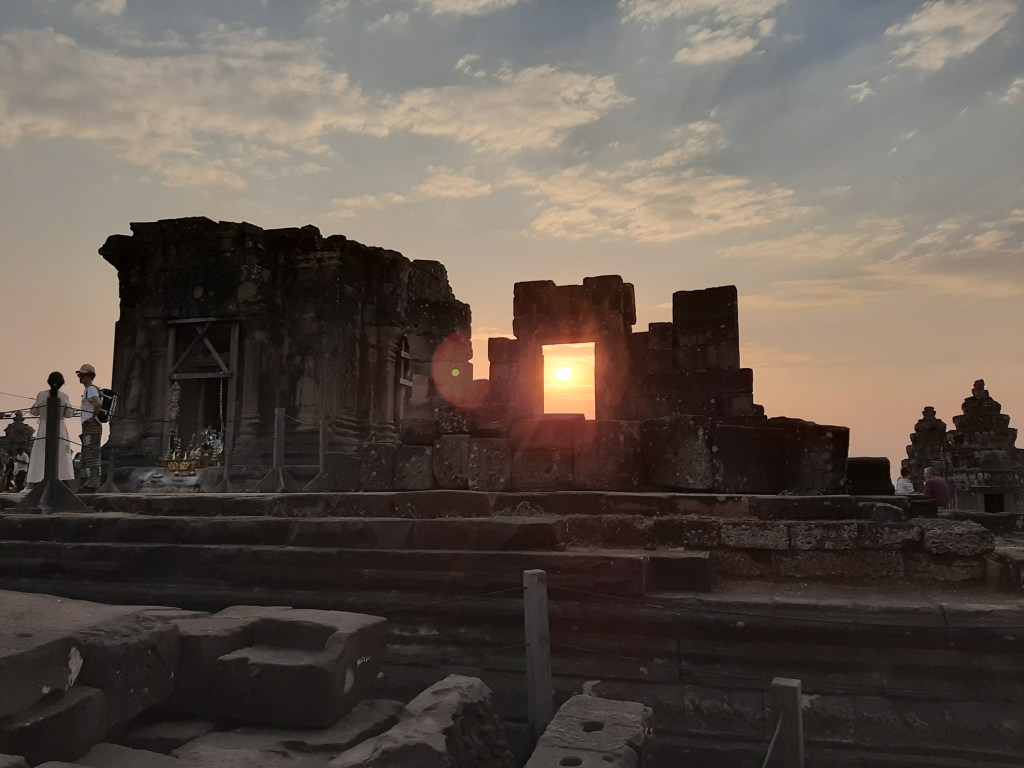
We walked along some 200 metres to our penultimate temple, Baphuom. This huge pyramid shaped structure had been painstakingly disassembled piece by piece by archeologists in the build up to the civil war. Their plans had been destroyed during the Khmer Rouge regime so putting it back together again has been like a monstrously complex jigsaw puzzle. They have done mostly a decent job, and we were able to make a steep climb to the 3rd level, providing views of a large clear area, accessed from Baphuom via a causeway on stone pillars, which used to be the spot where all the big royal ceremonies were held. We finished our temple touring with Pnomh Bakeng – a hill with a temple at its summit that makes a popular sunset spot with fantastic views of Angkor Wat, the jungle and reservoirs left behind by the Khmer empire. The spot has grown so popular that it is limited to 250 people and controlled with a visitors pass system. We sat on the top of the temple looking out over the setting sun with a the croud steadily growing. With a bus to catch, we headed back down before sunset but clouds on the horizon meant we didn’t miss anything anyway!
Rony had been a great driver and touring companion. We bid our fare wells, tipped him and offered to help him create a digital presence to boost his chances of getting custom. We were picked up for our sleeper bus which was relatively comfortable and unlike the Laos buses was both on time and didn’t break down! There was definitely more of a younger croud on this bus compared to the sleeper buses in Laos: we got chatting to a group of girls from the UK who were on their gap year before uni, and our bottle of Laotian whiskey was quite popular with an unfortunately tall (for the bus beds) German lad. The journey was much smoother than George remembered with clear improvements in the road network since he was last in the country in 2015. We left Siem Reap feeling delighted to have immersed ourselves in the incredible world of the Khmer Empire, but also feeling keen to move back to the less well trodden areas that the island of Koh Rong Sanloem promised. Thousands of Camborians, like Rony, have moved to Siem Reap in the hope of getting a piece of the mass tourism pie. Seeing the temples in quieter conditions was a treat for us but with the coronavirus pandemic now in full swing, we really feel for all those families that were already living in poverty and reliant on tourism, with no support available from their government in these unprecedented and difficult times…
 tranetrottingthemegamoon.travel.blog