After our incredible six days in Koh Rong Sanloem, our route took us through two major cities in back to back days: the Cambodian capital of Pnom Penh and the once capital of South Vietnam, Ho Chi Minh City (aka Saigon). With just over two weeks left for our time in Southeast Asia, we decided to go through these cities and just get a flavour with what time we had, before going on to explore Vietnam’s delights.
We set off from Wildflower guesthouse in M’Pai Bay around 8.30 in the morning on 28th Feb, but not before getting one more epic breakfast by local British owners Dom and Steph with Yorkshire tea (bliss). After the choppy crossing the week before, we were a little weary of what was to come. While the waves may not have been as big nor the wind so stormy, it proved to be without doubt the most gut-wrenching and terrifying ferry experiences of our lives. This was because the ferry was a high-powered speed boat that could sit around 50 people. Exiting the harbour, it got very rough, very quickly. The boat skimmed the top of the waves and with each wave you felt a huge thud before being propelled back into the air. We were sat at the back and even for us it felt like a rollercoaster ride. Some people toward the front were clinging on to what they could find, others were worse for wear and looking very sick. Some barely seemed to notice the waves at all! For Katharine who has a genuine fear of high seas and suffers from motion sickness at the best of times, this was beyond and unpleasant experience…
We somehow made it to Sihanoukville after what felt like hours but was probably about 40 minutes. About 5 minutes before arrival, the boat stopped and one of the staff rushed to the back to inspect the engines. Something was clearly not quite right. After a few minutes of playing around and looking, the engines were lowered back into the water and we sped off once more, albeit at a slower pace. Add this to the fact that the boat was overcrowded, with some poor people having to endure this madness while standing, it made you see how tragic news of sinking ferries in this part of the world come about! We finally disembarked at Sihanoukville feeling thoroughly shaken. We stopped at the pier for a few minutes to catch our breath but had to keep going to catch our bus to Pnom Penh. We walked up hill through the grime that is this city and found the ferry company office, from where we were picked up by truck and taken to our “deluxe minibus” for the capital. Surprisingly, this one did turn out to be quite posh with relatively spacious leather seats and good air con! The drive to Pnom Penh took about 6 hours during which we spent most of the time doing terrifying overtakes on the narrow road filled with trucks – this is the main commercial route between the country’s capital and its main port.
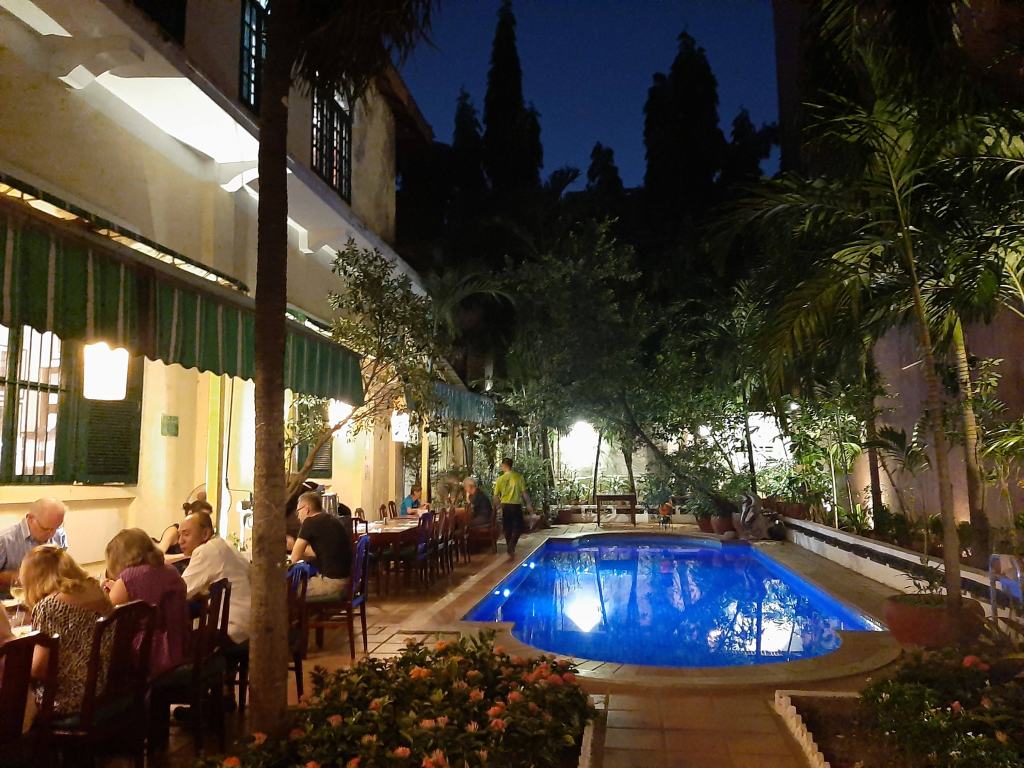
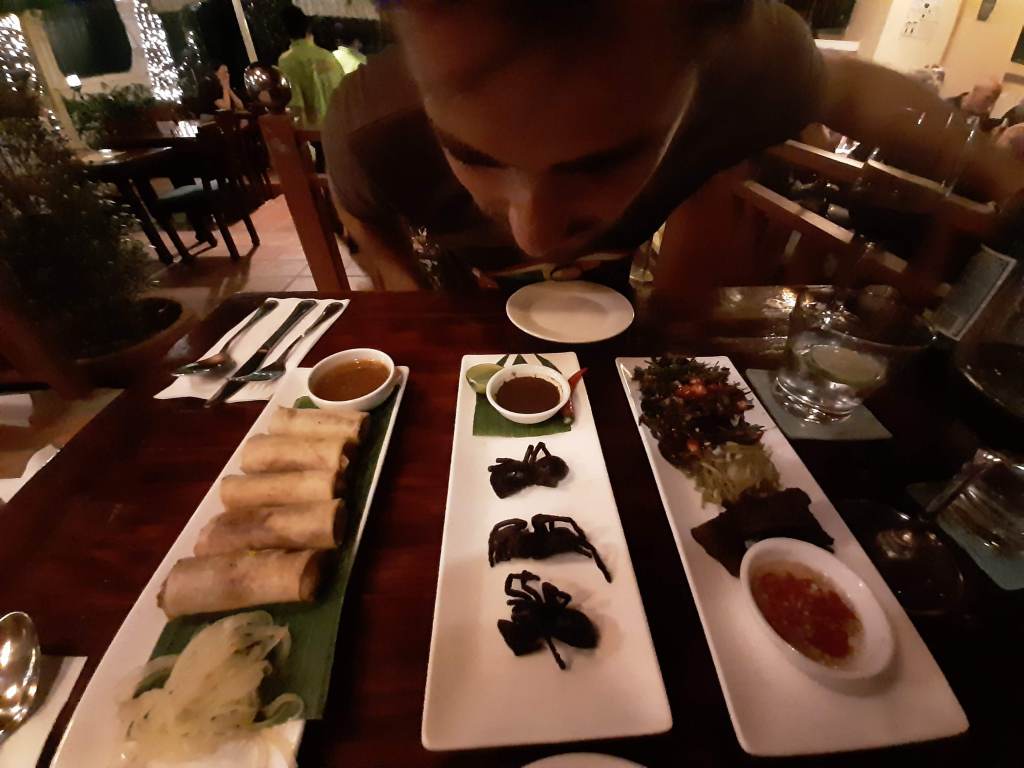
We stayed our one night in Pnom Penh in the centre of town, near the Mekong river. “Monsoon Boutique Hotel and Spa” proved to be affordable and nice enough. Extensive guidance on the policy towards “guests” in rooms gave it a slight brothel feel but was, really, just an indication of seedy sex tourism reality that is very much a part of Cambodia. That evening, we finally succeeded in collecting the US Dollars from Western Union, that Katharine had been owed for months as work expenses – a major win and would certainly help pay for things in Vietnam! We had a drink in a pleasant riverside bar and sorted ourselves a bus to Saigon for the next day. We grabbed ourselves a tuk tuk and headed for some dinner at Romdeng restaurant. This is one of a number of social enterprise restaurants in Pnom Penh, with a focus on training and employing former street kids as front of house and kitchen staff. It proved to be a great way to get a flavour of some gourmet insects, including tarantulas, frogs and crickets as appetisers, and red ant and beef stew as a main, served with nice red wine, in the grounds of a beautiful old French villa.
29th Feb was a long day. We were booked onto a bus leaving at 15.30 but had decided we wanted to go to the Killing Fields of Choeung Ek in the morning. This is one of the hundreds of sites where the Khmer Rouge regime led by Pol Pot carried out their massacres of ordinary Cambodians during three years of madness between 1975 and 1978. We grabbed some not so good breakfast at a café across the road and hired a motorbike to make our trip down to the southern end of Pnom Penh. The journey to the Killing Fields showed George just how much had changed in Pnom Penh in the five years since visiting previously. While last time the road had been pretty well empty, and in places, non-existent; the number of car and motorbike owners has clearly exploded, the road has been finished, making the whole thing one long and horrible traffic jam. With some expert navigation skills by Katharine, we managed to turn off the main road and make most of the way via small side streets. While slow going, at least we could breathe and we got a feel for more of the city.
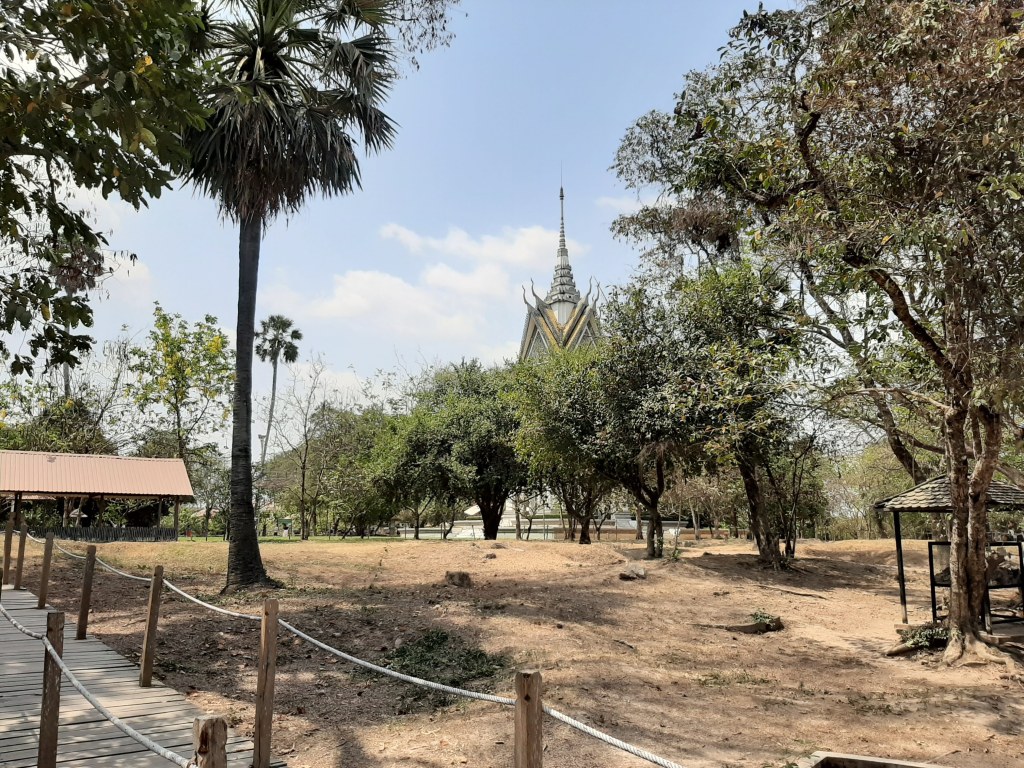
The site of Choeung Ek is today serenely peaceful and feels like a pleasant green garden. The immersive audio-guide, however, transforms you into this world of horror and insanity that ingulfed Cambodia for three terrible years. In Pol Pot’s new world, everyone was either a peasant / farmer, a soldier or a worker. Anyone suspected of being educated (wearing glasses, being well-dressed, speaking French) was an enemy of the state. We took in this peaceful place listening to the horror stories of survivors and of the mass graves that were found here in the immediate aftermath. Bits of bone and clothes are regularly washed up with the changing of the seasons and rain, providing a gruesome reminder of what went on here 40 odd years ago. At the centre of the site, presides a pagoda where hundreds of skulls and other bones have been housed, each labelled with the respective weapon used to kill the victim (hammer, stones, clubs, even sharp palm leaves… bullets were too precious to be used). It was a sobering but important visit, and we agreed it felt more powerful than the genocide memorial in Rwanda (not to compare suffering levels…).
We returned to downtown Pnom Penh via the new highway which we were given directions towards by helpful staff at the Killing Fields. We got back in less than half the time and avoided the horrible fumes of the traffic jams. We were now in full rush mode to get to our bus, and managed to return the bike, grab falafel wraps for lunch and water and snacks for the bus before heading to the travel shop on the river front for our pick up. We had been used to such pick ups being in trucks or tuk tuks – inexplicably, this time we were taken to the bus station in a Mercedes limousine with leather seats and air con. The bus itself also turned out to be a delight with massive leather reclining seats, air con and even some wifi! This was the poshest bus we had been on during our travels.
We sped on east towards Vietnam, crossing the massive Mekong one final time in the process. It was incredible to think that we had been with this river for a whole month, right from the northern end of Laos. We arrived at the border, armed with passports and our e-visas on our phones. We had experienced plenty of oddities at land borders (being asked to bribe the border officer and having people pretend to be police to steal our bags in East Africa, being made to pay an exit fee to leave Laos), but our final land border proved to be the most stressful. Things first got weird when the steward from our bus started asking for us to pay the Vietnamese border officer $5. We already had paid for visas and were not in the business of pandering to petty corruption or in a rush to speed things up, so we outright refused. Everyone went through, even another western traveller who seemed to have some difficulties. We presented our passports and phones to the border officer, who preceded to hand us his phone which he had used to google translate “you must have a printed e-visa to enter Vietnam”. With an expression of total disdain, he pointed back the way we had come and said “go back to Cambodia”. He then left his hut and for a moment, we were left totally alone in the room, with everyone from our bus having gone and a number of our things still on the bus that was now through and into Vietnam. It was late and we had already exited Cambodia – these guys know exactly what they were doing. Trying our best to remain calm, we tried to speak to another lady who just pointed us to where we had come from. Eventually the young steward from our bus came back. Having no real choice now, we handed him $5 which he placed in our passports and handed to the border officer who had now returned. This was not enough apparently but $10 did the trick. It was absolute nonsense but we were relieved to be through! The e-visa process is quite new in Vietnam and there are still, clearly, plenty of oddities that can be exploited by corrupt border officials. Handing e-visas on our phones was the norm even in Rwanda and Kenya…
We finally arrived in Ho Chi Minh City (Saigon) at around 10pm and got ourselves a taxi to our hostel. We had no Vietnamese Dong at this point, but our taxi driver seemed delighted with the $1 bill we gave him – worth slightly more than the fare in Dong. We headed out and easily found a superb Pho soup restaurant. We then grabbed a quick beer at a very strange, enormous semi-open-air bar. The ease at which we had found food this late, the groups of men smoking and drinking on tiny chairs on the street, the groups of women dressed in immaculate dresses, the bright lights, all gave us a proper feel of Saigon’s party vibes. Unlike Laos and Cambodia, however, it is the locals here who are as thirsty as the tourists and it felt fun to be in a country with a proper local drinking culture.
1st of March saw us properly start our Vietnamese explorations. We had almost a full day in Saigon, before our evening flight to Da Nang, from where we had arranged to be picked up by our homestay in Hoi An. We had initially planned to fly from Hanoi, the capital in the far north of the country, to Bali and, on to Brisbane in Australia on the 12th March. We decided to buy us some more time in Vietnam, however, to make sure we didn’t rush this incredible country, and moved our flight to Australia back to the 16th. This would give us two full weeks in Vietnam, 3 weeks in Australia and 4 weeks in New Zealand (well, at least that was the plan pre-Covid-19!).
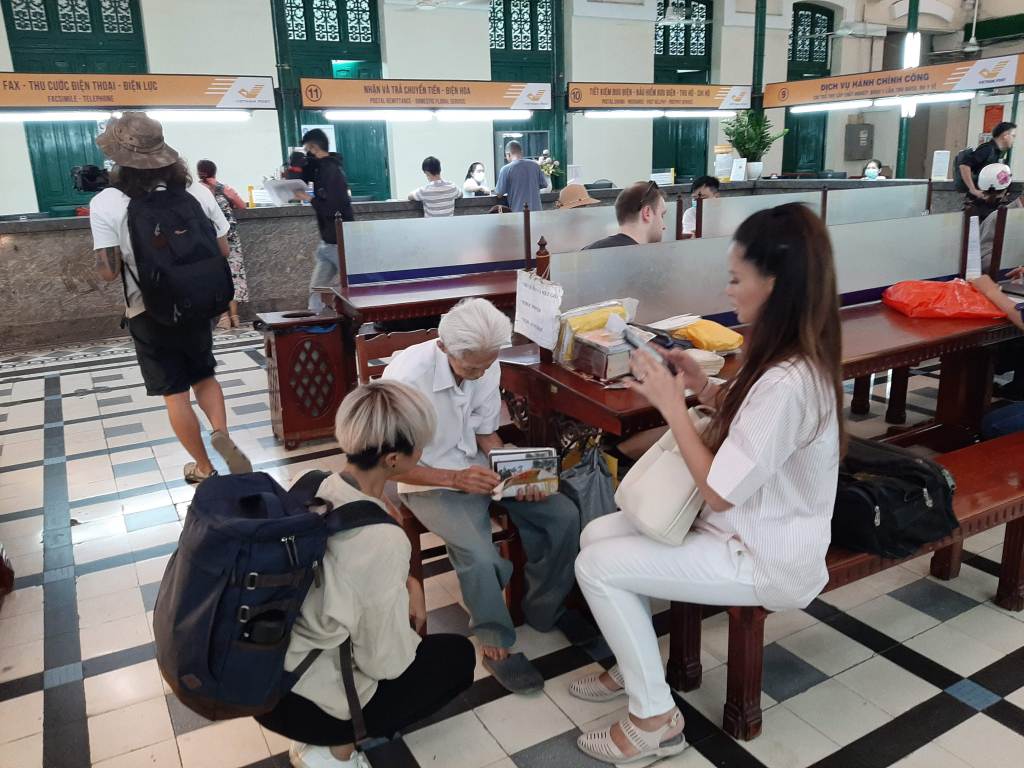
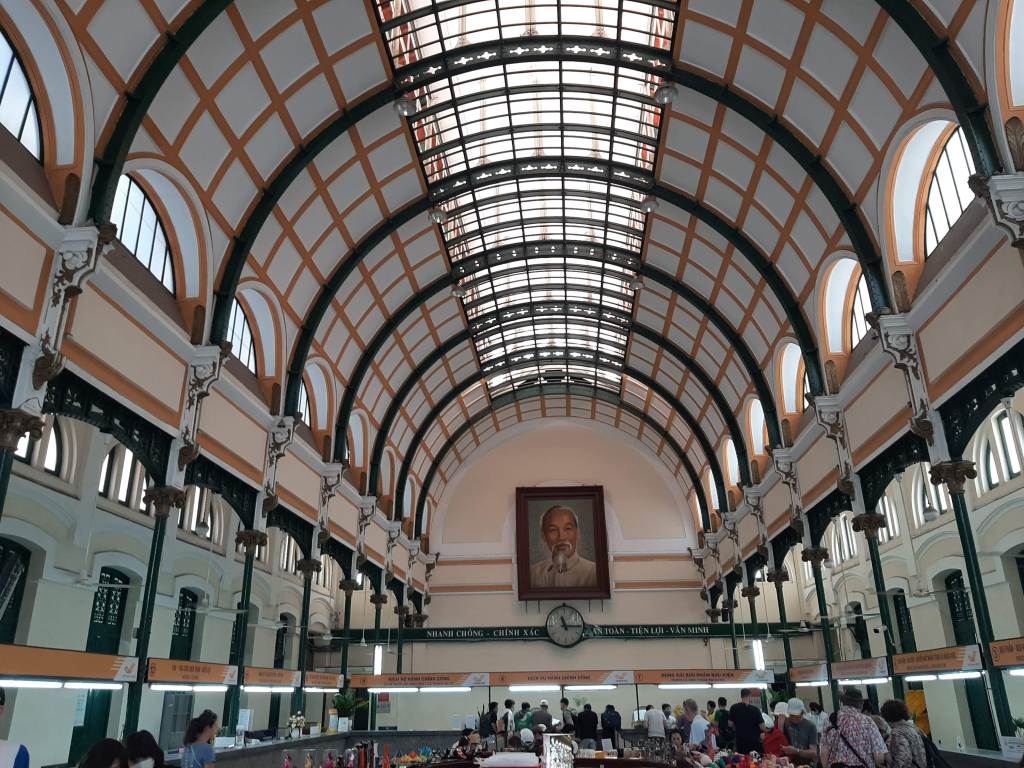
We got a Grab taxi (southeast Asia’s answer to Uber), to Saigon central post office. This might seem a strange start to sightseeing, but it is actually one of the most impressive buildings in the city! It is a beautifully ornate old French colonial building with stunning ceilings and walls on the interior. Some level of redecorating has, of course, taken place, with a painting of Ho Chi Minh (aka Uncle Ho) himself dominating the far end of the wall. This incredible building is also very much a working post office, and we took the opportunity to send home a box of stuff (mainly clothes we didn’t need). The operation of packaging and posting our things was incredibly swift and efficient – certainly a different side to the Vietnamese state than the corrupt border guard! We also came across the cutest old lady here who offers translation and letter writing services. She seems to have been doing this for longer than anyone could remember and is clearly proud of it!
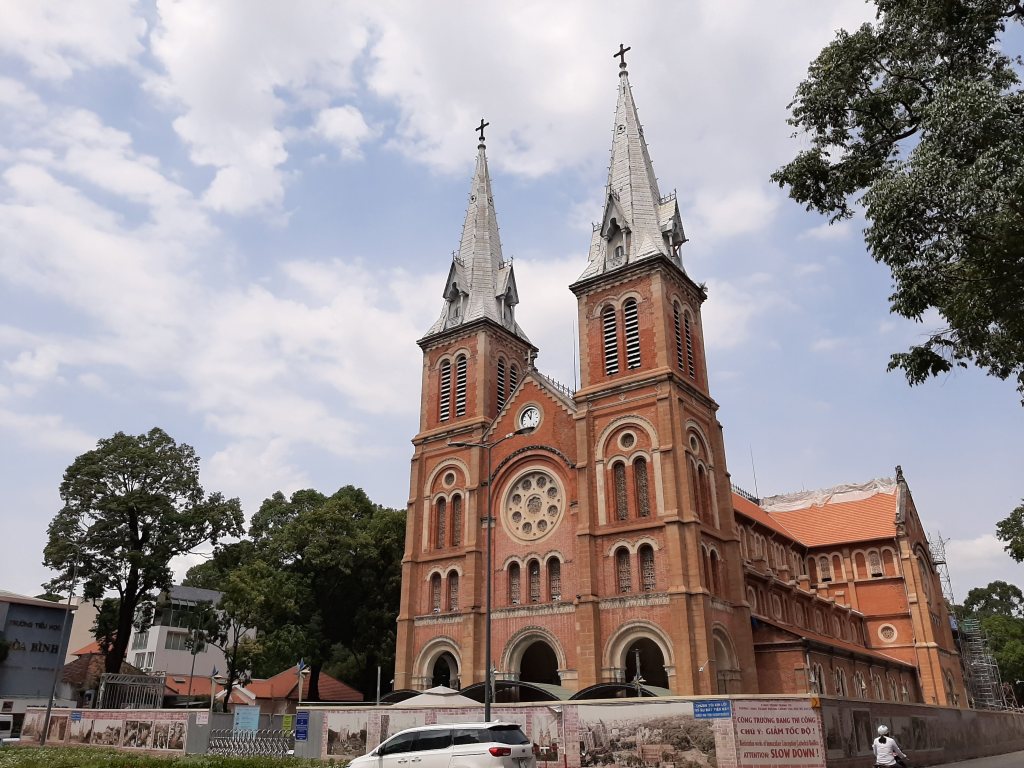
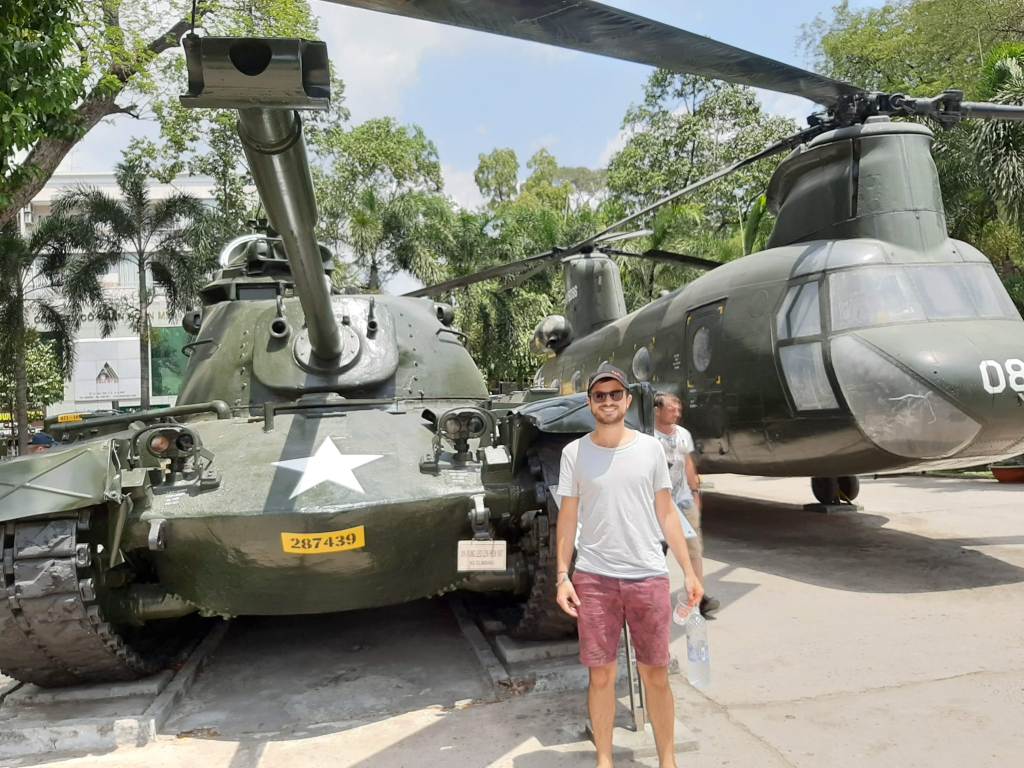
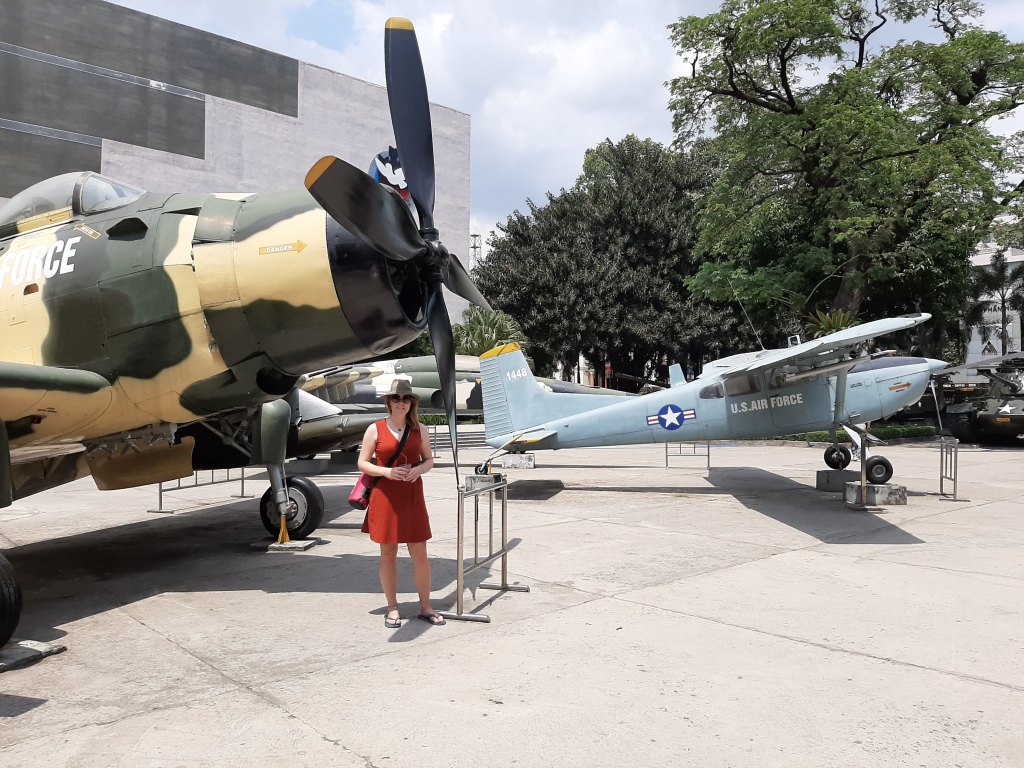
After our trip to the post office, we walked past the massive French cathedral, the 1950s Presidential Palace and up to the “War Remnants Museum”, that was until not so long ago called the American War Crimes museum… Aside from the collection of American war toys and tanks outside, the museum provides an incredibly powerful, in depth and personal account of the history and horrors of the Vietnam War. Collections of war photographers, many of whom also died in the conflict, brought the atrocities to life, while the Agent Orange section (chemical weapon used to destroy the jungle) and the longer-term human effects, was particularly harrowing. The section towards the end of the exhibition focusing on the peace movements during and after the war as well as the efforts of war veterans, Senators John McCain and John Kerry to promote reconciliation of relations between the USA and Vietnam, was a good uplifting way to end.
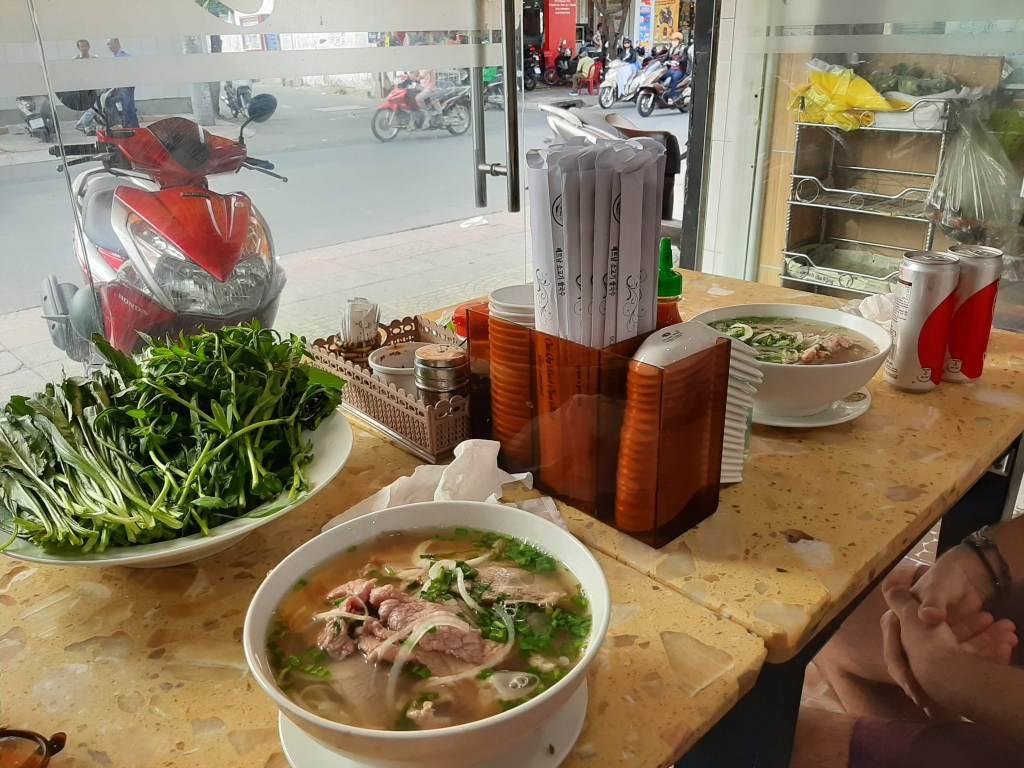
With our mini-tour of central Saigon complete, we grabbed a Grab taxi back to our hostel and found some lunch (another excellent local Pho beef and noodle soup). We went for a hunt in the local area and found a spa where Katharine got herself a particularly good massage, and then we made our way towards the airport for the next leg of our trip: the historic town of Hoi An, right in the middle of Vietnam. We left Saigon feeling like we had just managed a flavour of this incredibly vibrant city, and agreed that we would have ideally liked more time to get properly stuck into the place. The historic delights of central Vietnam and the natural beauty around Hanoi and North Vietnam were calling too strongly for us to stay any longer unfortunately!
 tranetrottingthemegamoon.travel.blog