Northern Vietnam: Hanoi, Ha Long Bay and the Ha Giang Loop


Hanoi is Vietnam’s capital and a fantastic base of operations for exploring Northern Vietnam. Bustling narrow streets filled with street vendors and motorbikes, a serious local coffee culture and beer scene and an outstanding selection of food options make this place an intoxicating experience. Hanoi has a reputation for being slightly insanely hectic and can be something of a culture shock for visitors, compounded by how easy it is to get lost in the narrow streets of the old town. While certainly busy in general terms, we really enjoyed our time here and managed to balance down time with exploring the city’s chaotic streets. Things were definitely quieter than George remembered from five years earlier, another clear sign of the impact of Covid-19 which was, at this point, on the verge of going global.

Northern Vietnam in general has just so much to offer in terms of history, outstanding natural beauty and off the beaten track adventures. With just over one week to go before our flight to Bali on 15th March, we were determined to see Ha Long Bay + make one additional trip. We had heard numerous travellers rave about Ha Giang province –  this is where we ended up heading. 

Hanoi 

We arrived in Hanoi in the afternoon of 7th March after our overnight train from Da Nang. We ended up agreeing to pay a little bit more for an upgrade to a private, 2-bed room which proved an excellent investment, and even included a beer each. We made the most of our long journey relaxing, reading and watching Netflix’ “Love is Blind” which we were pretty hooked on by this point. We managed to sleep well enough, although the instant noodles for breakfast from our exploration to the restaurant car were not great.

We had booked ourselves into “Ancient Lane Hotel” for one night just to the west of the lake and Hoan Kiem, the old town of Hanoi. Like with most buildings in Hanoi, the building is exceptionally narrow – an outcome of tax laws applying based on the length of road your property covers – which meant our room was pretty cosy. As its name suggests, however, Ancient Lane is situated on a lovely small lane with a rustic feel to it (an old temple just down the road and sleepy street market a little further on), and proved to be a lovely quiet base for the next two nights. Hanoi was seemingly already on full Covid alert by this point and received funny looks from hotel staff when we arrived without wearing masks. We bought some shortly afterwards to avoid scaring locals rather than out of genuine fear of getting ill…

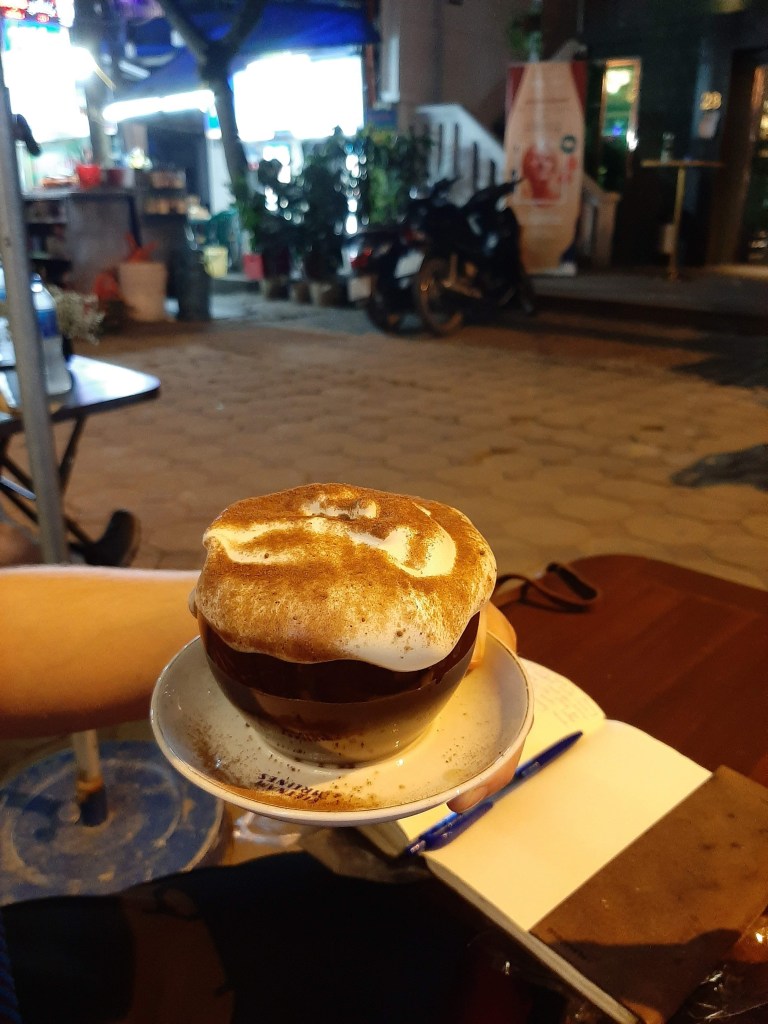
We were keen for a relatively relaxed first day in Hanoi so did not plan any real sightseeing and just decided to get out and sample Hanoi life and focus on planning the week ahead, before our flight to Bali on 15th March. We set off in search of the famous “train street”: a narrow stretch of railway track where local residents have opened bars and cafes out onto the street and tracks themselves. Incoming trains, of course, spark a flurry of activity with people keeping in. We somehow confused directions with the taxi driver and ended up in the wrong patch of railway! Fortunately, we quickly discovered we had stumbled into one of the key street food / bars areas of town so we were not too upset. We found ourselves a tiny, Hanoi hipster café and sat outside (on classic tiny Vietnamese chairs of course) taking in the scene with excellent Vietnamese coffee and, then, Bia (beer) Hanoi. Katharine also sampled an egg coffee here which was simply delicious – effectively strong, good coffee with a frothy custard! As the evening drew in, we moved on to one of the food stalls and enjoyed a superb seafood noodle dish and an interesting if slightly odd-tasting clam soup.

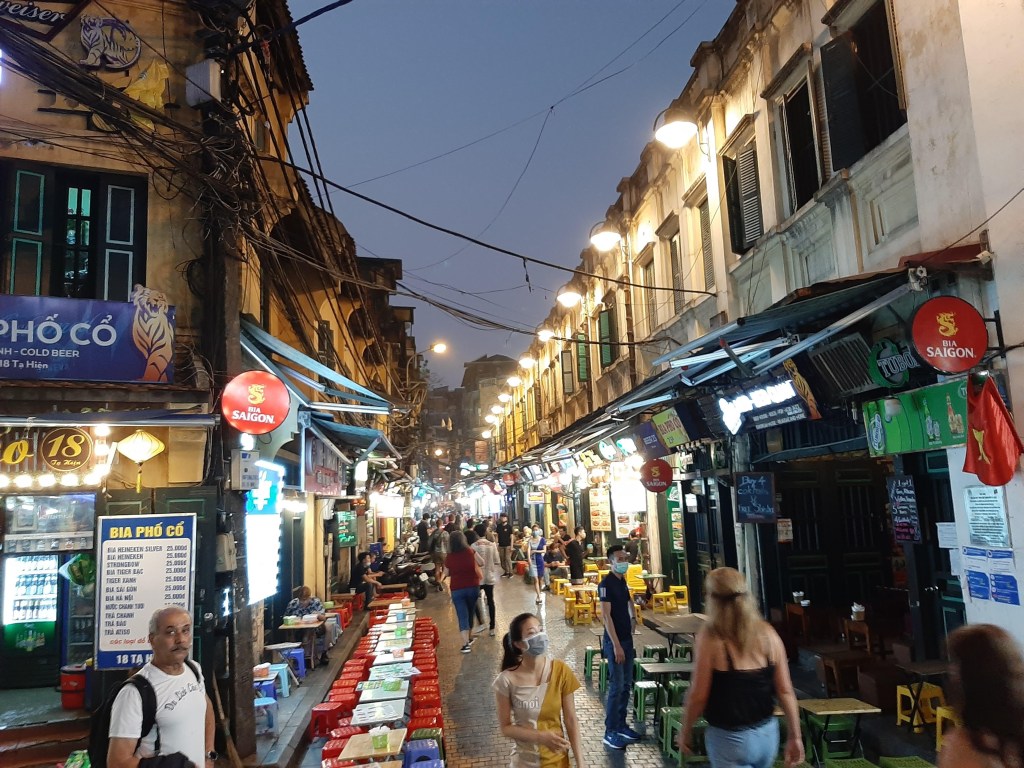
Having had our first promising taste of the culinary delights of Hanoi, we made our way towards the centre Hoan Kiem for a wonder around the old town. We managed to find the main “beer street” and grabbed ourselves a couple of Bia Hoi beers at one of the street bars for a mere 5,000 Dong (around 15p). Bia hoi is rustic, homemade draft beer and is phenomenally cheap. It tasted better than George remembered which was a good sign – perhaps the homebrewers have upped their game! Having finished our beers, we stumbled upon “Frontier Travel” – where some beautiful patterns and colourful woven items caught Katharine’s attention. We got chatting to the chap who ran the Business – a really nice guy called Thang. He specialises in “off the beaten track trip” travel, as well as trips to the Ha Giang province in the far north of the country. The various beautiful woven products (bags, purses, books, scarves etc.) were all made by various ethnic minority groups around northern Vietnam. It was our chance meeting with Thang that finally convinced us on what to do with our week in north Vietnam. We decided we would go on a one night cruise to Halong bay, and agreed to go on his 3 day, 2 night trip on the Ha Giang motorbike loop. We had been torn between the Ha Giang loop and going to the mountains around Sapa, famous for incredible views and rice terraces. In the end, the prospect of riding on the back of locals around the mountain roads of Ha Giang was too good to turn down. We had absolutely loved biking around the Thakhek Loop in Laos and had heard excellent things about Ha Giang.

With our week broadly planned, we now just needed to find ourselves a cruise. We spent much of the next day exchanging messages with various travel companies. The government were investigating a coronavirus cluster sparked by a Vietnamese woman returning from her tour of Europe (including Italy and the UK), and their investigations had led to an ongoing purge of Halong bay cruises… Cruise itineraries had already been limited to the centre of the bay in order to prevent contact with locals living in the bay (particularly Cat Ba island), so we were already resigned to having to go on a 1 night trip rather than our initially intended 2 nights. Operators were not even sure which, if any boats would be going! This was the first time we had genuinely felt the impact of coronavirus on our travels (boy were we, and the rest of the world obviously, in for a ride in the coming weeks). We eventually got confirmation that the trip was on! With the plummeted demand from tourists driving low prices, we decided to treat ourselves by going for a 5* luxury cruise… certainly not our usual style but we were stoked! 

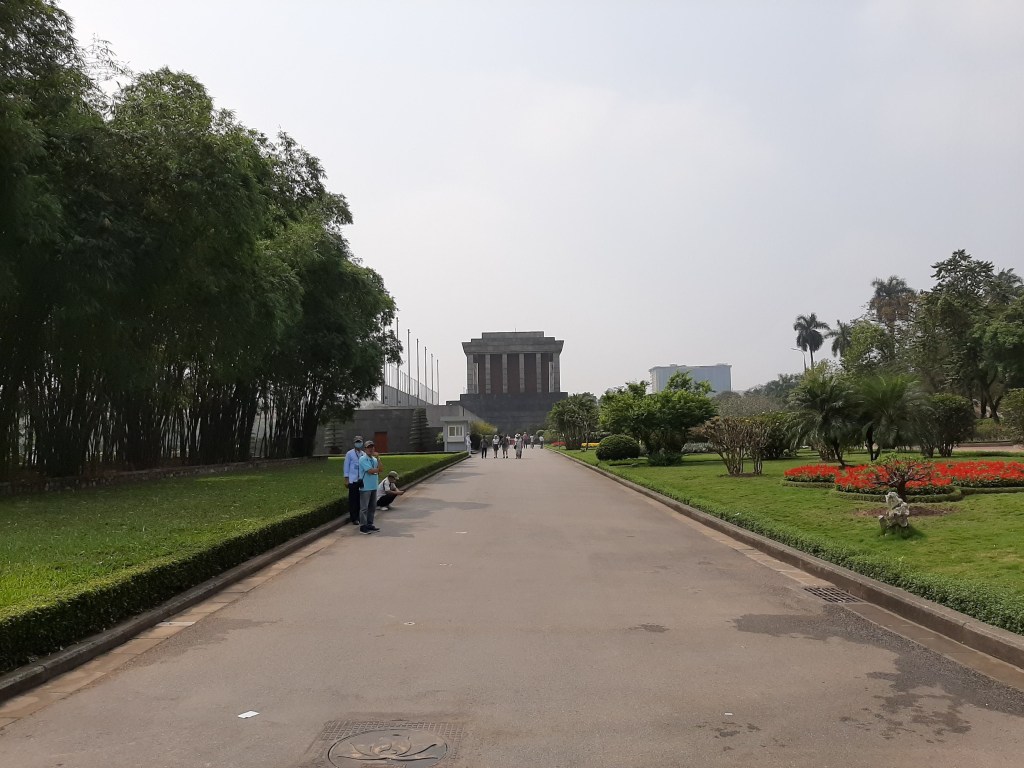
With our plans for the coming days now sorted, we set off for some exploring around Hanoi. We started our sightseeing with a trip to Ho Chi Minh’s mausoleum. Ho Chi Minh is more than just a national hero and founder of the modern state of Vietnam having led his country in wars against the French and Americans for over twenty years. He is everyone’s “Uncle Ho”. By all accounts, Ho Chi Minh was not the megalomaniac that a few of his contemporary communist leaders were – he lived humbly and had certainly not made any plans or requests for grand Lenin-scale mausoleum arrangements. Yet this is exactly what Vietnam has done. Around the government ministries district, a huge space makes up a strange Ho Chi Minh theme park. You can visit the Presidential palace, the Ho Chi Minh museum and even his humble straw hut that has been moved here. The mausoleum forms the clear centrepiece: a huge, solemn stone building, with stoic-looking pillars and “Ho Chi Minh”, written all along the top. We entered the complex, following direction and instruction from a string of military ceremonial guards, immaculately dressed in white uniforms rather than the usual Vietnamese khaki. The complex is designed to manage huge crowds but today it felt like it was just us and the guards. We finally reached the entrance to the mausoleum, and entered this super-chilled with air-conditioning, stone pyramid. The dark marble corridors within lined with guards gave us the chills. And then we saw him. Lying, suited, in his glass box with his iconic scraggly beard, he looks like he barely died 2 days ago let alone the 45+ actual years it has actually been. We walked along slowly through as you are supposed to, without stopping, even though there was nobody behind us and a just a handful of American tourists in front of us, and just as quickly as we had seen him, we had to say goodbye. Uncle Ho makes an annual trip to Russia for “maintenance”, where they have clearly perfected the technique with Lenin. We left the mausoleum complex, feeling a bit strange and definitely feeling like we had had the full communism experience.  

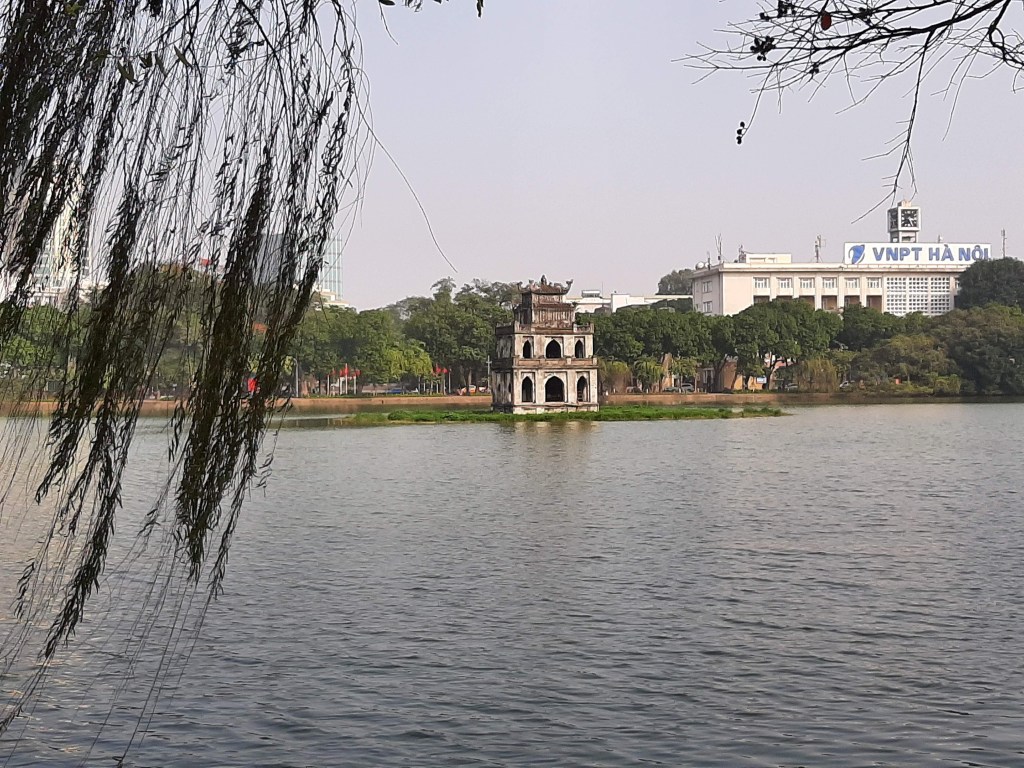
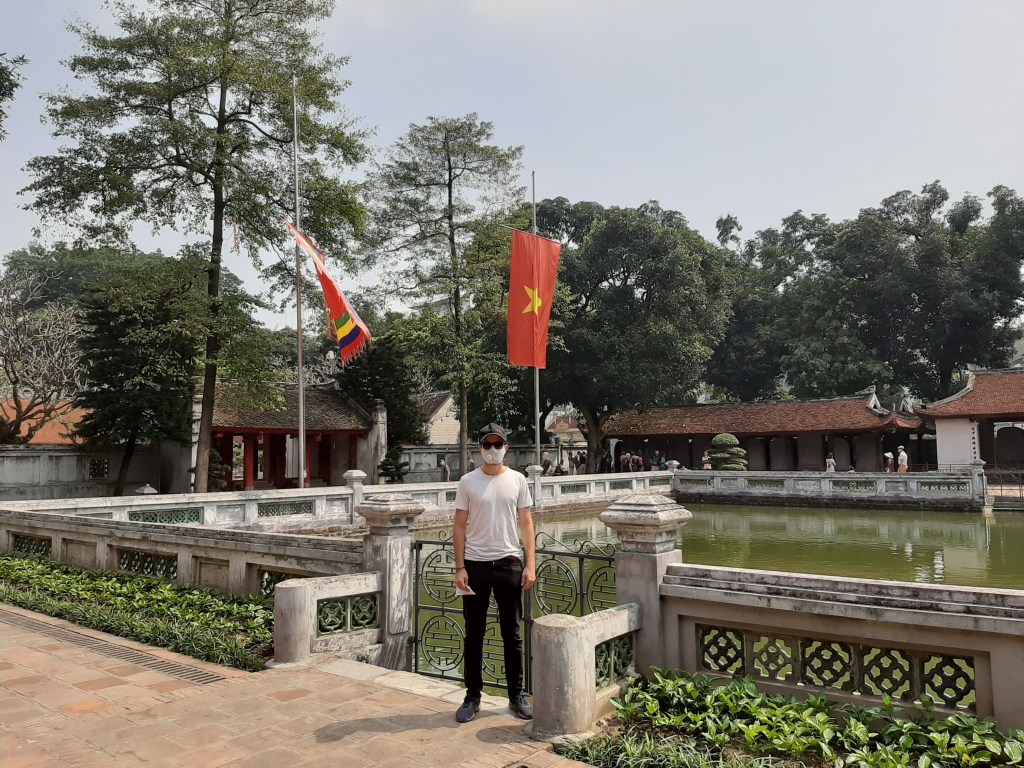
Our next stop was the nearby Temple of Literature. This beautifully peaceful set of 3 courtyards and temple buildings was an important historical centre of learning in Vietnam for centuries, for students and scholars of Confucianism. Even today, students pay visits to the temple in the search for good fortune with their own upcoming exams. We enjoyed exploring the grounds in what is very much a haven in the middle of the bustle of Hanoi. We spent the afternoon around Hoan Kiem lake, first stopping for a coffee and a chat with our mate Charlotte to begin some concrete planning of our trip to New Zealand in April (blissful ignorance still before the wave of covid-madness hit). After grabbing some street Pho, we went on to the Vietnamese Women’s museum, just south of the lake. The museum was an interesting insight into both traditional and modern Vietnamese women’s lives, with interesting exhibitions focusing on women fighters in the wars of independence, modern day working women and even the respected role of “living goddesses” that some women play among certain communities. Ultimately, we felt the museum falls short of a real feminist or emancipatory lens which was disappointing but not surprising given Vietnam is still in large a pretty traditional society. We finished our day of sightseeing with a visit to the temple perched on a small island Hoan Kiem lake. We arrived just in time to see the sun setting over the city and the far shore of the lake. The temple pays homage to the foundation story of Hanoi, according to which a giant tortoise rose from the lake to reclaim a magic sword which the Vietnamese had used to crush the Chinese with in battle. The name of the lake itself, “Hoan Kiem” means the “lake of the reclaimed sword”. 
Halong Bay

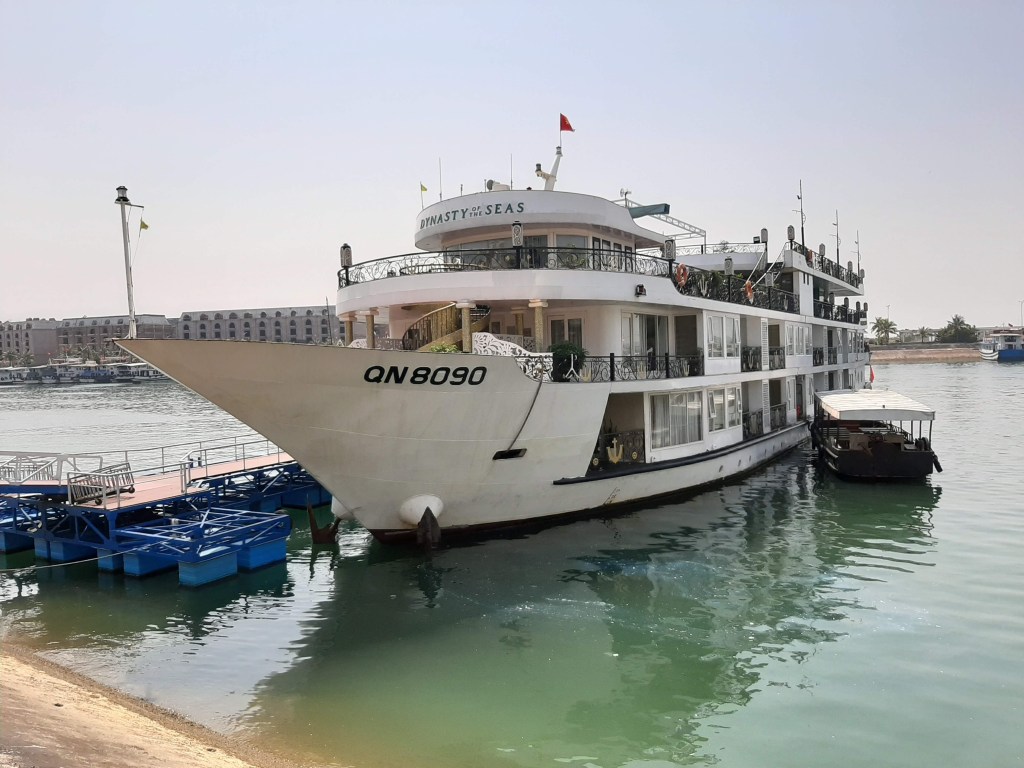
The next day, March 9th, we were picked up early from our hotel for our transfer to Halong bay. We stopped at a very strange pearl shop where they did live demonstrations of the end to end process for cultivating and farming pearls from oysters. It was all a bit gruesome and felt like a tourist trap. There were dozens of minibuses stopped here with people making their way to Halong Bay, even in these relatively quiet Covid times. We reached the port and began the longer than normal check-in process for the boat, which entailed passport checks for which countries we had recently visited (they were, thankfully, not fussed about Cambodia), as well as a temperature check. We finally boarded and made our way to our cabin. 

The boat was so over the top and different to our normal style but we just decided to embrace it. there was a general feeling throughout of slightly tacky-luxury, with seemingly classical golden banisters and wall features that were actually plastic. We didn’t care. Our room was huge with a massive double bed, private balcony and massive bathroom complete with jacuzzi! We started with a large and tasty lunch buffet and some announcements by the attentive staff. While food and water was all-included, we quickly sussed out the drinks tab system which we decided to approach with caution given the vastly inflated prices compared to the mainland. Still, it was not every day we went on a luxury cruise so we were certainly not planning on going dry for the trip! 

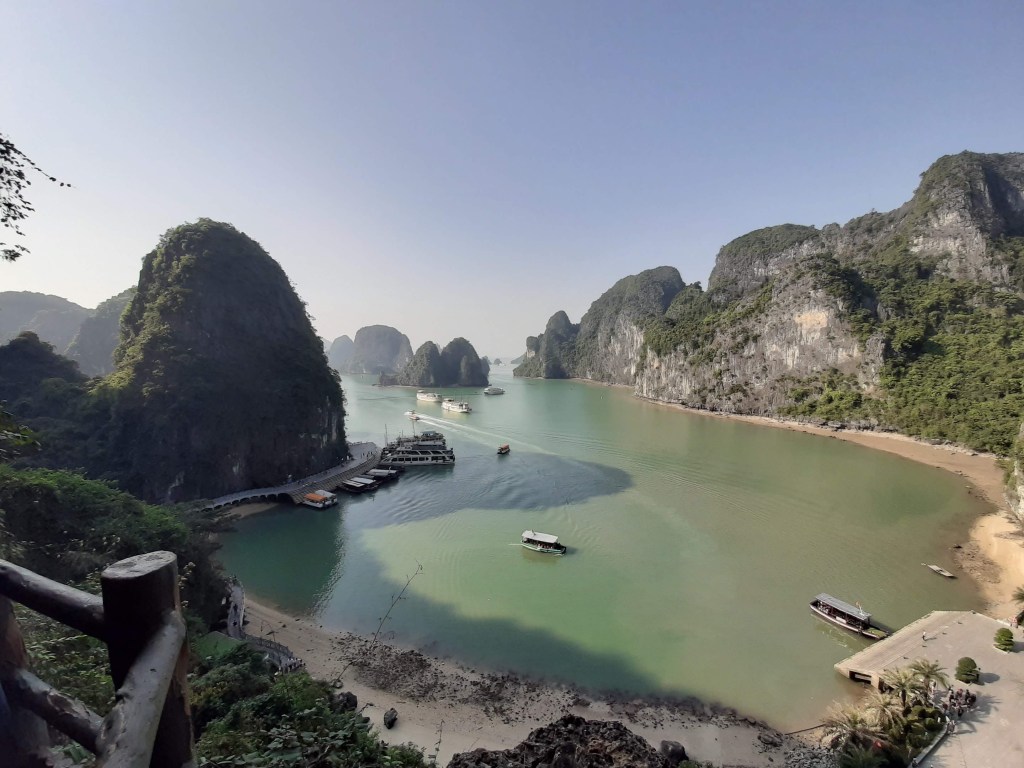
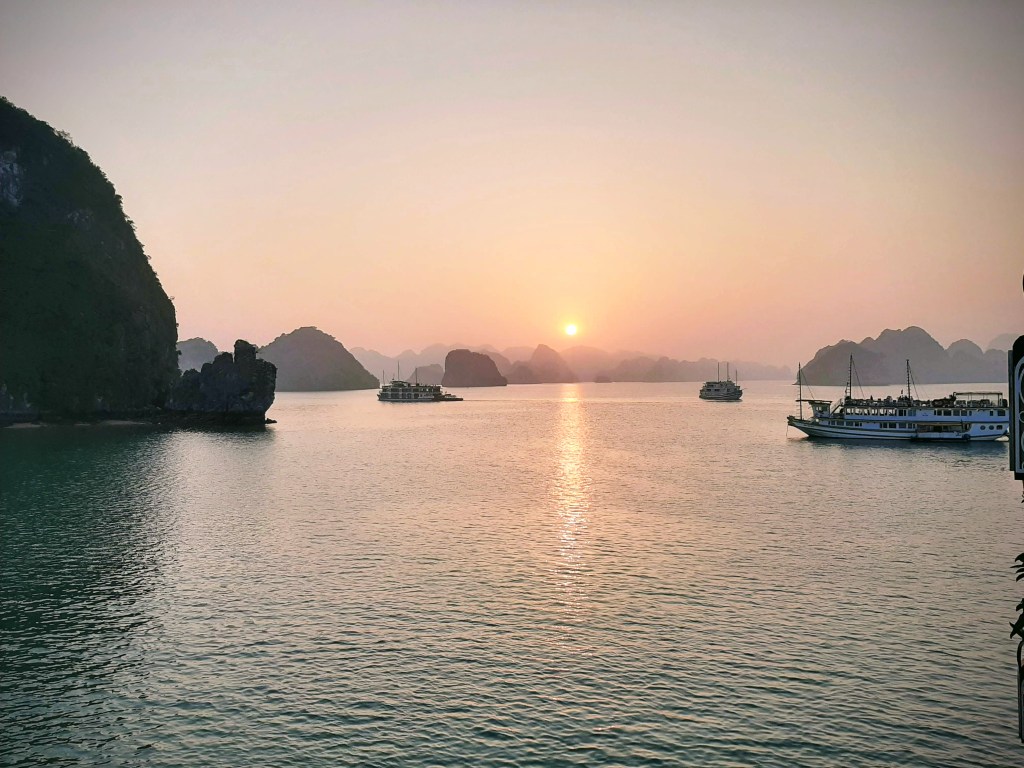
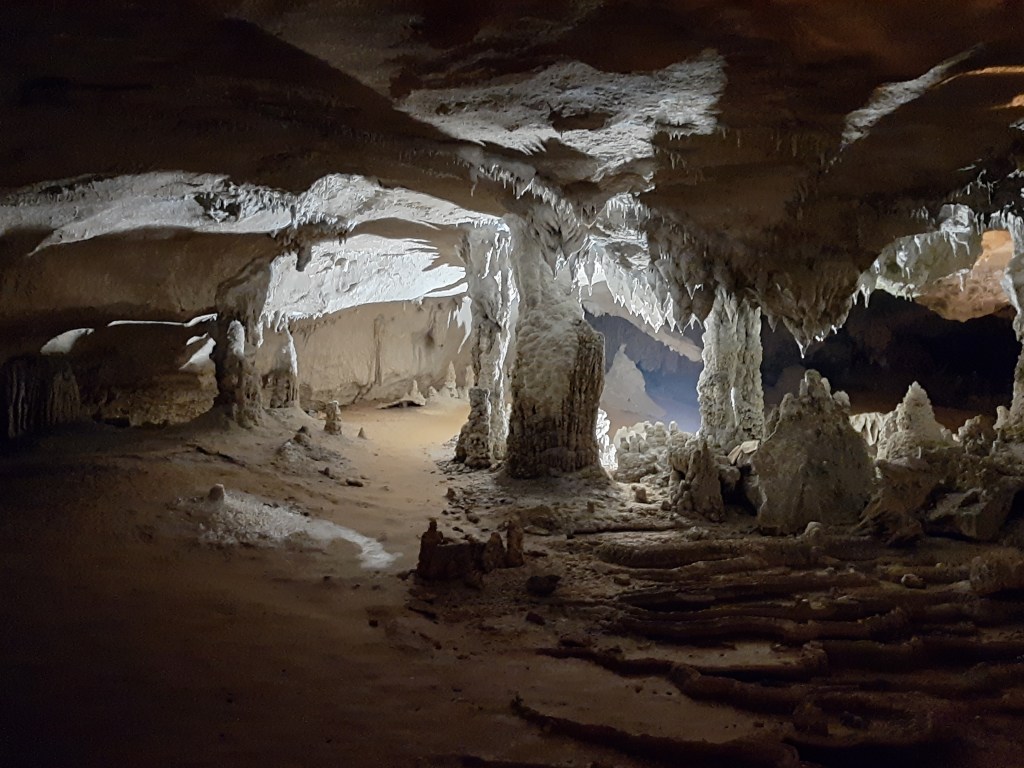
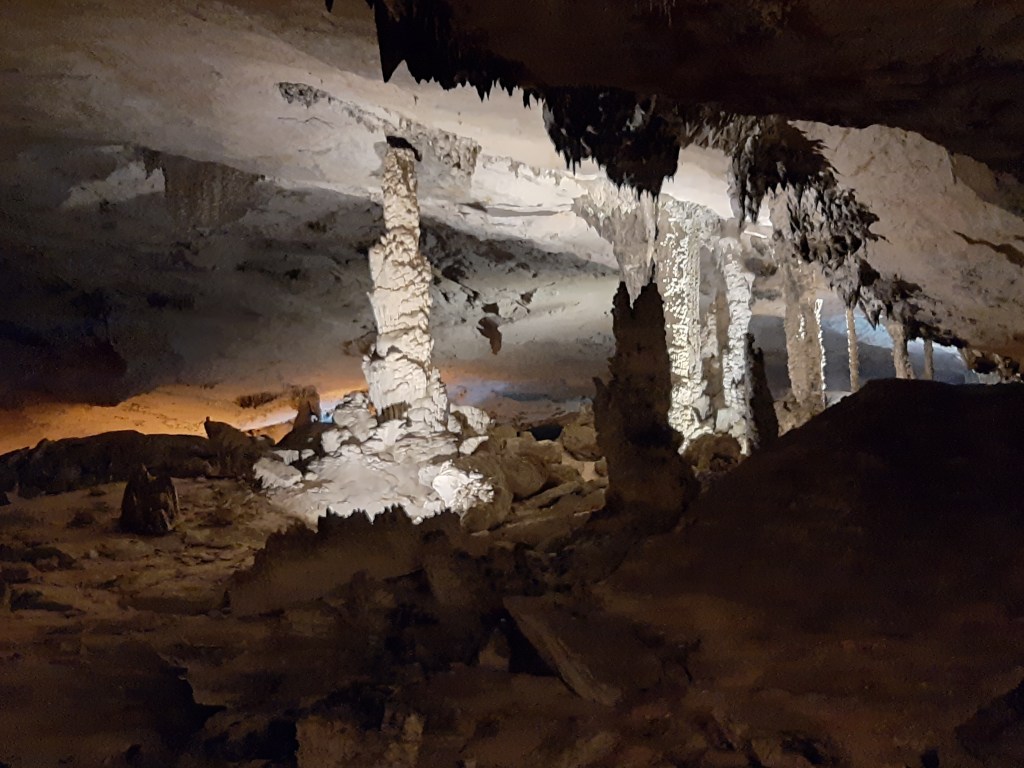
We began sailing into the bay and quite quickly were among the myriad of limestone karsts. We had seen our fair share of karsts in Laos and it was interesting to think that these were clearly the continuation of the same geological patterns in the region. Being in the water, however, gives these green jungle-clad karsts a next level of beauty. Sitting on the deck, all you can see around is small islets popping out from the water, and boats of course… Halong bay has been well and truly discovered and is exceptionally popular to the extent that Vietnam has been struggling to keep the right balance of ecological conservation with tourism. All of that will of course be different now – who knows when tourists will be back up to the pre-covid numbers! Our first stop was the so-called “Surprise Cave”. This inspirational name was apparently given because of how surprising the cave is when you get there (surprise, surprise!). All cruises to Halong Bay follow an identical itinerary, and it certainly felt like the whole bay was here with us, with the short trek up to the cave feeling like one long queue. The cave itself, was actually kind of surprising – at least in terms of how big it was on the inside. What surprised us more, however, was when we bumped into a couple of Aussies which George had met on his diving trip a few days earlier in Hoi An! Rochelle and Ash are friends from Sydney and ended up being our cruise buddies for the next day. 

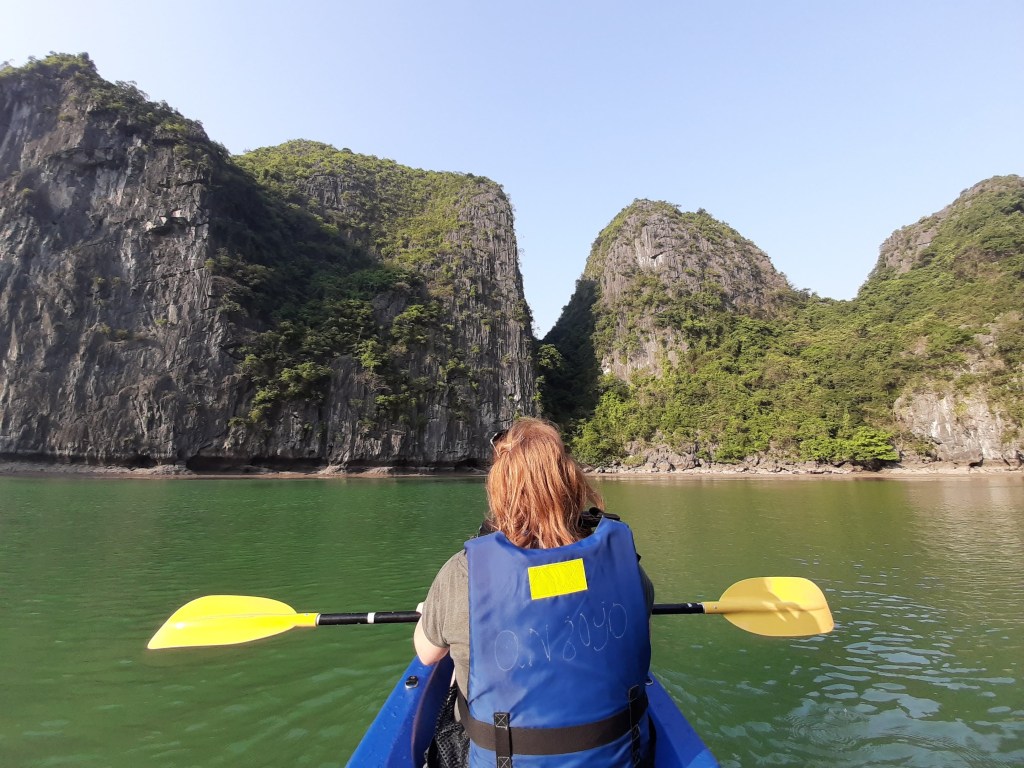
The afternoon’s main activity was kayaking around the karsts, where we came across monkeys eating shellfish by the water. We returned to the boat in time for happy hour at the bar, which we made use of to fuel Katharine’s margarita addiction. We spent the evening drinking and chatting to our new friends, having managed to get some cheaper beers from a lady who turned up with her rowing boat shop outside our balcony. There was a cooking class where we had a go at making spring rolls and then had another huge and tasty buffet dinner where we sat with an older Scottish couple who lived in Australia. They were lovely and it made for nice conversation on the whole, although their genuine interest in hearing about our travels and lives more broadly did eventually stray into being a bit intense for us. They had had a lot of wine and were a little delirious having just arrived from Oz that day on an overnight flight which probably didn’t help. The final activity of the day was squid fishing at the back of the boat where we got chatting with a few others, including a group of Germans who were primarily in Vietnam kite-surfing. The technique simply involves dunking a hook with a bright lure in and out of the water – the squid just turn up and get caught (although neither of us succeeded in catching any). 

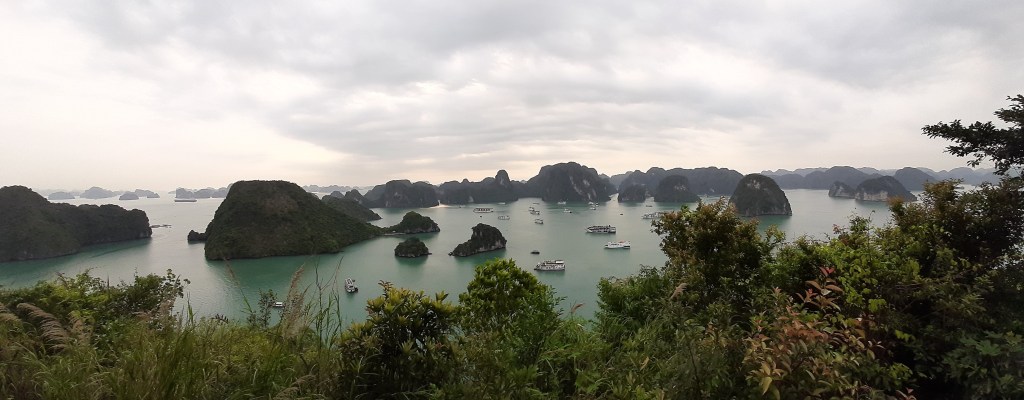
We woke up early on day two of our Halong Bay cruise (10th March), for our one planned activity of the day: a trek up to a viewpoint on one of the islands. There is also a beach (we suspected man-made) you can swim in but we opted for the trek instead. Once again, we joined the hoards of others on the identical itinerary making the hike, but reaching the summit made it all worth it. The view was absolutely sensational and really gave us a sense of the scale of Halong Bay. It was a shame we had not been able to go on a longer trip that would have seen us going deeper into the quieter parts of the bay, but seeing these areas from afar gave us a flavour of it. We had one final enormous meal for breakfast and enjoyed what was left of the cruise by sitting on the top deck and being surrounded by karsts for one last time. It had been a really great experience and we did not regret splashing out for the more luxurious experience. It was also certainly an insight into the crazy quantities of food that seem to characterise most big cruises (at least from what we have heard!).

We made it back to Hanoi around lunchtime, after the 2 hour drive back. We decided to try out a different hotel on our second stint in Hanoi – clearly the city was under capacity in terms of accommodation so it was so easy to find an abundance of good-looking affordable options. We settled on the Dahlia hotel, nearer the heart of the old town. We had a lovely, colourful, clean and modern room, although this time we drew a short straw and had no window – a result of the silly super-narrow shaped buildings of Hanoi. It was nice enough, so we decided to book (albeit a different room with a window) for our return from Ha Giang as well. Feeling a little tired from Halong Bay and with an early start the next day to go to Ha Giang, we decided against any proper sightseeing and just headed out in the late afternoon to explore some more of the Hanoi food and drink scene. We started with Vuvuzela bar which George had fond memories of from his last visit in Hanoi, where we had some good beer and a surprisingly tasty grilled German sausage as a snack. For dinner, Katharine had a pizza craving which we satiated at a fancy-looking restaurant, while George’s addiction of Vietnamese food led to more Pho soup from a street vendor.    We
Ha Giang Loop

We woke up in a bit of a panic on 11th March – we (George) had set the alarm 1 hour later than it should have been – so we woke up with our bus already outside… We needn’t have worried with perception of time being vastly more laid back in this part of the world. Our journey to the town of Ha Giang should have been 5 hours but ended up being around 8. It took us seemingly for ever to leave Hanoi and had a long stop along the way at a government Covid-19 checkpoint. We had our temperatures checked and signed declarations promising we were healthy and declaring recently visited countries / places. We would end up re-signing this form at every hotel we stayed in over the next two days, which seemed excessive at the time but in hindsight, aggressive contact tracing has been a key part of countries’ success with the virus. 

We finally arrived in Ha Giang around 15:30 where we were met by our local guide, Tiger and his mate who would be our second driver, Diep. Both are young lads in their early 20s and are from the Dao (pronounced ‘Dzao’) ethnic group. Tiger’s Dao name is Mangh, meaning ‘Tiger’, but in Vietnamese, apparently, the name means (we think) “window” so doesn’t have qiuite the same coolness about it! So, he has adopted the English translation as his work name. We were famished and Tiger led us to a local eatery where we gorged on some excellent fried spring rolls among other small tasty dishes. Feeling fed and ready – we set off! 

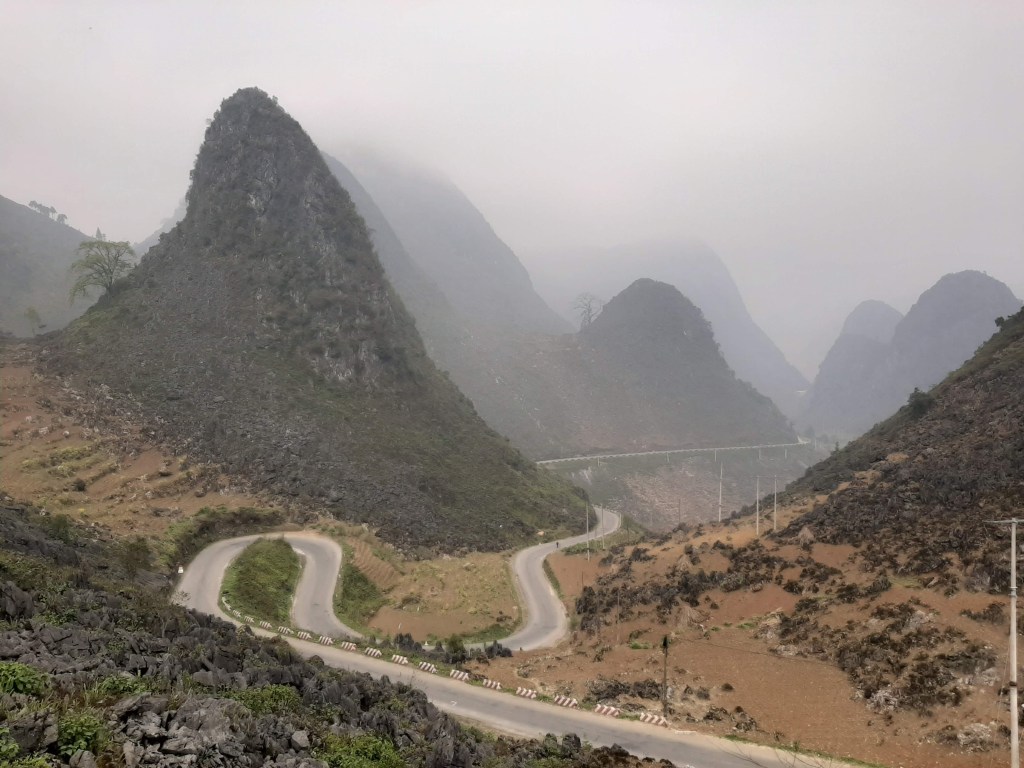
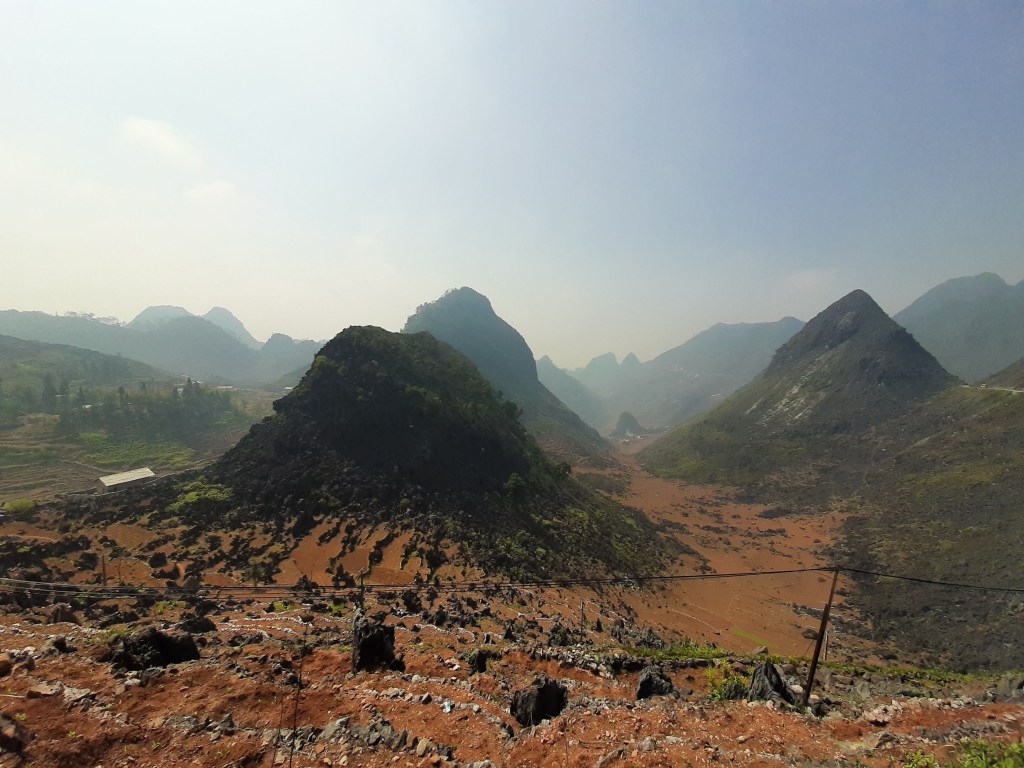
The weather on our first day was fairly chilly and overcast so the views were not quite as stunning. We could quickly get a sense, though, of the dramatic scenery that gradually unfolded with huge peaks looming on either side of luscious green valleys. The terrain on the early part of the loop is particularly characterised by domed-shaped peaks. Near our first overnight stop (the town of Tam Son), we came onto a clearing with dozens of domed hills poking out across a fertile plain. Two adjacent and identical hills have been named as “the fairy bosom”. According to legend they are the breasts of a fairy who married a local lad but vanished after he mistreated her. Her bosom remained, however, whose milk provided excellent fertility for the surrounding lands. Amazing! We had a great first evening getting to know our guides. We had, dangerously, gone for an all-inclusive package for the three days, which apparently included unlimited rice / corn wine… We let Tiger do all the ordering and enjoyed a delicious mix of food, including excellent pork ribs and stir-fried greens. We also quickly learned the classic “1, 2, 3, cheers” Vietnamese drinking routine which meant we got through the corn wine rapidly (‘mot, hai, ba, zo… hai ba zo… hai ba o!’). Tiger was just great fun – providing plenty of impetus on the drinking front while also being very relaxed and talkative. It genuinely felt like we were just hanging out with a couple of locals (which is what it was!). Diep was far quieter and largely kept to himself. His English was pretty well non-existent but he was generally less extraverted than Tiger. His wonky teeth and not great all-round looks led Tiger to describe him, hilariously, as “like a pineapple” – ugly on the outside but sweet within. While funny, this made us more determined than ever to be talkative and inclusive with Diep and we think we succeeded on a couple of occasions where he cracked a smile on some of our jokes! 

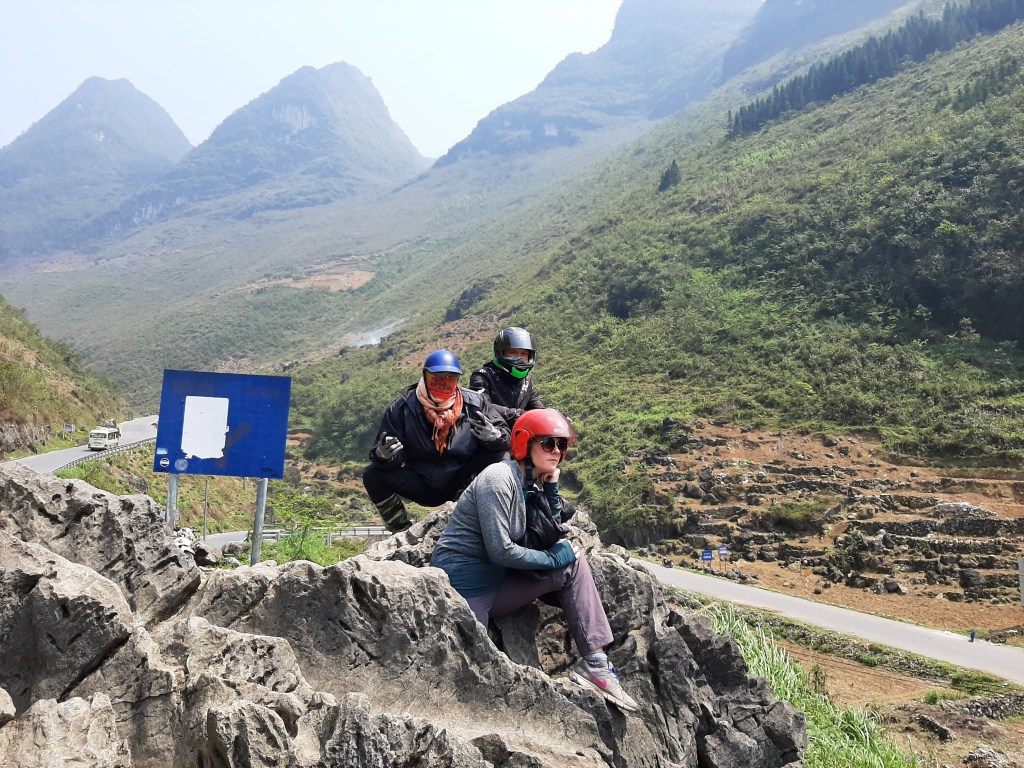
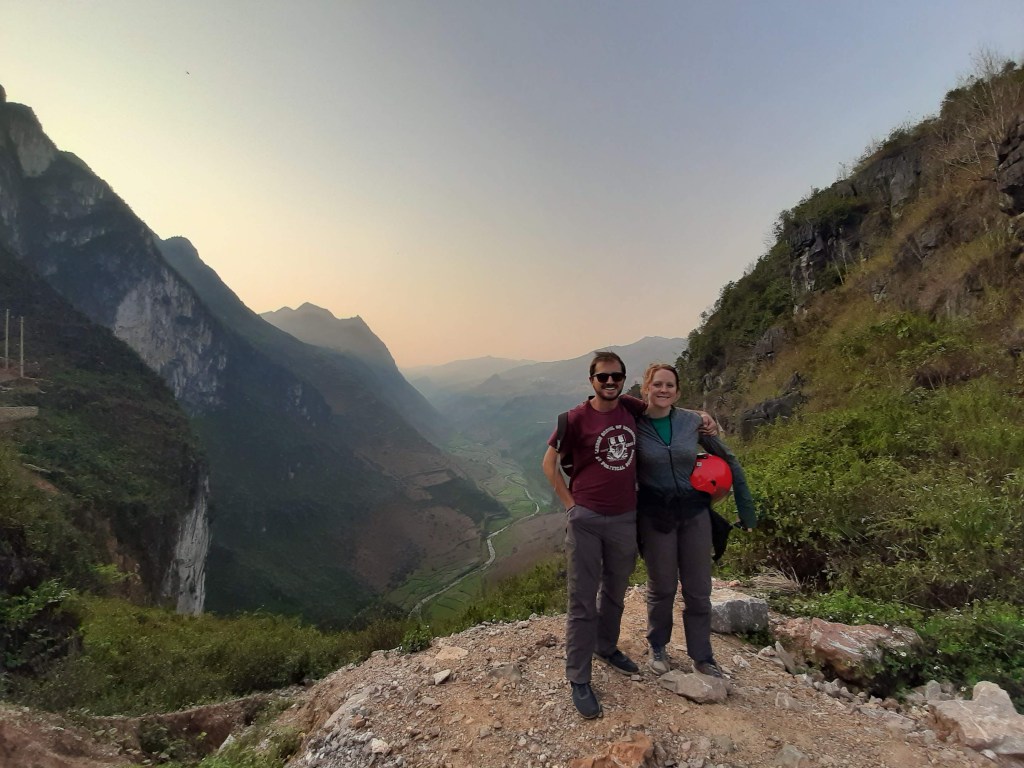
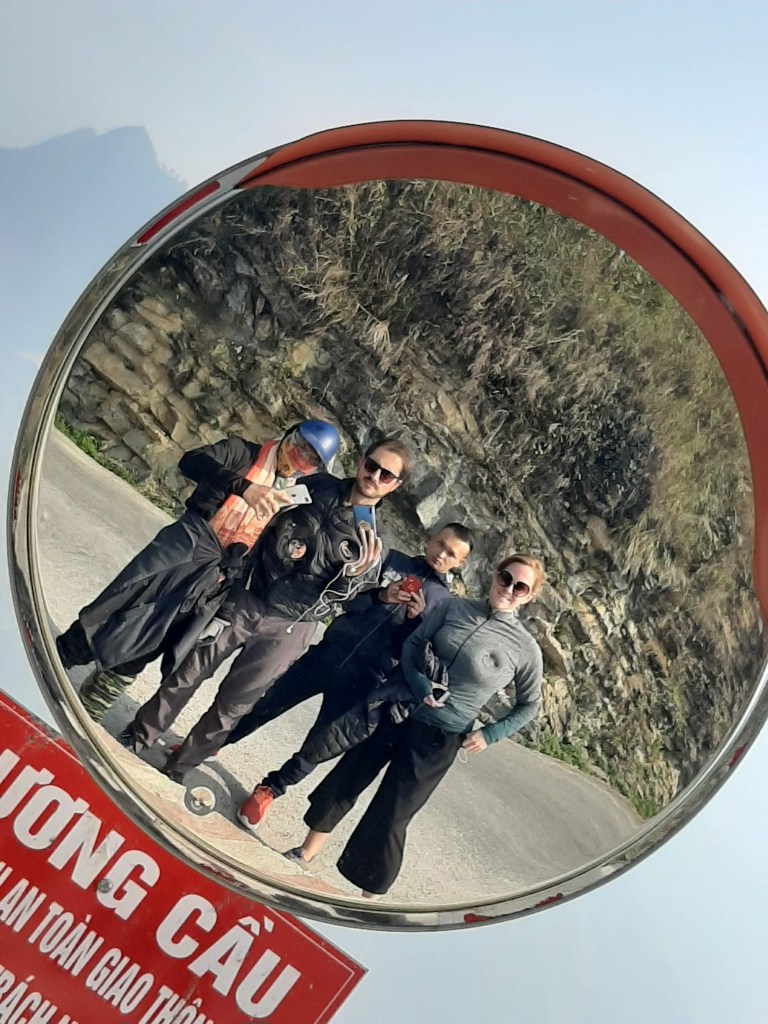
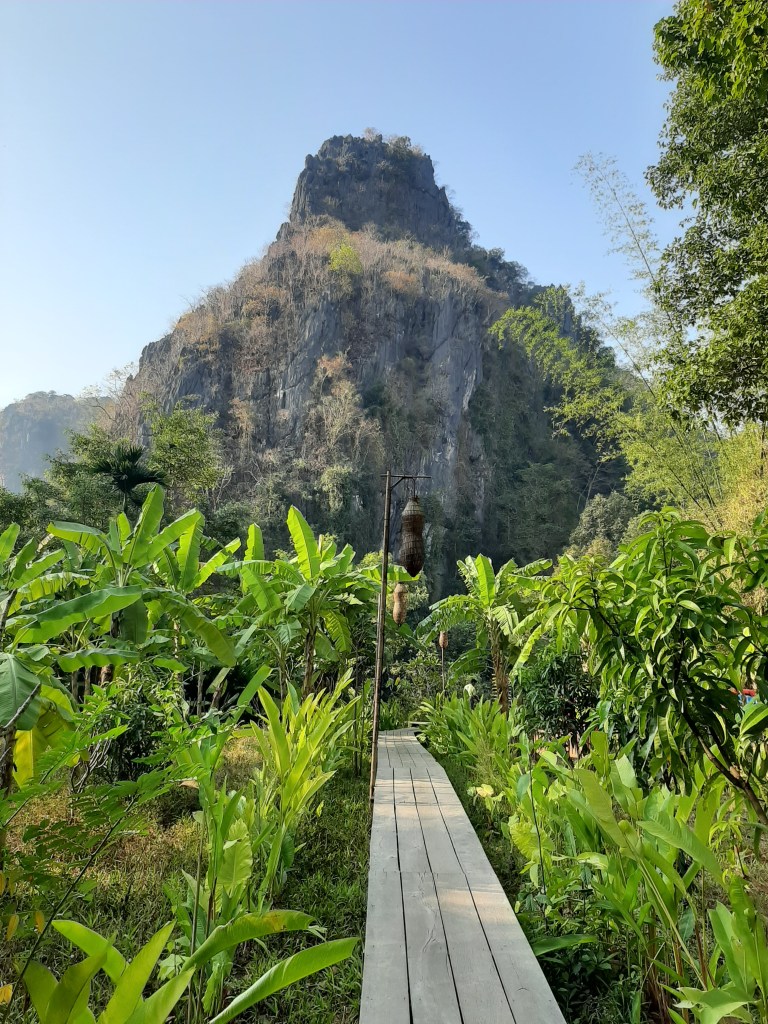
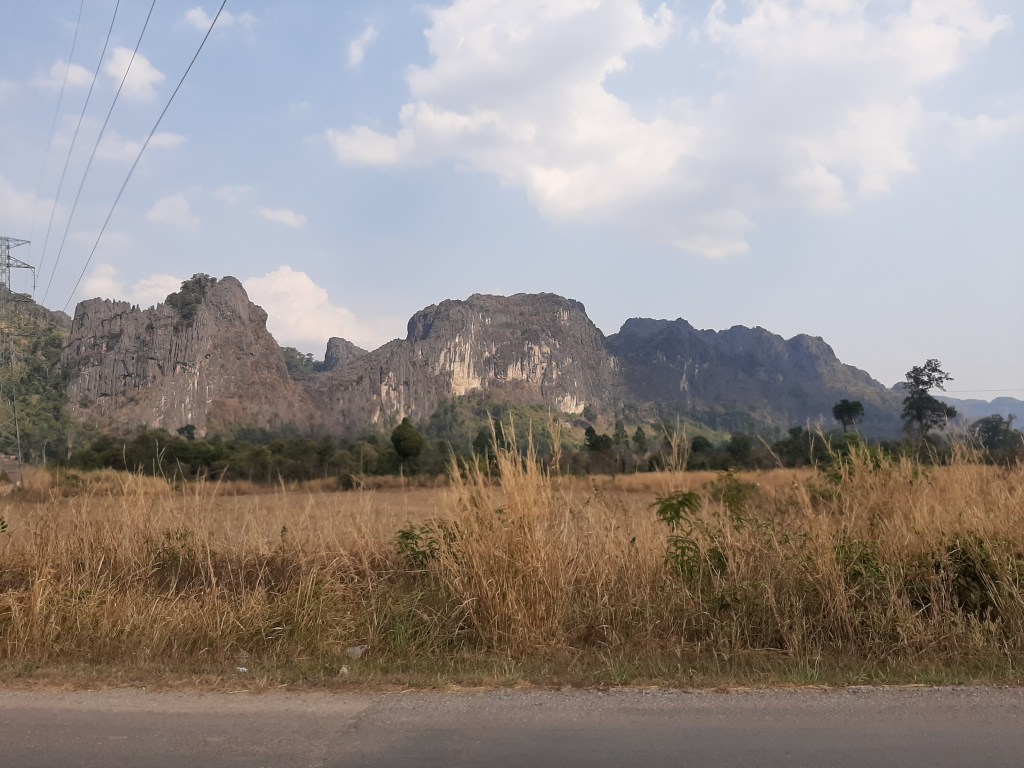
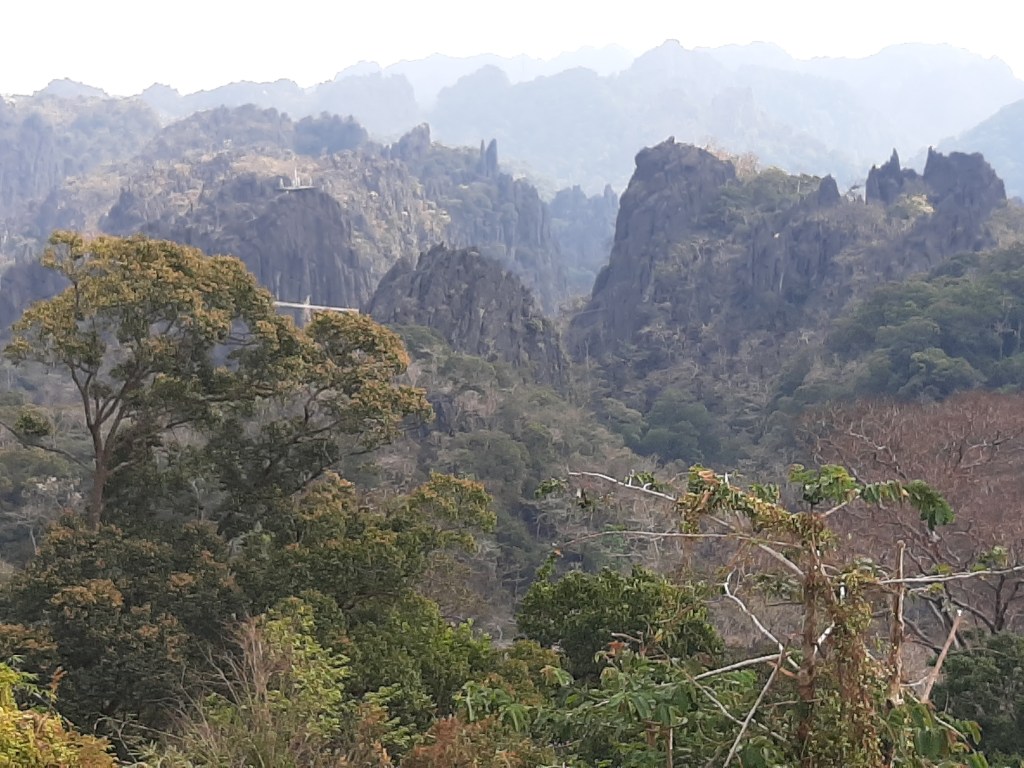
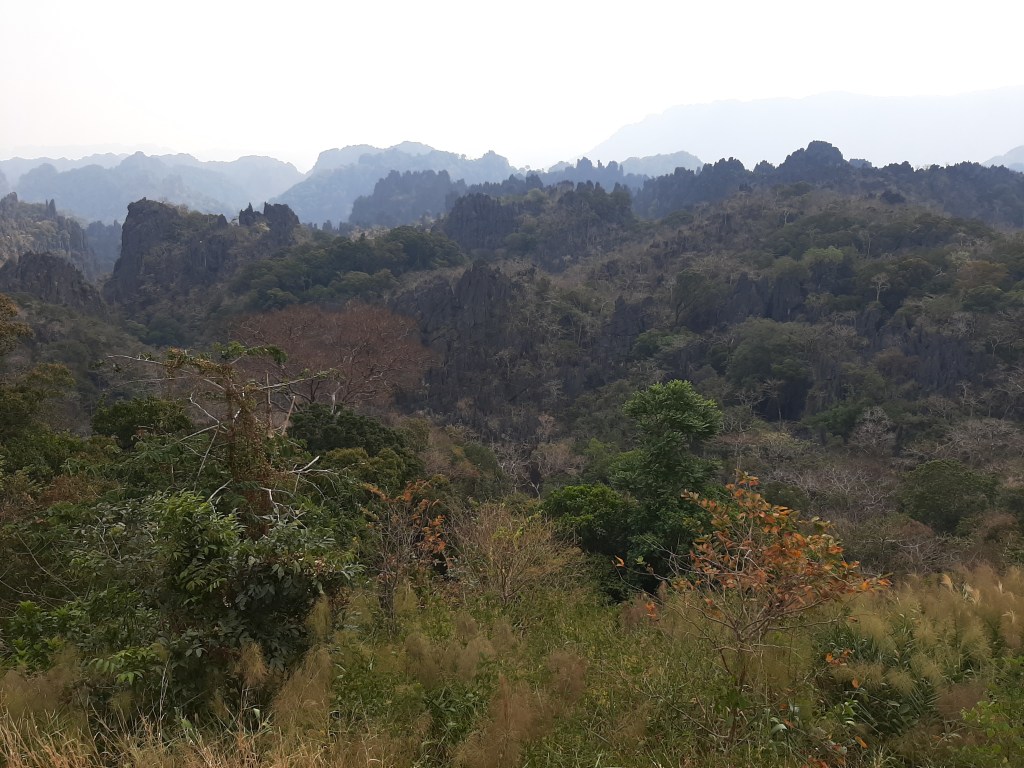
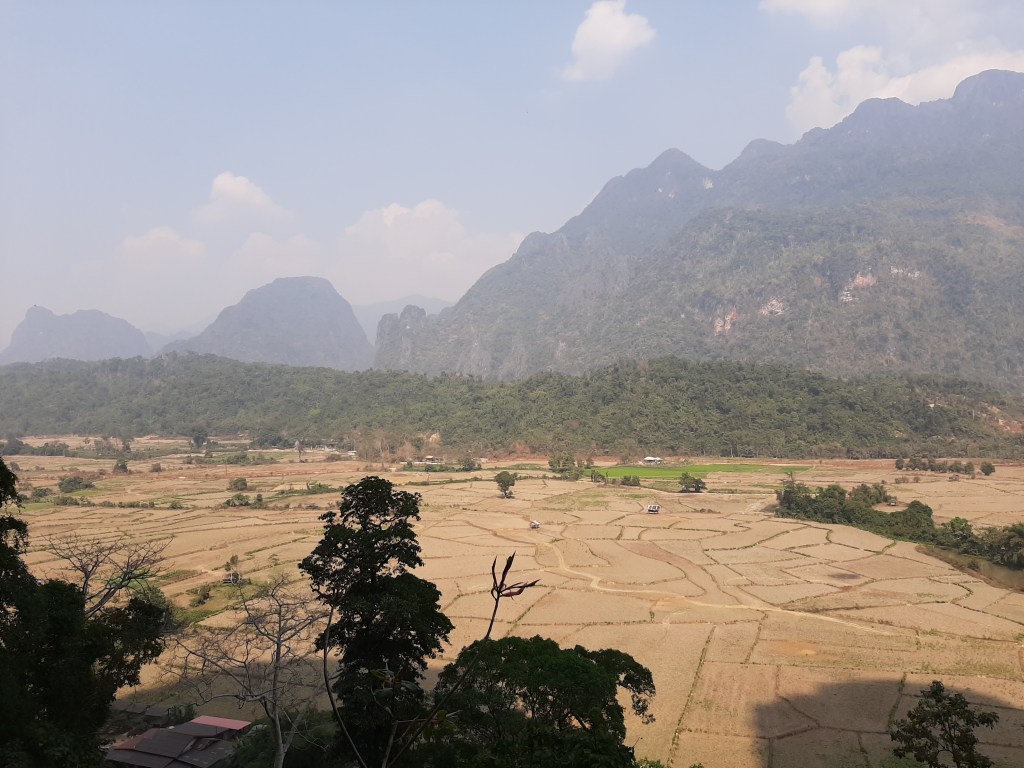
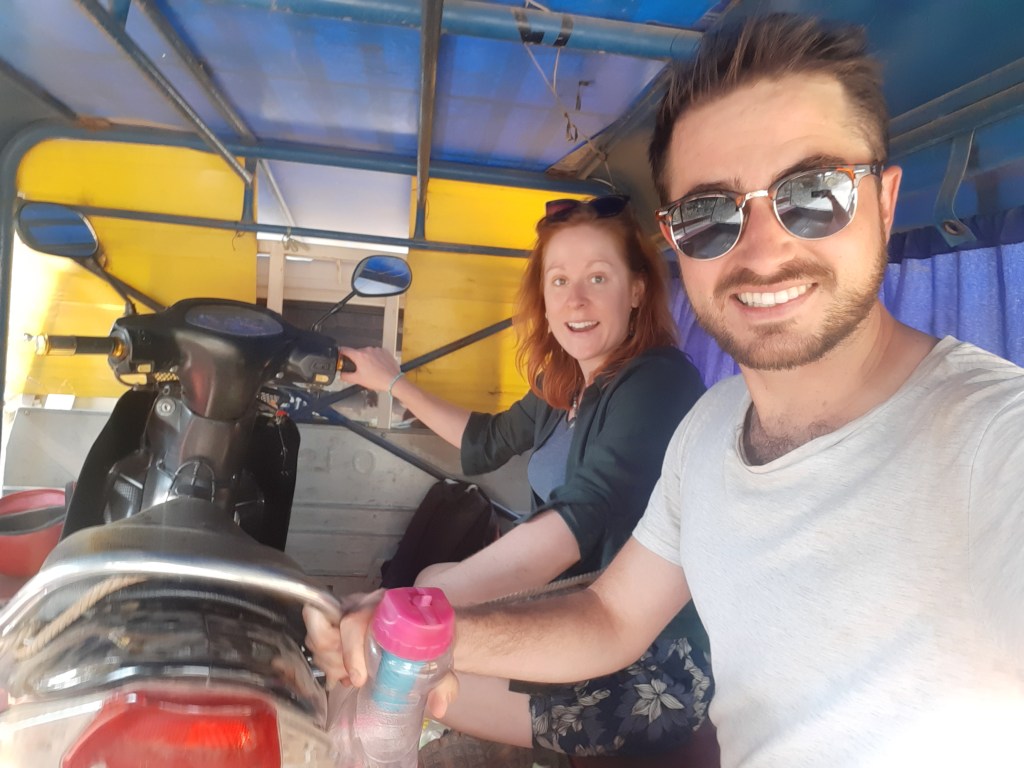
Day two saw a return to sunshine and an amazing all round day. Both 12th and 13th March were long driving days involving simply stunning scenery. The photos speak for themselves, but the best way we would describe it is “dramatic”… The scale of everything is just awe-inspiring. Massive valleys, huge, craggy peaks and a road that at points seems to float in the sky. Riding on the back of Tiger and Diep was an incredible experience and we were certainly glad not to be driving with so many hair-pin bends and the road being pretty patchy in places. While the Ha Giang loop did feel like an off the beaten track experience – certainly compared to Hanoi and Hoi An, we were surprised by how many big groups of tourists we saw on the loop (certainly more than we had seen in Thakhek in Laos), particularly with coronavirus starting to kick off properly. We had an incredible lunch stop overlooking an almost Martian-like landscape. Very quickly the scene moved from serene to an almost Ibiza-like feel, with western music pumping out of the restaurant speakers and a group of around 15 excitable tourists turning up! 

In the afternoon, we made a detour to the northernmost point in Vietnam, right on the Chinese border. Getting there was a little terrifying, as we sped down an incredibly narrow road with no barrier between the road and a gargantuan drop down to the valley floor that is the border. Looking into China was a surreal feeling given the country was at the time the centre of attention as the heart of the coronavirus pandemic. We spent our second night in the town of Dong Van where we had a similarly delicious meal and a little less corn wine with Tiger and Diep. 
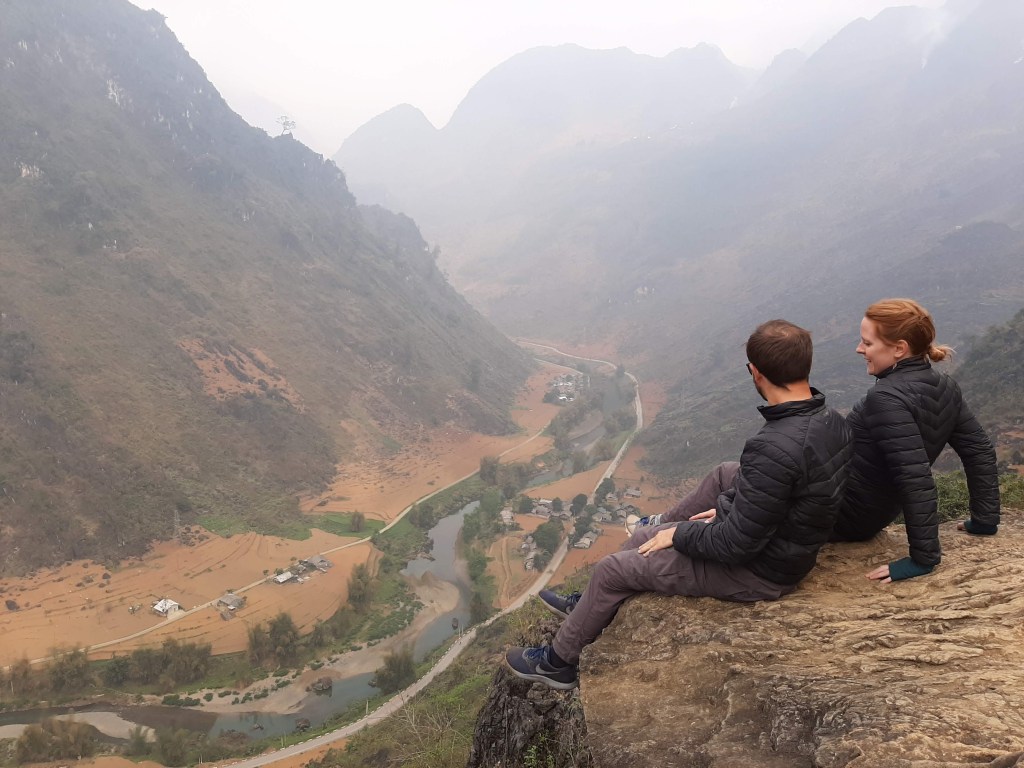
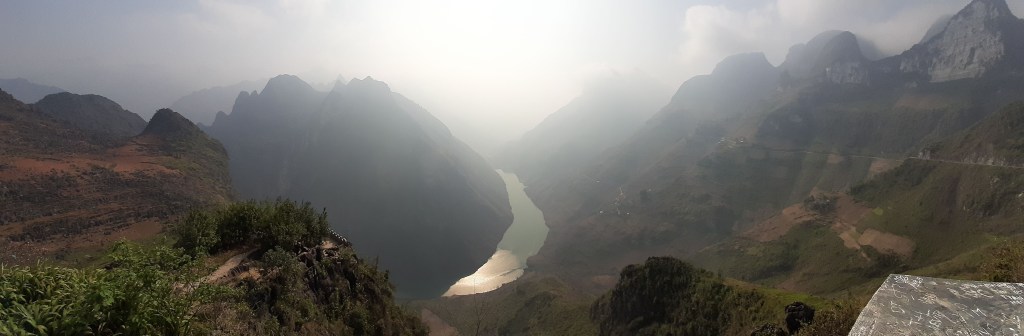
Day three (13th March) started with possibly the most impressive viewpoints of all at Ma Pi Leng: a massive valley with a small man-made lake lining its floor. Morning mist was still covering much the mountain scenery giving it a real ethereal feel as well. Our final day was the longest by far with 160km of biking across patchy mountain roads with simply incredible and varied scenery in the morning and afternoon, and a long, arduous bus ride back to Hanoi in the evening. Tiger and Diep had been simply incredible – the perfect mix of good drivers, attentive and just great fun. We arrived late and managed to get ourselves a streetside pho soup for dinner.

14th March was when everything started to change…
Hoi An, Vietnam

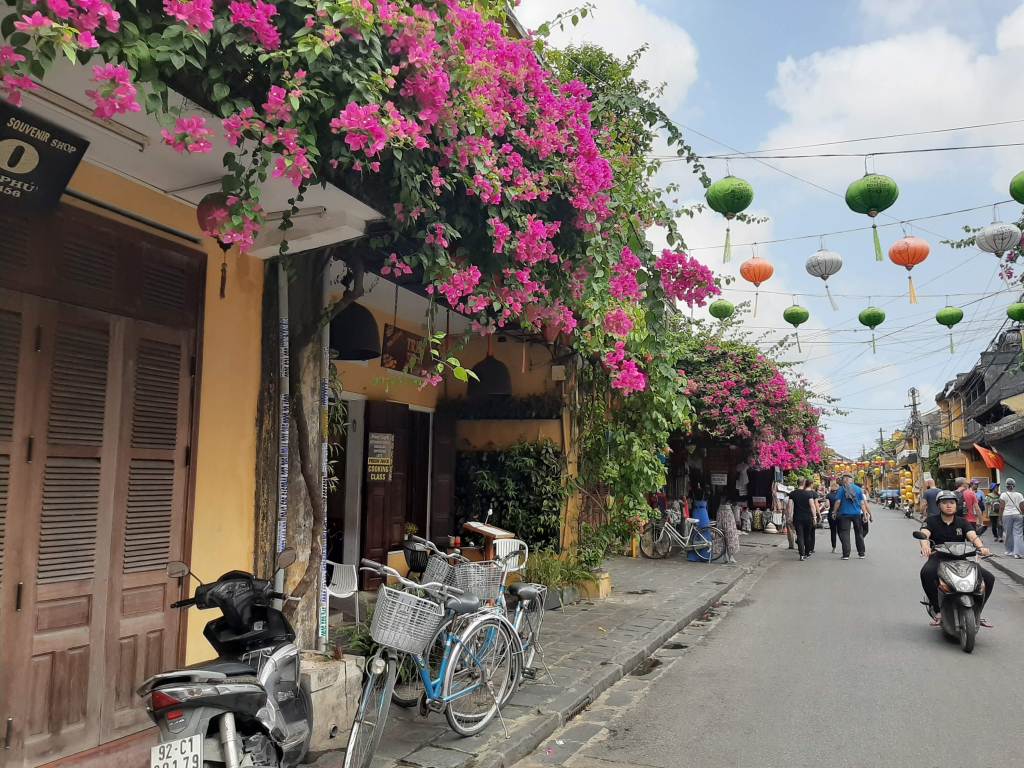
Whether you are going north to south, south to north or just making a short visit to Vietnam, the picturesque, historic trading town of Hoi An is a must-see. This is also no longer a secret and Hoi An now draws hoards of visitors to its charming colourful streets and waterfront. Hoi An for many years was a major trading hub for the region. Beautiful ornate houses and trading shops make up the town that was once a real melting pot of cultures, with traders establishing themselves here from Japan, China and the West. Their legacy lives on with many of the ancestral homes now being open for visitors and still inhabited by the descendants of these great Chinese trading families. The Japanese traders left Hoi An hundreds of years ago when Japan cut itself off entirely from the outside world. Impressive and ornate “congregations / temples” are still very much in use and important places of worship / gathering for the various Chinese communities that still live in Hoi An. We were in Hoi An from 2-6 March, and still riding the positive impacts (from our perspective) of coronavirus, with Hoi An now being quieter than usual and accommodation cheaper.

We were picked up at Da Nang airport in the evening of 2-March and made the 30-minute journey to Hoi An and the Pham Gia Homestay which became our home for the next four days. This place is a real gem and one of our favourites from our trip. We were incredibly warmly greeted with a “welcome home” by management. Our room was perfectly spacious, beautifully furnished with a balcony overlooking the courtyard where there is a small pool. Pham Gia proved to be a fantastic base and a real spot of tranquillity after the hectic cities of Saigon and Phnom Penh.

Hoi An is something of a cultural theme park, with just so many ways to have fun, whether it is just wondering the colourful streets, sipping superb coffee, eating incredible street food, visiting the historical sites or getting measured up at one of the towns seemingly hundreds of tailor shops. We did all of these things over the next few days – and it was fantastic! We started 3- March with a fantastic breakfast at our homestay, before heading for a wonder in the old town (about 15 minutes’ walk from us). We got stuck immediately upon arriving in the old town, stumbling upon a shoe shop that took Katharine’s fancy. She ended up having some beautiful tailor-made leather sandals for about $30. We were clearly prey for the myriads of shops and ended up being led to a tailors down the road, called Bari, who had a few good looking sports jackets on display that took George’s fancy.

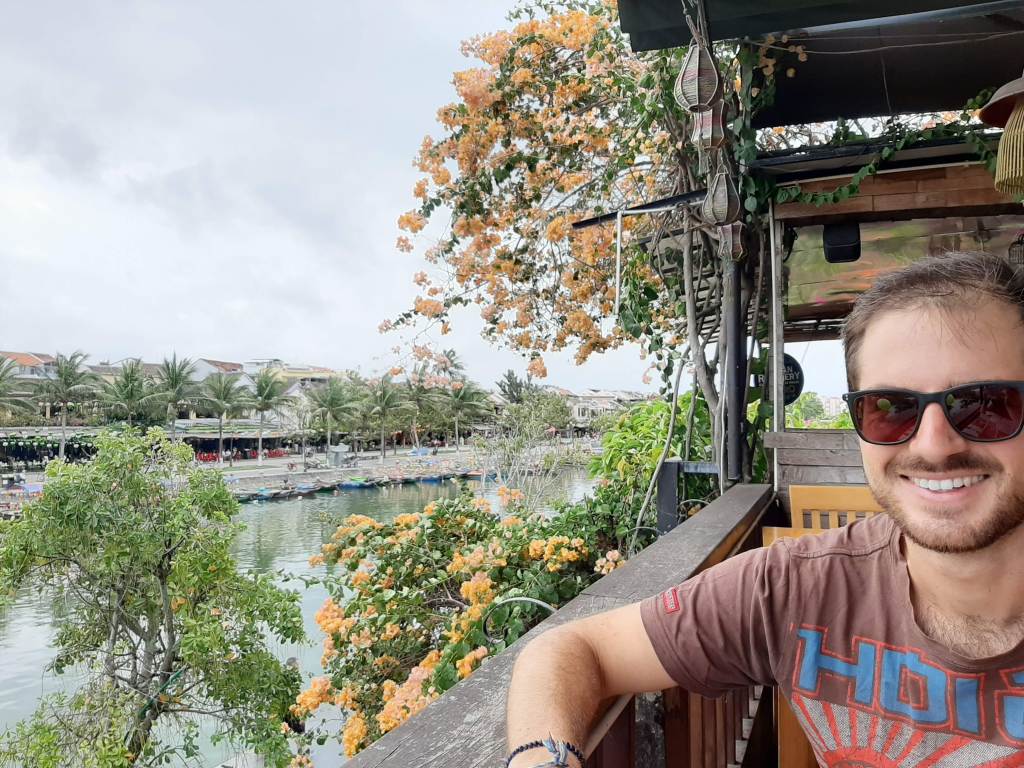
Not wanting to rush into anything, we made our way down to the waterfront and found ourselves a delicious, creamy, strong Vietnamese iced coffee (with condensed milk, of course). Coffee in Vietnam is something of an institution: we ended up loving all variants of Vietnamese coffee we tried, whether it was their regular filter coffee, machine coffee with condensed milk or thick and sweet “egg coffee”. The waterfront in Hoi An is just stunning, with predominantly yellow-painted (and faded) old plastered 2 or 3 storey houses with ornate balconies covered with colourful Chinese lanterns. Myriads of small wooden boats lie moored on the waterfront, many with their own lanterns hanging from the sides.

We moved on from our coffee in search of lunch. Having eaten Asian food pretty well flat out for so long, we were up for a break. Katharine had spotted “Mix”, a Greek restaurant in the centre of the old town. It was exactly what we needed! The setup was quite funny, with a bald Greek chap in his 50s working on the door as a tout to get people in, and all the other staff being Vietnamese who all, adorably, spoke a few key words of Greek. George got chatting with the Greek chap and this was,  predictably, enough to get us free drinks and a visit from the boss, who was a huge man with a huge beard, dressed in black. He was the perfect Cretan (google search “Cretan man” and you will see what we mean), and lo and behold, he turned out to be from Chania in Crete. It was all quite surreal, but in among the friendly chat and free beers, we enjoyed some excellent kalamari, Greek salad snf various dips.

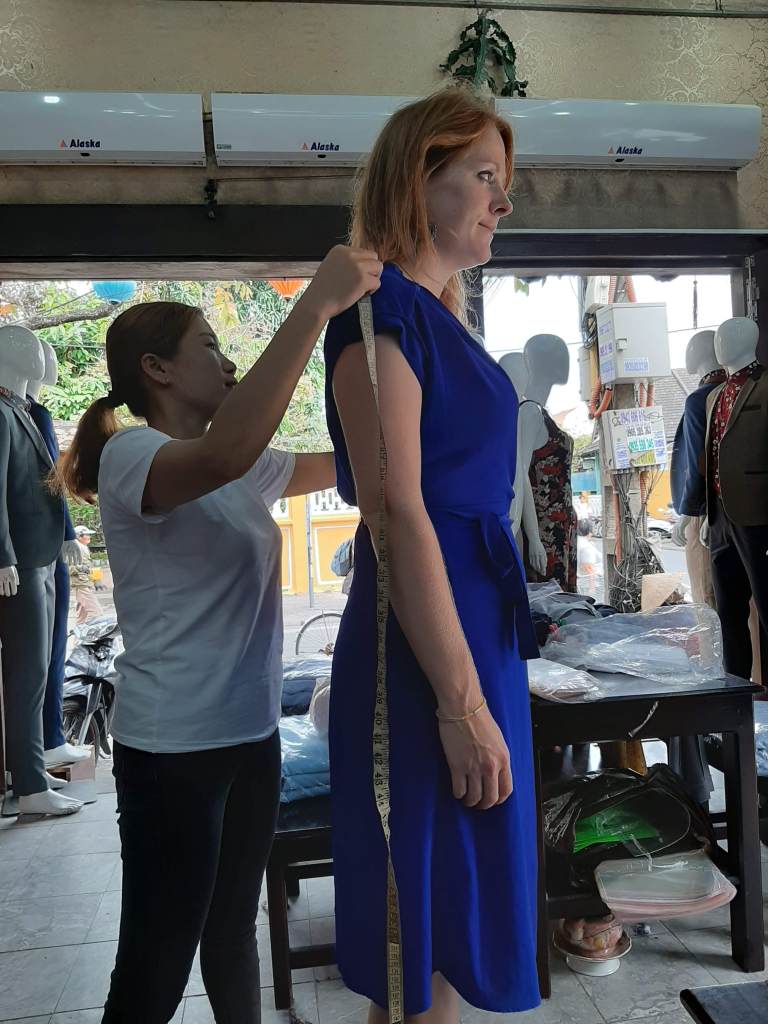
Over the course of the morning / afternoon we had decided that George would get himself a sports jacket and Katharine a dress from one of the tailors. George already had a suit from his previous visit to Hoi An. Not only can you easily find a great price for good quality, tailored clothing, it also provides a great souvenir and a lovely way to remember Hoi An. After a brief visit to “Bebe” tailors that had been recommended by our homestay, we decided to head back to Bari where we had dropped in in the morning. We spent some time sweeping through online photos for inspiration and eventually settled on a blue, wool and cashmere sports jacket with brown collar, pockets and elbow patches for George, and a wide neck blue cocktail dress for Katharine. Over the next few days, we would return at least twice each day for more fittings. George’s jacket was done pretty easily, but Katharine’s dress needed quite a few alterations to both the style and the fitting before she was happy. The fact she could have it so customised though meant that the end product was fantastic!

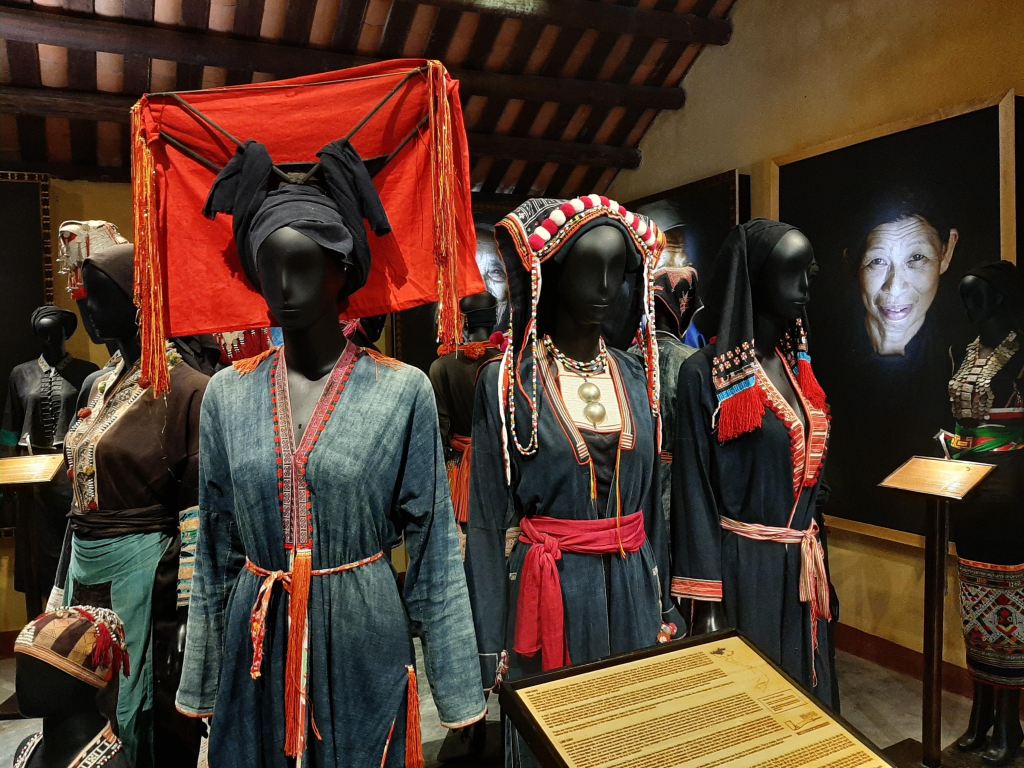
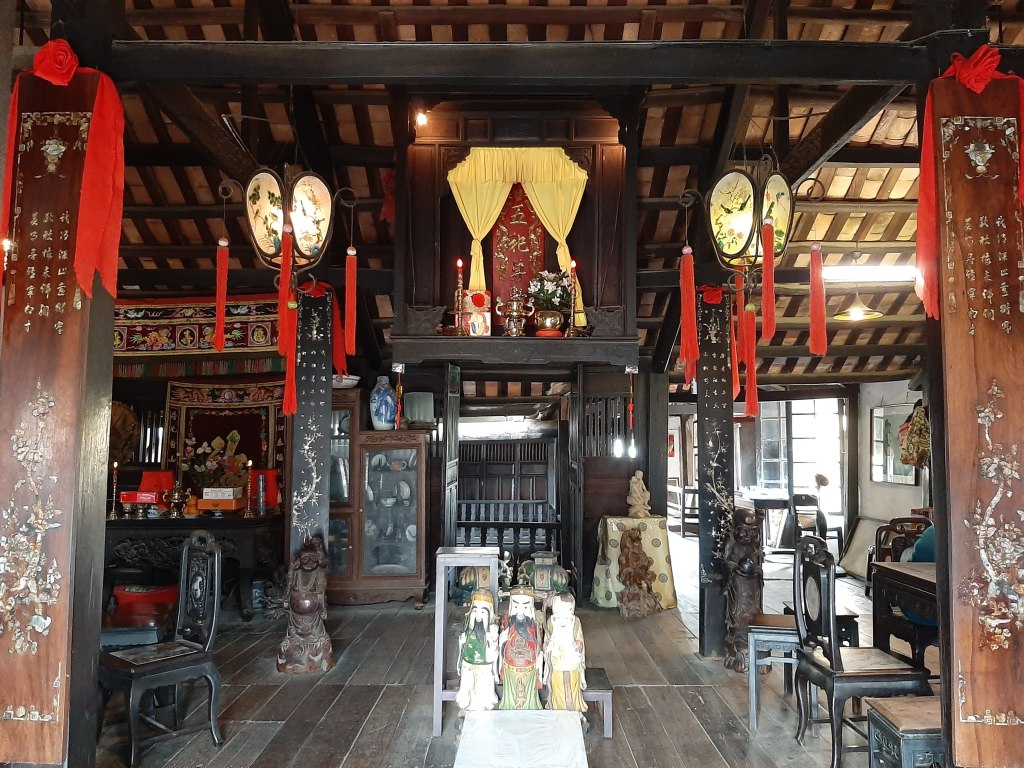
We spent some time exploring the more historical and cultural side of Hoi An, walking up to the old, stunning Japanese, covered bridge where we bought a multi-ticket allowing you to visit 5 different historical sites of the dozen or so scattered around the old town. Our first use of the ticket was at Qang Trang house – one of the many ornate houses built by important trading families. We were given a short tour of the house with a courtyard and beautiful dark wooden panelled interior with gold Chinese characters and other images set into the wood. We later visited an exhibition by French photographer, Rehahn, who has made Hoi An his base for various exciting projects, his most significant one being to meet and photograph each of Vietnam’s different ethnic tribes (officially there are 54, but he is certain he has discovered 2 more sub-groups). His pictures are stunning and largely display the human side of rural life in Vietnam.

In the evening, we got ourselves a foot massage from a sweet lady we kept bumping into by the waterfront and promising to return. With her shop being on the island across the bridge from the main part of town, we ended up exploring this area where the night market also is. Katharine was still keen to have a plainer food day while by this point, George was up for moving back to street food; so, we decided we would do just that. We headed to a pasta restaurant that proved tricky to find, hidden in among Hoi An’s quiet but still pretty back alleys. One glimpse of the menu was enough for George to realise that this was not an Italian pasta restaurant. Macaroni cooked with “spetsofai”, an incredibly niche Greek spiced sausage dish, was a key give away. A few minutes later, lo and behold, the big bearded boss from Mix turned up – it appeared we were doing a tour of his restaurants! As we got chatting again, another 2 staff from inside turned out to be Greek and joined in, one of whom had her foot in a cast, having fractured it from a particularly aggressive foot massage (terrifying news for us having just had one)! It turns out this chap owns seven restaurants in Vietnam and two in one in Greece – one in Chania (Crete) and one in Halkida (Euboia), where he is originally from. After our second, unexpected Greek experience of the day, we returned to the waterfront where George had a Khao Lao, pork noodle soup, a local speciality. We finished the night with a drink on the Hoi An island. We cannot remember the name of the place, but it was just passed a Mr. Been-themed bar which looked hilarious but ultimately unappealing.

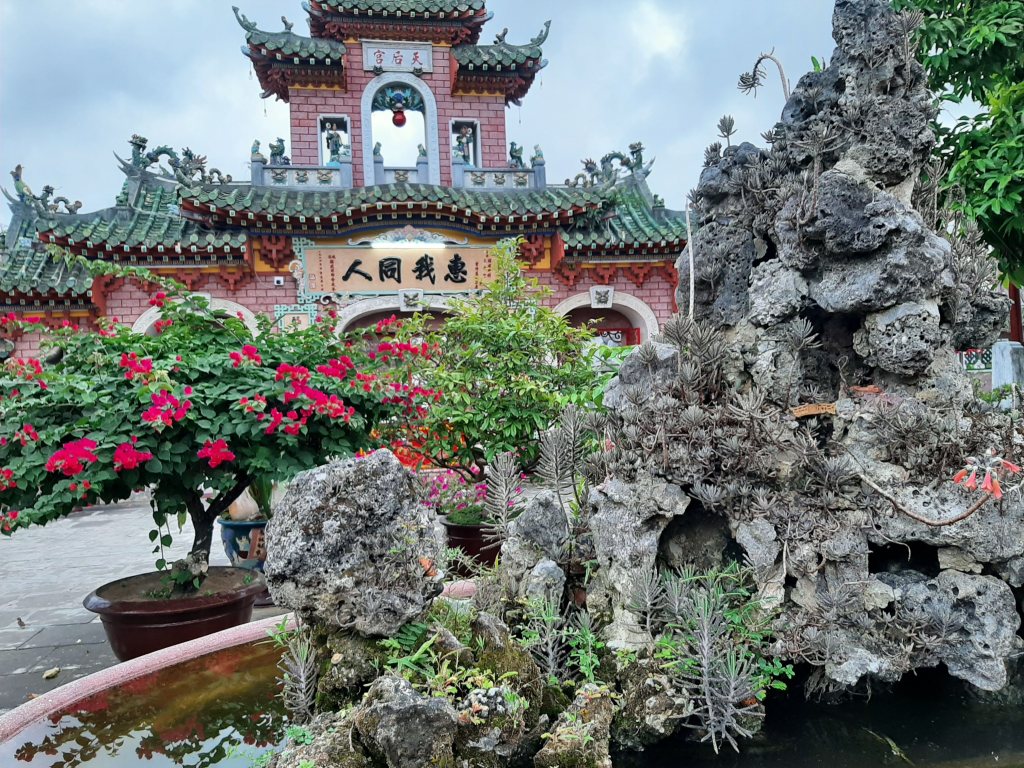
On 4-March, our second full day in Hoi An, we hired bicycles to zip around town a little easier, but also with the plan to go to the beach. We set off first for the Fujian Assembly Hall in the old town, a temple-like complex with ornate carvings of ancestors, deities and dragons. This is where the descendants of Fujian trading families that make up the still vibrant community, have important annual festivals and gatherings. There are photographs of the more recent events, providing an incredible view of how historical Hoi An is still very much alive. Having been inspired by our visit to Rahahn’s photography studio the previous day, we cycled east towards the artist’s ethnographic exhibition / museum. This is the result of Rehahn’s years of travelling around remote corners of Vietnam, meeting with, connecting with and photographing each of the country’s ethnic minorities. Each group has their own language, culture, and most importantly, traditional dress. Traditional weaving techniques for creating their traditional dress are slowly but surely dying out with the influx of cheap synthetic materials, making those remaining something of a cultural treasure for each of these communities. Rehahn has managed to get hold of a traditional dress from most of the ethnic groups to house them in this museum as a way of preserving their unique cultural heritage. The stories and photographs that accompany each dress in the exhibition are fascinating. In the end, we caved and bought ourselves one of Rehahn’s photos – an image of a Vietnamese trader-lady in Hoi An, with her produce slung over her shoulder. We had it wrapped up into a tube and sent home to Wales. We caught a glimpse of Rehahn himself but unfortunately did not manage to chat to him about his amazing work.

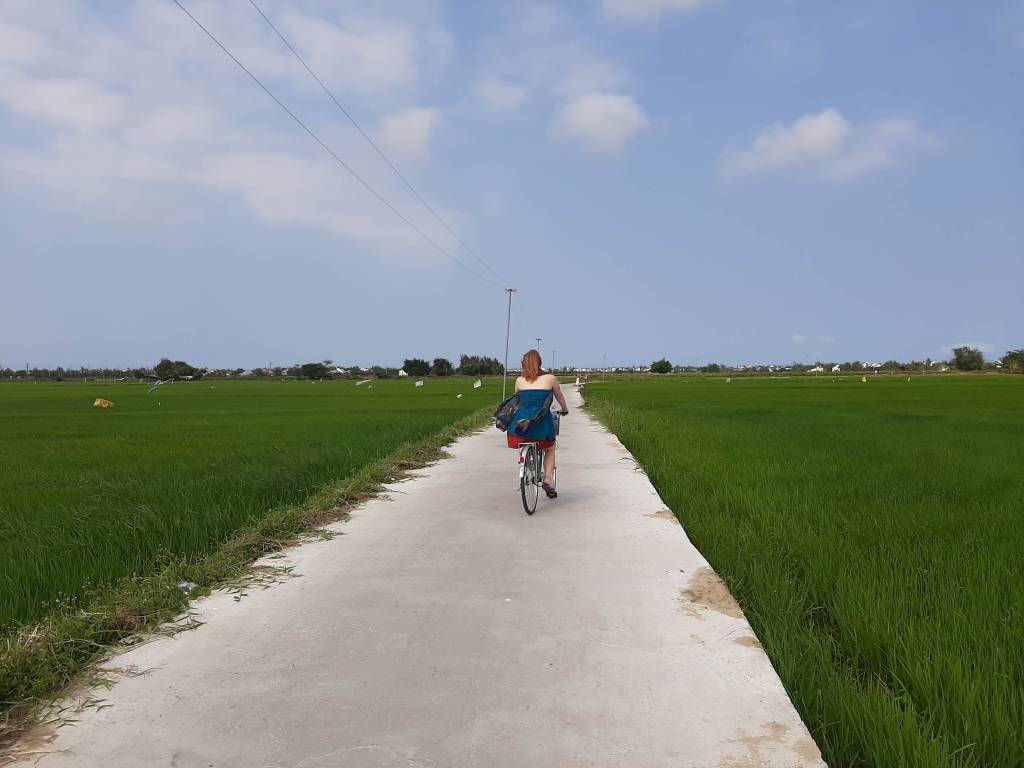
Feeling culturally enriched, we cycled back to Bari, the tailors, for another fitting, before enjoying a delicious Ban Mi (Vietnamese baguette) sandwich for lunch. We then headed north towards the beach. We fairly quickly hit the edge of town, and cycled along a trail straight through rice paddies, with buffalo working in the fields. It was a totally different side to Hoi An and much more of a reflection of the real Vietnam. We eventually came out to the main road on the other side of the paddies and cycled a further 10 minutes until we reached An Bang beach. It wasn’t the best beach weather, but we were able to enjoy relaxing and reading on sunbeds for a good couple of hours nonetheless. George also managed a splash around in the big waves. We ended up getting into a long chat with a very sweet lady selling souvenirs to tourists and eventually gave in and bought some nicknacks. She was genuinely lovely and also a very smart salesperson – first establishing a good connection with your customer!  

We made the cycle back to Hoi An, stopping at a delightful craft beer-garden not far from our hotel, where we had a flight of different beers to share between us. After a brief pit stop at our homestay, we headed back to Bari for another fitting and headed out for our evening’s entertainment. We started with a few nibbles at the Hoi An indoor market. It felt a bit like a Vietnamese version of some of the foodie “mercados” we had been to in Madrid. We sampled some delicious gelatinous prawn dumplings which are apparently another local delicacy. The main event for the evening, was the “Hoi An Memories” show – something of a theatrical, historical extravaganza with an enormous cast. We made our way to the theme park by taxi where the show is hosted. We say “theme park” because this is exactly what it is. An entire fake mini version of Hoi An has been created, with fake street food stalls, mini shows and entertainers and fake monuments. It is just so bizarre. Either the Vietnamese are looking for new ways to tap into the ever-expanding flow of tourists, or they have just gone mad (or both). We walked through this strange Vegas-like place to what feels like a stadium stand on the far end where we took our seats. The stand was barely a quarter full – another sign of the early impacts of Covid-19 on tourism. The show itself was incredibly spectacular with impressive choreography, costumes, lights etc. The set itself was yet another recreation of medieval Hoi An and the hoards of actors (there must have been about 200) played a host of characters from the town’s history (traders, farmers, seafarers etc.). It was a little odd but spectacular, nonetheless. We were somewhat bemused by the speed at which the crowd of mostly Vietnamese tourists dispersed at the end of the show and how little respect / enthusiasm they seemed to show for the actors. We and a handful of other westerners remained a little longer clapping. We weren’t sure if they were terrified of coronavirus and leaving as quickly as possible, or if this was just another cultural quirk. We headed back to the old town for some more craft beers at “Pasteur Street” brewery and some pretty bad chicken wings, before grabbing a drink at the “Dive Bar” which is seemingly the coolest hang out spot as well as the dive shop organising diving at the Cham islands just off the coast. We were fairly knackered after a long but excellent day so headed back shortly thereafter.

We upgraded from bicycles to a scooter on 5-March, feeling like we wanted to explore a bit more of the surrounding area. We started our day with yet another visit to the tailors, and used the opportunity to park our scooter there and do some more sightseeing around old Hoi An. We visited the Cantonese Assembly Halls which provided another view into the ancestor-worship, festivals and culture of the Chinese trading communities in Hoi An. We visited 2 more old houses, both beautifully ornate with Japanese / Chinese style dark wooden panels. At the second house, we were welcomed by a tiny old man who spoke some English and proudly proclaimed he was the descendant of the original family who built the house (6th generation) – it was yet another beautiful reminder of how the history of Hoi An lives on despite mass tourism having descended to the town. Exiting the house, we indulged in a couple of mango and sweet potato cakes from a street vendor and returned to Bari for one final fitting. The dress was now perfect, so we collected our new goodies and dropped them off at our hotel. We finished our morning with a return to the indoor market for some more delicious Hoi An food: wanton noodle soup and more sticky seafood dumplings this time.

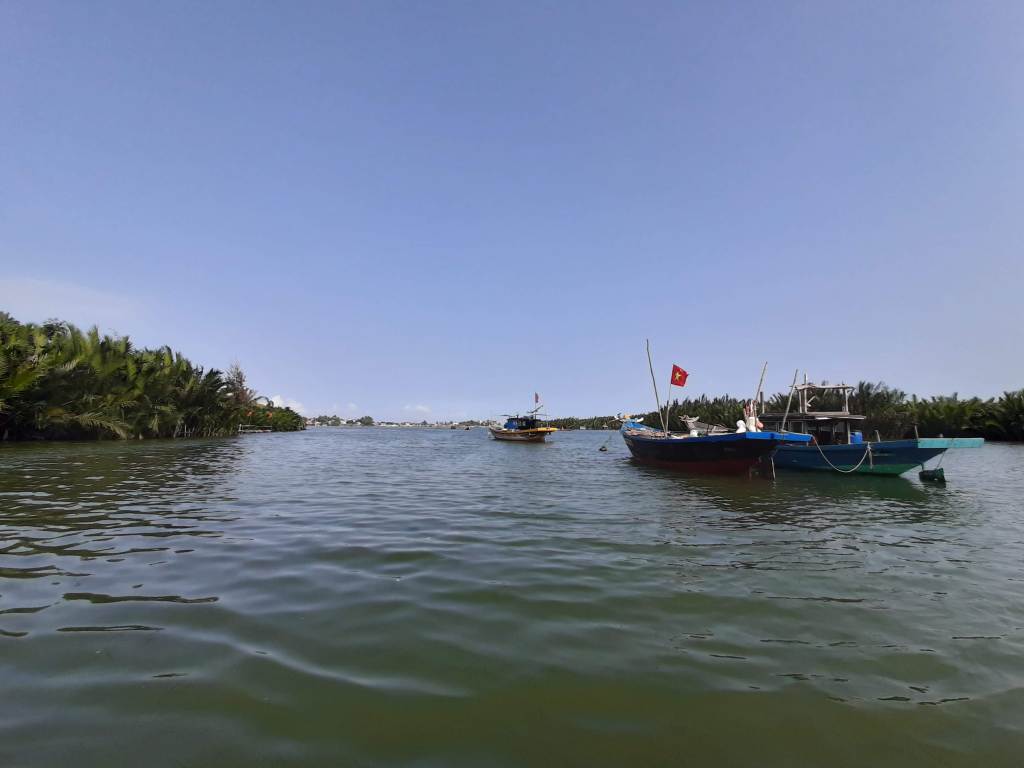
After our wholesome morning, we got back on our bike and headed east towards the sea once more – although this time, we went in search of the “coconut boats” and palm forests. We had read about excursions you could organise and decided we would explore this ourselves. Over the course of our travels, we had experienced all manner of touting techniques of people justifiably trying to get a piece of the tourism pie. We had never had it from another person on a motorbike while driving though! A man just drove right up beside us saying “coconut boat”? We felt like we wanted to see what the situation was on the sea front rather than follow a random man on a bike, so declined and sped off. As we approached the sea, another lady pulled up beside us and asked the same question again! For whatever reason, we said yes to the second lady and followed her to her house down a few narrow roads, barely 5 minutes away.

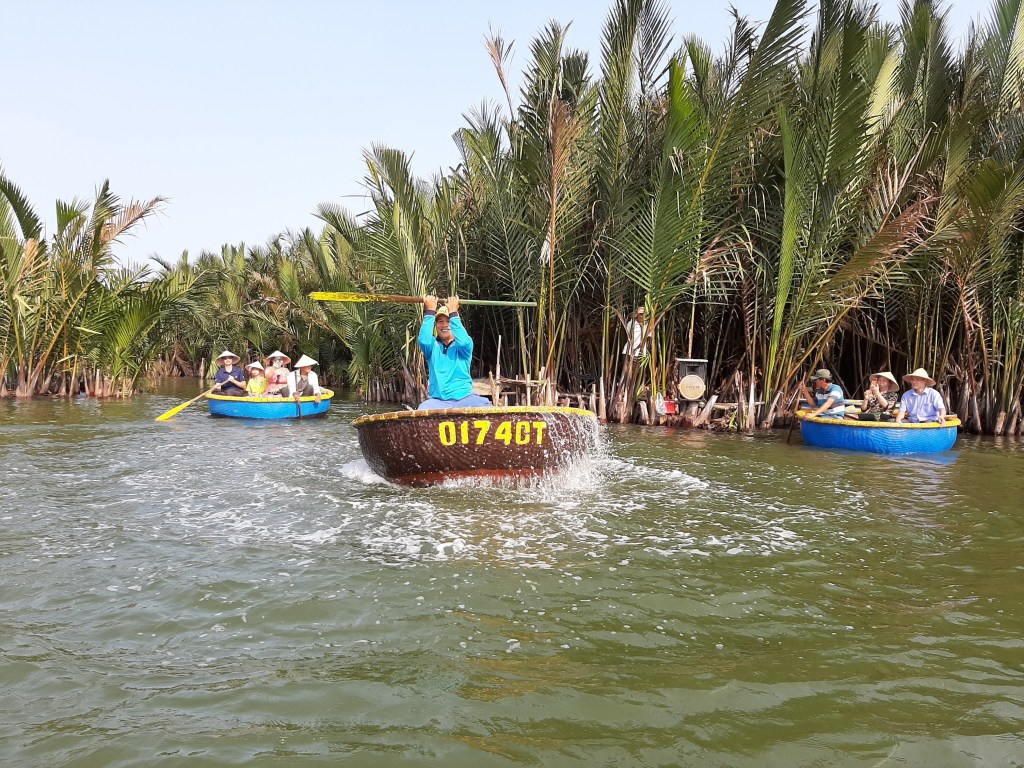
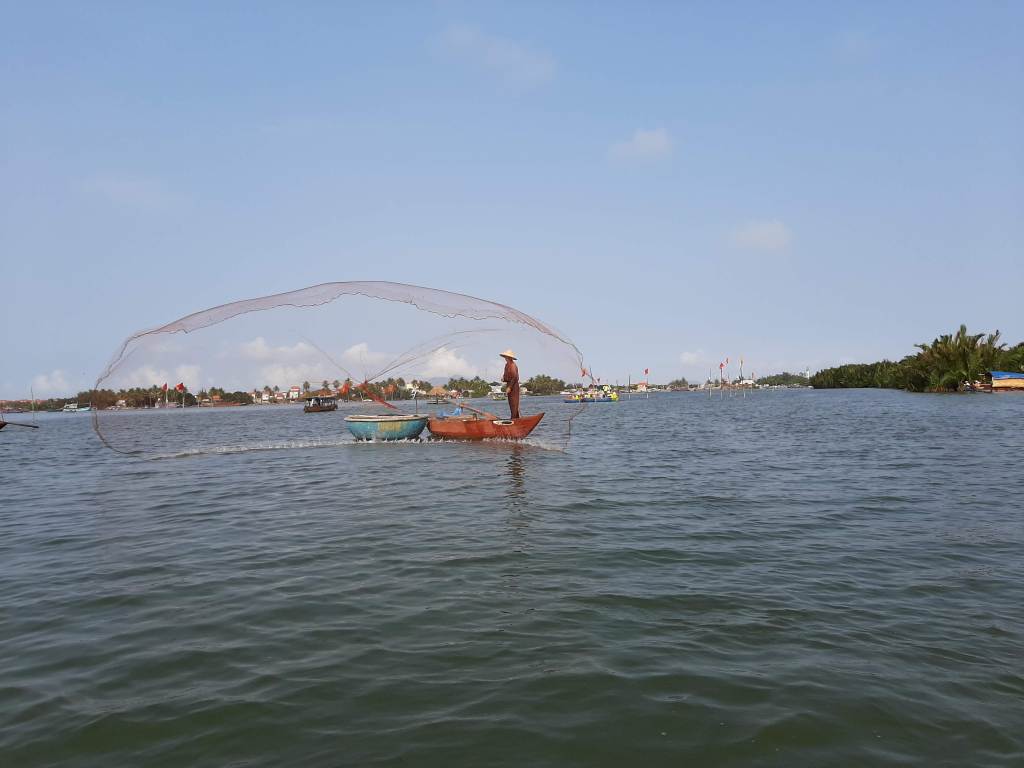
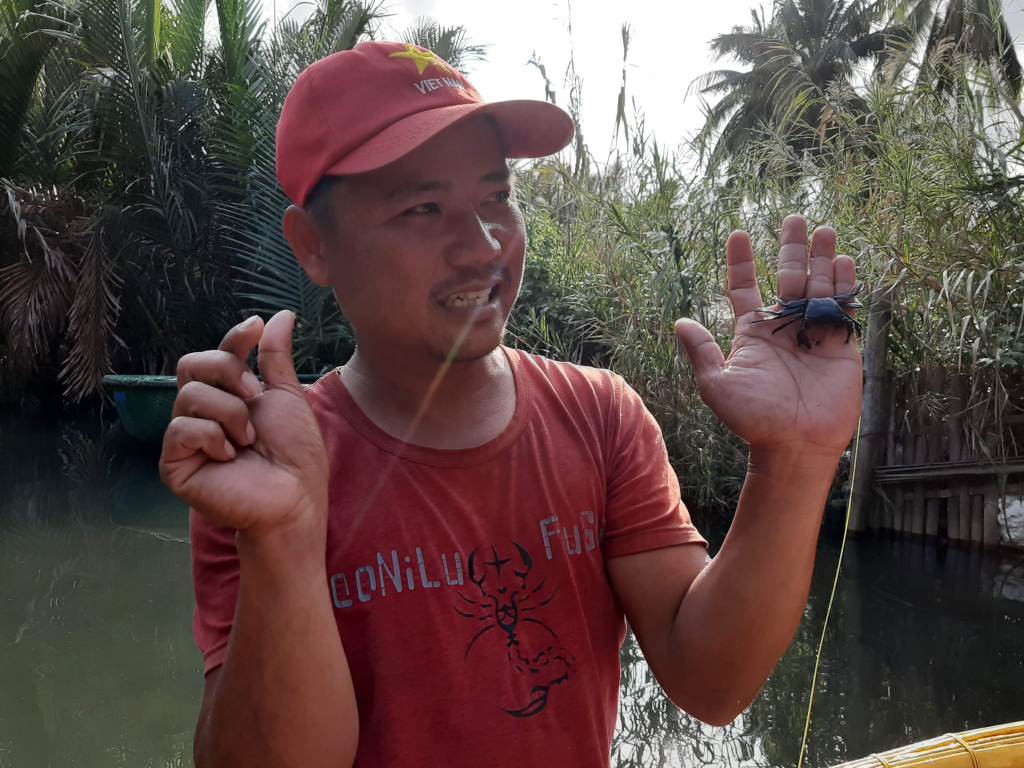
What followed, was one of the most bizarre and surreal but fun things we have done on the Megamoon! The lady’s husband, called Mr. Khun, ushered us eagerly into his small round tin boat. They are in the shape of a coconut but seem to be made from wood and hardened tar (for vital waterproofing!). It quickly became apparent that Mr. Khun was a bit of a hilarious maniac – he seemed to be a Vietnamese toddler in a man’s body, finding everything funny and joking around with toddler level naughtiness constantly – with virtually no English of course. He paddled us through narrow waterways lined with palm trees making jokes along the way. It felt very much like “Apocalypse Now”, made perfect with the Vietnamese straw hats we were given to complete the experience. After about 10 minutes of paddling during which we both had a go (it is very strange paddling a round bucket from the front, but we eventually got the hang of it), we started to hear loud music. Mr. Khun led us around some wider canals and we came to a large open area of water where there was a show about to start! About 8 other coconut boats with tourists in them (seemingly mostly Vietnamese) were stopped around a single boat with a man standing in readiness. A huge sound system stood nestled in among the palms just behind him. He suddenly began paddling in a circular motion and leaning from side to side to create a spinning effect. It became so vigorous that he started generating serious waves splashing into the boat and the rocking looked enough to make you sick. Somehow, with the blaring K-pop style music, it was like a mesmerising water-dance. Each boat man presented the man with a small amount of money (clearly included in our price for the tour), by sticking the note onto their paddles and presenting them to him simultaneously. It was a very strange but well-rehearsed and impressive act! One of the Vietnamese girls was brave enough to have a go sitting in the man’s coconut boat while he did his manic spinning, but we dared not. We continued our mad tour, passed a group of Vietnamese tourists doing karaoke from their boats with massive speakers stood on a floating pontoon in the middle of the water. In amongst the madness, we came across a fisherman tossing a wide net into the water – the traditional fishing technique here. Mr. Khun saved the most surreal for last. He somehow created a mini-lasso from reeds, and used it to catch Katharine’s little finger. He then caught a small crab and preceded to play around with it like a toddler: pretending to eat it and then letting it grab his hand with its claw and making pretend crying noises. It was hilarious and just so bizarre. We ended our hilarious tour feeling a little exhausted and not sure what hit us – but it was certainly an experience!

We headed to a quiet canal-side and palm-lined café, run by a local family who only spoke Vietnamese and French (a nice opportunity for us to practice French!). We then scooted back towards Hoi An and parked near the indoor market before heading into the old town for our final round of Hoi An evening delights. Walking through the market, we stumbled across a man selling crab-cakes: small crabs battered and deep-fried to stick together. George had remembered these from his previous visit to Hoi An so we bought one, while Katherine got a sugar-coated donut. We made our way across the bridge to the Irish bar, which had consistently played excellent live music from what we had heard over the past few days. It did not disappoint once again. We sat sipping cocktails and beers at happy hour prices for a good couple of hours, taking in the slowly darkening Hoi An scene around us.

Hoi An really comes to life at night, with the myriad of colourful Chinese lanterns lining all the streets and the water. After our drinks, we found a lady to give us a short boat ride in among the bright lights. Tourists light paper lanterns and float them on the water giving the place an additional level of beauty. Our final dinner in Hoi An was at the impressive “Morning Glory” restaurant. This is in one of the gorgeous old buildings and serves modern takes on Hoi An classic dishes.

6-March was our final day in Hoi An and we had a very different day planned. We had decided to put our recent PADI Open Water qualification to use on a day trip diving around the Cham Islands, just off the coast. While not meant to be earthshattering in terms of diving quality, we were excited to use the extra time we had bought ourselves in Vietnam to have another go at diving! That evening, we had a tight turnaround planned with catching the overnight train from Da Nang to the capital, Hanoi. Unfortunately, we did not set off to a good start as Katharine woke up feeling poorly. We got in the minibus taking us to the ferry nonetheless in the hope it was just some morning grogginess – it sadly was not. On arrival at the port, Katharine was in a big dilemma, on the one hand, she had genuinely been up for going, on the other, diving while sick can be unsafe and not a good idea. In the end we made the right decision and Katharine got herself a cab back to Hoi An. We consulted the diving instructor who agreed this was the best course of action: diving while not feeling 100% would only invite the possibility of having a bad experience and risk putting you off for a longer period as well…

And so, we ended up having mostly separate days sadly on our final day in Hoi An. Katharine managed to get back safe and sound and spent most of the day resting up at our hotel. George went on the boat with the group towards the Cham islands. Luckily, the diving school were super understanding about the situation and gave us a full refund for Katharine. George had a great time diving. He ended up getting on with a Polish girl from Australia who, funnily enough, was also travelling without her husband. They were joined by an English chap in his 50s as a trio group led by Calvern, our South African diving instructor. The boat ride over was fairly calm, but big swells in the water still made it quite a turbulent ride even if they weren’t actual waves… We arrived at our first dive site with seemingly great conditions – calm waters promising good visibility. George had to admit this was merely his fifth dive and first as a qualified diver. Diving with two others who were so experienced did make him a little nervous but he backed himself remembering our learnings from just the previous week! In the end those learnings were immediately needed, as George’s mask came off unexpectedly upon descending a few metres, having to replace it underwater using the technique we had learned of blowing into your mask with your nose. In all, it was a great dive that went smoothly. The predominant feature was vast soft choral gardens of varying colours and a few critters and worms. Marine life is less abundant in Vietnam due to overfishing. We did spot a giant frogfish though, which was a huge white globular fish clinging onto a rock. It stood perfectly still and George would not have noticed it as a fish had the instructor not pointed it out. The second dive was even better, with the defining feature being a rock edge gradually sloping into the water providing interesting features underwater. There were tonnes of soft coral once again and this time we saw a puffer fish and a spiky lion fish! It felt great to be back in the water and was a good confidence booster for George who received praise from the rest of the group for doing so well in just his fifth and sixth dives. The afternoon was spent on a gorgeous beach on the main Cham island, with an excellent group lunch of fresh seafood and some time relaxing on the beach before heading back to mainland around 15:00.

Meanwhile, Katharine made an excursion to get some Pho soup for lunch (not the best she had had) and otherwise felt better having had a day of rest. It had definitely been the right decision to not go diving. George made it back at around 17:00, just in time for our pick-up to the railway station in Da Nang, where we would catch the train north to Hanoi. Hoi An had been a really lovely half-way stop up the coast of Vietnam. Despite it being George’s second time there, it felt remarkably different and the sheer abundance of foodie, cultural and historical fun we had here, with a day diving as the cherry on top, made for a fantastic stay. Hoi An was also the last stop on our travels where we had yet to properly feel the impact of Covid-19, which had yet to be declared as a pandemic…

Cambodia #3, Pnom Penh & Vietnam #1, Ho Chi Minh City

After our incredible six days in Koh Rong Sanloem, our route took us through two major cities in back to back days: the Cambodian capital of Pnom Penh and the once capital of South Vietnam, Ho Chi Minh City (aka Saigon). With just over two weeks left for our time in Southeast Asia, we decided to go through these cities and just get a flavour with what time we had, before going on to explore Vietnam’s delights.

We set off from Wildflower guesthouse in M’Pai Bay around 8.30 in the morning on 28th Feb, but not before getting one more epic breakfast by local British owners Dom and Steph with Yorkshire tea (bliss). After the choppy crossing the week before, we were a little weary of what was to come. While the waves may not have been as big nor the wind so stormy, it proved to be without doubt the most gut-wrenching and terrifying ferry experiences of our lives. This was because the ferry was a high-powered speed boat that could sit around 50 people. Exiting the harbour, it got very rough, very quickly. The boat skimmed the top of the waves and with each wave you felt a huge thud before being propelled back into the air. We were sat at the back and even for us it felt like a rollercoaster ride. Some people toward the front were clinging on to what they could find, others were worse for wear and looking very sick. Some barely seemed to notice the waves at all! For Katharine who has a genuine fear of high seas and suffers from motion sickness at the best of times, this was beyond and unpleasant experience…

We somehow made it to Sihanoukville after what felt like hours but was probably about 40 minutes. About 5 minutes before arrival, the boat stopped and one of the staff rushed to the back to inspect the engines. Something was clearly not quite right. After a few minutes of playing around and looking, the engines were lowered back into the water and we sped off once more, albeit at a slower pace. Add this to the fact that the boat was overcrowded, with some poor people having to endure this madness while standing, it made you see how tragic news of sinking ferries in this part of the world come about! We finally disembarked at Sihanoukville feeling thoroughly shaken. We stopped at the pier for a few minutes to catch our breath but had to keep going to catch our bus to Pnom Penh. We walked up hill through the grime that is this city and found the ferry company office, from where we were picked up by truck and taken to our “deluxe minibus” for the capital. Surprisingly, this one did turn out to be quite posh with relatively spacious leather seats and good air con! The drive to Pnom Penh took about 6 hours during which we spent most of the time doing terrifying overtakes on the narrow road filled with trucks – this is the main commercial route between the country’s capital and its main port.

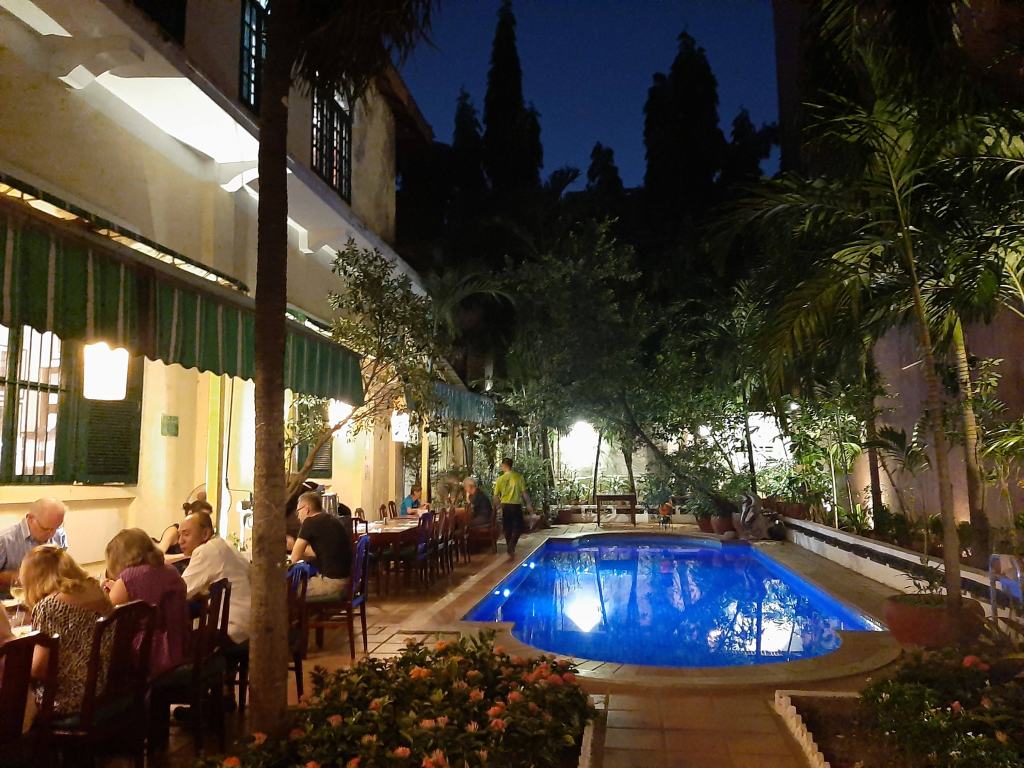
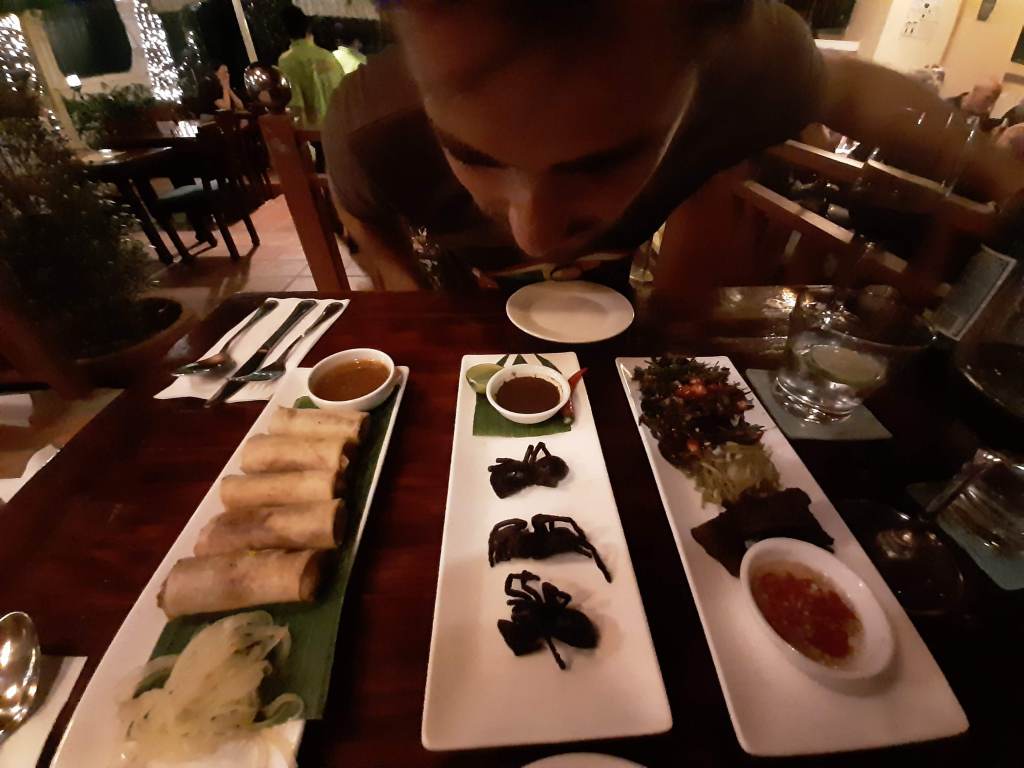
We stayed our one night in Pnom Penh in the centre of town, near the Mekong river. “Monsoon Boutique Hotel and Spa” proved to be affordable and nice enough. Extensive guidance on the policy towards “guests” in rooms gave it a slight brothel feel but was, really, just an indication of seedy sex tourism reality that is very much a part of Cambodia. That evening, we finally succeeded in collecting the US Dollars from Western Union, that Katharine had been owed for months as work expenses – a major win and would certainly help pay for things in Vietnam! We had a drink in a pleasant riverside bar and sorted ourselves a bus to Saigon for the next day. We grabbed ourselves a tuk tuk and headed for some dinner at Romdeng restaurant. This is one of a number of social enterprise restaurants in Pnom Penh, with a focus on training and employing former street kids as front of house and kitchen staff. It proved to be a great way to get a flavour of some gourmet insects, including tarantulas, frogs and crickets as appetisers, and red ant and beef stew as a main, served with nice red wine, in the grounds of a beautiful old French villa.

29th Feb was a long day. We were booked onto a bus leaving at 15.30 but had decided we wanted to go to the Killing Fields of Choeung Ek in the morning. This is one of the hundreds of sites where the Khmer Rouge regime led by Pol Pot carried out their massacres of ordinary Cambodians during three years of madness between 1975 and 1978. We grabbed some not so good breakfast at a café across the road and hired a motorbike to make our trip down to the southern end of Pnom Penh. The journey to the Killing Fields showed George just how much had changed in Pnom Penh in the five years since visiting previously. While last time the road had been pretty well empty, and in places, non-existent; the number of car and motorbike owners has clearly exploded, the road has been finished, making the whole thing one long and horrible traffic jam. With some expert navigation skills by Katharine, we managed to turn off the main road and make most of the way via small side streets. While slow going, at least we could breathe and we got a feel for more of the city.

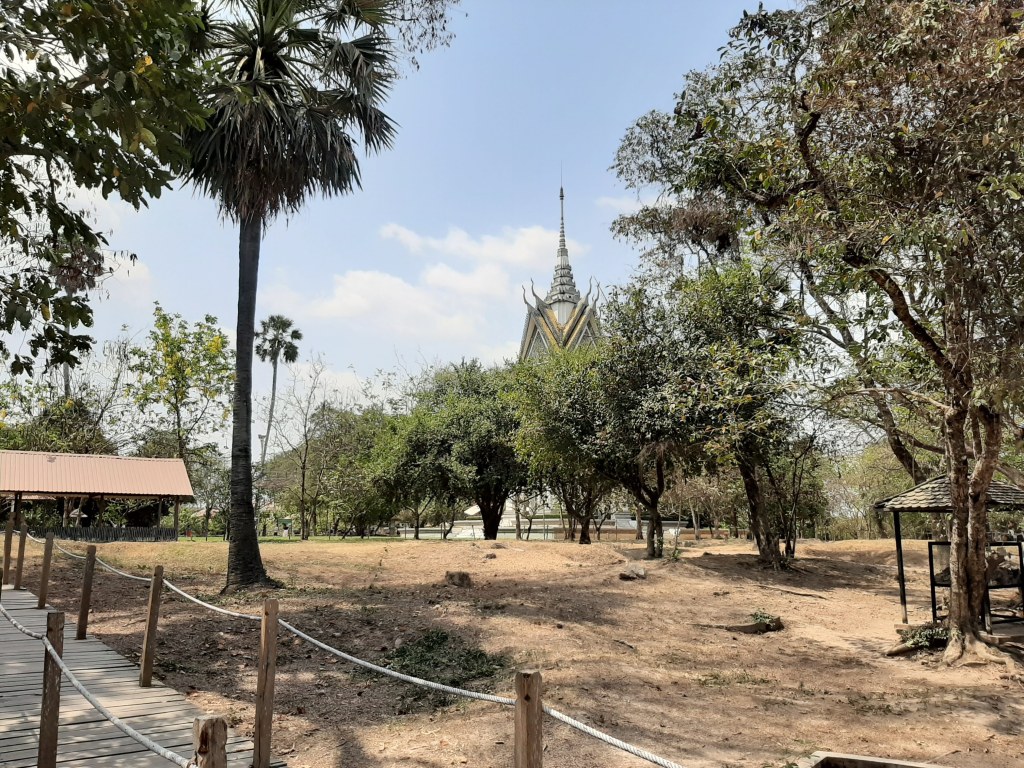
The site of Choeung Ek is today serenely peaceful and feels like a pleasant green garden. The immersive audio-guide, however, transforms you into this world of horror and insanity that ingulfed Cambodia for three terrible years. In Pol Pot’s new world, everyone was either a peasant / farmer, a soldier or a worker. Anyone suspected of being educated (wearing glasses, being well-dressed, speaking French) was an enemy of the state. We took in this peaceful place listening to the horror stories of survivors and of the mass graves that were found here in the immediate aftermath. Bits of bone and clothes are regularly washed up with the changing of the seasons and rain, providing a gruesome reminder of what went on here 40 odd years ago. At the centre of the site, presides a pagoda where hundreds of skulls and other bones have been housed, each labelled with the respective weapon used to kill the victim (hammer, stones, clubs, even sharp palm leaves… bullets were too precious to be used). It was a sobering but important visit, and we agreed it felt more powerful than the genocide memorial in Rwanda (not to compare suffering levels…).

We returned to downtown Pnom Penh via the new highway which we were given directions towards by helpful staff at the Killing Fields. We got back in less than half the time and avoided the horrible fumes of the traffic jams. We were now in full rush mode to get to our bus, and managed to return the bike, grab falafel wraps for lunch and water and snacks for the bus before heading to the travel shop on the river front for our pick up. We had been used to such pick ups being in trucks or tuk tuks – inexplicably, this time we were taken to the bus station in a Mercedes limousine with leather seats and air con. The bus itself also turned out to be a delight with massive leather reclining seats, air con and even some wifi! This was the poshest bus we had been on during our travels.

We sped on east towards Vietnam, crossing the massive Mekong one final time in the process. It was incredible to think that we had been with this river for a whole month, right from the northern end of Laos. We arrived at the border, armed with passports and our e-visas on our phones. We had experienced plenty of oddities at land borders (being asked to bribe the border officer and having people pretend to be police to steal our bags in East Africa, being made to pay an exit fee to leave Laos), but our final land border proved to be the most stressful. Things first got weird when the steward from our bus started asking for us to pay the Vietnamese border officer $5. We already had paid for visas and were not in the business of pandering to petty corruption or in a rush to speed things up, so we outright refused. Everyone went through, even another western traveller who seemed to have some difficulties. We presented our passports and phones to the border officer, who preceded to hand us his phone which he had used to google translate “you must have a printed e-visa to enter Vietnam”. With an expression of total disdain, he pointed back the way we had come and said “go back to Cambodia”. He then left his hut and for a moment, we were left totally alone in the room, with everyone from our bus having gone and a number of our things still on the bus that was now through and into Vietnam. It was late and we had already exited Cambodia – these guys know exactly what they were doing. Trying our best to remain calm, we tried to speak to another lady who just pointed us to where we had come from. Eventually the young steward from our bus came back. Having no real choice now, we handed him $5 which he placed in our passports and handed to the border officer who had now returned. This was not enough apparently but $10 did the trick. It was absolute nonsense but we were relieved to be through! The e-visa process is quite new in Vietnam and there are still, clearly, plenty of oddities that can be exploited by corrupt border officials. Handing e-visas on our phones was the norm even in Rwanda and Kenya…

We finally arrived in Ho Chi Minh City (Saigon) at around 10pm and got ourselves a taxi to our hostel. We had no Vietnamese Dong at this point, but our taxi driver seemed delighted with the $1 bill we gave him – worth slightly more than the fare in Dong. We headed out and easily found a superb Pho soup restaurant. We then grabbed a quick beer at a very strange, enormous semi-open-air bar. The ease at which we had found food this late, the groups of men smoking and drinking on tiny chairs on the street, the groups of women dressed in immaculate dresses, the bright lights, all gave us a proper feel of Saigon’s party vibes. Unlike Laos and Cambodia, however, it is the locals here who are as thirsty as the tourists and it felt fun to be in a country with a proper local drinking culture.

1st of March saw us properly start our Vietnamese explorations. We had almost a full day in Saigon, before our evening flight to Da Nang, from where we had arranged to be picked up by our homestay in Hoi An. We had initially planned to fly from Hanoi, the capital in the far north of the country, to Bali and, on to Brisbane in Australia on the 12th March. We decided to buy us some more time in Vietnam, however, to make sure we didn’t rush this incredible country, and moved our flight to Australia back to the 16th. This would give us two full weeks in Vietnam, 3 weeks in Australia and 4 weeks in New Zealand (well, at least that was the plan pre-Covid-19!).

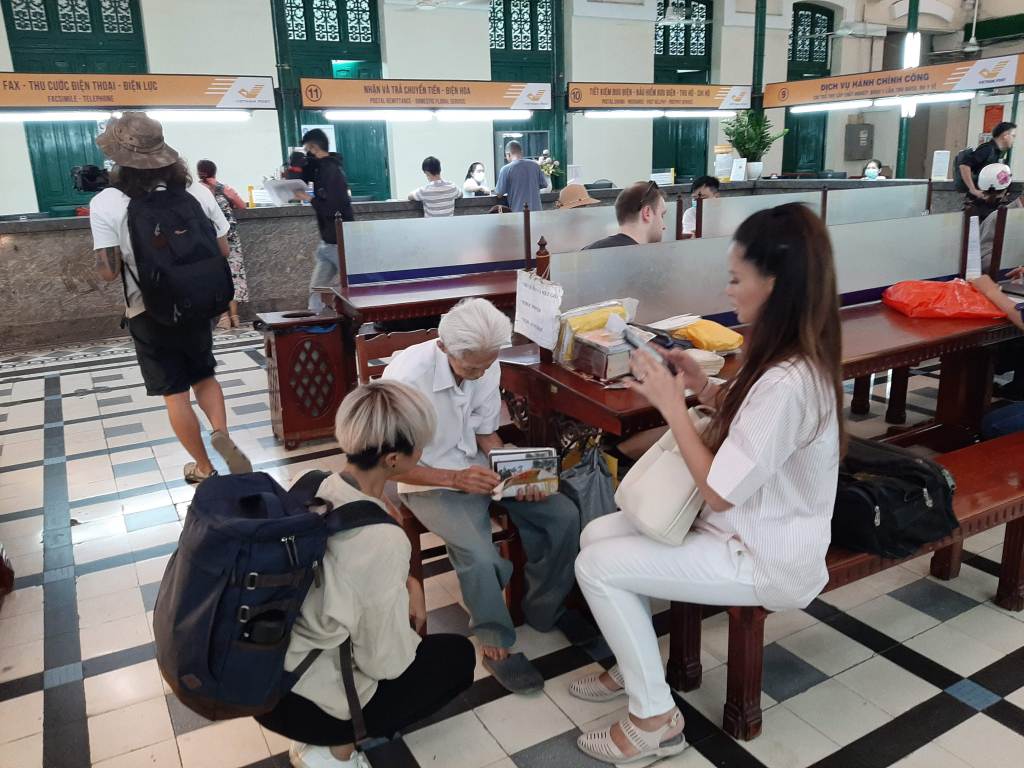
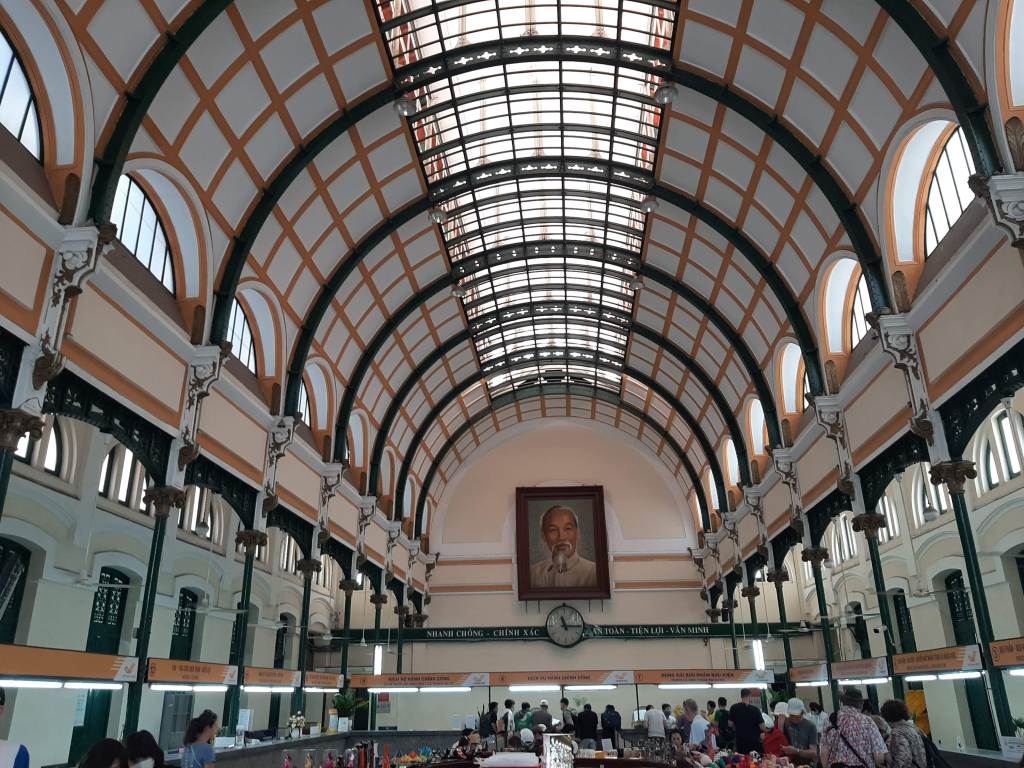
We got a Grab taxi (southeast Asia’s answer to Uber), to Saigon central post office. This might seem a strange start to sightseeing, but it is actually one of the most impressive buildings in the city! It is a beautifully ornate old French colonial building with stunning ceilings and walls on the interior. Some level of redecorating has, of course, taken place, with a painting of Ho Chi Minh (aka Uncle Ho) himself dominating the far end of the wall. This incredible building is also very much a working post office, and we took the opportunity to send home a box of stuff (mainly clothes we didn’t need). The operation of packaging and posting our things was incredibly swift and efficient – certainly a different side to the Vietnamese state than the corrupt border guard! We also came across the cutest old lady here who offers translation and letter writing services. She seems to have been doing this for longer than anyone could remember and is clearly proud of it!

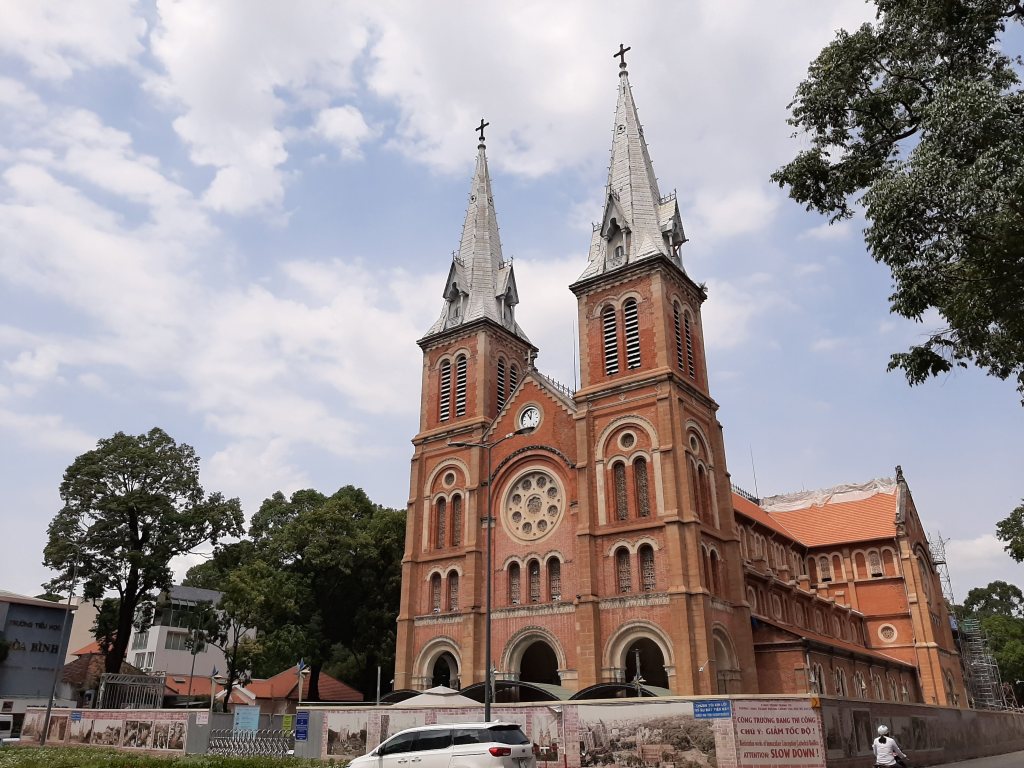
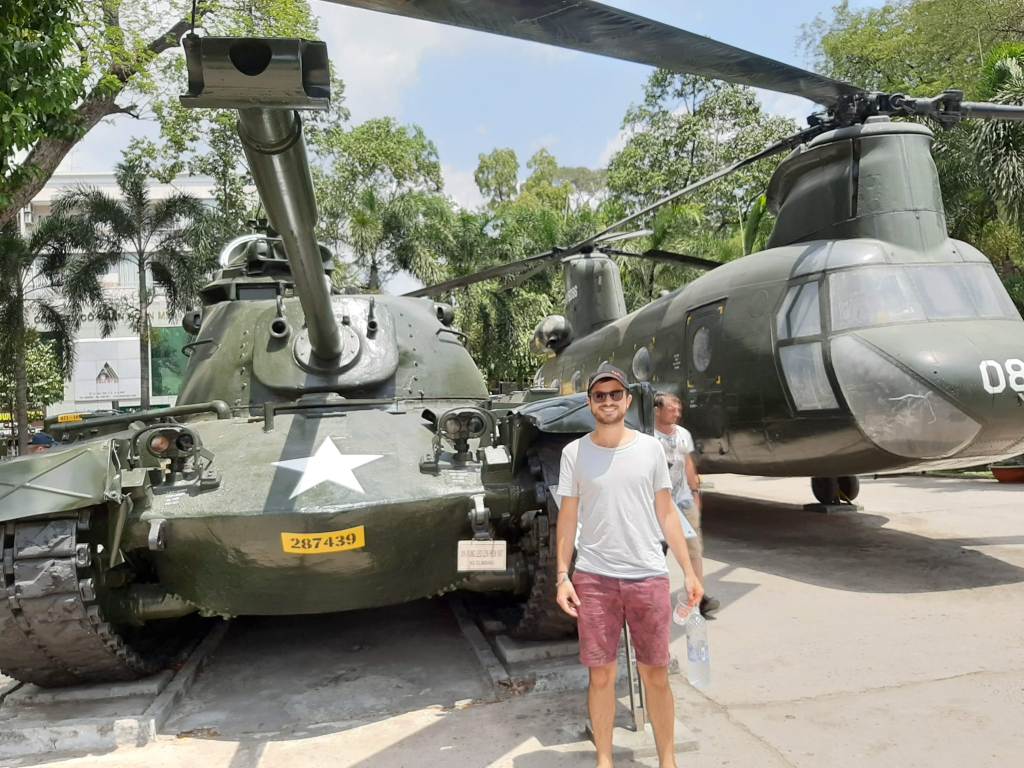
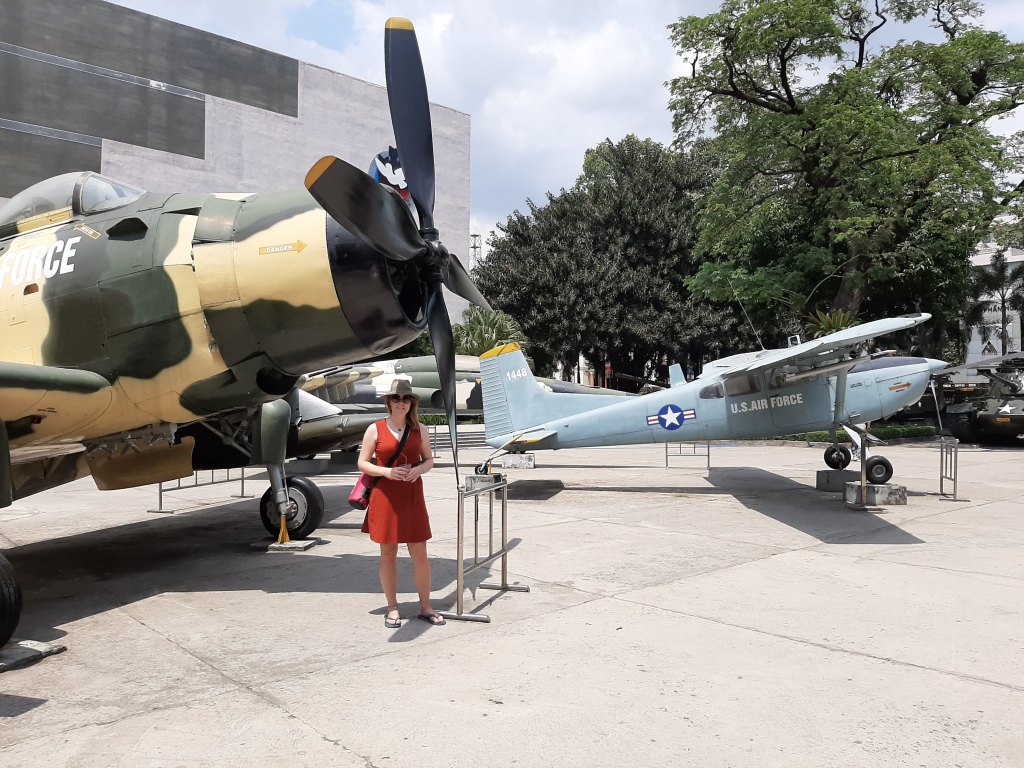
After our trip to the post office, we walked past the massive French cathedral, the 1950s Presidential Palace and up to the “War Remnants Museum”, that was until not so long ago called the American War Crimes museum… Aside from the collection of American war toys and tanks outside, the museum provides an incredibly powerful, in depth and personal account of the history and horrors of the Vietnam War. Collections of war photographers, many of whom also died in the conflict, brought the atrocities to life, while the Agent Orange section (chemical weapon used to destroy the jungle) and the longer-term human effects, was particularly harrowing. The section towards the end of the exhibition focusing on the peace movements during and after the war as well as the efforts of war veterans, Senators John McCain and John Kerry to promote reconciliation of relations between the USA and Vietnam, was a good uplifting way to end.

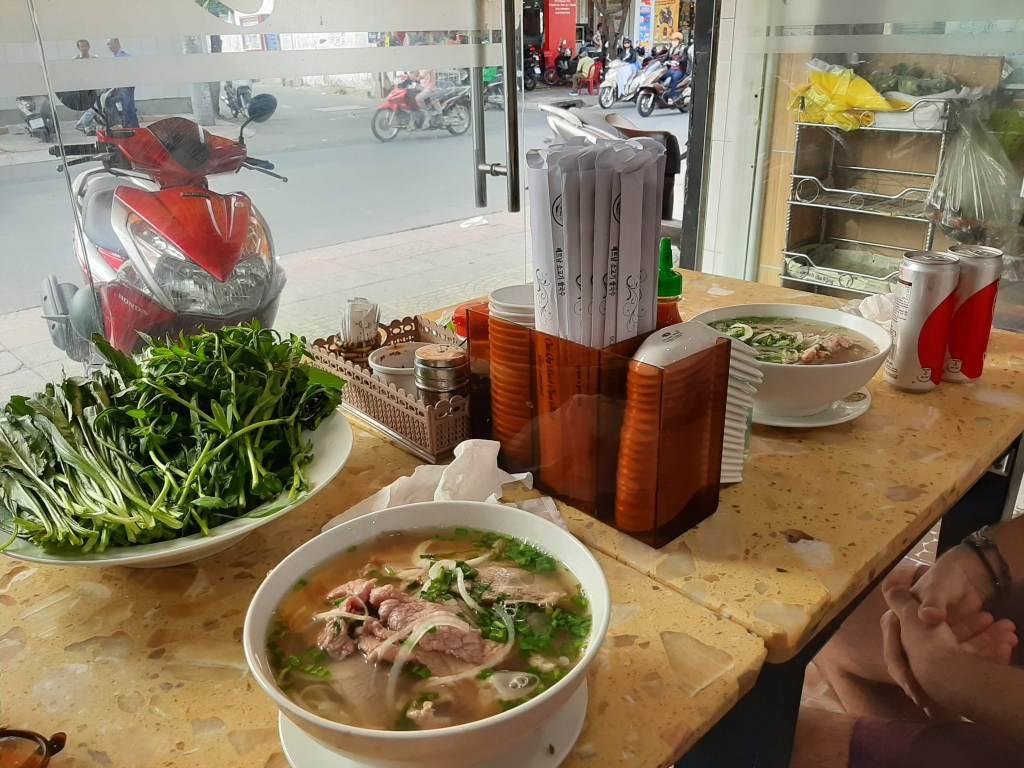
With our mini-tour of central Saigon complete, we grabbed a Grab taxi back to our hostel and found some lunch (another excellent local Pho beef and noodle soup). We went for a hunt in the local area and found a spa where Katharine got herself a particularly good massage, and then we made our way towards the airport for the next leg of our trip: the historic town of Hoi An, right in the middle of Vietnam. We left Saigon feeling like we had just managed a flavour of this incredibly vibrant city, and agreed that we would have ideally liked more time to get properly stuck into the place. The historic delights of central Vietnam and the natural beauty around Hanoi and North Vietnam were calling too strongly for us to stay any longer unfortunately!

Cambodia #2: Koh Rong Sanloem

We had not had any beach time since our days in Zanzibar and the Swahili coast. After 2 months of winter in the Caucasus and Nepal and exploring inner Thailand and landlocked Laos, it was high time for our return. We could not have picked a better spot than the island of Koh Rong Sanloem off the south coast of Cambodia. Until recently most of this coast was pristine white sands and a few sleepy bungalows. Then Chinese mass tourism came in a truly horrible force to the city of Sihanoukville, Cambodia’s main port and the gateway to these beach paradises. Just an hour from Sihanoukville by ferry, Koh Rong Sanloem has escaped (so far) mass tourism and is a genuinely gorgeous and peaceful spot. Our time on the island was split between two places with two purposes: Saracen Bay for chilling and M’ Pai bay for diving!

We arrived in the city of Sihanoukville at dawn on 23rd Feb. We had to wait for about an hour before a a couple of trucks ferried everyone down to the port. We agreed that Sihanoukville is without doubt the worst place we have seen or passed through on our trip. Monstrous Chinese hotels have popped up everywhere, but the Cambodian government have not had the time or money to build any actual infrastructure. The result is a whole area of massive concrete buildings with no road or sewage system, dirt everywhere and stench. We tried to have coffee and breakfast at a cafe near the beach but we felt sick just being there and getting the frequent whiffs of sewage. The cafe had toilets, but no running water…

In among the usual confusion of travelling in this part of the world, we eventually found our boat – a 2 deck catamaran – but learned that because of choppy waters it would not be stopping at M’Pai bay. While an ominous sign, this was fine for us as we were headed to Saracen Bay but it left a host of others from our bus stranded. As predicted, the ride was rough and we arrived in Saracen Bay feeling pretty rattled. Walking down to the beach, everything seemed deserted: empty or closed up bungalows and beach resorts. We later found out that the ferry had dropped us off at the far end of the beach and the hub was a good kilometer or so further down the beach.

We had not booked a place to stay so did our usual of finding the best deal on offer. We stopped to enquire at the first set of bungalows that looked simple with nice hammocks outside, and to our horror, were quoted $190 per night… It was certainly a shock having paid $7 for the last bungalow we stayed in! We eventually managed to negotiate for a nice bungalow a little further along, a few rows back from the beach for $40 per night, at a place run by a Ukrainian family. The combination of very strong winds and waves on the beach and our struggle to find somewhere affordable to stay left us somewhat irritated and was not a great first impression for Saracen Bay. While still very quiet with no road let alone ATMs or cars, the place is clearly more resort rather than backpacker-focused. As we got settled in and the wind died down, however, we liked what we saw: a vast bay with jungle backed pristine white sands. Saracen Bay is very much the main strip of the island but it is drop-dead gorgeous! We just spent our first day here relaxing on sunbeds and taking in this beautiful place. Katharine had a very affordable mani/pedicure in her sunbed from a lady who just turned up and was very persuasive. In the evening, we walked up to a pier further down the beach from us and enjoyed watching the sun setting over the green island. We had a quick drink at Tree Bar – seemingly the main hub of what little activity there was – and explored around. It was strange but excellent to be in a place where the beach is the road. There are dozens of bars and restaurants, mostly extensions of bungalows of varying levels of poshness, and each offering near identical menus and fresh seafood and fish barbecue on the beach.


Day 2 saw a return of tranquil waters and no wind and we got a real feel of this tropical paradise. After a leisurely start to the day, we decided to walk to “Lazy Beach” (it was a hard life), one of the other beaches on the western side of the island. We walked for about 30 minutes in the heat of the day and only saw a handful of people in what was otherwise raw, thick jungle. We eventually made it to Lazy Beach and immediately fell in love with the place: a large bay with fine yellow sand, waves rolling in, jungle backdrop and almost entirely devoid of any human development. There is only one resort on the far south end of the beach, which has managed to tastefully blend into the forest with wooden thatched huts. We made this place our paradise home for the afternoon, swimming, reading and chilling, before we had a tasty lunch at the resort restaurant and cold Angkor beers. It was truly blissful. We returned begrudgingly to Saracen Bay, this time via a narrower, more direct and more beautiful path through the jungle. We arrived back just in time to make use of one of the paddle boards our resort had. It was our first time paddle boarding for both of us – it was harder than it looks but a great way to see the sun setting over the island. We had a superb pizza at the pizzeria on the south end of the beach (the best of our trip for certain). After a couple of drinks back at Tree Bar, we went for a night time dip in the sea to experience the luminous plankton that we had heard a lot about. As some sort of defence mechanism, plankton light up when faced with movement in the water; so just a light swipe in the water revealed hundreds of sparkles all around us!

25th Feb was moving day again for us, but not before a very leisurely half day on the beach! Katharine had a cheap massage and had another go at paddle boarding in tougher conditions than the previous evening, while George kept it to swimming, sunning and reading. Our destination was M’Pai bay in the north of the island. We took a local small wooden ferry that looked like an old fishing boat. While rustic, being a slow boat and sturdy enough meant it was not too bad navigating the waves. We sailed on, reflecting of a great 2 nights/ 3 days in Saracen bay. The Ukrainian family in particular had been a key part of making our stay feel easy and welcome. The place is seemingly run by the son who can’t be much older than 22, with the mum running the kitchen, the granny inspecting rooms / checkouts and 2 or 3 other younger siblings / cousins providing the grunt work of manning the reception and restaurant. Ukrainian and Russian tunes blared from the sound system most of the time. It was a really surreal setup but truly excellent at the same time!


We arrived in M’Pai bay around 5pm and loved what we saw. As an actual lived in fishing village, the place has a much more authentic, rustic, down to earth feel and has now been discovered by backpackers. Much as we loved Saracen bay with its picture perfect white sands, M’Pai bay was definitely more our vibe. As we disembarked and started walking along the beach towards our guesthouse, we bumped in to a pair of British travellers called Nicky and Tom who we had met in Don Det, Laos! They were chilling on bean bags on the beach sharing a glass of sangria of truly epic scale. We stopped for a brief chat and said we would join them once we had checked into our guesthouse. “Wildflower” is a fantastic little guesthouse / hostel run by a British couple (Dom and Steph). It is pretty new and has a spacious, open cafe / bar / Mexican restaurant on the ground floor with a handful of rooms upstairs. Our room was simple but nicely decorated and a perfect base for the next few days. Before arriving we also checked in at the Dive Shop, “Ecosea Dive” to say hello. We were told to be there for 8.30am the next day to start our PADI Open Water diving course!

We returned to the beach and joined Nicky and Tom in getting our own huge sangria. The two are friends from the UK, Nicky being a nurse and Tom working in digital marketing. They had been joined on their travels in Cambodia by a younger Dutch girl who was nice but bizarrely fussy about eating no local food. She seemed to subsist on fried potato (how very Dutch). We had a lovely evening exchanging stories with these guys and went for dinner at a restaurant just next door that is seemingly run by a 9 year old local girl called Lisa. Speaking to her, we learned she was the youngest of 10+ siblings and the only one in her family who spoke English. While her mum ran the operations and kitchen side of the business, Lisa was the boss in front of house. While this was concerning on the one hand having such a young child working full time, it was also understandable in a way given she has become an integral part of their family’s income source… During her work, Lisa has grown past confident to now exude spoiled brat vibes. “Takes no shit” would be one way to talk about it, she is incredibly direct in conversation and simply demanded to have her hair braided by Nicky while we were trying to make our order. Over the next few days, we learned she had told some French tourists to “fuck off” and she also point blank denied us service on another evening when they didnt have any of our choices from the menu and we asked to stick to drinks! We were not really offended but it did certainly highlight the pitfalls of relying on an emotionally developing and erratic 9 year old to run your customer service! We hope she comes out of it confident and wise and not scarred…

We started our scuba diving course bright and early on 26th Feb, after a truly exceptional breakfast at our guesthouse. Not only did we hugely appreciate the quality of our eggs, avocado, beans etc., but they also had Yorkshire tea – a true game changer! It was a brilliant small highlight of home comforts after 3 months of travel. We reported at the dive shop and met our instructor, a Russian / Kazak lady called Anna, and our fellow student in our group, Maya from Israel. Having never dived before, we had initially signed up to the 2 day, “Scuba Diver” course, with the plan to upgrade to the full Open Water course if we enjoyed it. Having snorkelled before and loved it, we were keen!

The course started with us signing paperwork acknowledging all the various wonderful ways we could become injured or killed while diving. Anna reassured us if we did certain simple basics – particularly continuous, slow breathing – we would be absolutely fine. The first half of day 1 was a lot of theory, watching videos and doing quizzes as a group. In the afternoon and early evening, we learned how to use the various bits of gear and got into the water for some skills practice in shallow water. We took our first breaths underwater which was certainly a different experience but not quite the immediate “wow” for us. We practiced swimming, clearing our mask, finding our regulator (breathing tube) etc. underwater.

It was a huge amount of info for one day and we were told we had an exam the next morning. So, we did the sensible thing… and went drinking! We had tacos and margaritas at Wildflower, before continuing a little up the beach to the main beach bar. We immediately heard the sound of screeching of the girls from our Siem Reap night bus recognising us – so we not so reluctantly joined them in standing / dancing (mostly standing….) on the bar and getting involved with shots. It was a fun evening and a nice surprise to see these guys. Eventually, we did the sensible thing and went to bed before things got too out of hand!

Katharine was certainly feeling the effects the next day having strayed onto spirits earlier than George… We were a little concerned as the theory we had learned on day 1 was pretty clear on diving while feeling sick was a bad idea. Katharine mentioned this to Anna just to be safe who said it was fine so long as it was just a minor hangover. In the end, jumping in the water is what cured it! We started the day with our exam which we passed in flying colours. It turned out even making mistakes was OK though as you just sign below a declaration that “I have had any errors explained to me and understood” so it was hardly high intensity. We then went off for our first proper dive!
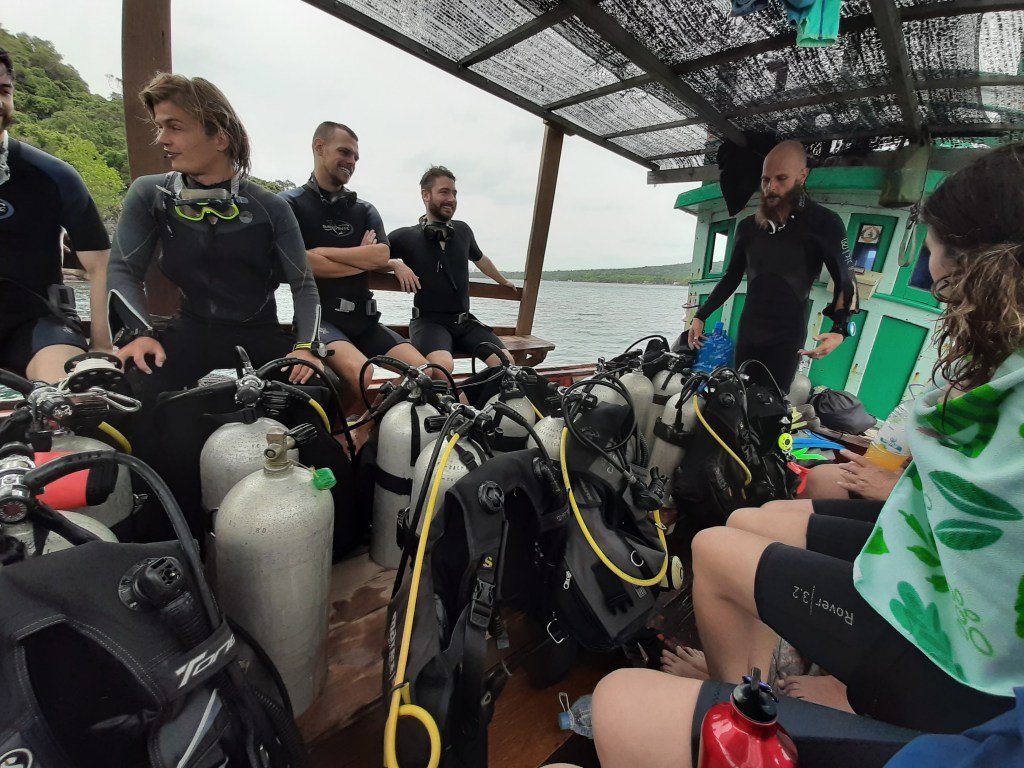
It was a cool if slightly tense feeling being on the boat with a load of other drivers (most very experienced) and a lot of gear – almost like you are in a plane waiting to be given your signal to para jump. Our first dive was to 10 metres and was on a nice sandy bottom for us to sit and practice core skills at depth. We slowly descended into the water by following the anchor line, practicing equalizing pressure on the way down. The water was rough and visibility was poor making this far from a relaxing way to do our first dive! We eventually made it to the bottom after Maya had some difficulties with equalizing. Removing, replacing and clearing your mask was definitely the toughest challenge for Katharine, while George weirdly struggled with anything that involved removing the BCD (jacket) or weight belt and putting it back on again. Katharine had something of a wobble with the realisation that you are deep underwater with no mask on but managed to keep going and complete the dive which finished with 20 minutes of just swimming around and getting a feel of buoyancy.

We got back to the boat for a short break before moving to our next dive spot. Katharine felt a little rattled and it took a lot of courage to get back on her horse for the second dive! Our second dive was to a slightly deeper 12 metres and this time to a coral garden. Visibility was about 6 metres, but given we could get up and close we still got a proper feel of this magical underwater world: vivid coral of different bright colours everywhere! Marine life was aplenty, although not quite the huge volumes we had seen snorkelling in Indonesia – apparently due to overfishing in the area. Katharine found herself struggling with buoyancy and inadvertently floating up to the surface. This was not a problem at the depth we were swimming but stressful nonetheless and she grew more anxious about how much air she had left – which in turn makes you use it up faster!

Having completed 2 dives, this was our decision point as to whether we continued to the full Open Water course or stopped for the “Scuba Diver” course. Feeling a little rattled once again, Katharine initially decided to stop here. Over lunch we reflected and talked through some of the ways to manage buoyancy by controlling your breathing – something our instructor Anna had not really explained but which George heard from others on the boat and found immensely helpful. Katharine had gained more confidence from speaking to a couple of the other instructors who said they experienced similar challenges when starting and that it is exceptionally common for people to struggle with buoyancy and the mask replacement exercise! So we both decided to carry on and joined Maya for 2 additional theory modules in the afternoon. In the evening, we did more skills exercises in the bay shallows, practicing mask replacement and buoyancy which gave us both greater confidence. There was a slightly hairy moment when a fishing boat moored near us and our instructor Anna’s float signaling to boats there were divers below, got caught in the boat and she was forced to swim along its path! Thankfully the boat was stopping and she was able to untangle herself easily enough. It really emphasised the dangers of boats to divers…

That night we had a much more low key evening, and went in search for barbecue fish and was the night we were denied service by little Lisa. In the end we found a superb barbecue with and got chatting to a recently retired British couple, the husband having made a business in creating lamps, and the wife having been a wealth advisor.

28th Feb was our third and final day diving on Koh Rong Sanloem. We had a delayed start due to rough waters early morning but we eventually kitted up and headed out on the dive boat. Our first dive was effectively our deep water skills exam, where we each had to demonstrate the various emergency skills we had learned. Despite feeling nervous on the boat, Katharine nailed the mask replacement exercise and grew increasingly confident in the dive! We also practiced emergency resurfacing from 6 metres. Our second dive was back on the coral site, and this time we were able to properly enjoy the stunning under water scenery. We resurfaced as qualified open water divers!


We said our goodbyes to everyone, after the dive shop had brought out a cake for Maya’s 22nd birthday! The rest of the day we spent resting back at Wildflower and reflecting on an incredible achievement! It had been a rollercoaster but we were delighted to have completed the course and ticked off another major bucket list item from our megamoon. The next day we headed back to mainland Cambodia towards the capital Pnom Penh with a view to moving quickly on to Vietnam the day after. Koh Rong Sanloem had been the perfect 6 days of beach time. In Saracen Bay we sampled a truly world class beach in still pretty undeveloped conditions. M’Pai Bay was the perfect all round package: local fishermen going about their daily business, kids zooming down the hill on the island’s one road sat on a skateboard, chickens and puppies wondering around, beach bars, a local nine year old business tycoon, incredible breakfasts at the Wildflower, and, of course, diving!

Cambodia #1: Siem Reap


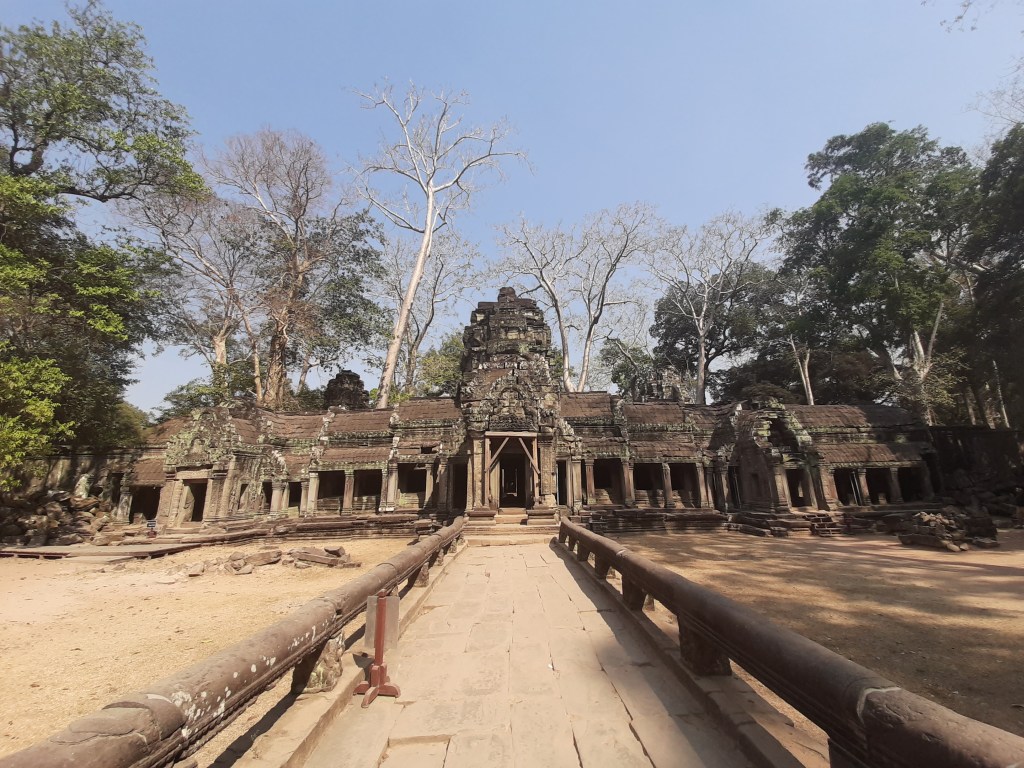
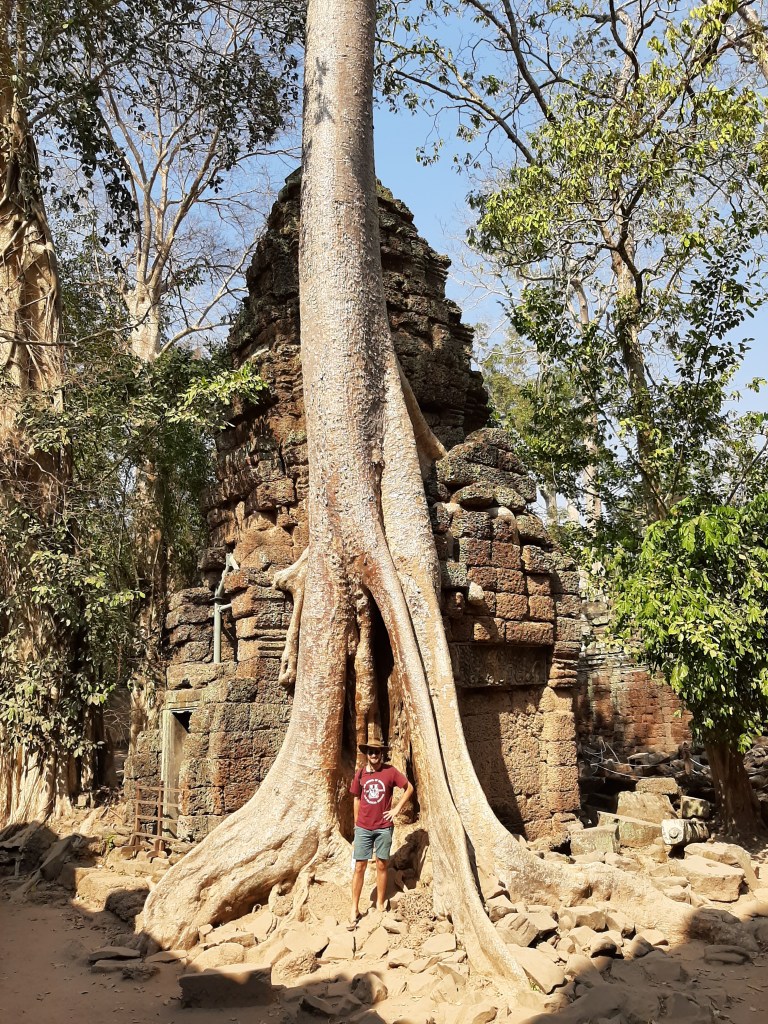
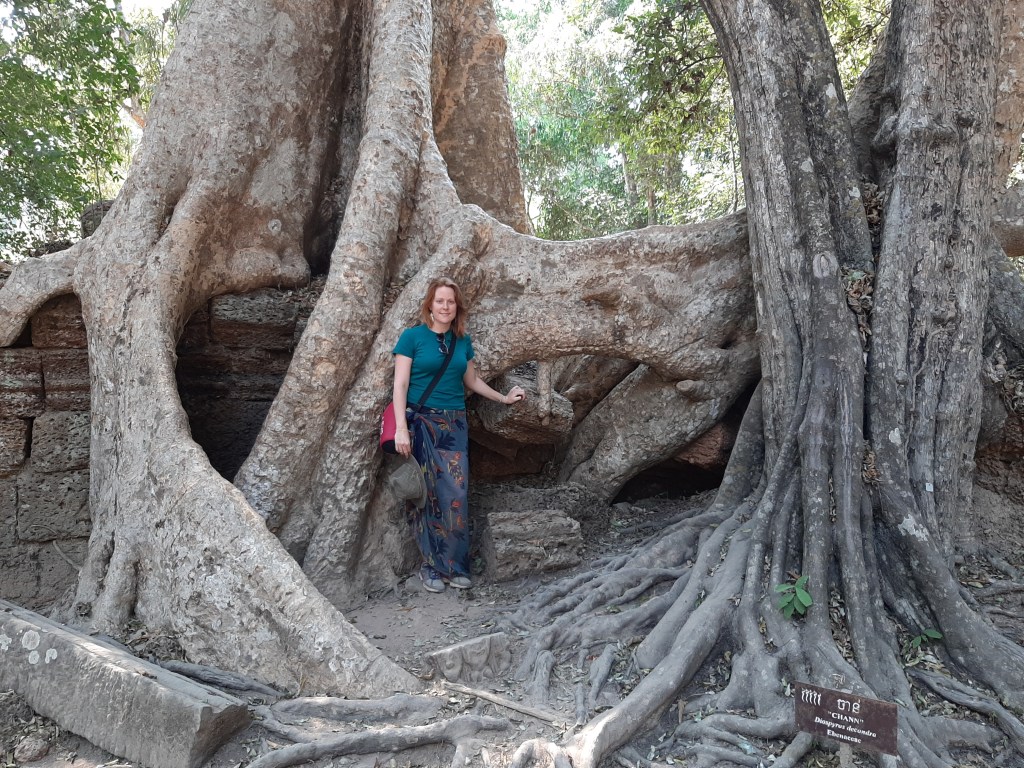
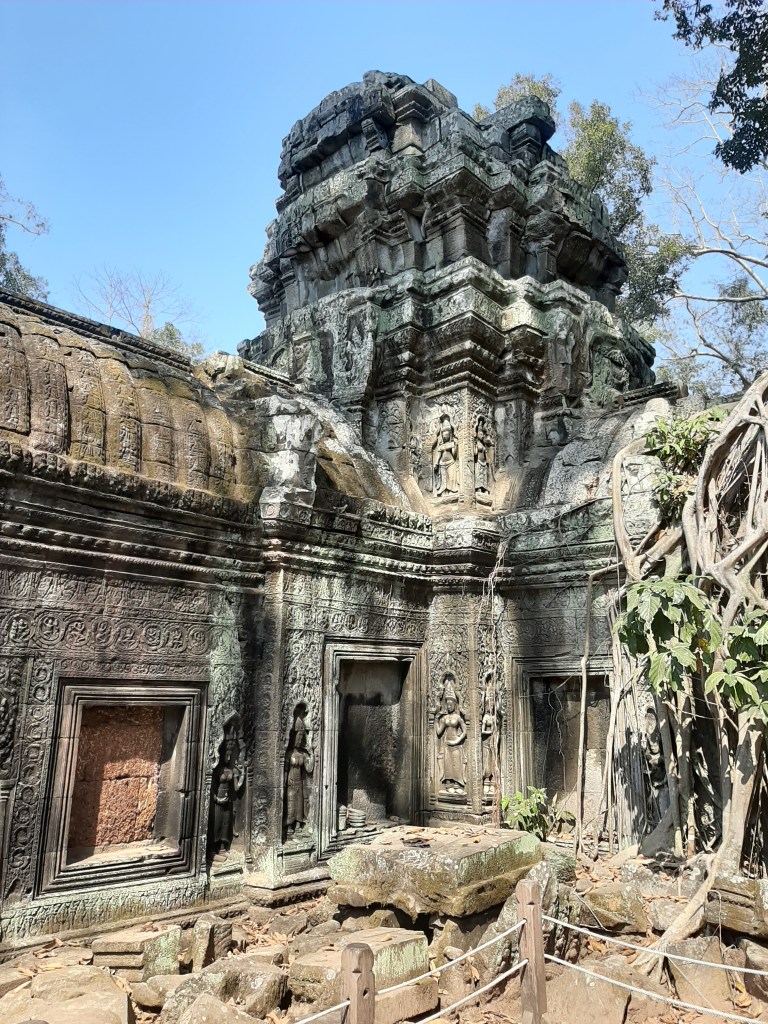
While George had been to Siem Reap on his last trip to Southeast Asia, the temples of Angkor are without exaggeration one of, if not the most impressive, vast and fascinating collections of archeological / historical monuments in the world. The scale and number of these vast structures is simply mind boggling. At its hay day in the 12th / 13th centuries, the Khmer civilisation controlled most of the areas around Cambodia, Laos, south Vietnam and Thailand, and the great walled city of Angkor Thom was home to 1 million people… There was never a chance of us missing them, especially given we could pass through en route to the Cambodian islands and Vietnam.
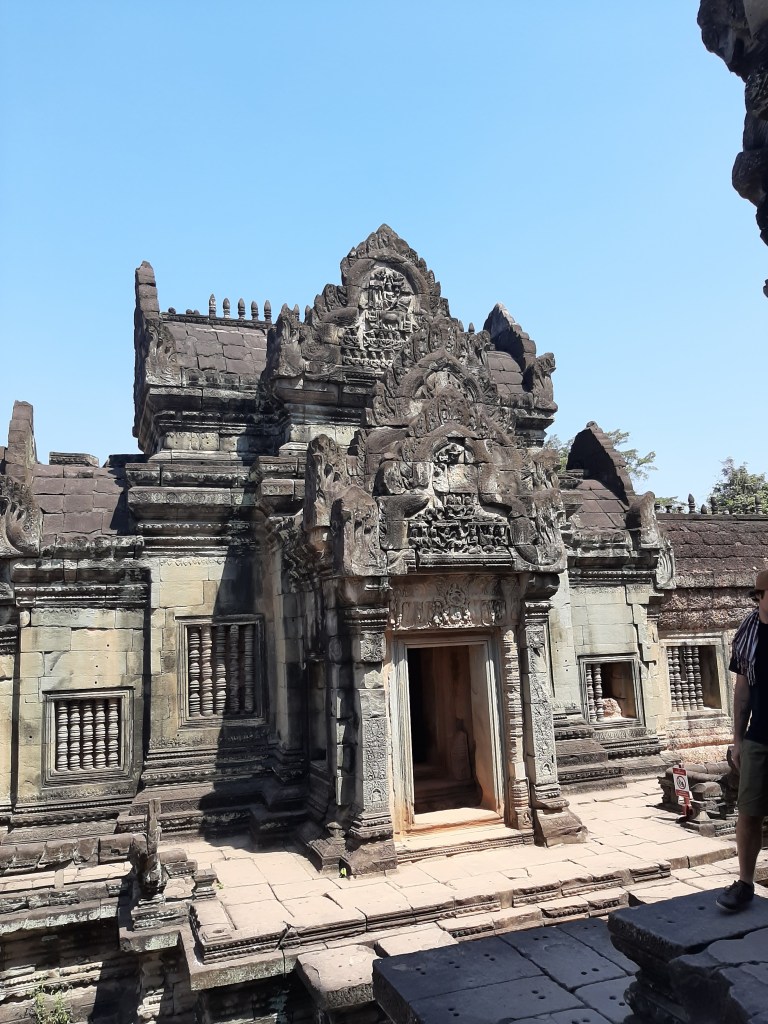
Our journey to Siem Reap in Cambodia was the longest and most disjointed of the megamoon. We set off from our bungalo in Don Det, Laos around 7.30am and arrived in Siem Reap 14 hours later, after one boat, one truck and two minivans. There is no straight through bus so travel companies have put together a patchwork of minibuses with several hours of waiting time in between. The Laos – Cambodia border was not without excitement… We first learned that there was an exit fee to the Laos authorities – only 2 dollars but still were pretty bemused by the notion of having to pay to exit a country! We also had a border official not keen on accepting our $100 bill for our visas because of a tiny tear in it (we had gotten new dollar notes in Pakse especially for Cambodia and their bizarre approach to the condition of US dollars). Thankfully his boss was happy to let us through, although ironically gave us dollars that others would later refuse!
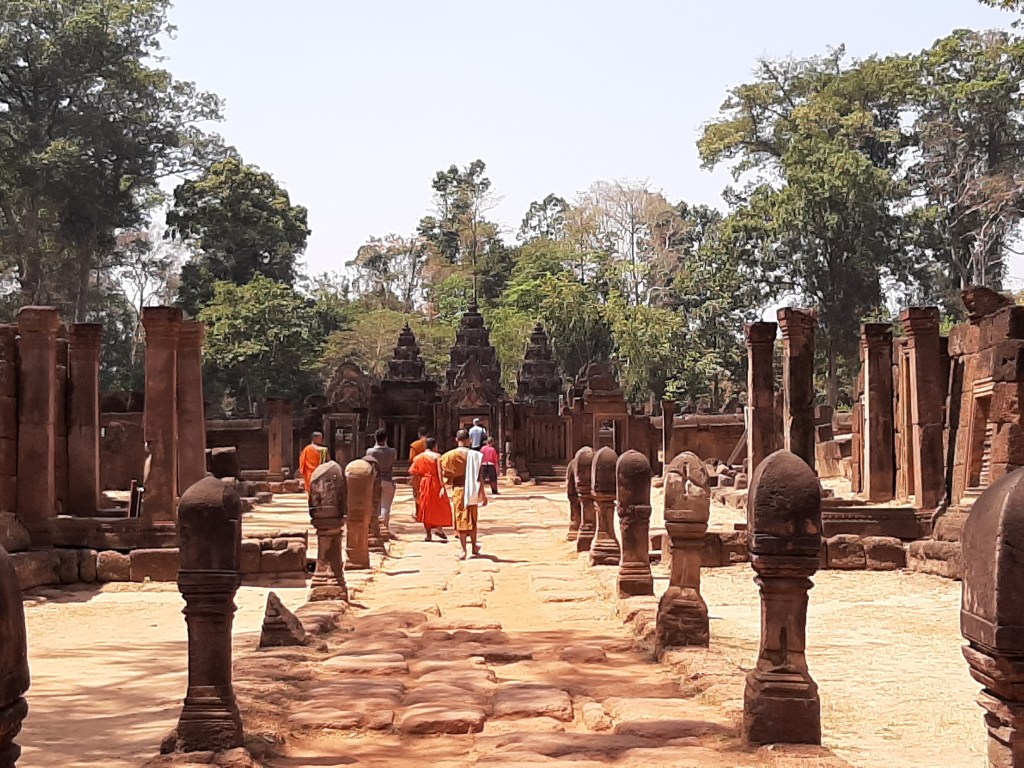
Our first minibus took us to the town of Stung Treng on the Mekong. We ambled out and sat in a cafe for about an hour until our next minibus arrived that would take us to Siem Reap. During the stop over, we got chatting to two Greek lads we had overheard speaking Greek at the bus stop in Laos – a massive surprise to find them here! They were both Athenians of Kefalonian origin and called Dimitris and Adonis. George enjoyed having the opportunity to speak some Greek and they were genuinely nice lads and good company. They had begun in Thailand and traveled down the length of Laos. Their plan was to head back to the Thai islands via the tempes of Angkor. They both work as freelance tour guides (via Air BnB experiences).

We finally arrived in Siem Reap and shared a tuk tuk to the centre of town with Dimitris and Adonis. It was somewhat surreal driving through the bright lights and busy streets of central Siem Reap, after being in peaceful Laos for so long! We exchanged numbers with the Greeks and were dropped off at Mad Monkey Hostel, where we were staying for the night. We also agreed with the tuk tuk driver, Rony, to take us touring around the temples the next day. Most tuk tuks in Cambodia (including Rony’s) are a normal motorbike with a wooden carriage attached to the back, giving them a horse and carriage type feel. Feeling famished, we finally got some food down us at a local noodle shop and plucked enough energy to go for a walk around the madness of Pub Street. Siem Reap has very much established itself as a party destination on the southeast Asian circuit. The entire centre of the town feels like a more low key version of Bankok’s Khao San road, with bars blasting music out onto the streets, lots of touts trying to get you to have their cheep or free shots, and bright lights. The centre of this madness is genuinely called “Pub Street” with the name brightly lit up in neon lighting above the streets to make sure everyone knows it.

We decided to spend 2 nights in Siem Reap to give us 2 full days for temple touring. After the second day, we would take a sleeper bus to the port city of Sihanoukville, en route to the islands. Unfortunately, our hostel was fully booked for our second night so we had to relocate to Onederz hostel down the road. We were met by our tuk tuk man Rony at around 9.45am, after we had made an unsuccessful and frustrating visit to Western Union to try and collect work travel expenses which Katharine had not been paid for months. We had exceptional eggs Benedict with smoked salmon for breakfast and finally headed off towards the temples. The plan was to go to a series of smaller, quieter and more intricate temples on day 1 before seeing the big hitters, including Angkor Wat itself, on day 2. Annoyingly, you can only buy 1 and 3 day passes for the temples so our visit was on the expensive side…

Our temple itinerary for day 1 was: Banteay Samre, Banteay Srei, Preah Khan, Neak Poan, Ta Som and Pre Rup. Our first stop was the temple of Banteay Samre, which was in decent condition and reminded us of some temples we had seen in Prambanan, Indonesia. It was built with a series of walls and trenches with steps going up and down them. The second temple was the furthest, a good 45 minute drive further, called Banteay Srei. This temple is the most intricate we saw due to it’s small size, picturesque location and incredibly detailed fine carvings into pinkish hue stone. We then made the long drive back to the main temple area and headed for the impressive Preah Khan. This was the biggest of the temple complexes we visited on day 1 with a large area of passage ways, converging on an alter in the geometric centre. We came across a tiny and old nun sitting in the middle who gave Katharine a blessing and a thread bracelet for a few Cambodian Riel – she was incredibly cute and warm. At the far side of the temple, we found a two storey structure that looked very much like a Greek temple with large round pillars that are not really the style in the Angkorian temples at all.


After Preah Khan, Rony took us for lunch at a spot with lots of pop up restaurants for tourists, inside the walled city of Angkor Thom. It was uninspiring and overpriced but kept us fed! Next on the tour was Neak Poan, which was very different to the other temples. Situated on a man made island in the centre of a massive reservoir, we walked across the causeway for a few hundred metres to find an ornate structure that was effectively a large fountain, with three pools surrounding the centre monument. Ta Som temple was small but very atmospheric, with the highlight being a huge tree growing through the walls and far entrance, providing Tomb Raider-type images of the temple covered in roots and being claimed by the jungle. By this point we were getting tired so we stopped for a drink and a chat with Rony outside the temple. Rony is an honest, hardworking man who speaks good English, and made a great tour driver. We learnt he had been through a difficult divorse and now found himself as the sole bread winner for his entire family and daughter despite work being much tougher than normal because of the coronavirus threat. Most of all, he seemed really down in self-confidence and feeling the pressures of life. We did our best to cheer him up and reassure him he was great st his job. From our perspective as visitors, the virus had been a positive impact as there was no actual disruption or real risk in Cambodia, but the lack of Chinese and scared Westerners made the temples super quiet compared to their usual cramptness in peak season. We finished the day with a brief visit to Pre Rup, which is built like a large almost Aztec-style pyramid, and then a stop for sunset by the eastern side of Srah Srang reservoir. On the way back to Siem Reap, the carriage of the tuk tuk got a flat tyre which made us feel even more bad for Rony. We were thankfully able to fix it pretty quickly and easily, as there was a street mechanic set up just 500 metres or so along the road back. We used the opportunity to buy ourselves a coke and also bought Rony one.


When we got back, we climbed onto the roof top bar at Mad Monkey hostel and used our free beer tokens given to us at check in. The roof has, incredibly, been turned into a beach bar with the whole floor covered in sand! We then moved into our new hostel and had a quick swim in the indoor pool that was deserted. After showering and winding down, we set off to sample the delights of Siem Reap for one only real night here. We had been in touch with the Greeks to meet up for a drink later, and even bumped into them on our way out for food! They had been on their own trip of some of the peripheral temples, albeit with a bit of a later start than us.

We had dinner at “Cambodian Barbecue”, which was the same sort of barbecue and hot pot combination we had also had in Laos. The prices and quantities were not as spectacular as they had been in Laos, but we did end up with a weird and wonderful variety of meat tasters, including crocodile, ostrich and kangaroo. While not really Khmer in the slightest, it was tasty. We then headed up to a bar that was within an old traditional Cambodian wooden stilted hut. Remarkably, this house had been there all along, preserved, and now used as a cool bar! We met Dimitris and Adonis here for a beer and exchanged stories of what we had seen in the day. The lads were quite tired so decided to head back. We hugged them and agreed it would be lovely to meet up whenever we were in Athens – it had been a genuinely lovely and very relaxed encounter with these two, and really lifted our spirits from the draining journey the day before. We decided to persevere with one more drink at Miss Wong’s cocktail bar: a place that looks like it has come out of 1920s Shanghai.


Day 2 in Siem Reap saw us resuming our touring with Rony to see the big hitters of the Khmer emspire: Angkor Wat, Banteay Kdei, Ta Promh, Bayon, Ba Phuom and Pnomh Bakeng. Rony parked and pointed us towards the entrance to Angkor Wat. Walking towards the great moat surrounding the temple, we reached the causeway and the temple suddenly came into view in the distance. It is one of the iconic and most memorable moments of anyone’s visit to Angkor Wat. The causeway was under repairs so visitors had to cross the moat on a temporary pontoon bridge. We reached the outer walls (impressive in and of themselves) and walked through to enter the temple complex. Only the Taj Mahal competes in terms of the spectacle of this incredible monument. Looking down the main path to Angkor Wat are gardens and 4 libraries – each an impressive structure in their own right. The stone road eventually leads up a staircase to a grand entrance. We spent a good 1.5 hours exploring the temple. We first did a circuit of the passageways inside the outer walls, taking in the intricate carvings on the walls with some help from the guide book to decipher the stories they depict. They all without fail depict some sort of bloody conflict with a host of gods and deities intervening, each an important Hindu story. In latter yeats, the temple was used as a Buddhist temple. We walked up to the inner part of the structure to find an array of stone Buddha statues. Reaching the 2nd floor within, we were faced with a reminder of the temple’s current use as a place of worship, as the inner most 3rd level was closed off for local pilgrims and worshipers – unlucky for us sadly as the views from the top are spectacular. At least we were able to enjoy Angkor Wat with uniquely small crowds given the usual hoards were driven away by the coronavirus.

We left the largest religious building in the world behind us and found Rony parked in a sea of tuk tuks. Our next stop was Banteay Kdei. The temple itself was not hugely memorable (certainly going after Angkor Wat would not have helped), but a platform with lion statues overlooking the Srah Srang reservoir provided a picturesque pit stop. We had a leisurely lunch at a nice restaurant called Khmer Cooking Empire on the north side of the same reservoir/ lake, including the iconic Cambodian dish, Lok Lak – peppery stir fried beef, fried egg and rice.


Feeling fed and energised, we drove to the nearby Ta Promh. Ta Promh is really where the imagination can begin to wild. Many of the temples of Angkor were in a desperate state of ruin, having been reclaimed by the jungle by the point of “rediscovery” by French explorers in the 19th century. With most having now been carefully restored and the jungle kept in check, Ta Promh provides the best view of this battle between nature and the man-made in Angkor, today. Huge tree roots can be found sprawling over, through and around every corner of the temple. Conjure an image of a “jungle temple” in your head, this is it – indeed, Ta Promh was famously used in the filming Tomb Raider with Angelina Jolie. Ta Promh is justifiably a popular temple. With the diminished crouds however, we were able get lost in the various passageways and really get a feel of this mystical place.

We next drove into the great walled city of Angkor Thom. Within the vast space inside this area where once 1 million people lived, is a collection of temples, a huge ceremonial parade ground, and swathes of dense jungle. Rony dropped us off at Bayon temple, another iconic temple with seemingly hundreds of human heads covered on towers facing in 4 direction. The faces mean that from a distance, the temple looks like a mound of rubble. We explored Bayon soaking up the slightly spooky feel with all these many faces looking down at you. Unfortunately, the top level was out of bounds for restoration work, so we had to satisfy ourselves with the stories of Khmer wars against the Chams (based in what is now Vietnam), in bloody depictions carved into the outer walls.

We walked along some 200 metres to our penultimate temple, Baphuom. This huge pyramid shaped structure had been painstakingly disassembled piece by piece by archeologists in the build up to the civil war. Their plans had been destroyed during the Khmer Rouge regime so putting it back together again has been like a monstrously complex jigsaw puzzle. They have done mostly a decent job, and we were able to make a steep climb to the 3rd level, providing views of a large clear area, accessed from Baphuom via a causeway on stone pillars, which used to be the spot where all the big royal ceremonies were held. We finished our temple touring with Pnomh Bakeng – a hill with a temple at its summit that makes a popular sunset spot with fantastic views of Angkor Wat, the jungle and reservoirs left behind by the Khmer empire. The spot has grown so popular that it is limited to 250 people and controlled with a visitors pass system. We sat on the top of the temple looking out over the setting sun with a the croud steadily growing. With a bus to catch, we headed back down before sunset but clouds on the horizon meant we didn’t miss anything anyway!


Rony had been a great driver and touring companion. We bid our fare wells, tipped him and offered to help him create a digital presence to boost his chances of getting custom. We were picked up for our sleeper bus which was relatively comfortable and unlike the Laos buses was both on time and didn’t break down! There was definitely more of a younger croud on this bus compared to the sleeper buses in Laos: we got chatting to a group of girls from the UK who were on their gap year before uni, and our bottle of Laotian whiskey was quite popular with an unfortunately tall (for the bus beds) German lad. The journey was much smoother than George remembered with clear improvements in the road network since he was last in the country in 2015. We left Siem Reap feeling delighted to have immersed ourselves in the incredible world of the Khmer Empire, but also feeling keen to move back to the less well trodden areas that the island of Koh Rong Sanloem promised. Thousands of Camborians, like Rony, have moved to Siem Reap in the hope of getting a piece of the mass tourism pie. Seeing the temples in quieter conditions was a treat for us but with the coronavirus pandemic now in full swing, we really feel for all those families that were already living in poverty and reliant on tourism, with no support available from their government in these unprecedented and difficult times…

Laos #5: Don Det, 4000 Islands

We stated Laos with one of our favourite places we have been on this trip (Luang Prabang) and in 4000 Islands we ended in another favourite. Right at the bottom of Laos by the Cambodian border, the Mekong river swells and widens to 18 km wide creating an incredible area of seemingly thousands of islands (hence the name!). Some are just tiny specks with a lone tree on then. Everything we had read, everyone we had talked to, pointed at 4000 Islands being a place where you can get stuck by the incredible tranquility, beauty and sense of isolation here. So it proved to be the case for us, extending our stay twice to five days in total. We picked the island of Don Det which has more of a backpacker feel and is a little busier than Don Kong and Don Kohn (the other two island destinations in the area), but is still pretty quiet.

On the morning of 15th Feb, we took a bus from Pakse down to the small river town of Ban Nakasang. We hopped in a large longtail boat alongside a good 15 other tourists and made the 15 minute crossing to Don Det island. This was our first glimpse of the gorgeous and tranquil scenery at this spot on the Mekong: islands of different shapes and sizes everywhere, clear dark alluring waters, locals fishing or just passing through on boats, and everywhere beautifully green. The “port” is just a small beach and a basic platform to disembark. We walked up the main street of Don Det village, which has a handful of restaurants and shops. There are no cars or ATMs on the whole island. The port/ village sits at the very north tip of the island, so after walking south for about 100 metres you have a choice: turn right to the east, sunset side, or left to the sunrise side. We had been told the sunset side was the more “happening” side so turned right. Despite being still morning, it felt madly hot walking with our backpacks for a good 20 minutes, scouting out possible bungalows. Don Det is simply perfect for budget accommodation. Basic wooden stilted bungalows on the river front for as low as $5 per night. We settled initially for a spot with basic bamboo huts called “Peace and Love”. The views looking out across the water and countless green islands was incredible.

We quite quickly realised that we needed to find a different place… The room was unbearably hot and a thicker ceiling to the mosquito net prevented any air from the fan from reaching the bed. Sitting outside didn’t help much either as the sun gradually kept over to the south-east in the afternoon and it was practically still wind-wise. So, we offered to pay $2 and moved on to a similar spot a little way up the river where the huts were a bit more solid and the fan more effective!

Having set up (again) we went off exploring, with the main aim to find a spot that was relatively cool and good to stop and chill for a while. While not quite a stoner island, Don Det certainly does attract its fair share of people who want to come and smoke joints for two weeks in tranquility. It seems 4,000 islands is either too remote for the authorities to care, or there is some kind of understanding locals come to with the government given the tourism factor… Either way we found the overall vibe to be more chill than stoner and the occasional whifs of weed were not too overpowering as some tourists have complained about.

After trying a couple of spots, we realised that the sunrise side of the island was the breeziest and coolest. We spent some time relaxing, reading and writing at “Mr. Mo’s Cafe” that came to be our favourite hang out spot with plenty of shade and breeze, good coffee and fantastic views over the water. We returned to the sunset side for sunset and for a bite to eat at “Sunset Bar” – as the naming suggests, the sunset over this Mekong waterland was indeed beautiful! That evening, we returned to relax in our hammocks. Being battered by the heat of the sun all afternoon meant that our room was roasting, even with the fan, well into the night…

Waking up on the 16th Feb, we decided to move (again), but this time to the brazier sunrise side. We also discovered a grumpy group of French lads that we seemingly kept bumping into since Thakhek were staying a few huts down from us so we were not too upset to be leaving that minor awkwardness behind as well! There was no real rush (as with everything in Laos, and Don Det in particular of course!), so we left our bags at our previous digs and went for a sensational Shakshuka breakfast at a spot just up the road from us. Morning was the best time to be on the sunset side we decided (having now seen the sunset!). We wondered towards the sunrise side and quite quickly found a good spot, with a larger, en-suite bungalow with a big terrace and hammocks overlooking the river, for thr slightly steeper, but very reasonable price of $7 per day. We quickly came to meet the local tout working for this place, who, hilariously, turned out to be a Yorkshireman in his 60s called Adrian. Adrian was exceptionally skinny, is rarely seen without a joint in his hands and would prove to be a real character over the next 4 nights we stayed here! In amongst the nonsense it was genuinely interesting listening to what a seasoned traveller and stoner like himself had to say about his travels and experiences. Adrian’s first few words of wisdom to us were “welcome to paradise my friends… this is what Asia used to be like everywhere”. It was certainly interesting to think of places like Bali being like this as recently as the 80s…

We decided to hire two tubes (much like those in Vang Vieng) as our main “activity” for the day! We first launched from the small beach at the port area and tried to paddle around to the sunset side. We gave up and came back as the currents were against us, and, instead, walked over to the sunset side where we paddled to a little island about 100m away. We found a lovely little beach and sat reading in the shade of some reeds for a good while, taking a dip into the calm, clear waters too cool off when we needed. After a while, a Dutch couple swam past us, blaring music out of a speaker in a waterproof bag, to the other side of the tiny island we were on. Going for a swim later ourselves, it became obvious the music they were blaring was to cover up them having sex… After returning our tubes, we had a surprisingly superb burger for lunch at “4000 Islands Bar”. For somewhere so remote the Western food was particularly good – we suspected this is because of the relatively large number of expats (many British) who have made this island their home.

We transported our stuff over to our new digs, and, hilariously, found that Adrian had almost given our bungalow away to someone else – he probably forgot given all the smoking! After relaxing in our hammocks for a bit, Adrian returned to try and sell us his literary masterpiece. He had survived a terrifying flash flood in Bukit Lawang in Sumatra, 2004, in which 250 were killed, and been inspired to write a book about his experiences travelling. The book is called “Southeast Asia: In Yer Face”. Perhaps unsurprisingly, nobody back in the UK wanted to publish it, so Adrian has been selling the book himself, ringbound and printed in Pakse. He has been doing this for a number of years now to raise a bit of extra cash and he is quite good at it! “Best fucking book very written” he says, highlighting that the stories within are totally unique. He even has a hand drawn grid where he tracks how many copies have been bought by different nationalities. In the end, it proved too hilarious and different an opportunity to pass up so we bought a copy. George read it over the next couple of days. The first half is a collection of moderately interesting and amusing short stories from his travels, while the second half was a strange appraisal / overview of each country in Southeast Asia, with massively generalised statements based on no actual research or rigour. It was certainly an experience to read and a very different souvenir to take home! That evening we hit the strip for a drink and a curry and reflected on a very relaxed first full day and a good decision to move to the cooler, eastern side of the island!


The next day (17th Feb) we had a very relaxed morning, eventually getting ourselves over to the sunset side for an outrageously tasty “smoothie bowl” which was the perfect sugary breakfast disguised as healthy with a mix of granola and fruit. We hired bicycles for a dollar each, to get around quickly and explore more of the island later in the afternoon. We spent a good two hours just chilling in our hammocks and grabbed samosas for lunch.

In the afternoon, we went on a bicycle tour, first heading south where the path quickly became more rural with the string of bungalows and restaurants giving way to rice paddies, fields and a few local houses. We turned right through the dry centre of the island and came to the southern end after about 20 minutes (it is not a big island!). We crossed the old French bridge connecting Don Det to the adjacent island, Don Kong, with stunning views of palm and coconut-lined river coastline on either side. On the Don Kong side of the bridge, we came to a large old French steam locomotive parked under a shelter. Reading the information boards provided a fascinating insight into the history of these islands. The French saw the Mekong as an potential trade route opening into China. The problem was that at 4,000 islands the river swells and then crashes down a series of huge waterfalls, making it impassable for any steamers intending to make the journey. The engineering solution the French devised, was to construct a railway track from the south of Don Kong to the north of Don Det and lift boats onto trains before transporting them to beyond the falls! We realised that the road we had come down (including the bridge) had been that very railway!

Seeing these islands in an entirely different context, we continued to the huge Liphi waterfalls, stopping at a picturesque local temple en route. The falls were like nothing we have ever seen. Because of the sheer size of the river, it is the breadth of the waterfall rather than the height that makes it impressive. Lush green and tranquil waters give way to dark rocky landscape and crashing water with the river being diverted around countless smaller channels and falls, in search of the path of least resistance down.

We cycled back over the bridge and up the western (sunset) side of Don Det. On the way, Katharine made friends with a very cute group of piglets and we stopped at an isolated beach bar called Mad Monkey Bar on a little island in the middle of jungly wetlands. The place was surreal and felt a bit like the film “The Beach”. We had a Laos whiskey and coke each and sat here for about half an hour, taking in this superbly relaxing spot with at most 20 other people there. We had a quick dip in the river and hopped back on our bikes as the sun was setting. That evening we had a DIY hotpot/ barbecue at a restaurant just down the road from our bungalow and just watched TV in bed.


The 18th of Feb was our most active day on the island: we decided to go on a kayaking and sight seeing day trip! We met the group at our favourite Mr. Mo’s cafe where we had breakfast and got ourselves sorted with life vests and paddles. We set off with a big group of around 30 from just below the restaurant. We were surprised by the diversity of the group (making a change from majority French), with a good mix of people from across Europe, the UK, USA and even Brazil. There was a French family with two girls aged around 10 and 13, on the trip, who we had also seen on the Thakhek loop a few days before. Speaking to them, we learned that they had left France with the plan to live cheaply on the move, travelling for around 3 years! A seriously gutsy move and it made us simultaneously both impressed and very sceptical about the decision to take their girls out of school for so long. They apparently weren’t even home schooling… On the one hand, we couldn’t help but think about the longer term damage of being out of the system and behind with everything around how modern society judges success in young people. On the other, the girls came across as very confident, were clearly learning a lot more broadly on their travels, and both spoke superb English for their ages…

The trip started with a 30 minute kayak to a different island. We then walked to one of the many impressive waterfalls that are scattered around this part of the Mekong. While not as impressive as the Liphi falls from yesterday, the more manageable size meant we were able to swim in the big pools that formed 50 metres or so away from the bottom of the waterfall itself. It was good fun swimming in the refreshing water and jumping in from rocks, though you had to be on your toes with the strong currents. After our swim, we walked for another 20 minutes or so to a spot beyond the falls where our kayaks had been transported to. We had a lunch of barbecue, fried rice and fruit here in beautifully green scenery.

We had been warned by our guide that we would eventually come to rapids and that “some of you will capsize”. This warning was a little ominous for non-experienced kayakers like ourselves, although we were all given reassuring instruction on how to best navigate the rapids and what to do if we capsize. So, we got back into our kayaks after lunch and headed towards the rapids! We weren’t entirely sure what to expect, but it effectively was a large patch of water where the currents grew particularly strong and we started encountering big waves. We turned so that we faced directly into the waves and had a relatively hairy moment when we were knocked sideways by a wave and vulnerable to capsizing but managed to recover and get through the 5 minutes or so of rapids.

We paddled on past a massive hydroelectric dam to our left and after about 20 more minutes we arrived at a wide open area in the river that felt like a lake. This is the home of the 3 remaining Irrawaddy dolphins in this part of the Mekong. That’s right, 3. There used to be thousands of these magnificent mammals living here but overfishing has systematically killed them off and closed off their habitat. This area, right on the border with Cambodia, (we apparently briefly paddled into Cambodia) is a protected pool for this last remaining family. Given the tiny number of them left, we were sceptical of the likelihood of us seeing them. But after sitting still for about 5 minutes on our kayaks, somebody spotted them! For the next 20 minutes we all kept quiet and looked for the 2 dolphins (1 must have been elsewhere!) to re-emerge for air and paddle towards the area we thought they were travelling. It was a really magical moment seeing these precious, perilously endangered creatures.

The group paddled about 15 minutes to shore and we helped load the kayaks onto the trucks that were there to collect us. Our next stop before heading back towards Don Det, however, were the Khone Papheng Falls – the largest waterfalls in Southeast Asia. This was the third and without doubt most impressive of the falls we had seen in 4000 Islands. Simply terrifying volumes of water crash through every second, covering a vast area of rocky, craggy, watery landscape. We grabbed an ice cream and walked down to the river about 100 metres from the bottom of the falls, to soak up the scene and get a sense of the sheer force of the water.

We piled into the truck again, with two lucky ones standing out from the back and hanging on, and drove for 30 minutes or so back to the village of Ban Nakasang. We made an ATM stop given there are no cash machines on Don Det and returned to the the sea front to launch our kayaks one last time. We made the 30 minute crossing to Don Det and helped load the kayaks back under the stilts of Mr. Mo’s cafe. It had been a great day out although certainly something of a shock to the system being on a tight schedule with a big group after a few days of serious relaxation levels! We had an Indian meal near our bungalows and then headed to a bar on the sunset side for a quick drink. We could hear the “half moon jungle party” that was going on a kilometre or so further south and George couldn’t resist from walking down to have a look, even though we both knew we were not really up for partying. Much like everything on Don Det, it was very low key, with perhaps around 20 people standing around with some basic disco lights going and a massive sound system. We went to bed instead!


19th Feb was, finally, our last day on this blissfully tranquil island. In true Don Det fashion, we did pretty well nothing! This was our half way point of the megamoon and also a good point to reflect on how much we had already done. It was weird to think how much more we had ahead of us! We had muesli and coffees at our local favourite, Mr. Mo’s, and then spent most of the day just relaxing at our newly discovered “Reggae Bar” near the port which has fantastic hammocks and cushion space overlooking the stunning river scenery we just wanted to pack up and take with us for the rest of our trip. We were even lazy food-wise, having mash potato and spring rolls for lunch (it was great mash…!) and some rubbish noodles at Adam’s bar just next door for dinner. We spent the evening reading and watching highlights from the BAFTAs on our tablet.

We set off early the next day (20th Feb) in the island longtail ferry for our long journey to Cambodia and Siem Reap. We were leaving Don Det and Laos with a heavy heart. Laos had been hands down our favourite country of the trip so far with incredible variety of scenery, superb food, genuinely lovely, warm people, the best beer of southeast asia in Beerlao, the cheapest whiskey we have ever drank, the most bougainvillea we have ever seen, the biggest cave we have been in, rare river dolphins and a tropical island paradise, despite being a landlocked country. In Luang Prsbang we had the perfect start and in Don Det we had the perfect end to help us feel recharged and refreshed for the onwards journey.

Laos #4: Pakse

Pakse is the main city in the south of Laos and a necessary stop through on the route towards 4,000 Islands and Cambodia. We had read plenty on the natural beauty of national parks, huge areas of coffee plantations, waterfalls, etc. in this part of the country. Unfortunately, we just didnt have the time to see much of it! Determined to make the most of our being in this part of Laos, we had organised a 2 day excursion to an area of the Mekong river just north of Pakse, involving trekking, staying at a homestay in a local village, and a boat ride on day 2 to bring us most of the way back to Pakse. It would be just 2 nights in all in the Pakse area, before making our way down to the very south of Laos and 4,000 Islands.

In typical Laos sleeper bus fashion, our 1.30am bus dur to take us from Thakhek to Pakse was late… Apparently the bus broke down, and a replacement had been sent from Lak Sao (a town we had passed only the day before, several hundreds of kilometres away on the Thakhek Loop), but it was progressing slowly due to heavy rain in the area. So, we started the 13th of Feb, sat in the back of th truck / tuk tuk alongside a group of French and Dutch. Finally the bus turned up at around 3am. Mercifully, it was more spacious than the previous one so we managed to get some sleep. We were meant to be meeting our guide for our trekking / Mekong excursion we had booked with an organisation called “Green Discovery”, so made sure we gave them a heads up via whatsapp that we were running a bit late.

Somehow, we ended up making up time and arrived around 9am in Pakse. Lucky for us, the bus station is just a 2 minute walk away from the Green Discovery offices. Feeling unexpectedly OK given the journey we had just been on (not to mention the 450km of motorbiking over the past 3 days), we walked to the office and met our guide for the next two days: a middle aged chap with floppy hair called Sin Xai. We also met Mr. Singh (not a Sikh as far as we could tell!) – our driver. We headed to a local fancy cafe for breakfast – croque madame and some very tasty fruit smoothies – and then headed off north back the way we had arrived on the bus.

Our destination for the day was the village of Ban Mai Singsamphan on the Mekong. Despite being pretty near Pakse geographically, it took us a good 2.5 hours to get there. The road got very rough at some points and the car made crunching contact with the ground on one occasion – we were reassured there was “no problem” although both of us would have wanted to check it out had it been our vehicle! Upon arriving at the village, we quite quickly came to feel that we had picked the wrong activity for our time in the Pakse area… it was hot! Much, much hotter than Thakhkek and the rest of Laos and the terrain was so dry with the sun beating down on the parched earth and rock, clearly with no rain having fallen for months and months. George bought an emergency straw cowboy hat (the only hat the village sold) from one of the few very rustic duty free-style shops selling booze, cigarettes and tourist gifts, largely aimed at Thai tourists who hop across the river for cheap goodies and a short visit to Laos. Otherwise, the village felt like a very normal place (by Laos rural standards) with animals running around and basic wooden stilted houses being largely the order of the day.

With George now looking slightly ridiculous but certainly more protected from the sun, we began our hike in the heat of the day around 12.00… We had a local guide, Mr. Lang leading us around these parts. Like Sin Xai, he was also middle aged with children. The path climbed steeply through the rocky and dry terrain with only limited shade, up to the top of the hill that overlooks the village. It was, thankfully, not a long climb.

We reached our first stop / point of interest after an hour of walking: a small cave hidden in the north facing cliff on the far side of the hill we had walked up. We were relieved that the northern, shady side of the hill in combination with the cave itself provided some relative cool for us to rest. The cave itself was cute: only a small indent into the rock face that had been long ago created into a place of worship/ meditation. On the far end, simple bamboo sleeping mats were laid out, apparently used by Buddhist nuns from time to time. This combined with the thick jungle in this cooler side of the hill gave a proper ascetic / hermit feel to the space. We had our simple lunch of chicken, rustic fish and sticky rice and spent 15 minutes trying to meditate in this peaceful spot. Unfortunately, the cave also seemed to be popular among mosquitos and other local insects making it difficult for us!

We moved on at around 2pm, back up the path we had come from and then along the ridge of the hill until we reached an opening that had local spiritual significance, with a small open temple having been built and a range of symbolic stone animals (pigs, elephants and snakes) taking guard in the surrounding area. The focal point here however, is a very peculiar-shaled rock and the impressive panoramic views down to the Mekong and beyond into Thailand. We took a good 20 minutes or so once again to cool off in the shade before braving the return trek back to the village.

By this point we had both grown quite annoyed by our guide Sin Xai. He was just overly keen and pushy, making unnecessary loud comments, being unnecessarily prescriptive about what we did where (what photos we take, where we sit, how we pose). His fun forcing wound us up over the next day and a half, as did the latent sexism that increasingly became apparent – likely a normal feature among Laotian men his age… Comments checking if Katharine was ok or tired were just constant and random and a lot of the chat focused on addressing George. Our lessons from Mr. Lang about local herbal medicines was interesting if also quite amusing, with the emphasis being on tiger balm and its use in mixing with whiskey to “make men strong” and “good for babies”, while the women’s equivalent was a special tea to help women giving birth.
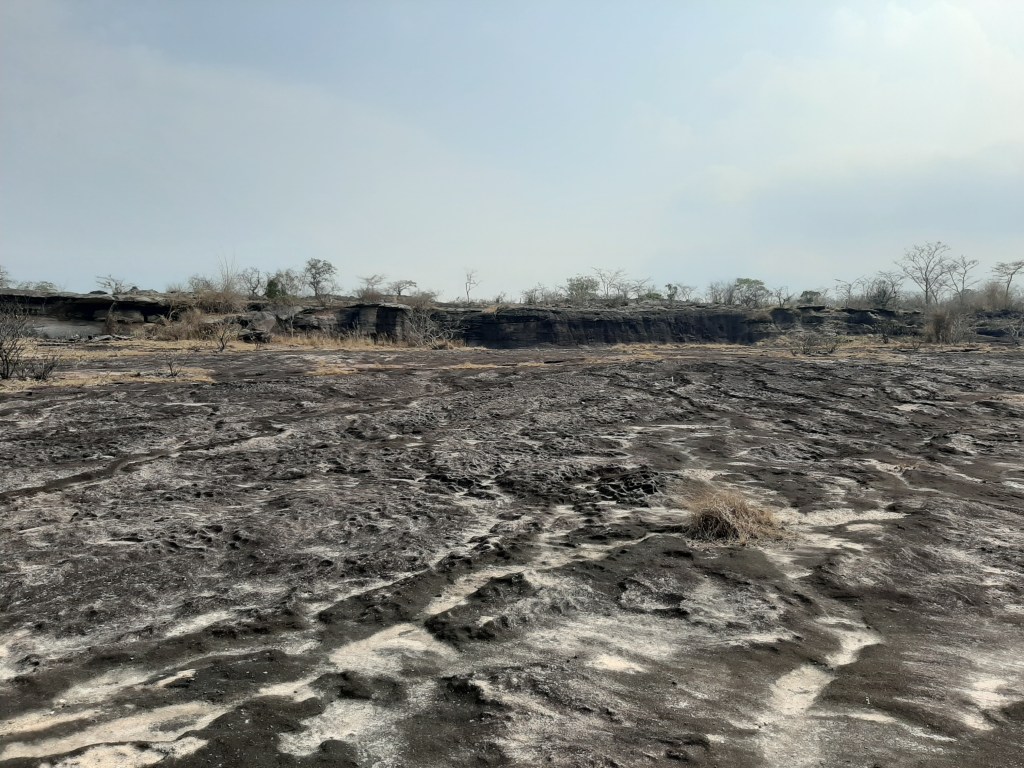


Walking back in the heat of the afternoon felt like an eternity. We eventually reached the village, back down the stony steps we had walked up, and headed straight to the nearest shop where we downed a big bottle of cold water. Sin Xai then took us on a bit of a tour of the village, with the main site being the temple which felt quite posh compared to the rest of the village, with spacious, well kept gardens, classic teak ornate temple buildings, a stupa and pleasant if simple monk / nun living quarters on the side. We sat inside (being careful to make sure our feet were pointing away from the Buddha as an important sign of respect) and observed the monk chanting that was going on. There were also two nuns paying their respects and joining I with the chanting. Like monks, nuns in Laos also have their heads but they wear white robes instead of saffron. It is clear there is a gender hierarchy in terms of levels of importance in Buddhist religious institutions and practice in Laos (and everywhere we expect – certainly also in Thailand, Katharine learnt). It was a nice experience which our guide Sin Xai did his best to make a little forced and weird for us – trying to make us “prey” in a specific way and filming us before sending the footage off to his work whatsapp group. It just felt like he wanted to show “look how great a time my white tourists are having” to his work peers… After our temple visit, we walked to a beautiful spot on the banks of the mighty Mekong. George grabbed some beers from the local shop and we sat and watched the sun setting over Thailand while local kids were running around playing on the riverside.

Our homestay for the night was meant to be part of the experience to provide “local interactions with an ethnic minority family”. Well, it turned out our host family were relatively wealthy Thais who had a proper brick and mortar western-style house. We suppose they technically were a minority in Laos but it was not quite the “authentic” experience we expected. The family were very welcoming in fairness. Showering was an interesting experience. We had done bucket showers in Nepal, but the water tank for the bucket had an inhabitant: a medium sized fish! We guessed he may have been out there to eat any insects or parasites that may turn up, keeping the water clean for human showers – certainly unexpected! (Katharine briefly thought she was meant to get in the tank with the fish – but eventually figured it out with the bucket!).

We had a simple meal of stir fried mushrooms veg. and rice. Sin Xai produced a plastic bottle with the fabled Tigerbalm Whiskey in it he had previously been talking about. We both thought it tasted like bad oily whiskey and George confirmed no obvious aphrodisiac results from drinking it but hey ho! We slept on mattresses on the floor of a big empty living room space (with pictures of the Thai king on the walls), inside what genuinely felt like a cute child-made den: a square mosquito net and a wider sheet surrounding us to provide some privacy.


14th Feb provided us with a very different Valentine’s Day! We woke up in our den and set off early (around 8.30) to make as much ground as we could in the relative cool. We walked up the rocky slope as we had the previous day. This was where we learnt the Laoian term “Hon Lai”, meaning “very hot”… another one for our travel vocabulary to go with the Swahili “Pole pole” (slowly slowly). We reached the top of the hill and this time turned right into much thicker and greener forest which provided merciful shade for most of the morning. The masses of thick spider nests along the floor was the biggest feature here.

Eventually we run out of forest, and for the next 2 or 3 hours we walked through incredibly arid, parched land that felt like an almost other-worldly mix of endless ancient lava fields (now grey spiky stone) and dust. It was hot… The main points of interest in otherwise quite hot and samey terrain were a big “bird rock” that sort of looked a bit like a chicken but was meant to be a Geruda (Hindu Shiva’s transportation bird). We scrambled up for some photos, including some utterly hilarious/questionable posing from Sin Xai. Just before finally reaching the alluring waters of the Mekong, we also came to a Hindu phallic stone rock – which our guides were only able to tell us was “good for fertility”. We sat there for a few minutes and watched a single motorbike come up a trail that was not even discernable as a footpath. The man also joined us at the penis rock and, turned out to be a ice cream man – surreal! We bought some cheap and very tasty taro ice lollies that cooled us down sufficiently fke the last stretch of walking down to the river.


The scenery immediately beame much greener and cooler by the Mekong, and we sat in the cool shade while we waited for about 15 minutes for our boat to pick us up. Our boat was a good sized long-tail boat which thankfully had a food shade canopy. The boat took us 15 minutes up river to the small village of Sula. Sula seemed less charming and more isolated compared to Singsamphan village where we had stayed the night before. When we bought drinks from a local shop, we learned that Thai Baht was the main currency here, with the village far more connected economically with Thailand across the river than the rest of Laos. The young lady selling is the drinks was sweet and wanted to get selfies with us. Meanwhile, Sin Xai was up to his old tricks, being unnecessarily prescriptive about saying “sabaidee” (hello) and “korp jai” (thank you) to people … these were basics that we had very much picked up by now and we didn’t feel we needed a lesson in common human courtesies… He also ushered us to a group of locals and suggested we get a photo with them. This version of “local interactions” we had been promised did not seem right or balanced so we said hello but refused. Apparently the village had been set up by a pair of families some decades ago, and now has 100 odd people, 50% if whom are from an ethnic minority.

After our short visit to the village, we returned to the boat and set off southbound towards Pakse. We had lunch on the boat, which involved sticky rice, small river fish and boiled eggs. Passing Singsamphan village again, we dropped off (and tipped) our local guide, Mr. Lang who had been great, and picked up Katharine’s phone we had forgotten at the homestay. We also picked up the boat man’s wife and daughter who would keep him company for his long ride back to the village after leaving us in Pakse. We stopped at a little island in the middle of the river which had a sandy beach, providing a great spot for a dip. It was our first swim in this mighty river which we had been following down the length of Laos, and wow it was refreshing. The water was very clear and pleasant and just the right level of cooling from the heat we had picked up from the morning’s walking. The ride back to Pakse was very pleasant. We just enjoyed relaxing, reading and taking in the beautiful surrounding scenery. The journey back was around 2 hours in total, with a 30 minute stop at the small island of Don Kon where we walked around for a bit and visited a local weaving cooperative. The island has a simply enormous tree that can be seen for miles and miles and the locals claim is 500 years old.


We arrived in Pakse in the early evening and scouted out options for accommodation, settling on the simple, friendly and cheap Sabaidee 2 guesthouse instead of the far posher hotel we had been dropped off by. We had a lovely Valentine’s day evening together, first starting with “Panorama” rooftop bar where we shared an excellent bottle of red wine (it had been a while since we had drank wine!), and had some very tasty bruschetta and olive tapenade – luxury! The place was clearly full of couples (mostly local) and we were given chocolate hearts for free – clearly Valentine’s Day is a thing in Laos, at least among the more wealthy, western-oriented! We had dinner at what we thought looked like an American ranch-style restaurant. When we turned up, we discovered it was very much a local spot and enjoyed cheap beer and cheep noodle soups, stir fried morning glory with (lots of) garlic.

In all our stop in the Pakse area and trek around Singsamphan was good but definitely less of a highlight compared to what we had done in Laos to date. Having a different guide may well have made our experience different. Despite this and the heat, however, we definitely left Pakse feeling like we had sampled life like a local on the Mekong river. Our next stop would take us even further into tranquil river life: 4,000 Islands!

Coronavirus Update!

You have probably noticed we are a little behind on our blog posting and that quick updates as to our whereabouts are more important now with the global Covid-19 pandemic and subsequent travel disruptions!

Rest assured we are safe and healthy and the good news is that we are continuing with our travel plans. We have made it to New Zealand, our planned finishing spot, a little earlier than expected, partly because of travel restrictions in Australia and partly to get us ahead and make sure we reached what is our planned end point, where our good friends Charlotte and Dom live, and an amazing country all round!

We are currently in self-isolation as per the New Zealand government’s instructions, in a very quiet an lovely beach house on Waikanae Beach about 45 minutes from Wellington. We have been immensely supported by Charlotte and Dom (mates from uni) who are both simply phenomenal people. They helped us figure out our plan of action on how to get there, what self isolation would mean, they dropped us off at our house and are keeping us stocked. We cannot thank you both enough! After our two weeks are up, we plan on continuing with our touring for the remaining 5 weeks or so that we have (paying a close eye on the news of course both internationally and with local developments).

We will be hopefully making a few posts to do some catching up on this blog while we have abundant down time. We hope these stories will provide some more entertainment and interest for all of those who are finding yourself spending most of your time at home.

For far more “live” updates, you can follow our stories on instagram at @kg_megamoon where we are trying to provide daily updates.

Lots of love,
Katharine & George
xxx

Laos #3: The Tkahkek Loop

The big thing to do for backpackers and intrepid travellers in central Laos is the 450 km Thakhek motorbike loop around the Phou Hin Poun national park. We had expected the scenery to be stunning based on what we had heard from other travellers, but we had not expected excellent quality, quiet roads (albeit with the odd cow or chicken with a death wish thrown in). These two combine to create what has definitely been one of the best adventures of our trip so far.

Thakhek itself is an old French administrative town on the Mekong. For most of central and southern Laos, the Mekong makes up the border with Thailand so looking across the river, you are looking into a different country. Getting to Thakhek proved to be painful. We got a small bus from Vang Vieng to the capital, Vientiane, where we had an hour or so waiting time for the sleeper bus. We had not eaten so Katharine managed to haggle with a lady for dubious barbeque sausage, chicken and sticky rice which we ate out of plastic bags in the bus station.

The bus itself proved to be a pleasant surprise. It was a huge double decker and each bed space was effectively part of a double (quite cozy) bed, making it a little unfortunate if you are a solo traveller. The bus was clean, had colourful lights and ample space giving it a weird but kind of fun sleepover feel. Unfortunately this didn’t last as the bus broke down after remaining stationary for a good hour in the Vientiane South bus station. Not only had we been in Vientiane for 3 hours, but we had also now been moved onto a far inferior bus with not enough room for either of us to lie down properly. Things got worse when we learnt that the hotel we thought we had a booking, actually did not… (Mekong Hotel). George telephoned them to alert them of our delay, only to find out they had either double booked us or just didnt fancy staying up late so were pretending to have done so… The rest of the 5 hours or so went by with us wedged in weird angles trying to sleep, thinking about the possibility of us having to sleep on a bench somewhere in the middle of Laos.

We arrived in Thakhek around 2.30am. There was nothing remotely resembling a bus station so our plan was to tag along with the other tourists who disembarked in the hope of finding spare beds of any sort. We were met at the bus by a young Laotian lady who seemed to be running operations and bundled us into the back of a truck with a group of 4 French lads and 2 Dutch girls. Conveniently, it turned out our driver was also running KGB guesthouse (it is unclear if there is any connection to the former Soviet Secret Service), and that they had a room. It was a pretty grim twin room but it was dirt cheap and, at 3.30am was perfect!

We woke up on 9th Feb with the mission of sorting a motorbike and deciding whether to commence the loop today or the next. Conveniently, it turned out KGB Guesthouse is only a small component of their business – motorbike rental is what they are really all about under the catchy brand “Wang Wang”. Already by 9am most of their bikes seemed to have been taken by keen loopers, but George managed to get hold of a standard black and red Yamaha semi-auto bike. Feeling pretty sleep deprived, we decided to have a rest day in Thakhek. We booked ourselves into nicer accommodation at a clean, spacious but otherwise pretty generic hotel a short way away, and began ferrying our things with our new motorbike. Having moved in, we then decided to head off to the “Travel Lodge”, a popular spot among backpackers, to chill and do some planning for the rest of our time in Laos. We also read through some of the legendary log books that they have there, full of entries of those who have completed the loop, for some tips.

In the afternoon we decided to make some use of the bike and head to a stupa / temple a few kilometres south of town. The Sikhottabong temple is a major holy sight for Laotians in the surrounding area, and, while it occupies a commanding spot overlooking the Mekong, it lacks the charm and grandeur of the temples we had recently seen in the likes of Chiang Mai or Luang Prabang. There had also been a big festival there and we had arrived in time to witness the aftermath and packing up. It looked like the post-Glastonbury clean up in terms of the amount of rubbish around… We got back to Thakhek, got ourselves a drink by the river, and had dinner on the floating Smile restaurant. All in all, we felt eager to hit the loop thr next day: Thakhek is not a particularly interesting town and, despite needing a rest day, were feeling a little angsty as a result!

Day 1, 10th Feb, Thakhek to Thalang


Day one of the Thakhek loop begun with a bit of an emergency: George’s wallet had disappeared. We traced its last whereabouts to a small shop we had bought snacks from the previous night just before returning to the hotel, so it was either there, fallen out of his pocket while driving or had been stolen from our room in the middle of the night. The latter option was pretty disturbing but seemed very unlikely. Luckily, it was in the local shop! We showed the lady a google translated text in Laotian and she immediately produced the wallet, neatly packed in a plastic bag. This caused great excitement among the 3 ladies who were in the shop who explained to us in sign language that they spotted the wallet just before heading to bed and had seen on their CCTV camera that it was us who had left it!

Feeling relieved, we headed off around 10am, via a petrol station, without having suffered too much of a delay. Coming out of Thakhek it became quickly clear why this loop was a thing: the road was in superb condition and the landscape was absolutely stunning, with limestone karsts emerging on all sides, and the road inhabiting something of a valley within this amazing national park. Our first stop was the so called “Buddha Cave” and nearby “Pa Sevan” cave, reached by about a 20 minute drive north on a dusty track. We first walked through arid bushland to Pa Sevan (around 20 minutes). The cave itself was just a dark opening that needed torches (and a guide) to explore but the setting was spectacular: a gorgeous lagoon surrounded by greenery, filled with birds and with massive limestone karsts on three sides. There was a small wooden platform over the lagoon which we sat on and meditated for about 15 minutes, just taking in this incredible peaceful scenery and the sound of the local birds inhabiting it. We walked back and headed for the more famous Buddha Cave. Predictably, the cave is filled with buddha statues, many hundreds of years old, that were discovered within the cave only a few decades ago.

Satisfied with our first stop, we headed on, deciding to take up the challenge of finding Tham Pa Chan cave and the Nam Don resurgence. Reading descriptions, this is a spot in the heart of the national park with an impressive cave and also where the Don river reemerges from under the limestone karsts. Unlike other sites on the loop that have clear brown signposts – made in partnership with the New Zealand aid and development agency – Tham Pa Chan has none of the sorts and we were only following some vague instructions from the Lonely Planet. After driving for about 45 minutes further north and asking for directions from school children, two monks, an old lady, a lady running a shop, and a group of men working at a temple, we finally gave up our search – not because we were lost, but because we ran out if road… The road turned into sand which was impassable for our humble Yamaha semi auto city bike. We considered walking the last few kilometres but sensibly decided to head back to the main road given we sill had a good hundred odd kilometres to travel before the village of Thalang: our destination for the night.

On the road back, we stopped at a small cave by a village, in which we found the two monks who had given us directions earlier! They welcomed us to come in and have a look at their humble temple-cave. It really epitomised our explorations into this corner of rural Laos. The villages are very simple and the surrounding scenery has an other worldly beauty. Yet even here, the monks in the cave were entertaining themselves watching videos on youtube on their phones.

We eventually rejoined the main road and were back on the loop! We stopped at the Xieng Lap cave a few kilometers along. This is an impressive cave with a stream going through. We walked through and reached the other side – or near enough, making the full trip would have entailed some swimming or wading. There are apparently soft shelled turtles living in the waters in the cave but we didn’t see any!


We headed back onto the loop and stopped for some very tasty noodle soup a few kilometres away – the food was really excellent both in taste and quantity. We came across a group of French folks who seemed totally knackered, one of the girls just lying on the floor. We reasoned they must have been on their final day of the loop – two days later we would come to understand why they were so knackered!

With only so many people heading on the motorbike loop each day, it quickly becomes apparent who was on the same schedule and route as us. For the rest of the day, we kept passing or being passed by the same two men – we never got to stop and chat, but each time we waved / honked. We drove for a good two hours in all before reaching Thalang. The scenery on the way was simply stunning. We emerged out of our limestone karst valley into wetlands. Throughout the journey, we only encountered a few loopers, locals going about their business on motorbikes, and the odd bus heading to Vietnam. We stopped at an information centre for one of the major dam projects in the area that has flooded a huge area just nearby and necessitated the relocation of a number of villages. The centre was obviously focused on the benefits of the project (work for locals, clean energy) but information on the human and environmental impacts was noticeably absent. After climbing for a few minutes, we came to the plateau that has now been turned into a giant reservoir, fuelling the hydroelectric dams. Dead trees emerge from the water throughout the area, giving the place a very spooky kind of beauty.

Finally, with about an hour of daylight left, we reached the village of Thalang, on the shores of this spooky reservoir. We had a simple room at on the lakeside and the place itself had a relaxed feel to it with plenty of seating areas, hammocks, a fire pit and even a boules pitch on site. In our week in Laos, we came to realise that travellers were broadly split into two groups: the French and the rest (largely Dutch, Swedish, German, American, Aussie, Kiwi and British). Nowhere did this become more apparent than in Thalang. Despite there being ample communal space, the place seemed weirdly quiet with nobody really talking to each other. It was mostly French people staying there but all seemed content on keeping themselves to themselves. We walked over to the other main guesthouse in the village, where there was much more of a communal atmosphere. That atmosphere can perhaps best be described, however, as French village fete! French language was spoken all around with people gathered by a bonfire and a good 10 people having a very serious game of boules – they were seriously good at ot as well! A French bloke seemingly took pity on us and came for a chat. He was nice and it seemed that the French village feel was a bit much for him as well. We had a very tasty barbeque buffet sat around the bonfire. Gradually, the non French natives found each other and so we got chatting to an Irish couple and Dutch couple. The Irish, Neil and Lauren, were great fun and heading in the opposite direction as us in Laos so it was good fun sharing stories of where we had come from. We would later keep bumping into them along the loop!


Day 2, 11th Feb, Thalang to Kong Lor

There are dozens of caves, natural pools / lagoons, viewpoints and picturesque villages along the Thakhek loop, but the highlight without a shadow of a doubt is the epic river cave of Kong Lor. Kong Lor is 40 kilometres south of the loop itself, right in the heart of the Phou Hin Poun national park, and was the destination for day 2 – although we did not plan on visiting the cave itself until the day after.

We set off after an early breakfast, with the road winding around the spooky reservoir for a good hour. The road climbed steadily and we got pretty chilly riding into fog on a few occasions. Gone were the linestone karsts from day one, the terrain was now hilly jungle. We eventually readed the town of Lak Sao (50 km north of Thalang), which seemed pretty uneventful but did have plenty of petrol options for us to fill up! We turned west in Lak Sao, away from the Vietnamese border, and shortly stopped at the “Dragon cave”. The cave was the most spectacular we had seen so far, with a narrow cavern eventually opening up into a big hall filled with stalactites and stalagmites lit up in beautiful colours. The route climbed steeply above the hall, exiting into the thick jungle above, with the return trail being above land. It was a great all round cave and a good rest from the bike.

Gradually, the road re-entered the limestone karst valley, with luscious jungle in every direction. Our next stop was the village of Tha Bak, famous for its river boats made out of American unexploded bombs! We parked the bike and walked for 10 minutes through the village and found a few bomb boats to have a good look at and snap some photos. The village felt rustic and we were greeted by lots of animals, school girls and a lady working on a loom in her home. George unsuccessfully tried to become friends with a cow. We felt that seeing the bomb boats rather than going for a ride was sufficient, so we hit the road once again again.

The road gradually grew more winding and mountainous and we eventually came to a simply phenomenal viewpoint, as a huge valley opened up in front of us in among the limestone karsts. A river outlet for a hydroelectric dam flows past the villages in the valley. This valley is the road to Kong Lor. After bumping into our Irish friends Neil and Lauren again at the viewpoint, we set off down hill and then along the valley. At first the road had a really surreal feel to it: it goes on in a straight line as far as you can see, lined with huge electricity pylons on either side, carrying their hydroelectric produce away over the karsts. Finally, the road bends and the feeling grows more rural passing cute villages with stilt houses, water buffalo, cows, chickens and children occasionally straying into the road keeping us on our toes. Lush green rice paddies line the side of the road with the ever present towering limestone karsts seemingly guiding us through to Kong Lor.


In the last few kilometres the road grew increasingly patchy, having to navigate chunks of dust track and finally, we reached our destination for the night – a turn to the right just before the village of Kong Lor, to “Spring River Villlage Resort”. We had managed to book us a bungalow in this beautiful spot – and wow we were pleased we did. The main reception and restaurant sit on a stilted platform overlooking the Nam Hinboun river, which is, of course, backed by sheer and stunning limestone karsts. The bungalow itself was also lovely and walking between the restaurant, toilets etc. is a delight, via lantern-lined, raised wooden pathways through a forest of banana trees. We got to Spring River in good time and so hired a kayak for us to paddle up their “private lagoon” – a narrow waterway that comes off from the river and out towards the karsts for about 800m. Because it felt a little like a river itself, we were not sure if we were in the lagoon itself or on the way to it, until eventually we hit a dead end in the water and realised it was definitely the former. Paddling along this peaceful paradise was a real highlight – it was so surreal being in dense jungle, alone in crystal clear waters, shaded by the ever present karsts.

We enjoyed a couple of moments of silence to soak up this amazing place on our paddle back. As well as nature, we were also immersed in a very local, rural setting. We had a quick swim in the lagoon, being passed by a boy no older than 8 paddling his family’s long tail boat up the lagoon to fetch water. Another slightly older boy wet up the lagoon, this time with a motorised boat and returned with a whole load of firewood. Arriving at the resort a few hours earlier, we came across a local elderly lady going about her business topless. Writing this from just across the border in Vietnam, we recently visited an ethnographic museum by a French photographer who made it his mission to meet and photograph every one of the country’s 50 odd tribes. For almost all tribes, he managed to get hold of their traditional dress to preserve the culture of these people who are rapidly being assimilated into wider western / Vietnameze culture. Why this glimpse into the future of our trip? Well, it provided us with real sense of the richness of ethnic diversity inhabiting these remote parts of Southeast Asia, with these people usually living across both the Laotian and Vietnamese sides. It was a shame we did not have this level of insight into local tribes and ethnicities while we were on the Thakhek loop, but then again, it is telling how the French photographer’s research took him 6 years to complete – it is serious work!


Day 3, 12h Feb, Kong Lor to Thakhek

Our third and final day on the Thakhek loop was also the longest (150km). We had made the ambitious decision to catch a sleeping bus from Thakhek down to the city of Pakse in south Laos, and had also signed up to do a 2 day trek / Mekong river trip the very next day. Given how tired we were from hundreds of kilometres of motorbiking, this may have been slightly rogue but it did mean that we had to make it back to Thakhek that night no matter what. We had learned from Neil and Lauren that it is possible to put your motorbike on a boat and take it through Kog Lor cave and continue down dirt roads on the other side as an alternative loop. While slightly terrifying, this had the appeal of avoiding the final 80 kilometre stretch down the uninteresting and quite busy highway which the classic route entailed. In the end, we decided to stick to the classic route, knowing we had to make it back to Thakhek that night and having been warned by the hotel staff that the road beyond the cave was very bad.

So, after breakfast, we made our way up to the village of Kong Lor where a scattering of guest houses have sprung up. We bought our tickets, were handed a head torch and life jacket each, and were led by a boat driver down to the river. It is an odd feeling starting by a bright, tree-lined river and then suddenly seeing it disappear into the mountainside. We walked along the river bank and into the cave for about 50 metres, where all the boats are moored, and on we went into the darkness. It was a real powerful experience being plunged into darkness, getting only glimpses of the detail in the walls of the cave as we planned our head torches around. The first section of the cave really feels man made, an almost perfect tunnel shape with the river flowing straight through. And then the real wow moment: out of nowhere, the tunnel opens up into a simply gargantuan, vast space you could fit cathedrals in. It really is Lord of the Rings-esque and being in the vast dark underworld, virtually alone was a hugely memorable experience. We eventually reached a docking spot where we disembarked and walked through a magical 100 metres or so of lit up stalagmites and stalagtites. Meanwhile, our boat driver had to perform an acrobatic manoeuvre to get up a mini waterfall through a seriously impressive run up! We joined up with our boat again and continued through to the other side. Exiting felt a little bit like a rebirth – going from total darknes, suddenly into a tropical green paradise, with jungle clad mountains and beautiful clear waters. We stopped for about 30 minutes at a clearing on the other side. Katharine found a beautiful scarf made by local women in traditional colourful patterns which was too cheap to decline. This was where bikes could disembark from the boat and continue down the alternative loop trail.

After soaking up the colour and light of the outside world, we returned to our boat and journeyed back through the darkness to where we had come from. Disembarking at the cave entrance, we once again bumped into Neil, Lauren and a young German bloke they had picked up called Maurice. They were just loading their bikes onto the tiny boats – a really quite spectacular operation and we could not imagine how the boatmen make the leap over the mini waterfalls withing the cave! We bid our fairwells and went on our way back down the valley we had come up yesterday.


Our next stop was the so-called “limestone forest”. We rejoined the main road and drove up a steep road, overtaking numerous struggling, lumbering massive lorries on the way, and came out to a viewpoint on the top. Ir turns out the name “limestone forest” is about right: a large area where the tops of limestone karsts are jagged and spiky giving an eerie beauty to the place. We had lunch and pondered doing the 2 hour adventure around this forest, entitling ziplines, via ferrata and walking across some pretty scary-looking rope bridges and “spiderweb” bridges. We psyched ourselves up to do it, only to realise we did not have enough cash, so on we went with the loop!

It turned out to be a sound decision as it was already mid afternoon and we still had a good 100+ kilometres to travel. The last stretch of road before joining the main north-south Laos highway was unexpectedly beautiful. The road winds around karst scenery here rather than driving through the middle of a valley, giving it a more mountainous feel and different vistas appearing on every corner. The final long stretch was about as uneventful as expected although the traffic was not as bad as we expected with the lorries being easily avoidable with sensible caution.


We made it back to Thakhek utterly exhausted with very sore bums, and made it to the Mekong just in time to see the blood-orange sun setting over Thailand. With our night bus scheduled at around 1.30am, we luckily struck a great deal with the motorbike rental company to use two of their dorm beds for cheap to get some sleep before heading out. We had a much needed shower and headed out to find some food, when we almost immediately bumped into Neil, Lauren and Maurice again sat at a restaurant outside! It was a great surprise (though perhaps should not have been surprising) seeing them again and we ended up having dinner together exchanging stories of the day and our travels in general – they were really great craic and some of the more similar minded / background and age folks to us that we have met on the trip. It turned out shortly before we saw them in the cave, they had had a motorbike accident… A water buffalo had crept onto the road and Maurice had fallen badly in an effort to avoid it. He had badly scraped his entire right side and was unable to walk with a very swollen ankle. Lauren and Neil slid but were luckily unscathed. Maurice was planning on heading to Vietnam the next day where he would get himself checked out at a hospital if his ankle was still bad… not fun!

Despite hearing of Maurice’s accident it had been a really lovely evening chatting to those guys and a great way to cap off and reflect on an amazing 3 days motorbiking around rural Laos. We said our goodbyes (Maurice hopping off supported by Neil) and got some shut eye before heading back out to meet our bus to Pakse and the south of Laos.

Laos #2: Vang Vieng

Vang Vieng is a place that burst onto the backpacking scene some twenty years ago, obtaining an almost mythical status as a party destination in Southeast Asia. The main attraction of this small town in the middle of the jungle surrounded by limestone karsts was (and still is to an extent) tubing on the Nam Song river. Tubing involves floating down the river in a tractor tyre tube, being pulled in to various bars along the way. In its heyday, dozens of tourists died each year – hardly surprising when you combine an alcohol, weed and mushroom frenzy with rapid waters. The Laos government shut down the river bars in 2012 and the community have since sought to rebrand the town as an adventure activities spot with numerous businesses opening up to provide mountain biking, ziplining, kayaking, cave exploring, lagoon swimming etc. Tubing has, since, resumed, albeit with sensible regulations going in. The town is very much back on the list as a must stop in Laos with a now somewhat more balanced crowd visiting.

We arrived in Vang Vieng in the afternoon of 5th Feb after our 5 hour drive from Luang Prabang by minibus. Along the way, we had glimpsed something closer to the “real” Laos, passing some pretty rustic villages and otherwise a lot of jungle! We also saw several glimses of the incredibly impressive looking high speed rail line being built by the Chinese, connecting China with Bangkok via Laos… While clearly a good thing in terms of boosting Laos’ connectedness to the outside world (particularly important given it is landlocked), we hope this does not lead to a huge influx of Chinese mega hotels and casinos…

We stayed for 3 nights in Vang Vieng and broadly divided our time across chilling on day 1, tubing on day 2 and touring on day 3. We stayed at some lovely stilted bungalows near the river called “Champalao”. The place is run by a couple of Thai gents and has a great chill out area with hammocks and cushions and glorious views across to the jungle-clad limestone karsts that give Vang Vieng such an iconic feel. For our first afternoon, we just relaxed here and soaked up this amazing and exotic landscape. We got chatting to a group of three Brits who had the same idea as us. The two girls were Leeds students currently on their exchange year in Ausralia while the other was a friend who wanted in on their trip to Southeast Asia – we had a great time chatting and got plenty of good tips for places to visit in Australie. Hearing about how life in Sudney had been so heavily effected with smoke from the horrific forest fires was also pretty sobering… After they headed off, we enjoyed watching the sunset over the karsts with hot air balloons dotting the sky!

Later in the evening, we went exploring around Vang Vieng – a pretty uninteresting town in itself that is totally filled with amenities for tourists (bars, restaurants, travel shops etc.). Katharine had a cheap and good Laos massage, which turned out to be the same as a Thai massage with all the associated cracking and stamping. We had a pretty forgettable “barbeque” dinner and a much better drink at Gary’s Irish Bar – this one run by an actual Irishman (possibly called Gary)! Once again it was great craic and we got chatting to a pair of Swedish girls, a Bajan (Barbadian) and Canadian bloke.

The view of the incredible Vang Vieng landscape from our bungalows.


6th Feb was the day of our quintessential Vang Vieng experience and the only day of the megamoon we have allocated solely to drinking (likely the last). We had a lovely lie in in our bungalow and, after some tasty muesli for breakfast, headed off in search of tubes. Our leisurely start meant we were a little late starting, which was also compounded by how confusing it was to figure out the differences between the various tubing shops and “colours”. It turns out we accidentally signed up for “red” tubing which is not the classic route and we had been warned is less busy. (We later met people who dispelled the “less busy” rhumour but hey ho). We managed to change to the classic “yellow” tubing and eventually were on our way on the back of a truck (the Laos version of tuk tuks).

The driver dropped us off and pointed us towards the river, in case there was any confusion as to what we were meant to be doing. We launched into the river, which, it being dry season, proved to be incredibly low and slow – on occasion getting stuck on shallows. The first bar is directly opposite the launch site and was empty- clearly the party had moved on already (it was around 2pm by now). Despite the enthusiastic arm waving by a British tout and calls to join him for a drink, we continued floating downstream until we reached the second bar and met a big Swede bobbing around with a beer in his hand who welcomed us and said the rest of the group of tubers were here. A local lad, no older than 10, pulled us in and we moored our tubes and walked up the river bank to the bar. It was excellent: a wooden deck area with picnic tables on one side, a “gladiators” style wooden beam with deep pools of mud water waiting below, a ping pong table, a basketball area and, of course, a bar. There were around 25-30 people in all and we were quite surprised to hear later that “this was everyone”! It turned out to be the perfect number though: big enough for something of a party and to fill the small bar area, and small enough that it felt like everyone got to know everyone!

Upon arriving, we immediately bumped into the Brits we had met the previous afternoon – now joined by two others in their travel party (both also Leeds students on the year abroad, one of whom was based in Shanghai had been pretty much kicked out of the country with the coronavirus outbreak). We shared a “bucket” of rum and coke got straight in! We had been a little bit nervous about us being possibly older than most people there, but it turned out to ot be the case – it was a pretty mixed crowd and everyone got on incredibly easily (why wouldn’t you if you are merrily drinking in jungle / river paradise!).

After what must have been a good two hours of steadily flowing drink, chatting, games of basketball and “around the world” ping pong, we set off to the next bar! It was a surreal and really fun experience being part of a mass of people in tubes, chained together and floating down a river with enormous limestone karsts looming over you. Upon reaching the next bar, we were thrown a rope by another 10 year old and scrambled ashore. This bar had a less fun set up, but they did have a giant swing you could plunge yourself into the water from… George did it twice and the water, thankfully, was comfortably deep enough. We got chatting to another British couple here who were a similar age and had so far been in a career of seasonaire work in the Alps and beaches alternating. By this point the crowd had thinned as some of the morning punters were pretty drunk and chose to float on towards the finish line. It was also getting late in the afternoon and we knew we still had plenty of river to cover, so we soon followed suit and continued our drifting and paddling.

After briefly stopping at a floating bar without actually getting drinks, we continued on until we were flagged down by a Laotian man who was clearly there to collect us given it was too late in the day to attempt to return all the way to Vang Vieng (a much speedier journey in the wet season!). So in we piled into the open back truck / tuk tuk with around 15 of our tubing friends, we drove back to town and were dropped off outside Gary’s Irish bar. Feeling like we wanted to see the traditional tubing finishing line, we made our way over to Smile Beach bar – a cool place that really does have a seaside feel to it given the river beach – for a quick drink before it got dark, and headed back to our bungalow, past a gaggle of noisy and very excitable geese, to freshen up before finding food. We had pretty ordinary pizza which took ages to arrive and headed back into the town to continue with the day of drinking! We first stopped at our favourite, Gary’s bar, before sampling “Sakuro”, the centre of the madness of the Vang Vieng drinking scene. It was a fun but strange setup, playing a mix of western dance music and K-pop for the significant numbers of Koreans also around. We bumped into the Swedes we met tubing and had a round of beer pong with them before heading back and crashing. It had been a fun, hedonistic day and we had, thankfully, been relatively sensible on the drinking volumes so were fit and healthy the next day.


For our final day in Vang Vieng (7th Feb), we sourced a semi auto motorbike and headed off for a mini loop around the stunning karsts that dominate the Vang Vieng backdrop. We quickly discovered why so many people hired dune buggies as their exploration vehicles: the road became incredibly dusty and pretty rocky / bumpy. Nonetheless, we drove on, taking in the truly stunning scenery while trying to avoid falling behind other vehicles and eating their dust. We stopped for a couple of hours at “Blue Lagoon 3”, a beautiful little spot in the shadow of a karst where a stream has been dammed to create an idyllic freshwater pool. Swings and ziplines to plunge into water are also accessible from a platform. After enjoying the lagoon and having lunch, we hiked for 20 minutes up the karst to a viewpoint. Reaching the top entailed crawling through some pretty small channels in a cave, which were even hairier coming down… but the view from the top was beautiful: the valley below was dotted with rice paddies (albeit dry) and a forest of more karsts dominated the backdrop.

We set off once again with the plan being to stop at a series of viewpoints and caves en route back tho Vang Vieng. After driving for five minutes thought, we went over a particularly big rock, heard a pop and lo and behold we had got ourselves a flat tire! This one proved to be more complex to fix than our running out of petrol in Zanzibar unfortunately. A truck-taxi drove up who we flagged down asking for help – he said we should head to the village we had just passed about 2 kilometres back. With our rear wheel totally flat, we were not driving anywhere… A Dutch lady emerged to inspect the scene and she flagged down a dune buggy going in the direction we wanted, filled with 4 Koreans. We managed to explain to the Koreans what we needed and got a ride. Katharine managed to squeeze on the rear seat, but was in the firing line of whatever the buggy may spit back from its front right wheel (including cow poo on a particularly unfortunate instance…). George was standing on the left side, hanging on to the top. It was all pretty comical!
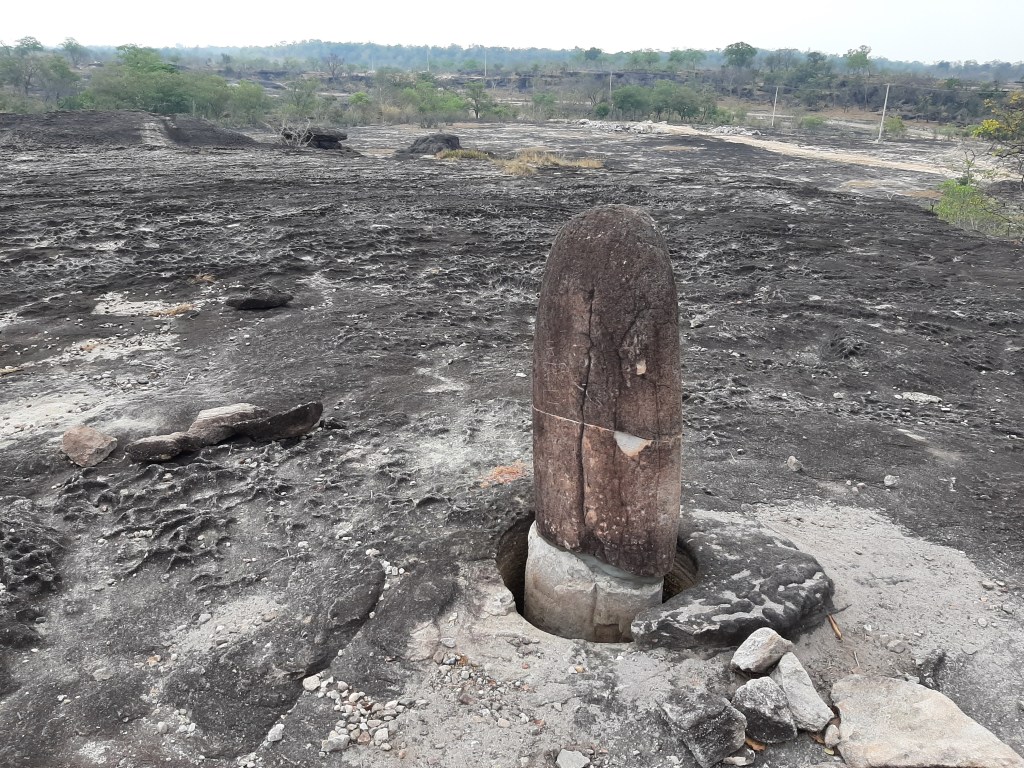
We thanked the Koreans and disembarked at the village (really just a handful of houses and a couple of “shops”). We tried asking 3 or 4 different locals if there was any kind of mechanics that could help us, getting quite good at miming the sound effects of a flat tire in the process. Each person pointed us in a different direction, saying they couldn’t help. After much sign language, we eventually found another truck taxi driver who was willing to put our bike in his truck and take us back to Vang Vieng for the princely sum of 300,000 Kip (about £24): a pretty vast sum in Laos. We were not exactly in a strong bargaining position so our haggling led to no avail and we agreed to take his offer on – emergency recovery in Europe would have been far more costly to be fair!

Somewhat embarrassingly, the driver proceeded to boot out two local ladies who presumably were now far less profitable than our rescue mission… they seemed happy enough so we hoped it had not inconvenienced them much! We drove to where our busted bike was and collectively lifted it up, tying it relatively securely in place. We both sat in the back, holding on to the bike to be extra safe… Our route back was exactly along the road we had planned, except we obviously didn’t stop anywhere and only caught glimpses through the dust of the beautiful surrounding scenery. On arrival at the bike shop back in Vang Vieng, the owner was very apologetic (obviously it wasn’t his fault) and also quite surprised: he had not had a flat tire in about a year! Clearly we had been very unlucky, or driving too fast, or both… We declined his offer for an alternative bike, feeling too frazzled, and paid him around £2 for the tire replacement cost.
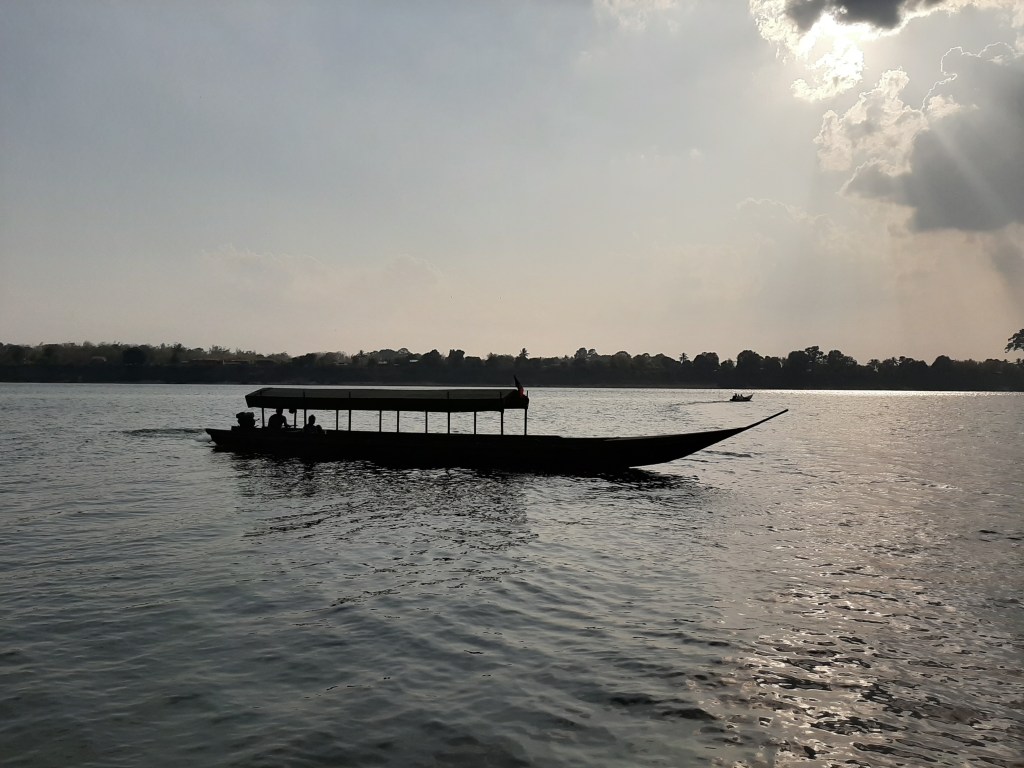
We were hot, bothered and totally, disgustingly caked in dust, but felt unsatisfied and that we had not really seen much of the Vang Vieng area. So, we got on a tuk tuk and headed for Nam Cham, the nearest cave to town. It proved to be a really worthwhile visit. The cave itself has very much been turned into a destination, with concrete paths laid out and entrance fees. We climbed a steep staircase and explored several hundred metres of this well lit cave. Walking through to another opening in the karst, we stumbled upon a “cave temple” with a few golden Buddha statues and devotions (money and sticky rice mostly as is most common). After exploring the cave, we went for a dip in the cool clear waters at the base of the karst, where a stream exits from caves underneath before joining up with the main river. It was perfectly refreshing and cleansing after our dust bath earlier, and it was fun if a little scary swimming into the narrow cave to the point where we could no longer see further ahead!

We got back to Vang Vieng before sunset and headed to PM bar in the rooftop of one of the bigger hotels in the town centre. It was an excellent way to wind down, sipping margaritas with amazing panoramic views of the karst landscape. We had fajitas at the expat-run Mexican restaurant in town which George loved for the relative novelty but Katharine was less impressed with and headed back to crash after what had been something of a rollercoaster of a day! There was a “jungle party” going on about 2 kilometres away and we could hear through the night, but we were not tempted in the slightest given our previous day of drinking and also not having heard the best reviews from other travellers.


Three days felt about right for Vang Vieng. Tubing turned out to be a really fun and quite different experience, while the surrounding landscape is simply breathtaking (even though we had been unlucky with our flat tire and not able to fully enjoy it!). With the size of Laos and the quality of its roads (well paved to be fair but pretty small and full of cows and other rural obstacles), we had a long journey ahead of us for the next stage of our journey: a 12 hour bus rise to Thakhek in central Laos, with a bus change in the capital Vientiane.

Design a site like this with WordPress.com
Get started