It is hard to really comprehend the scale of the Serengeti national park. The name means “great plains” in Masai – and in the centre of the park they truly yu are great: vast grasslands filled with wildebeest, zebra, thomson gazelle, impala and more as far as the eye can see. We were lucky enough to pass through these great plains at the end of the wildebeest migration – the number of animals was astounding but our guide Rama insisted this was only a tiny portion of the full host that had covered the entire Serengeti a few months ago. The wildebeest migration is one of those few, huge global fauna events that has taken place each year for hundreds of thousands of years as heard animals cross between the south Serengeti and the Masai Mara in Kenya along with the rainfall every year.
We were very lucky to pick up an astounding guide / Serengeti and Ngorongoro tour in Mwanza, from a fantastic company called “Mindful Adventures”. The company is run by a lovely Dutch lady, Alina, who is trying to offer something a little different to the standard drive safaris, with a dual focus on mindfulness and meditation, as well as ethical ecotourism in the Masai heartlands of the Ngorongoro conservation area. Although the seriously steep park fees for these world-famous parks made this a seriously expensive trip – the style was very much up our street and we also agreed to go as a camping trip to minimise cost.
Day 1:
We were collected from our hotel in Mwanza on 12th December by our guide for the trip, Rama, and a monstrous Toyota Land Cruiser (the rainy season meant the roads in the park were particularly diabolical and having such an impressive vehicle proved absolutely necessary a number of times, including literally crossing through rivers).
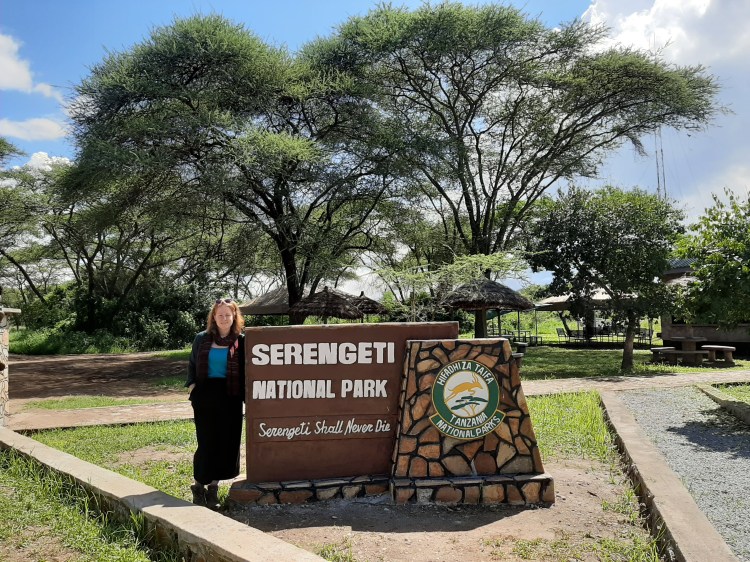
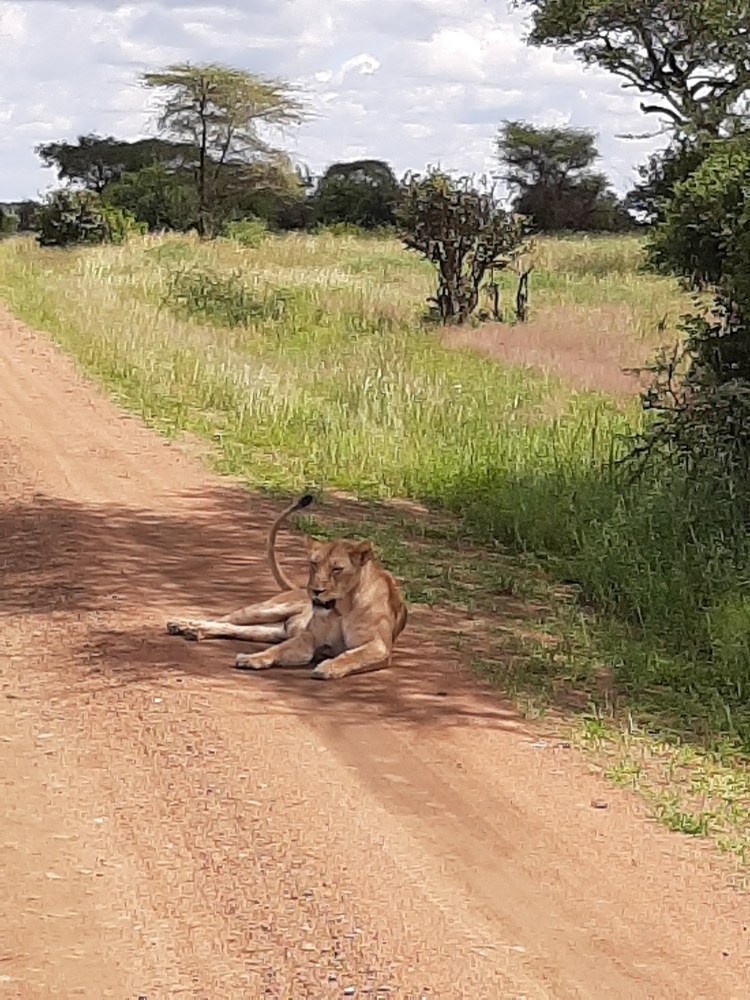
We drove a couple of hours north to the Ndabaka gate, where we quickly crossed into the Serengeti’s western corridor. We were absolutely astounded by the number of animals you see almost immediately from entering the park- it turns out this western corridor is a bit of a destination for the animals at this time of year. We saw countless zebra, wildebeest, warthogs, (pumba), baboons, impala and very quickly, giraffe and elephants up close. After about 30 minutes driving in the park, we turned a corner and stumbled on a lioness just lying in the road in front of us…! We parked right up next to her and got so close you could hear her breathing – a definite highlight for day 1! Because it was low season, we were one of a handful of safari vehicles in the western corridor all day. It was truly special being able to get so close to these incredible animals in such privacy and properly observe and learn their behaviours and temperament…
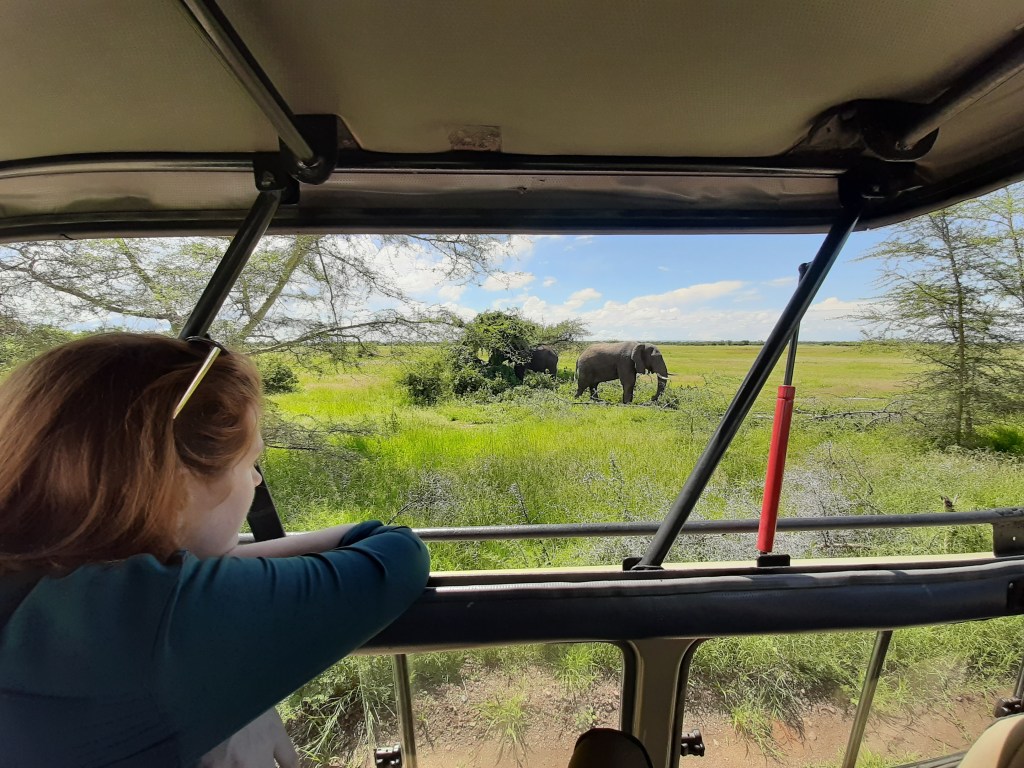
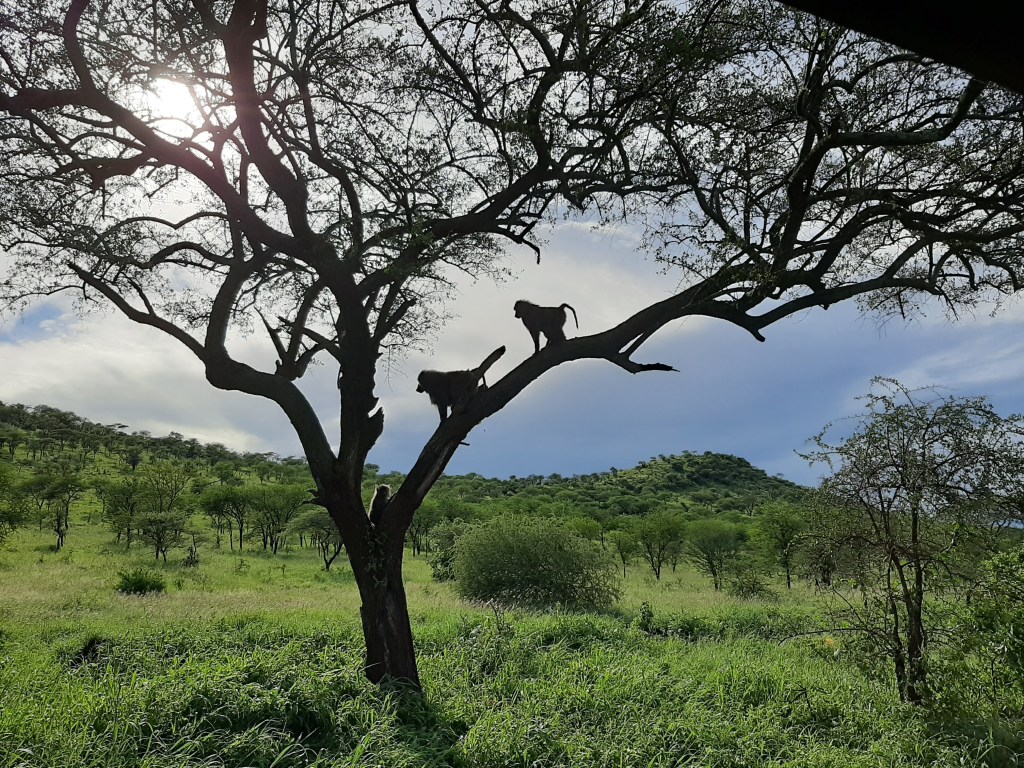
We drove on for another 2 hours – constantly seeing animals along the way – until we reached the heart of the Serengeti, which was our stop for the first night. As evening drew, we managed to catch a glimpse of a leopard relaxing in its tree, having recently caught an impala and brought it up to its branch for safe keeping / more snacking later. We could only really glimpse the leopard’s long tail and a bit of it’s back.
The campsite itself was a bit of a shock to the system. We had so far been used to being the only tourists or “muzungus” (foreigners) and here was a surprisingly posh campsite (showers, kitchen and eating area) full of them! Here is where we also met our cook for the trip – Prochess, who proved to be excellent. We expected small meals on the trip so came prepared with snacks… how wrong we were. Prochess kept us more than fed and cooked everything from leak soup, bbq chicken to pizza – all in a campsite setup!
We had been informed about the likely presence of animals in the h the smell of humans so very unlikely to turn up). An Italian woman absolutely freaked when she saw the eyes of a buffalo at night near the camp and started screaming “lion, lion!”. Some others also started approaching and filming the same buffalo that quickly got aggravated and started huffing. Buffalo can be very aggressive so this was a beyond idiotic thing to do… the same Italian woman also massively freaked out at a hyena that was sheepishly hanging around the kitchen looking for some scraps.
Day 2:
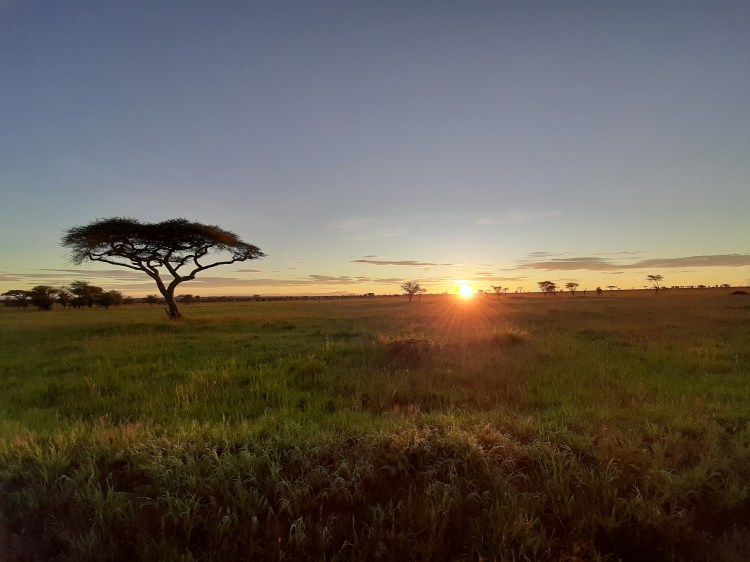
Despite the loud and occasionally idiotic tourists, and the very excitable and noisy cooks who were all sleeping/ partying in the kitchen, we managed to get a decent nights sleep and woke up the next day before sunrise. Rama drove us slightly out of the campsite and we popped the roof of the Land Cruiser. The sunrise was sensational – I guess it was the quintessential view of the African Savannah – very special.
After breakfast we resumed our game drive around the heart of Serengeti. Having seen the wealth of animals we had on the previous day, today was all about trying to see big cats – leopards, cheetah, male lions. Despite the absolutely stunning scenery, it was slow going at first – a reminder that these are wild animals that are unpredictable and cant just be “found”. We saw a family of mongoose (meerkat-like animals) living in an abandoned termite mound. We also stopped by an enormous herd of elephants (~50 of them) including many babies / young ones as well as crocs and hippos at the nearby river. Still no sign of cats. We eventually returned to our leopard friend and his tree and found he was now fully visible lower on the branch and his impala food was in 2 halves…
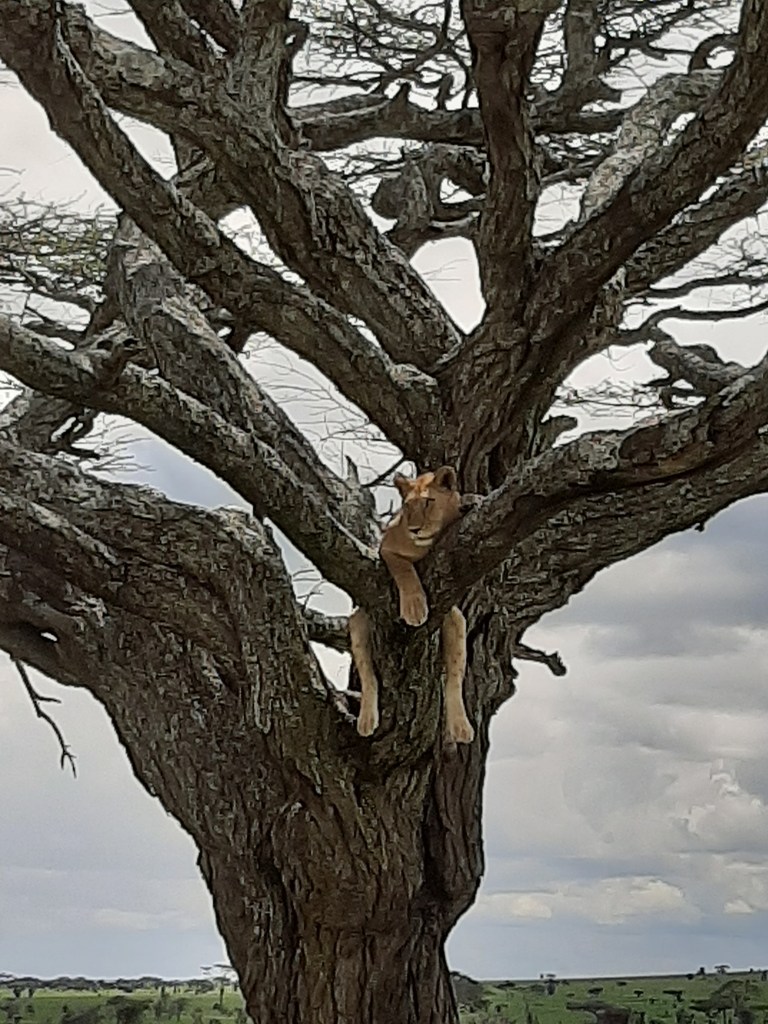
After a quick pit stop, Rama got intel of 2 lions sitting in a tree some way away- so we sped off (along with seemingly the rest of the safari groups who also had heard the rumours). En route we eventually stumbled upon 2 lions walking in the middle of a great plain. A little further along we came across a single male lion lying by a buffalo kill from earlier – garding it from scavengers. Then we finally made it to the large tree where lo and be hold were the 2 lionesses straddling different branches looking very relaxed in the shade, despite the now 5 or 6 Land Cruisers that had turned up. Seeing this pride was a really fantastic way to end our game drive and left us suitably cat-satisfied!
We made the 1h+ journey back to the campsite where we had lunch and packed up the tents before setting off towards the Ngorongoro Conservation area. We learned the difference between a conservation area and a national park is that while the animals are protected in both, humans are allowed to live in the former – an important distinction for the next part of our tour! Leaving the heart of the Serengeti in the afternoon of day 2, we began to cross the simply enormous, vast plains where we caught up with the end of the wildebeest migration (mentioned earlier). Crossing the gate for Ngorongoro, we immediately began to come across Masai people herding cattle. It turns out there are 40-50,000 Masai living in the Ngorongoro area – we had not properly realised the significance of this space as a home land for these people.
About 30 minutes after crossing the Serengeti / Ngorongoro gate, we came to a ford that was impassable due to localised heavy rain. We arrived behind a short queue of other vehicles and a digger had just started dumping deposits of earth and rock into the rapid, high waters where the road was supposed to be. Katharine seized the opportunity of the delay to meet 3 local Masai women who were on a rock overseeing the intrigue that was unfolding. They were all in bright beautiful colours of the Masai “shuka” (tartan-like dress). They were all virtually bald and wore an array of beautifully crafted Masai jewellery (mostly made from colourful beads), which Katharine politely declined the offer to buy off them, and had a number of large piercings each in their ears (we later saw that large holes in the ear lobe was very much a traditional look among both men and women).
We had been warned about the increase of disingenuous, culturally insensitive encounters between tourists and Masai – e.g. through fake / show village visits or kids asking for money in exchange for photos. This felt like a pleasantly natural encounter with Rama translating for us and the ladies very keenly accepting a few sweetie and sugar cane that Katharine had to offer.
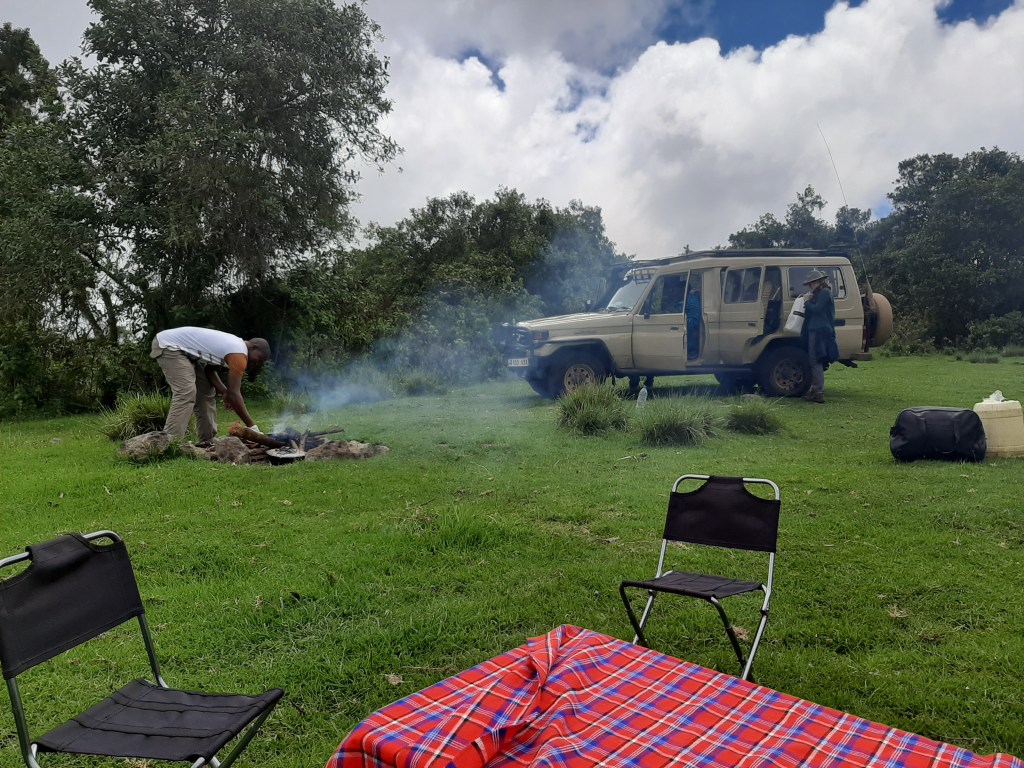
Eventually, the torrents calmed and the digger had successfully built a “crossing” and we were on our way. We arrived late at the “Simba” campsite on the rim of the Ngorongoro crater, set up camp (this time away from the cooks!). This campsite was even posher and had wifi – we just about managed to see the UK election result which we had not known due to no signal or wifi on the first 2 days.
Day 3:
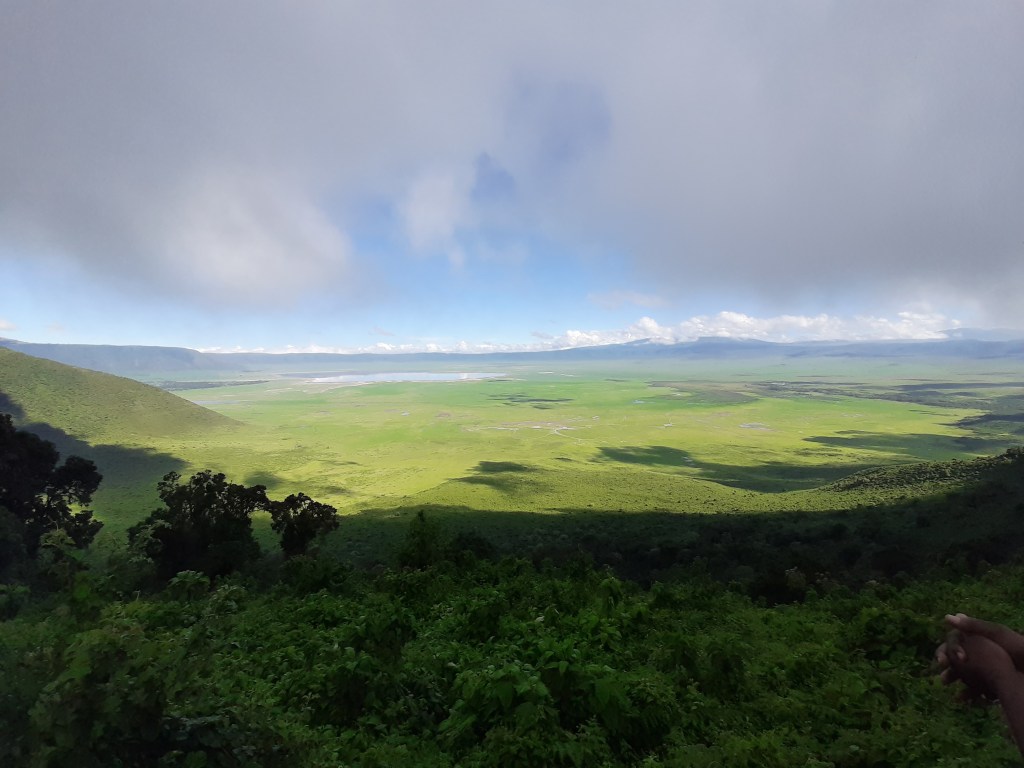
We woke to the sight of gently rising mist from the Ngorongoro crater. While we still did not have a full view – you could already get a sense of its scale and beauty. We once again packed up and drove to a view point for the crater. We didn’t drive into the crater to see more animals – as this would have cost an extra $295 in park fees and we felt it would have been more of the same. The view from the top was simply sensational. The caldera of an ancient gigantic volcano, long ago collapsed, has now become a vast tropical depression, filled with elephants, black rhino etc. It is probably a similar width to the crater in Santorini – except it is filled with animals instead of sea! Masai used to live here as well and their cattle would graze on the crater floor – the Tanzanian government “relocated” them a good 60 years ago.
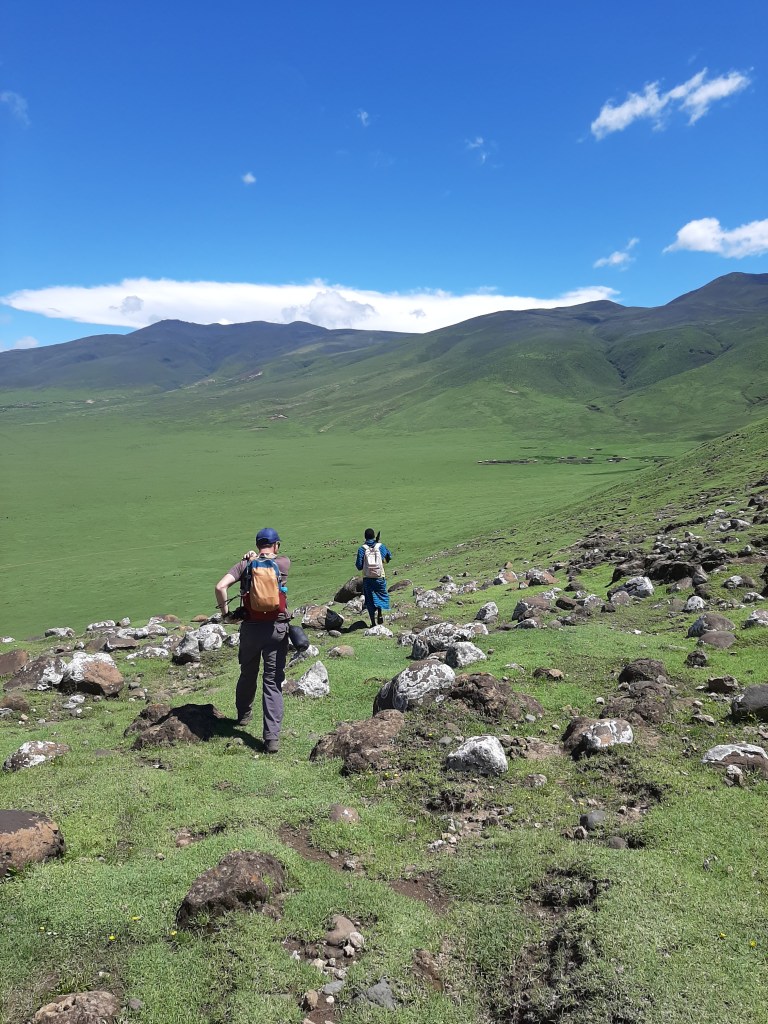
Having digested the beauty of the Ngorongoro crater, we drove for another 2 hours to the Masai village of Nainokanoka to begin the second stage of our trip: a 2 day walk across Masai heartlands to the Empakai crater. We picked up our local Masai guide Daniel and dropped off at the local rangers’ post. We set off around mid day towards the village of Bulati where Rama and Prochess (our cook) were driving to set up camp ahead of our arrival.
Our Masai guide Daniel was a really lovely, warm and energetic chap. He spoke really good English so we were able to have some interesting chats over the 2 days learning more about Masai culture, weddings, religion (now mostly Christian) and his many business and social enterprise initiatives. Daniel was clearly a rising star in the Masai of Ngorongoro – he had just set up a bee-keeping / honey-making enterprise, was working with NGOs to promote human rights education, of course had his own cattle, ran a small shop out of his spare boma (Masai hut), and of course, he did guiding for tourists / walkers. He also has a young family with 1 toddler and another on the way. Oh and he was the local banker – safekeeper of a community money box that he and 2 other village leaders had keys for and all 3 were needed to open it. Any wealth from social enterprise projects go into the box and the community agrees which initiatives to invest in or if there are any particular families in need.
As we headed off towards Bulati, we realised how dramatically the scenery had changed. We had left the savvanah and plains of the Serengeti, the rainforest of the rim of the Ngorongoro crater, and were now in what felt remarkably like home for Katharine! The high altitude grazing land of the numerous Masai villages in the area genuinely felt like the Black Mountains in the Brecon Beacons in Wales – or even the Lake District perhaps. Mountainous yet totally devoid of any trees, with grassland covered with sheep… (OK and donkeys, cows and the occasional zebra). We have never seen so many donkeys grazing together! The Masai use them for transport / work but they seemed to be mostly enjoying the abundant grass on offer.
We also got a real sense that these Masai communities seemed to be doing pretty well. We saw the presence or products of a number of NGOs (including cattle watering and sanitation facilities built by UKAID / DFID) that meant these villages had all the key essentials: a new medical centre, schools, water pumps etc. This is not to day there was not poverty, but we had a sense that here, people had found a way to somehow balance living sustainably alongside wild animals who’s habitat as a default takes a second seat in other places in the world. We also learnt from Daniel that he personally had built an extensive international network from his guiding work, and was being supported by a few Americans in particular (someone had bought him solar lights while another had promised private education for his girl!). While these communities were clearly attractive to international NGOs and donors, it felt like a healthy relationship and Daniel and members of his community were both very grateful for international support and also firmly independent, entrepreneurial and proud of their culture and homeland.
We walked down into another vast crater-like depression and past a dozen or so different animal herds, watched by Masai boys no older than 10 (it was school holidays we were reassured). We managed to pause for 15 minutes of mindfulness in the middle of the depression, just to absorb some of the space and the quiet. At the entrance to Bulati village, we came across a pre-Christmas celebration being held at a local school run by the NGO Compassion. We found ~100 kids all dressed in new red and white Christmas jumpers and participating in various singing / games. We didn’t hang around for long as the presence of “muzungus” seemed to be distracting a lot of the kids!
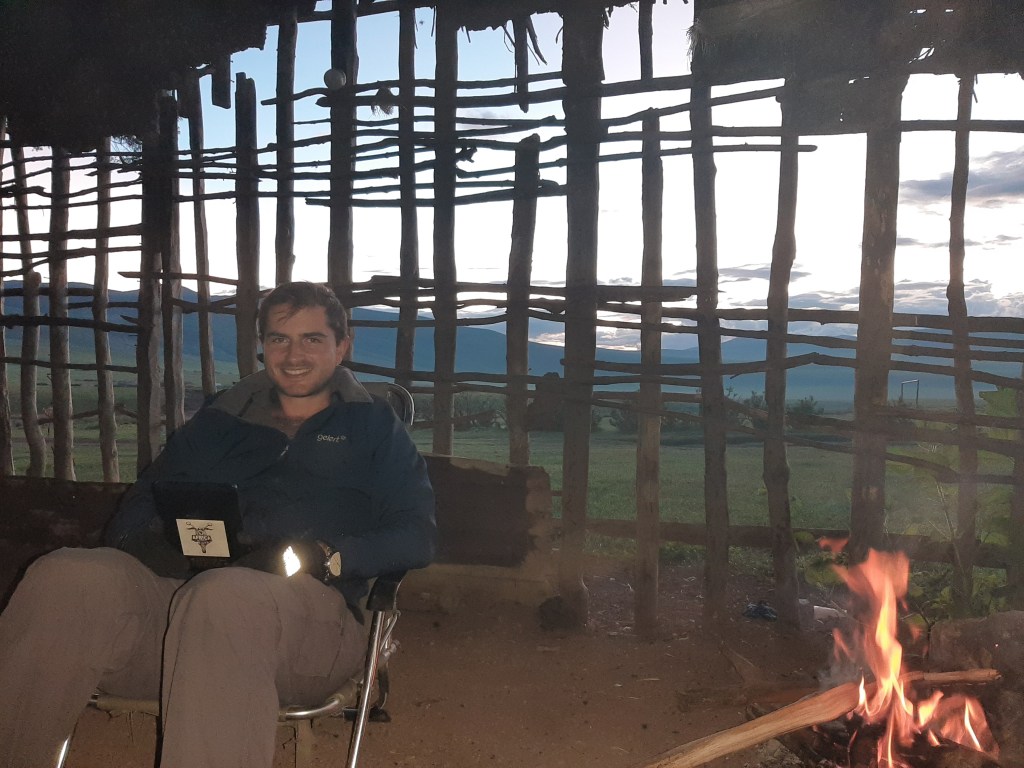
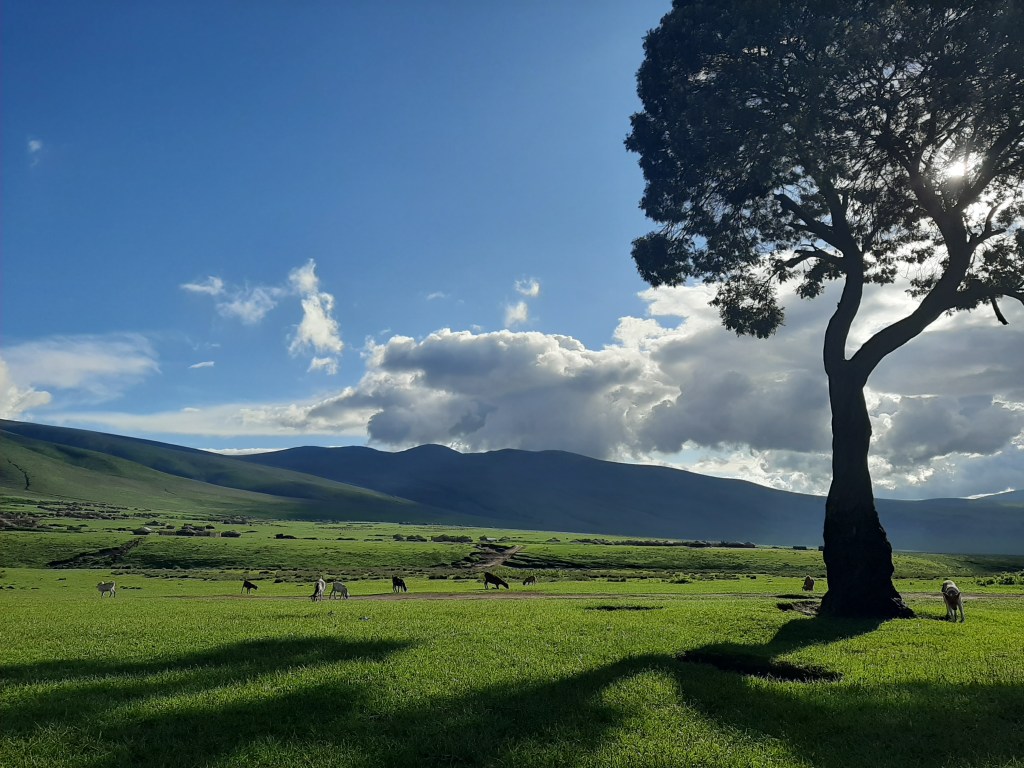
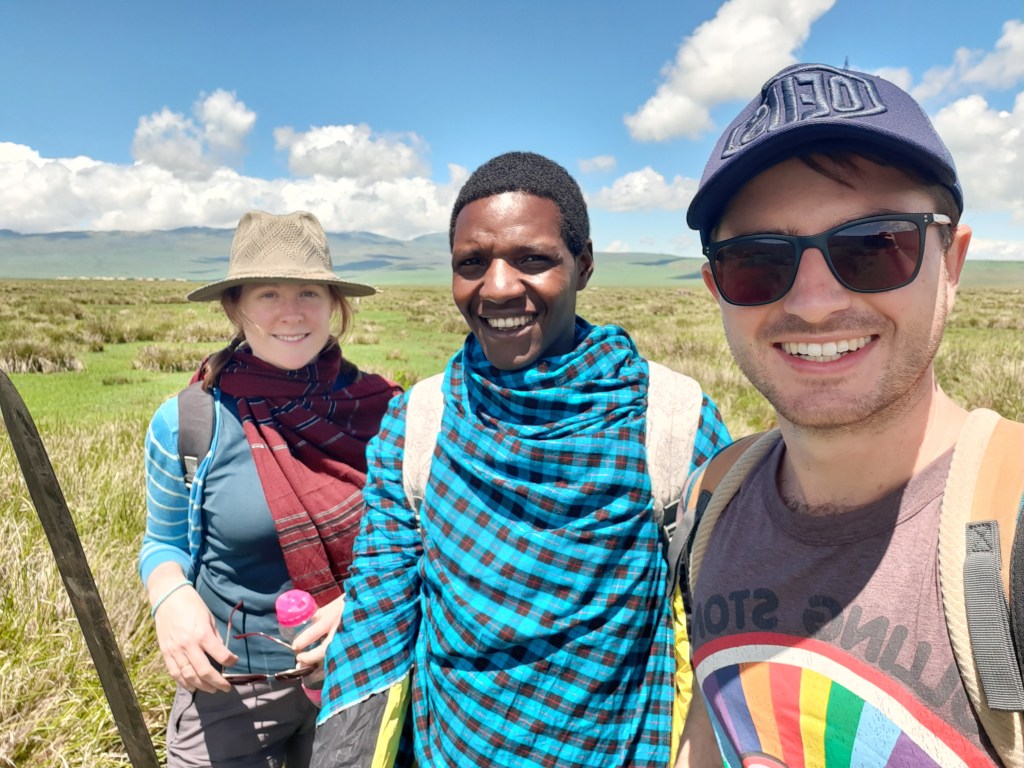
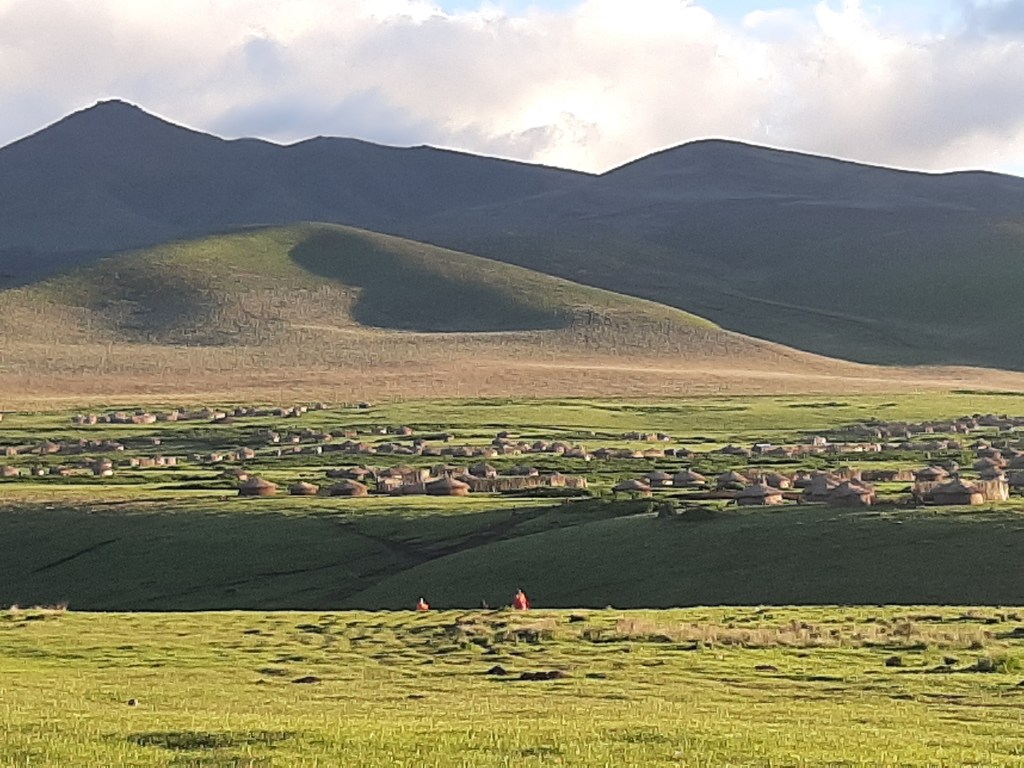
As we entered the village of Bulati, we were welcomed by children. Children waving and shouting “bye bye”, children staring at us and then running off, children running up to us and shaking our hands. The Masai clearly dont hang about when it comes to children… they are everywhere! We were certainly not the only white people to have visited but we nonetheless were a key source of excitement. As soon as sun went down we were in for a shock – it became bitterly cold very quickly with a bracing wind blowing down the mountain. Turns out we were at an altitude or around 2000 metres… we got out all our cold weather gear we had got for the Caucasus / Nepal and huddled by a fire in a very rustic and worse for wear banda (hut) for some shelter. With the cold, Brecon Beacons-like landscape and the rain that also soon followed we told our guides that it was just like the UK here (which they were most surprised to hear)!
Day 4
The following morning the rains had cleared and we woke to the stunning view if the vast depression we had walked across with villages scattered on the surrounding slopes. In Bulati itself, we could see herds gradually making their way out of their pens for another day’s grazing. We walked on up the mountain where the freezing wind had come from. The terrain soon changed from bleak plains to bush to rainforest. On the way, Daniel pointed out a hyena on the road ahead. It saw us and wondered off – Daniel later spotted a small pool of blood from where the hyena had earlier dragged its kill…
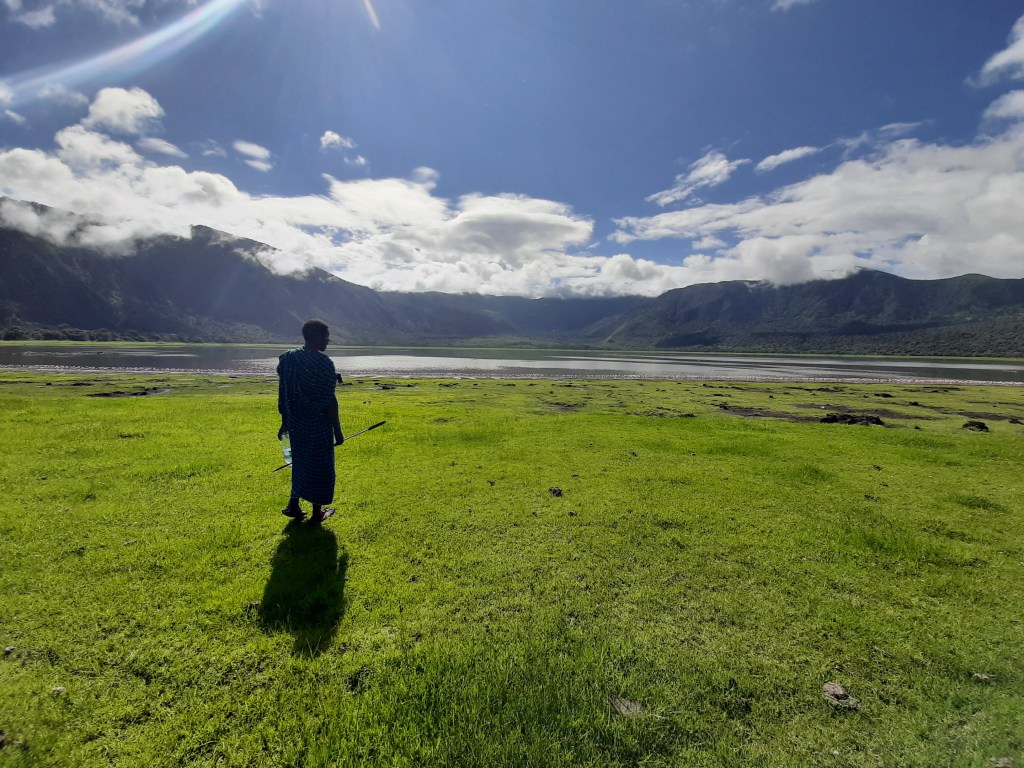
Exchanging stories that evening, we learned that Daniel can actually smell wild animals, and tell them apart..! He said he smelt the hyena before seeing it and that growing up in the bush means you come to learn these distinctive smells of various predators (something Rama affirmed was very common among the Masai). Our sense of smell is clearly under practiced in modern society! George jokingly called Daniel a “bush” human – not far from the truth. We learned that Daniel had on a number of occasions killed hyena attacking his cattle and has also had to fend off hungry leopards in the past. Throughout the walk, Daniel carried a cast iron spear with him. We thought this was probably a bit if a “Massai warrior” gimic but it turns out Masai are not allowed to have guns of any sort so genuinely use spears as a means of defence on the rare occasions they encounter trouble with wild animals. Any trekkers in the Ngorongoro area are mandated to have a Masai guide with them – partly to promote sustainable ecotourism and partly for the protection of tourists!
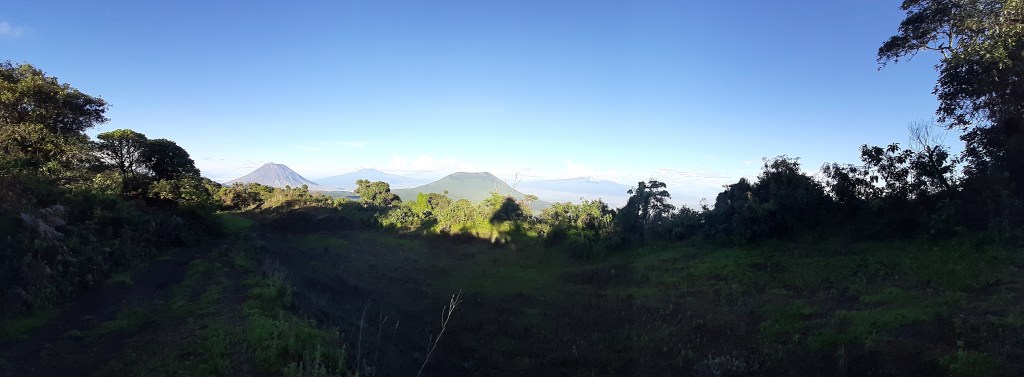
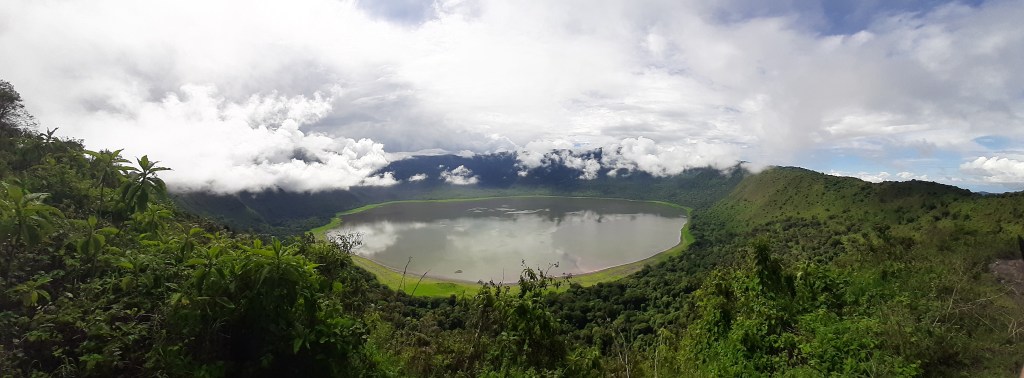
After about 3 hours of walking we arrived at the long-extinct volcano if Empakai. It is like a miniature and totally secluded version of the Ngorongoro crater. Breathtakingly beautiful, covered by rainforest on the slopes of the collapsed caldera, with a large (due to the rainy season) lake in the middle… and thousands upon thousands of flamingos! We reached the campsite and had lunch. It started to rain quite heavily so we took the opportunity to have a rest / read in the tent. In the afternoon, we begun our descent into the crater floor. A little further from our campsite, we paused to take in an incredible view away to the east from the crater: fairly close, we could the impressive active volcano of Ol Doinyo Lengai and Lake Natron behind. Further to the east lay vast plains of bush and farmland, and, in the distance, Mt. Kilimanjaro covered in clouds but unnistakably massive.
We walked down a steep path through increasingly dense and humid jungle, each corner revealing a different stunning angle of the crater. Passing some ancient ~4m thick trees, Daniel said these were sacred among Masai and that animal sacrifices were made here in periods of long drought. Reaching the floor of the crater, the path went through a tunnel-like cover of leaves / tree branches before opening up to the great spectacle: thousands of flamingos everywhere on the beach around 100 metres ahead. A group of baboons were chilling in the distance to the right. And we were the only people around. We quietly walked closer to the flamingos to get a closer look / take photos, until eventually some started to fly off and, like dominos, their neighbours followed suit until there were hundreds of flamingos flying low over the lake. We sat down for another 15 minute mindfulness session and to just take in the incredible beauty and sounds. Daniel had a paddle in the saltwater lake but we didn’t fancy it (there was a LOT of flamingos poo..).
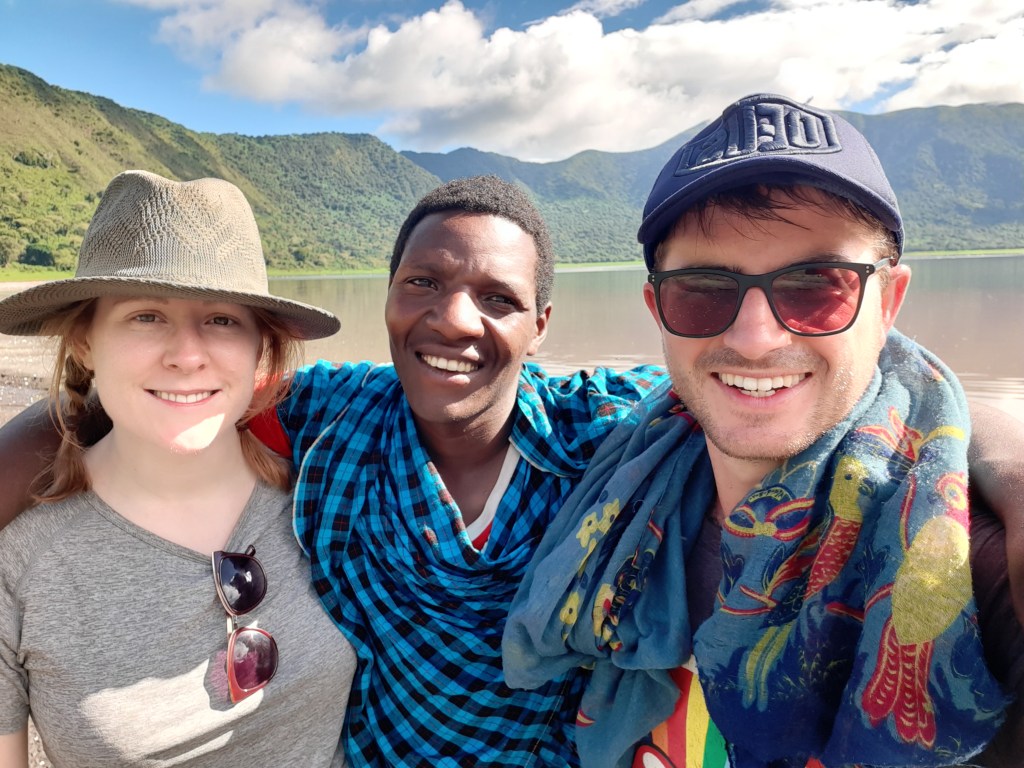
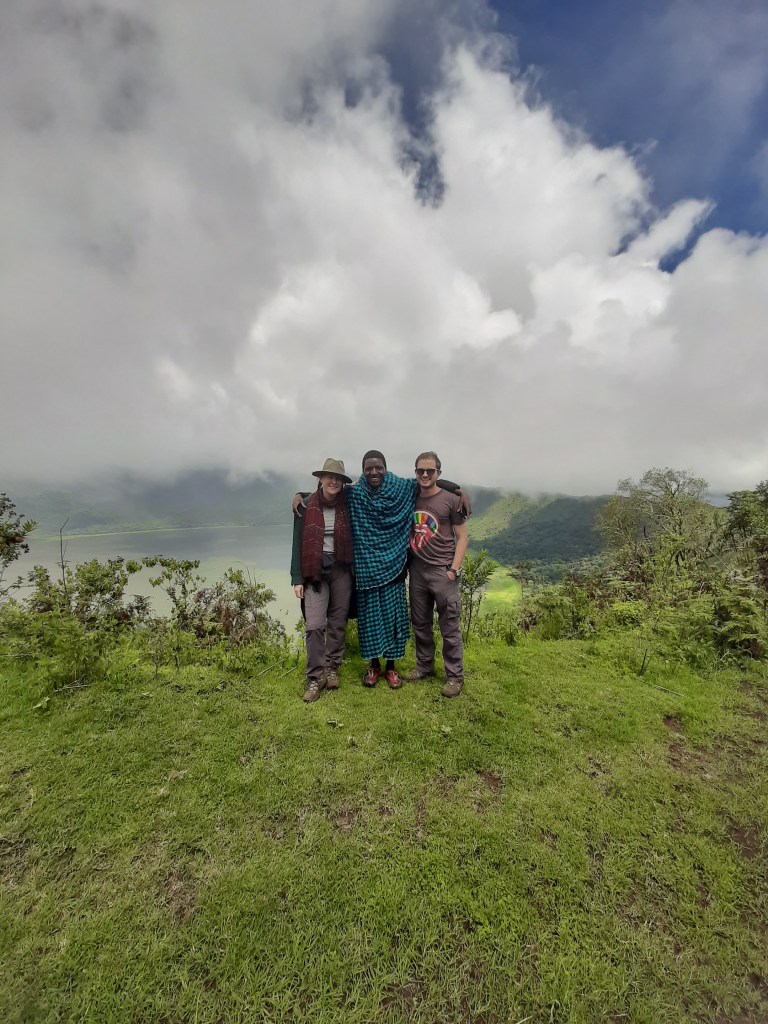
We eventually begun our ascent up the steep path. A combination of high altitude, searing heat and high humidity made it touch work but we made it back after about an hour- pausing for rest and interesting chats with Daniel along the way. As our last night on the trip, there was a bit more of an informal and relaxed attitude in the camp. Prochess and Daniel both joined us to have dinner together (previously only Rama sat with us) and we exchanged stories in front of a camp fire as the night (and cold) drew in. Rama had a particularly scary story about a little white boy who was abducted by a leopard in a national park nearby some 10 years ago… George joked that Daniel would smell them out but it left Katharine a little anxious going to bed!
Day 5
Our final destination for our tour of the Serengeti and Ngorongoro was the city of Arusha where we planned to stay overnight before making the journey to Nairobi. On the way, we drove in the Land Cruiser back along the route we had walked and after ~2 hours on very rough roads, reached Daniel’s family home in Nainokanoka village. Daniel introduced us to his (very large) extended family as well as his wife and little girl. We saw his spare boma which housed his “office” and little shop, and had a tour if his actual boma which felt surprisingly spacious inside and even had multiple rooms. Apart from the relatively “modern” stove (still wood burning) which had the luxury of a chimney – this is how Masai have been living for thousands of years. It was quite incredible to think that this man who spoke good English, owned a smart phone and was connected with dozens of people around the world, lived here.
On leaving, we tipped Daniel and received very cute Santa earrings and Masai bracelets as a leaving gift and were on our way. The long drive to Arusha took us back along the rim of the Ngorongoro crater before descending into the plains and flat lands past lake Manyara. We briefly stopped for a view of the lake and for some souvenir shopping in the village or Mto Wa Bu and were once again on our way. Rama, originally from Arusha, had a good recommendation for a guest house and was able to drop us off right there. We then said our goodbyes and tipped both Rama and Prochess.
It was quite an emotional end to what had been a really phenomenal trip. Rama in particular had been incredible and is one of life’s great people – incredibly attentive, kind, engaging with a relaxed demeanor. We gave him a thank you card (one of the many Katharine had made with Welsh love spoons on them. We explained this is traditional in Katharine’s tribe).
By the time we got to Arusha we were knackered and getting sick – we managed to sort a shuttle (minibus) to Nairobi for the following morning and ate at a local Indian Barbeque (Khan’s) where we had a fantastic assortment of Muglai food and Indian sauces and veg. dishes. Otherwise Arusha didn’t seem up to much – just a hectic city that is primarily a launchpad for safaris to the West, or in our case, to Kenya!

 tranetrottingthemegamoon.travel.blog