The detour from our overall eastward journey to the Caucasus region was very much in the spirit of the megamoon: exploring exciting new corners of the world while also stopping by to see old friends. Our week in Georgia and Armenia proved to be outstanding on both fronts, managing to get a good flavour of life in the region, it’s natural beauty and having the luxury of being hosted and shown around which only whetted our appetite to return to this gorgeous part of the world.
Georgia:
We landed in Tbilisi, the capital of Georgia, in the afternoon of 30th December. En route we had managed to glimpse the vast snowy mountain ranges on Iran, not that far from Tehran. From the sky, the Georgian countryside looked brown, almost parched – it turns out the climate is cold but very dry in the central parts of the country in the winter. We had braced ourselves for serious sub zero temperatures but instead had single figure temperatures largely in sunshine or high cloud.
Our first impression of Georgia was hugely positive: going through passport control at the airport, the border officer handed us our passports and, without so much as a word or smile, a small bottle of wine each! Hospitality is clearly very serious business in Georgia. Georgians also love their wine (justifiably, what we tasted was excellent) and proudly claim to be the first people to create wine based on evidence of 8,000-year old clay wine vats. Our first taste of Georgian cuisine also did not disappoint. In the evening, we went to a local brewery/ restaurant called Alani. The place felt like a small beer-hall and was buzzing with locals. We somehow entered at the same time as the only other tourist in the restaurant – an Italian lady – and we were firmly ushered into the only table still left to sit together. The food was outstanding (their own made beer was also great)! We had a gorgeous lamb and raisin stew, a spinach-filled flat bread and some juicy and very garlicy sauted mushrooms. As we were waiting for our food two men and one woman all dressed in traditional Georgian clothes, unexpectedly showed up and started doing traditional dancing. It was very upbeat and fun and some of the men’s moves in particular were very impressive (jumping and rigid food bending / moving – serious stamina!). It felt fantastic to back in a country with a real foody and boozy culture.
After our fast-paced itinerary in East Africa, we were keen to slow things down a little. Katharine also was unfortunately pretty flu-ey for most of our time in Tbilisi, but our cozy room in Namaste hostel in the old part of town proved to be an excellent and relaxing spot for rest and recuperation. The hostel is run by young Tbilisians who were very welcoming, laid back and fun people. They have somehow mixed old Tbilisi architecture, cozy rugs and a fireplace with slightly oriental decor to create really warm and inviting place. Over the course of the next 4 days, we got to know a young Armenian chap who was travelling with his mum (she looked young enough to be his girlfriend…).
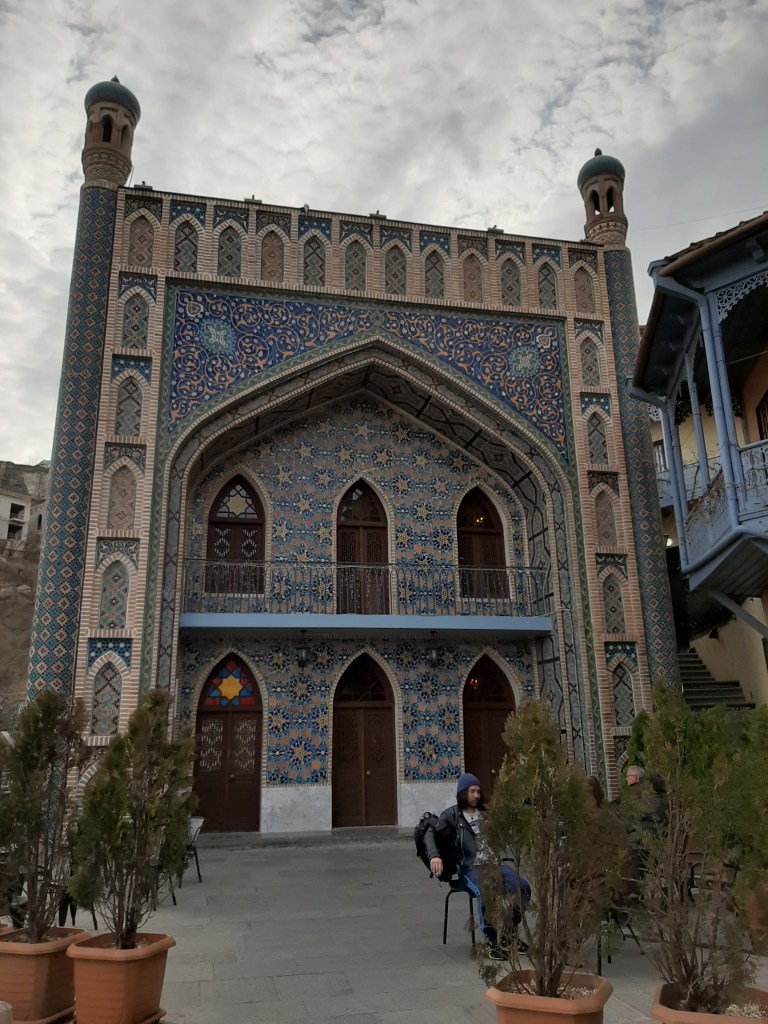
Our first full day in Tbilisi (New Years Eve!) was very much a rest day (at least until the evening…): Kat slept a lot as she had come down with flu while George watched TV / read. In the early evening, we managed to get out and up by cable car to the old fortress. First built by the Persians around 1,500 years ago, its presence as well as the strategic location on the river persuaded the Georgian kings to move their capital here from Mtskheta. Tbilisi’s name derives from the Georgian word for warm (tbili) in relation to the natural hot sulphur springs in the old town: dozens of old Persian baths are still fully operating and popular among locals and tourists alike!
From the top cable car station, we made the short walk towards towards the rather Soviet-feeling massive aluminium statue of “Mother Georgia”. From her vantage point, she oversees proceedings in the city with sword in one hand and a cup of wine in the other: a fitting symbolism for Georgian culture and attitudes to guests or invaders. A few hundred metres further on the ridge we glimpsed the huge flying saucer-like house belonging to the local chief oligarch – a man with tremendous influence in the country who has also briefly held the presidency. From mother Georgia, we walked to the fortress itself. Katharine found some strength to discover an apparent love for scrambling over ramparts – it was certainly a fun way to enjoy the remarkably quite intact ancient walls.
After descending from the fort, we had dinner at a popular local restaurant specialising in khachapuri: large boat-shaped pies filled with cheese and egg (among other interesting variants). It was tasty if not overly healthy and certainly made up for the lack of cheese in our weeks in Africa. We then headed off to find the New Years celebrations towards the Republic Square and Rustaveli area of town. We stopped at the cool and intimate Warszava bar for a cheap beer and flavoured vodka. Then the madness begun… we walked up the entire length of the boulevard between the Republic Square and Rose Revolution square which had been pedestrianised for the evening and turned into one massive street party. People everywhere were setting off hand held fireworks and bangers. Even children did so, applauded by their parents. It was constant and this was a good 2 hours before midnight… We eventually reached the Rose Revolution square to join a big crowd gathered to watch the show on a stage that had been set up with a series of hilarious but musically quite good cover acts. It was a medly of some of Anglo-America’s biggest hits: we saw the Georgian Eric Clapton, Freddy Mercury, Tina Turner and Rita Franklin (the latter two showing no qualms with blacking up…). The whole show was showing on Georgian nation TV and had 2 Eurovision-style hosts. In the end the, “Happy New Year” moment at midnight was something of an anti-climax. Apart from the presenters’ count down there was no real discernable change in firework or banger volume at midnight. We walked back a little exhausted from the crowds and sensory overload. Back at the hostel, we were compelled to join the 2 Armenian guests and Russian girl on duty that evening with some more relaxed new years celebrations. We stayed up for another hour or so drinking vodka and chatting – a great end to what was a very different NYE!
Unsurprisingly, in light of the previous night’s entertainment, Katharine started 2020 by having something of a relapse with her flu so spent much of the day resting. George managed to go on a free walking tour led by a young female local student (as they often are!). It proved a great way to get a proper feel of the city- particularly the old town. Tbilisi has a distinctively European feel to it. The newer parts of town have wide boulevards lined with neoclassical buildings. Houses in the old town display a fascinating blend of Persian with European style and its streets are great fun for exploring or stumbling onto another wine bar. We learned that the owners of the old town houses had been forced to “squeeze or leave” by the newly founded USSR in the 1920s. These formerly grand multi-storey town houses have ever since been split into multiple flats.
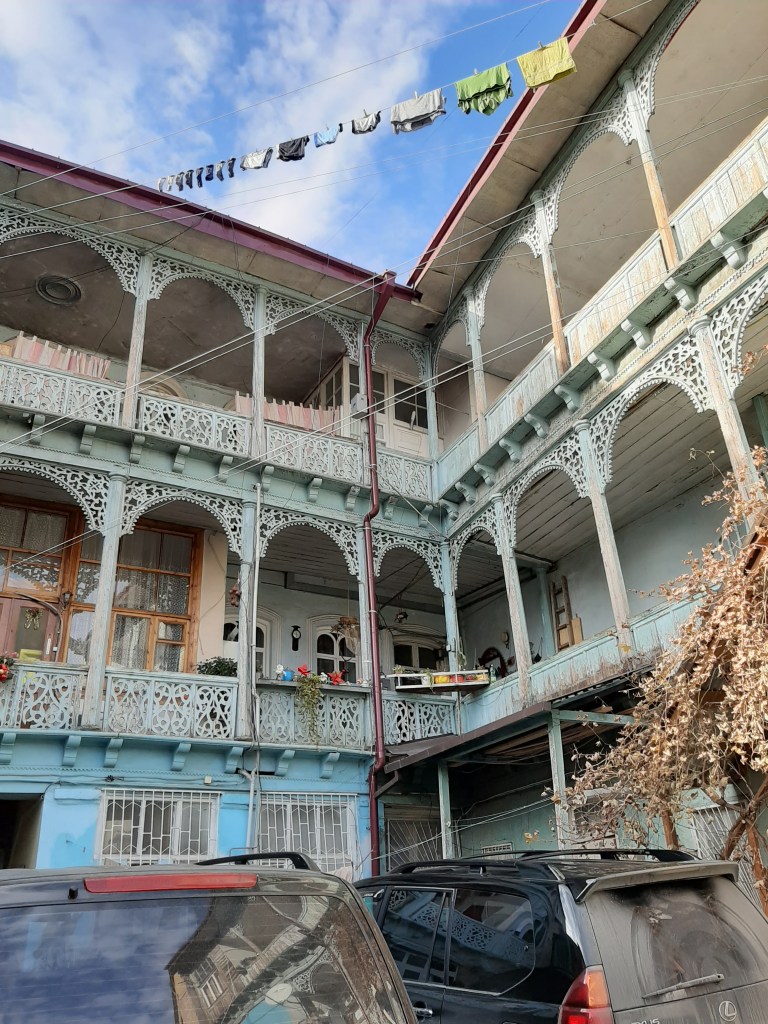
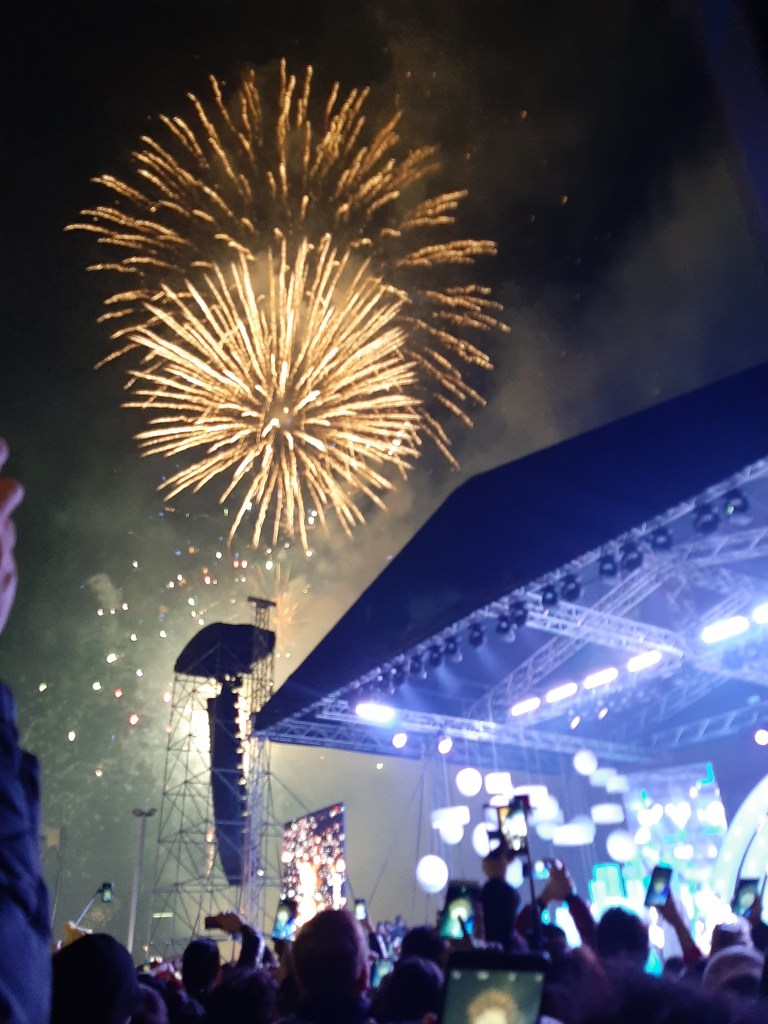
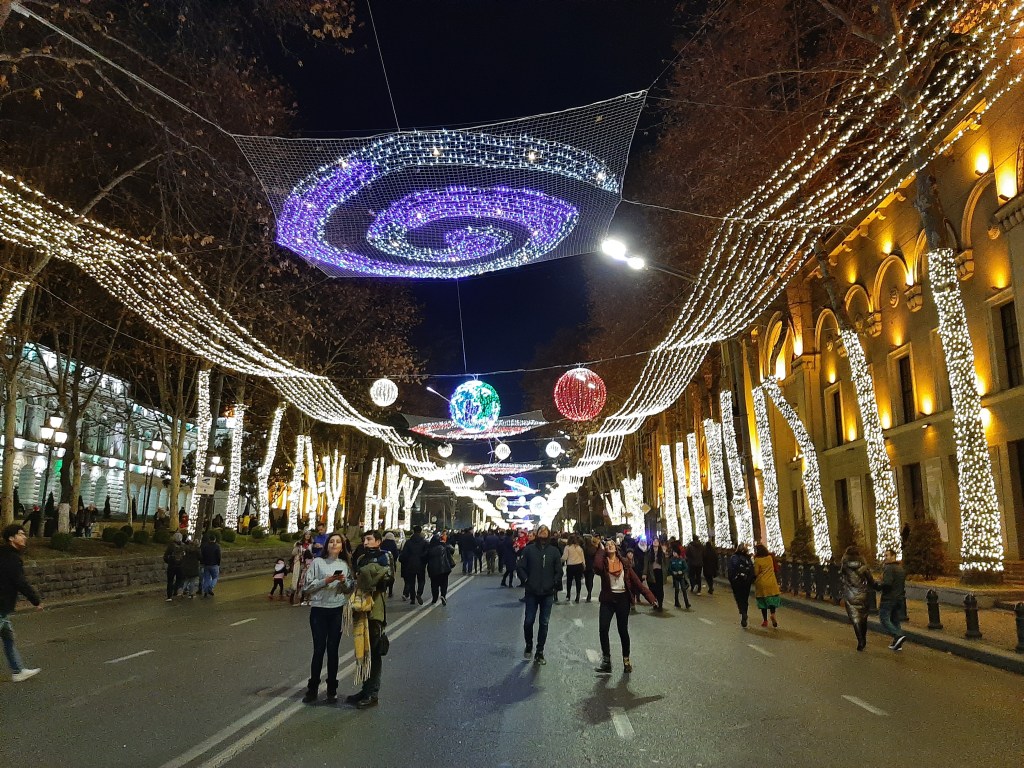
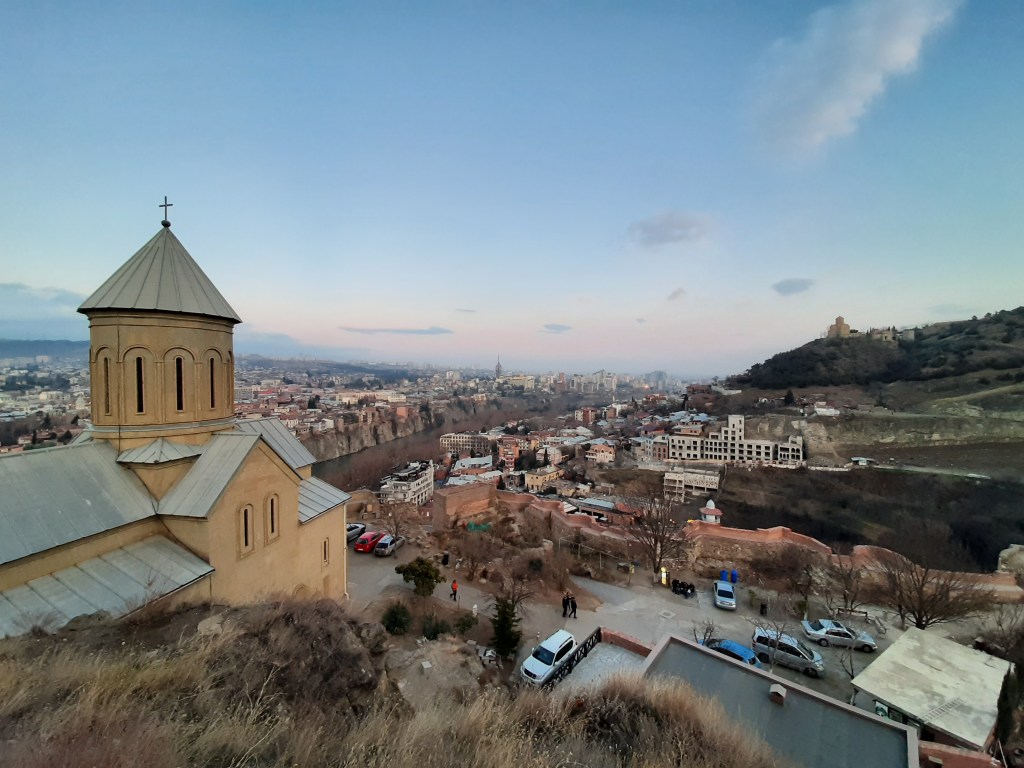
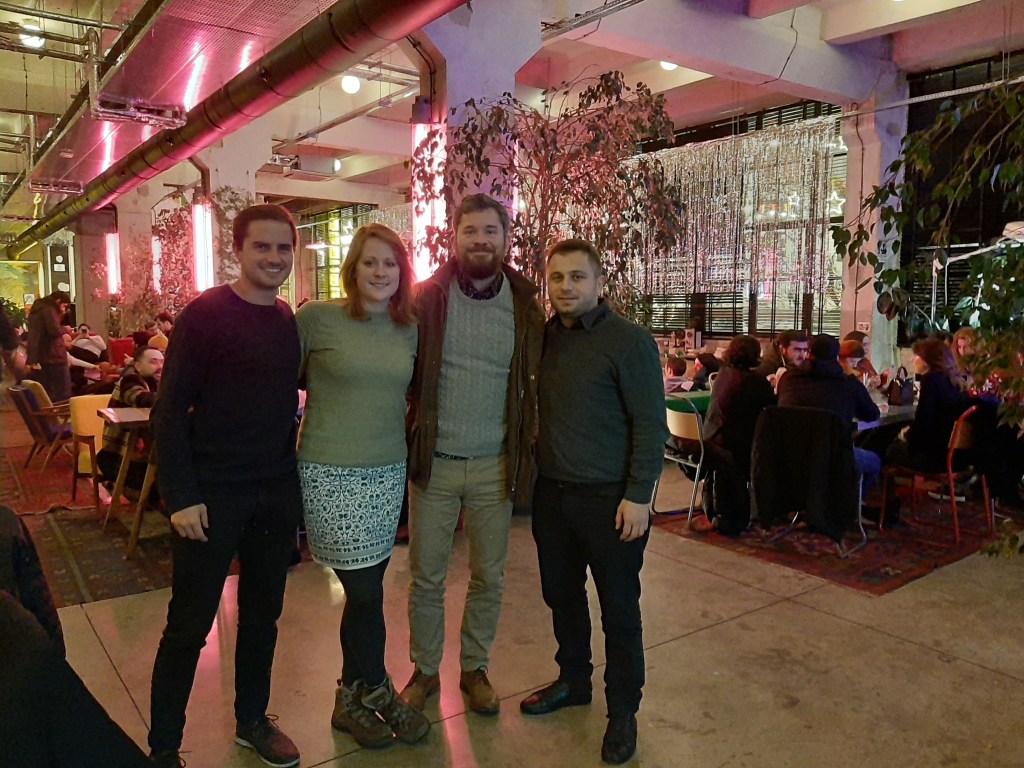
The evening was dedicated to seeing old friends! We had a really fantastic evening with Akaki and Hans who were fellow Essex graduates to Katharine – Akaki a local working for the national anti-torture ombuhdsman while Hans (from Sweden) is working with the EU mission in the country, monitoring the “boundaries” with the Russian-occupied (since the 2008 war) South Osetia and Ankhazia regions. Hans and Akaki showed us an excellent time in Tbilisi, going to some of the further afield, cooler spots for dinner and culminating with drinks in “Fabrika”, an old factory that has been converted into a hostel and a string of bars with a genuinely cool Soviet-hypster vibe. It was a really memorable evening and great fun to catch up with both after so many years.
Living in the old capital and spiritual centre for Georgia, Mtskheta, Hans very kindly offered to give us a tour of the town and local churches and monasteries in the area (there are many…!). We very gladly took up his offer but we had something important on the schedule first for the day: a trip to the Persian baths! We were quickly able to find an available private room in one of the many baths – and even agreed to pay an extra 2 quid each for one of the famous full body scrubs… The room felt positively luxurious with our own private changing room, a hot pool and adjacent freezing cold pool, both decorated with ornate blue themed mosaics. Opposite were two slightly ominous marble slabs… We relaxed in the hot pools for 10 minutes or so, and then it was time for the scrubbing. The man and woman who were our scrubbers were in their 50s, overweight and spoke virtually no English – it proved to be a hilariously transactional (we got used to the slap on the back meaning “turn over”) yet incredibly relaxing experience.
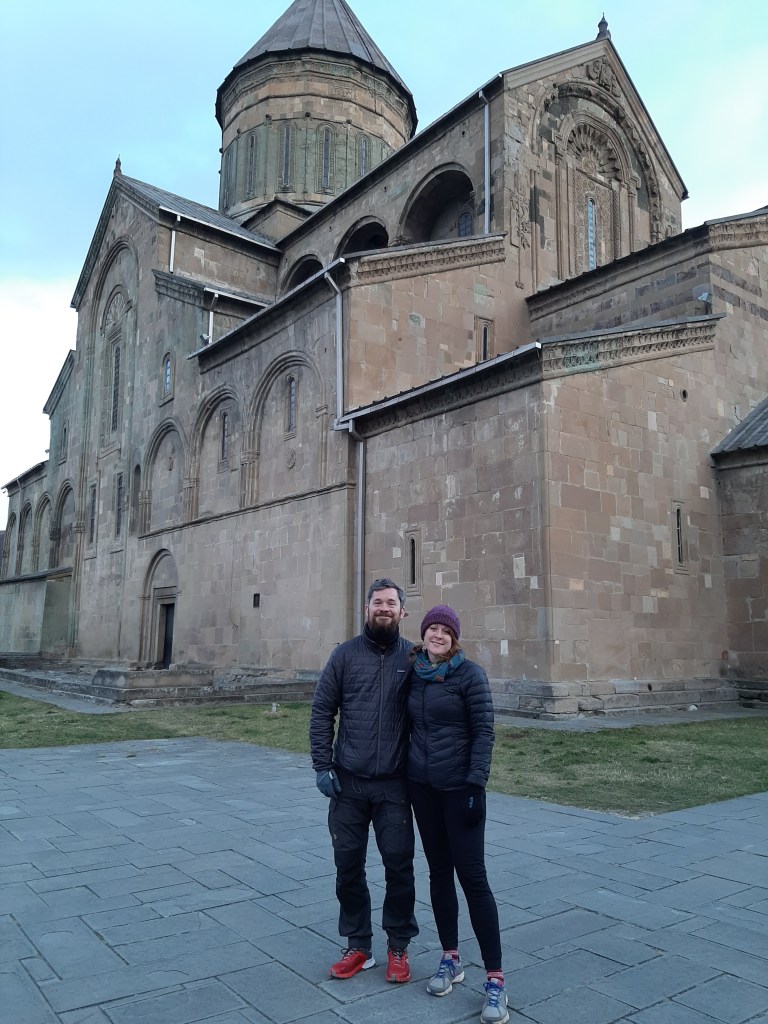
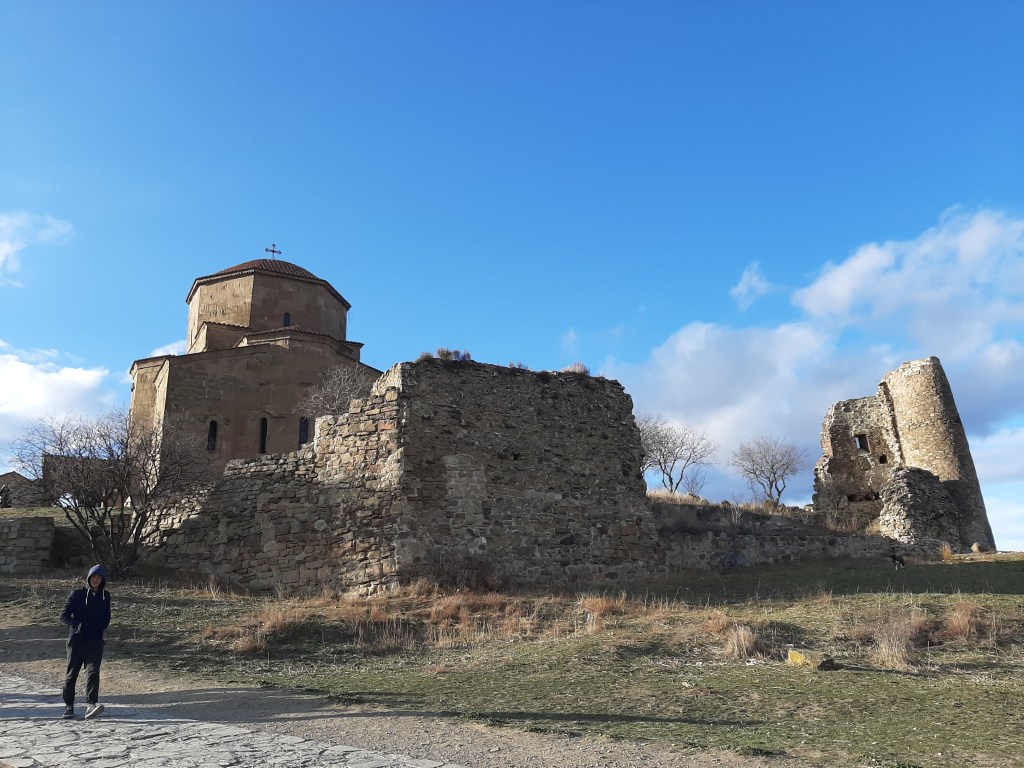
Feeling like relaxed snakes that had just shed a layer of skin, we made the 30 minute taxi ride to Mtskheta. Hans picked us up in his ancient Korean-made compact jeep that looked somewhat underpowered but great fun to drive. We saw 5 different monasteries and churches – including Jvari, Samtavro and the impressive, fortified Svetiskhoveli in the centre of the town itself. Some of the churches dates to the 5th century, when Christianity first established itself in the country, and included darkened with age but still beautiful frescoes. It was a really enjoyable tour and a great way for us to get a glimpse of Georgia outside of Tbilisi. It was also really lovely to be able to hang out with Hans again who had been a fantastic host / tour guide! In the evening, we returned to Alani, our local favourite, for more tasty cheap food and entertaining dancing.
Armenia:
Our Armenian friends in the hostel happened to be returning to Yerevan on the same day we intended to travel. They, very helpfully, helped us book seats on the minivan / shared taxi they were taking. And so, on the afternoon of 3rd January, we drove off towards Armenia! (Albeit, not before an hour delay… the final passenger showed up 20 minutes late and proceeded to chain smoke while on the phone for 40 minutes.)
The drive was around 5 hours long across windy roads roads through valleys and mountain passes. As we drew closer to Yerevan and the night drew in, it started to snow. We were worried coming to this part of the world in winter would have made it difficult to travel but we found the winter had in general been unseasonably mild so our route over the mountains was easy. We were met at the motorway exit for Abovyan (Anahit’s home town) by our friend Anahit and her father Michael. It was such a wonderful and surreal moment – a reunion we had been planning for months – as we embraced in the steadily falling snow on the side of a motorway.
Anahit’s dad drove us to their family home where we were immediately made to feel extraordinarily welcome. We were sat down at the dining table and enjoyed a traditional new years meal prepared by Anahits mum, Margarita: home made dolma, Armenian cold meats and cheeses, dried fruit and nuts, roasted pork. We drank dangerously delicious Armenian cognac which Anahit’s dad kept constantly topped up, and discovered Armenian toasts: we had several rounds of family members providing lengthy toasts / speeches to health, prosperity, and most commonly to us as their guests. It was a really humbling and warming evening and a really amazing way to discover true Armenian hospitality.
Anahit and Katharine studied together at Essex. She is doing incredible work running a human rights research/ consulting NGO she co-founded with a focus on women’s rights and poverty. Chatting to Anahit’s family we discovered that her dad is a software engineer working on payments systems for banks, while her brother is in the final year or so of his PhD in Physics. Margarita was incredibly warm but we were unfortunately hampered by a language barrier slightly.
Anahit lives in her own 1 bed appartment a short walk away from her parents. Like her family home, and much like most of Abovyan, the appartment is in an old Soviet-era block, built in an time where housing people effectively, cheaply and equitably was the order of the day. After our epic dinner, we walked to Anahit’s flat and set ourselves up for the night on her sofabed.
The next day (4th Jan), Anahit had a well thought out and ambitious sightseeing schedule for us in Yerevan. A thin layer of snow from the previous night had settled giving Abovyan a bit more of a Christmassy-Soviet feel. We had to keep reminding ourselves that although we were well into January, we were right in the middle still of the Armenian Christmas and holiday period. New Years Day is a big celebration in Armenia and is when gifts are traditionally exchanged. The days leading up to Armenian Christmas (on 6th January) are all a public holiday and, as we found in Yerevan, many shops or museums are closed.
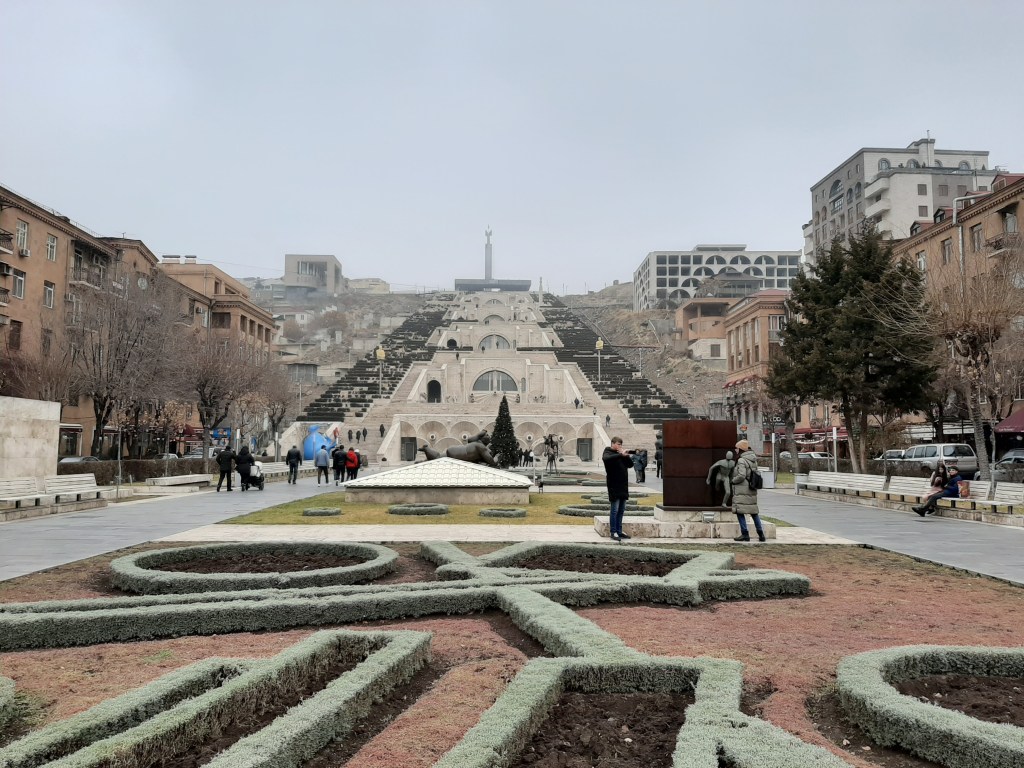
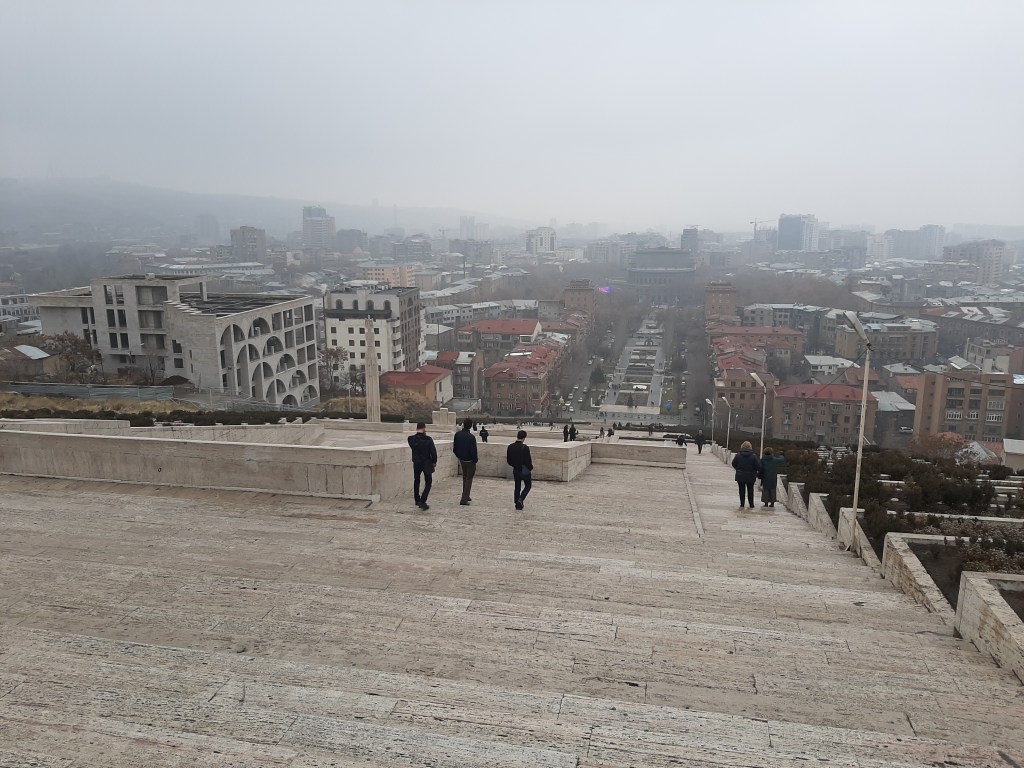
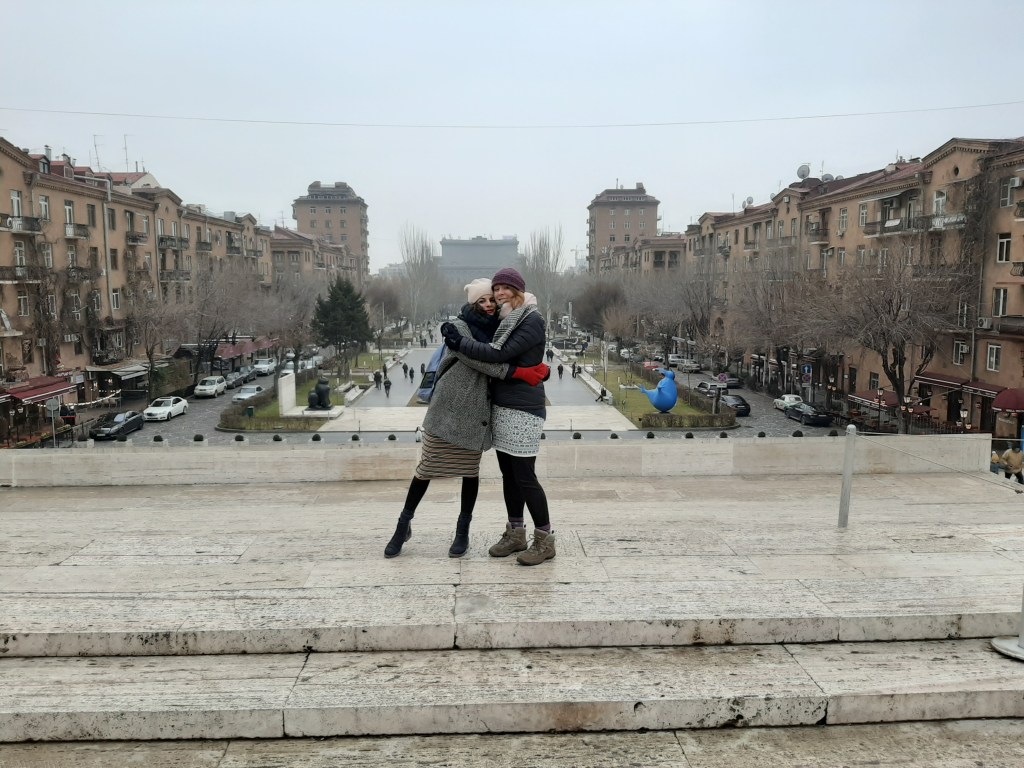
After having breakfast, we grabbed a taxi to Yerevan and paused on one of the boulevards (sorry Anahit the place names were a struggle…! 😛 ) in the newer part of town to the north of the centre. We walked down hill until we reached a huge obelisk-like Soviet monument. Over to the east, we could see the great silver statue of “Mother Armenia” with sword in-hand (not dissimilar to Mother Georgia), overlooking the city from Victory Park. Just past the monument, we came to a huge concrete platform overlooking the old city of Yerevan. The city was designed in the early 20th century as the first Armenian republic was fighting for its independence against Turkey. The original designs were for the city to be built in a basin with a circular grid system in a sun-like shape with roads exting the centre like rays. Yerevan has since vastly outgrown itself and struggles with traffic and smog problems, although it was distinctly quiet during our stay during to the holiday period.
From the platform, we could see the entire city below. It was a bleak and cold day unfortunately so visibility was poor – Anahit highlighted that on clear days you can see Mount Ararat dominating the backdrop. The mountain is engrained in Armenian psyche and situated in “Western Armenia”. These were the lands that suffered the brunt of the Armenian genocide some 100 years or so ago – they are now still part of Turkey and inhabited in large by Kurdish populations. We walked down the hugely impressive “Cascade”: an immaculate stone staircase descending from the Soviet monument down to the “sun” part of the city, eventually joining the boulevard leading up to the neoclassical opera house.
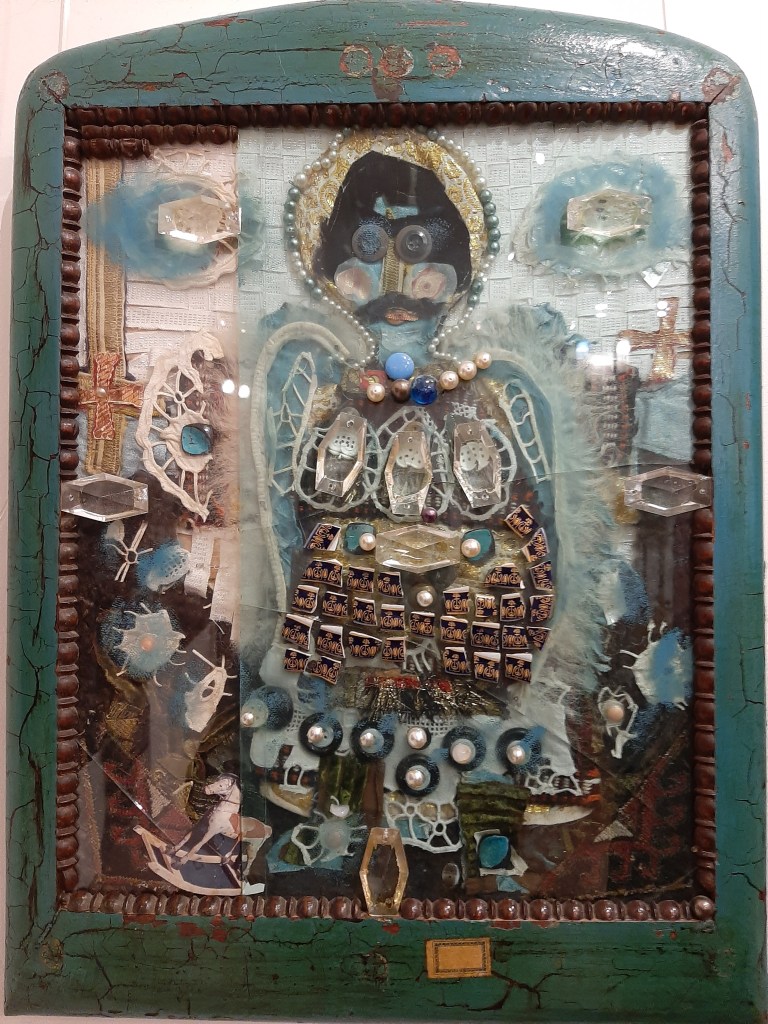
We had lunch at one of Anahit’s favourite cafes at the bottom of Cascade and grabbed a cab across the centre of town to the Parajanov museum. Sergei Parananov was an iconic Armenian avant garde artist and film maker who created intriguing and provocative films and art to convey often political messages against the Soviet hegemony (for which he spent some time in prison). We met Anahit’s friend, Arpi at the museum who helped provide some context into the bizarrely fascinating art pieces in the museum. The style largely involved a picture frame, with Monty Python-esque collage intermixed with various 3D physical object within. Over the next few days we got to hang out with Arpi and get to know her – she is great fun and a top addition to our list of new friends from the Megamoon! Arpi is an feminist activist in Armenia and runs a feminist library. She is very much a “creative”, writing poetry in English as well as painting.
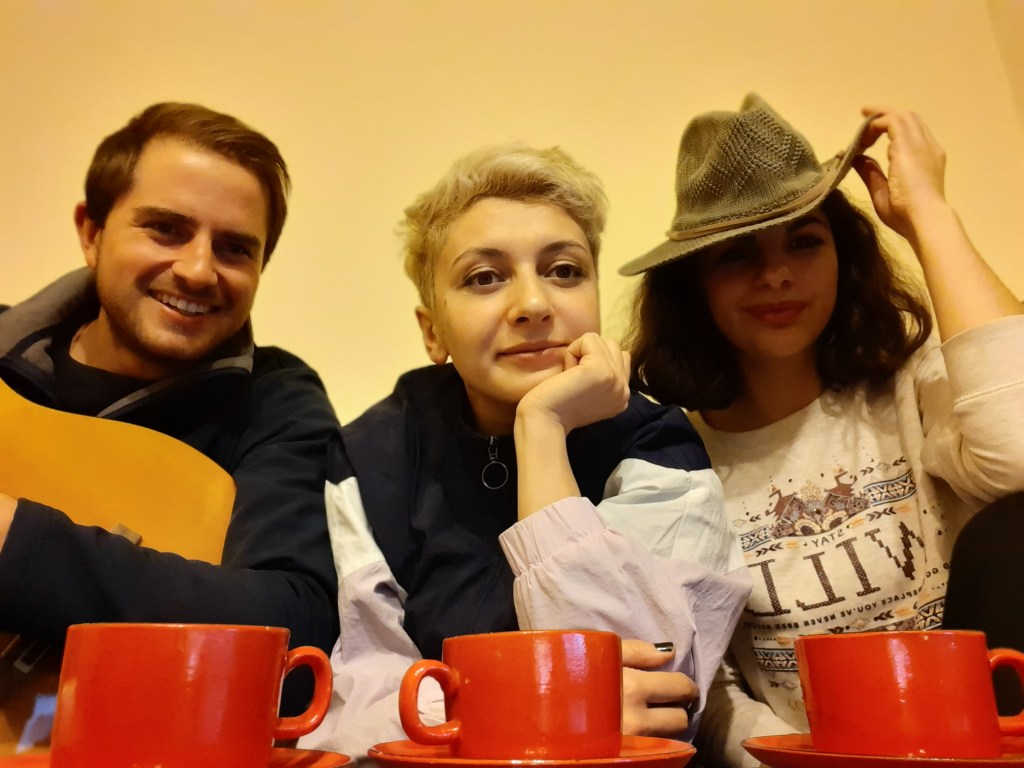
Feeling arted up, we headed for another of Anahit’s favourite cafes and then the four of us returned to Anahit’s flat in Abovyan. It was Saturday night, and Anahit had made plans for us to sample some of Yerevan’s nightlife… Katharine napped (still feeling a little poorly from her flu in Georgia), while George, Arpi and Anahit chatted away and started on the Tekila. We ended up having a great night, starting at Calumet bar- a fun but incredibly smoky bar with a properly bohemian feel to it, we later escalated to “Polygraph” for a traditional Armenian techno / rave experience. We were joined by more of Anahit’s friends that evening who were also great fun and very friendly.
Our initial planning with Arpi and Aahit for the next day (Armenian Christmas Eve) was ambitious – there was talk of up to five museums at one point! Waking up at 11 meant we had to temper those ambitions somewhat (in the end we managed one!) Anahit had a work meeting around lunch time, so we travelled into Yerevan together and went for lunch at Lavash – an upmarket but somewhat underwhelming restaurant – for lunch. After lunch, we met Arpi who chaperoned us to the History of Armenia museum. Anahit joined us shortly after. The museum provided a fascinating story of the troubled history of this ancient, culturally rich, incredible nation: from the stone age communities that lived here, through to the wars of independence and Armenian genocide.
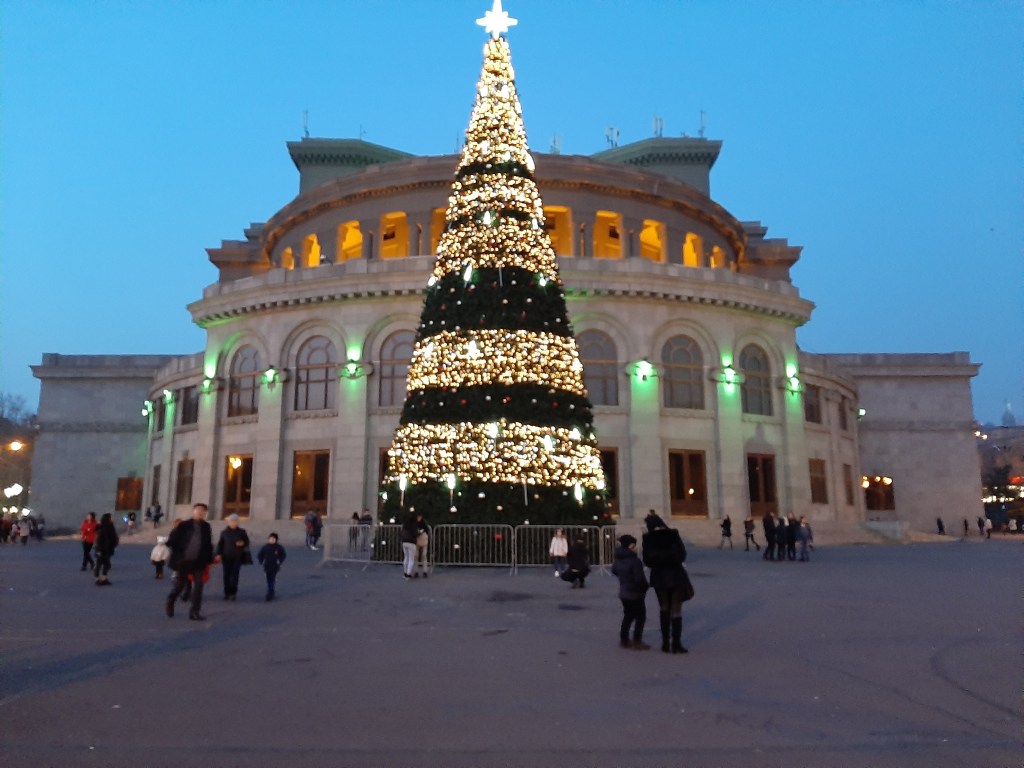
Aftern the museum, we toured some of the key streets of Yerevan around Republic square, up to the opera and parliament building. Exploring these quiet alleyways, Anahit told us the gripping stories of her own personal involvement in the Armenian revolution of 2018 that ousted the then President and forced the first genuinely free and open democratic elections in a generation. It was really incredible to hear the stories of activism and the elation of the moments of triumph – a rare success story in the book of peaceful pro-democracy popular uprisings… We enjoyed an outstanding dinner and delicious wine at a Yerevan wine bar with a lovely homely feel to it. We then indulged in some dangerously tasty cake for desert at another of Anahit’s favourite cafes. We had overall been given a good glimpse into the Yerevan cafe culture. It seemed to us that every cafe we stopped at Ananahit and Arpi knew people coming and going. It turns out there is very much of a scene in Yerevan with the same people frequenting the same sort of places. Stuffed with cake, we returned to Abovyan for a relaxed end to the evening, giving a really good opportunity for Anahit and Katharine to connect on the common challenges in their careers and how to balance healthy mind and good living with vocational work.
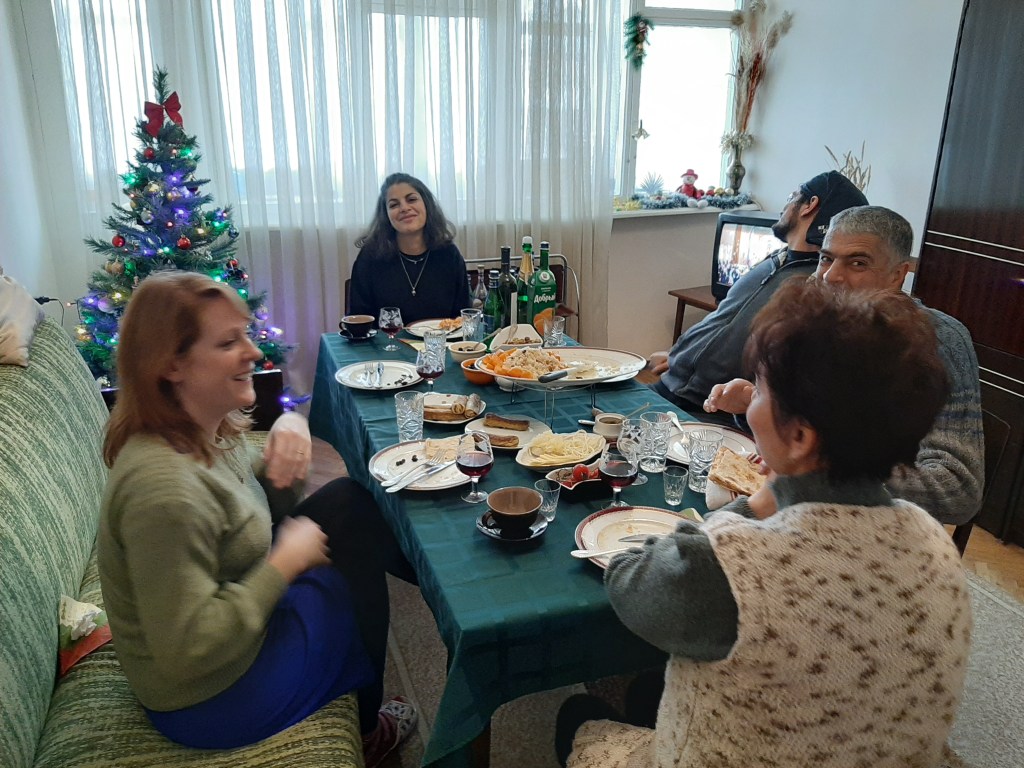
Christmas Day (again)! Unkike our Zanzibari Christmas, we were treated to a genuinely white Christmas for the Armenian celebration on 6th January given the snow that had fallen a couple of days earlier. The day started with a traditional Christmas breakfast at Anahits parents’ flat where we enjoyed many of the same traditional seasonal delicacies we had enjoyed on our first night. There was, once again, much toasting with wine (morning did not stop us). We were again humbled and made to feel extremely welcome.
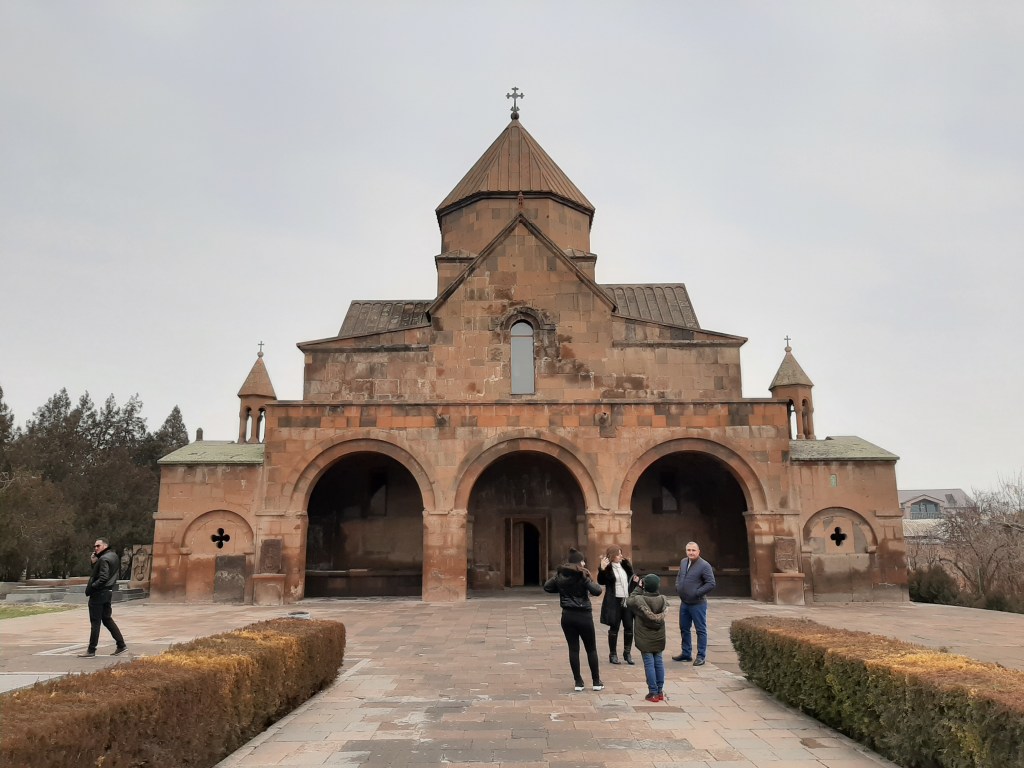
Christmas Day was the day we had planned to see something of the Armenia outside of Yerevan. We drove with both of Anahit’s folks to the city of Ejmiatsin – the spiritual capital of Armenia and birthplace of Christianity in the country. This was the site where Gregory the Illiminator had been granted the authority by the King of Armenia to construct the first church in the early 4th century – several years before Christianity became the religion of the Roman Empire. We arrived in Ejmiatsin and the place was bustling with Christmas Day activity – families o the move to / from church or to see family. Unfortunately the old cathedral was closed for restoration, but we wandered just a little further to a beautiful small church – similarly ancient looking – which Anahit’s cousin had recently been married in. En route to Ejmiatsin, we had also stopped in Yerevan to do some further last minute sightseeing. We walked up to the Matenadaran building – an academy / manuscripts museum with an impressive statue of the founder of the Armenian script. We also had a walk through the Republic Square in the daylight, and the (not so traditional) Christmas markets. It was a really lovely outing and very kind of Anahit’s family to show us around on what would generally be a very much family-focused day.
We returned for a rest and some snacks at Anahit’s flat and packed our bags ready for our 3am flight to Nepal. The snacks turned out to be a mistake as we were treated to yet another gargantuan meal at Anahit’s parents’ flat. This time we were joined by Anahit’s cousin and her husband and their ~5 month old baby boy. The cognac and vodka flowed freely, Anahit’s dad once again out-doing himself by making sure no glass was empty at any point. We ended up engaging in a round the table series of proper Armenian (i.e. lenghty), incredibly heartfelt toasts. It was simply amazing the amount of love we received and the talk of health, prosperity and happiness in such lovely family setting and made us properly reflect on the more important things in life.
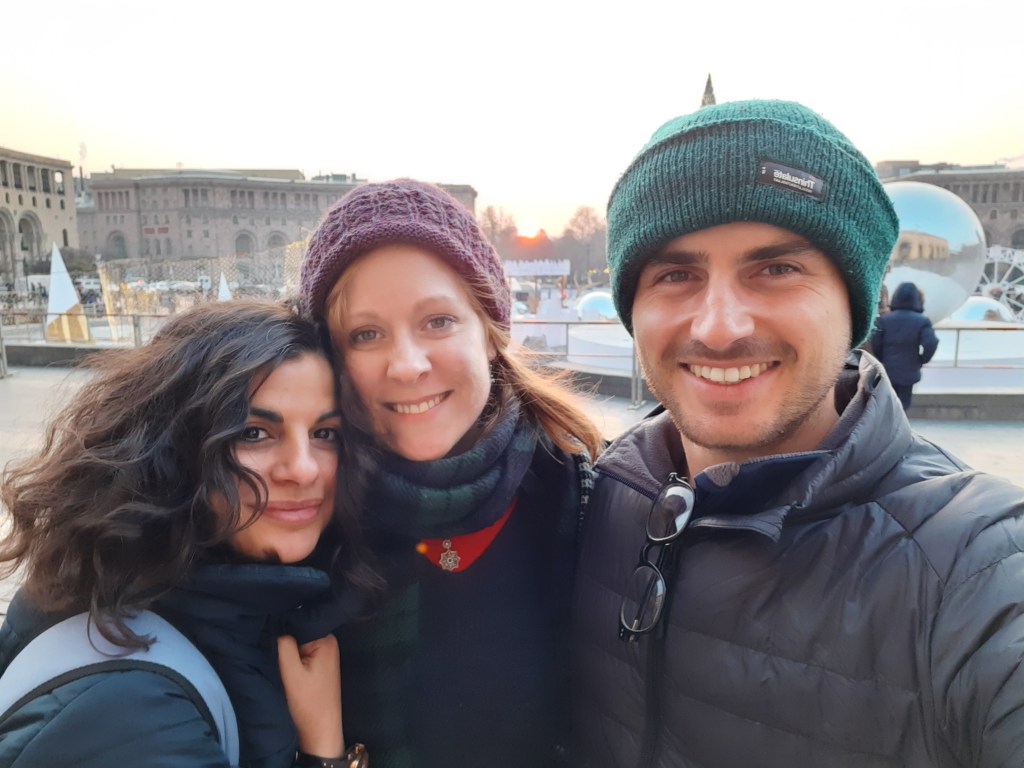
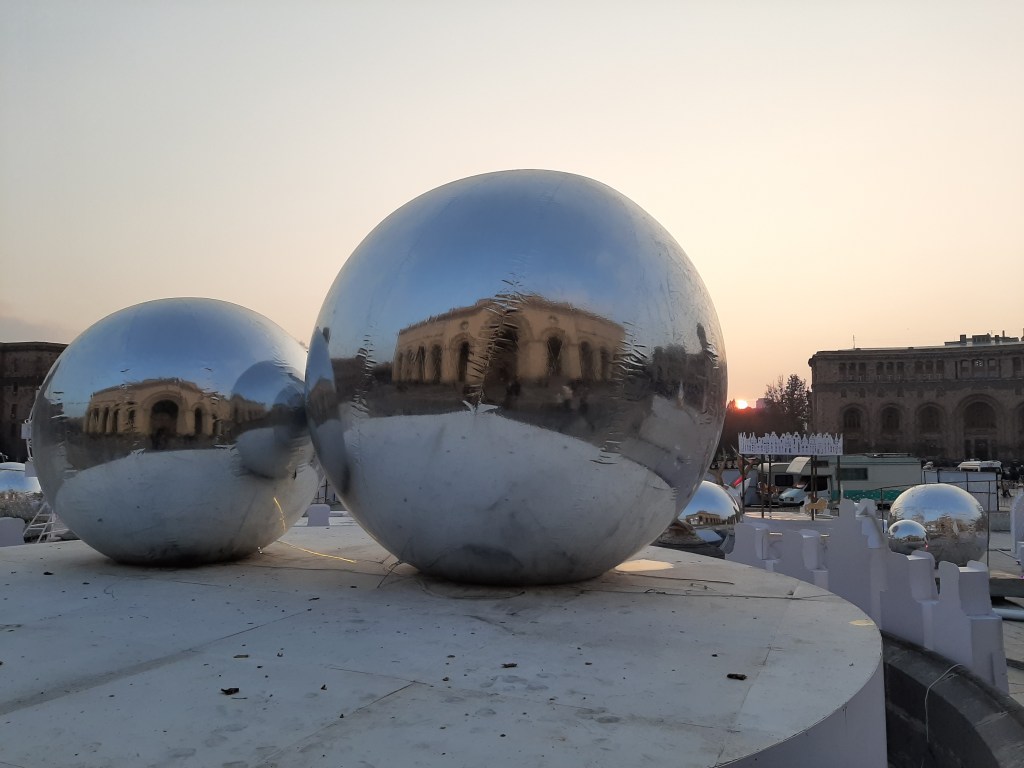
Suitably over-fed, and feeling much love, we grabbed a taxi to the airport with Anahit (who insisted on sending us off). We had an emotional fair well and went on our way to the next leg of the Megamoon. It had been an incredible day to end our time in this furthest corner of Europe: fitting for a land where hospitslity is an obsession (and such a fantastic one). We had travelled to Georgia and Armenia primarily to see old friends but in doing so could not help but feel we need to return… both to see Anahit again but also to continue exploring this incredible part of the world (in a warmer time of year next time!).
 tranetrottingthemegamoon.travel.blog
Fantastic post and amazing photos. Georgia and Armenia are two places I always had a desire to visit. How cold does it usually get there in the winter, there was no snow in any of your photos. Thanks for sharing and safe travels 😀 Aiva
LikeLiked by 1 person
Hi Aiva. There was only a little bit of snow in Abovyan where we stayed in Armenia and you are right, no photos of here. They don’t tend to have issues but it can happen of course. If you have the option, would suggest spring / Summer or Autumn though as it really was quite cold and bleak. Certainly not the best time to enjoy the countryside.
LikeLiked by 1 person
Great post😀
LikeLiked by 1 person