We touched down in Kathmandu in the afternoon of 7th January. We felt a little zombie-like having only managed an hour or so sleep in gender segregated quiet/ sleeping rooms in Qatar airport and on the plane. From our very first day in Kathmandu, we had a real sense that Nepal is a really special place… Kathmandu is situated in a large valley / plateau in the heart of the Himalayan foothills, sat at 1,400m. Coming into land we glimpsed the enormous mountain ranges that dominate the world’s tallest peaks Wikipedia page and are so engrained into the psyche of this country. Despite being a busy capital city, our 5 days in Kathmandu provided us with some much needed rest, and just about got us hooked on Nepal and feeling we wanted to properly explore this amazing country before moving on.
We got ourselves a prepaid taxi to our hotel in the northern, quieter end of Thamel – the city’s bustling backpacker district. The guesthouse was called Kathmandu Garden House and had a really lovely feel to it with welcoming staff. We had been warned in advance that there was no heating, but had also read in the Lonely Planet that this is quite normal in Kathmandu guesthouses and that, as January is typically a sunny season, getting a south facing room should keep you sufficiently warm. Unfortunately this was not true in our case. It had been rainy and cold for several days running and we absolutely froze that night.
Before freezing our *** off we enjoyed some momo dumplings and noodle soup at a traditional Tibetan eatery nearby, and then went exploring around Thamel. Thamel is a little infamous for being manic and being full of touts trying to sell you treks, drugs or sex. We found the place great fun and not too overwhelming at all – it being the quiet season likely helped but it also felt distinctly calm compared to the madness we had experienced in other capital cities (e.g. Nairobi, Delhi). Ultimately, Thamel feels like something of a backpackers paradise. It is absolutely filled with guesthouses, bars, restaurants, massage spots, trekking/ travel agencies and gear… more outdoor gear shops you can possibly imagine. It made exploring really quite intoxicating and it was very easy to get sucked in to to consumer mode! We ended up chilling with a very tasty Ghorka beer in “Electric Pagoda”, an outdoor bar with a very cool / hippie feel to it.
We woke the next morning determined to upgrade to somewhere warmer. George walked around the corner and found an affordable nice guesthouse which had decent rooms with air-conditioning. It was called “Sunny Hotel” which could only be a good sign! We moved our stuff and had breakfast in the nice rooftop terrace. It was still cloudy with poor visibility but we could just make out the impressive-looking Swayambunath stupa on its green hill overlooking the city.
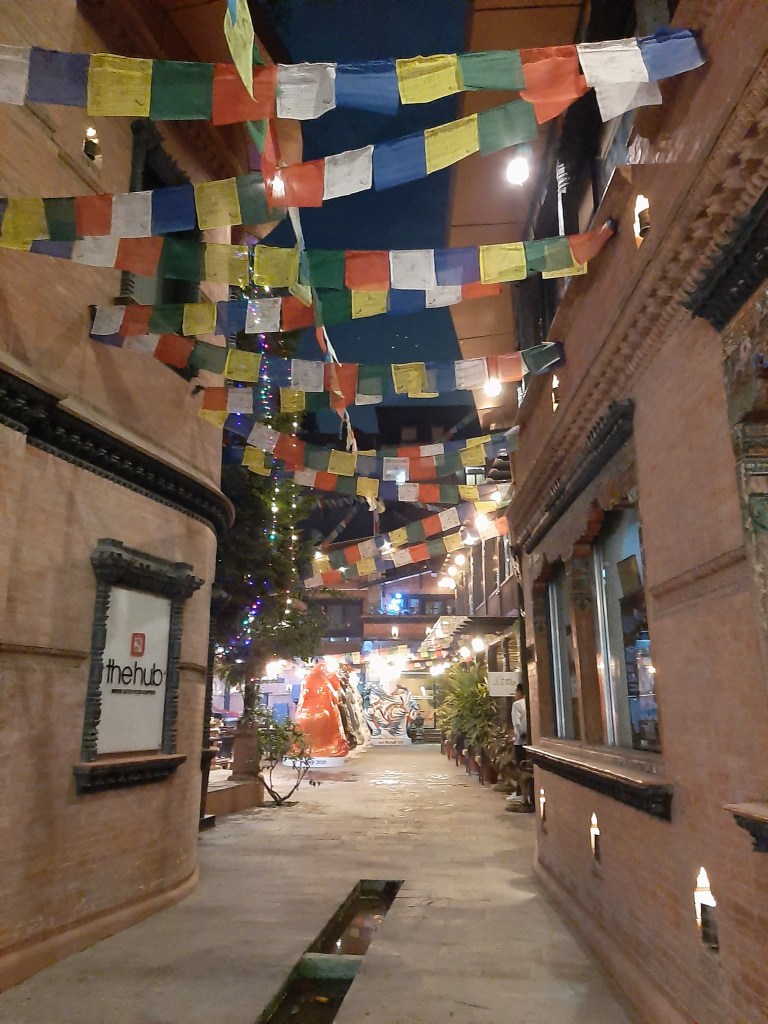
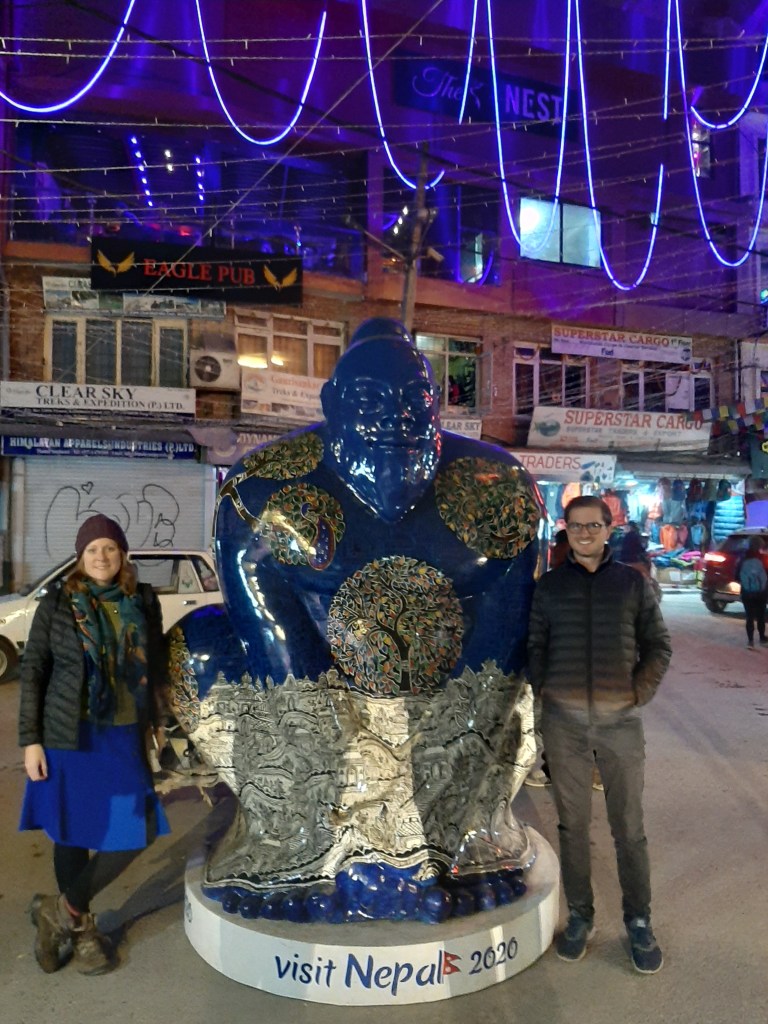
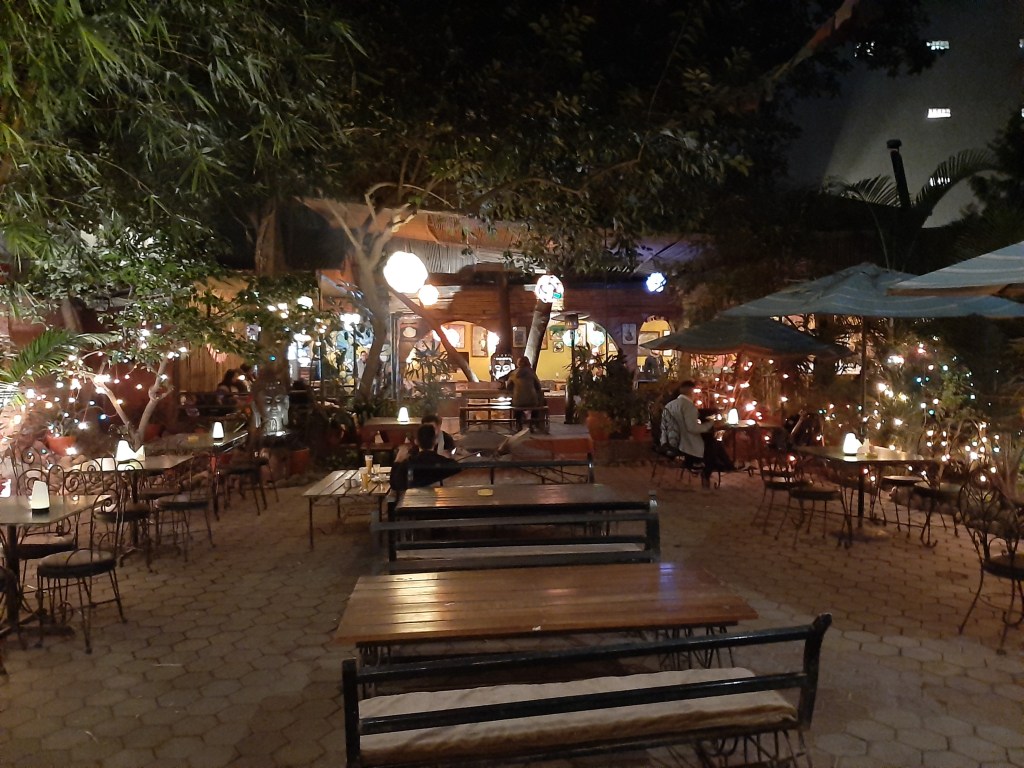
Our first full day in Kathmandu was something of a rest day. We blasted the AC on full heating mode and rested / read up on Kathmandu and beyond. We had a late lunch at “Momo hut” which included chocolate momos for desert. We then spent some time shopping around the myriads of outdoor gear shops, testing out our haggling skills for bargains which much were easier to find given it was low season. We returned to the streets of Thamel in the evening for something of a typical and slightly surreal Thamel evening: bought some thermals, headed to an underwhelming Korean restaurant for dinner and finished with mint teas at a Moroccan cafe!
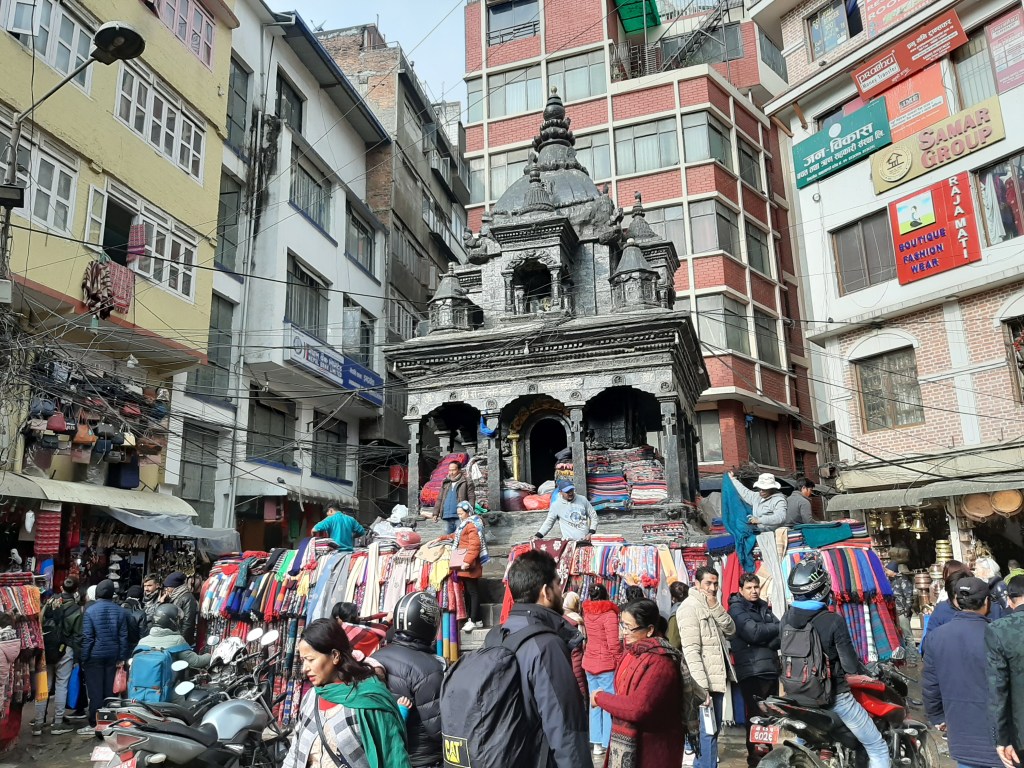
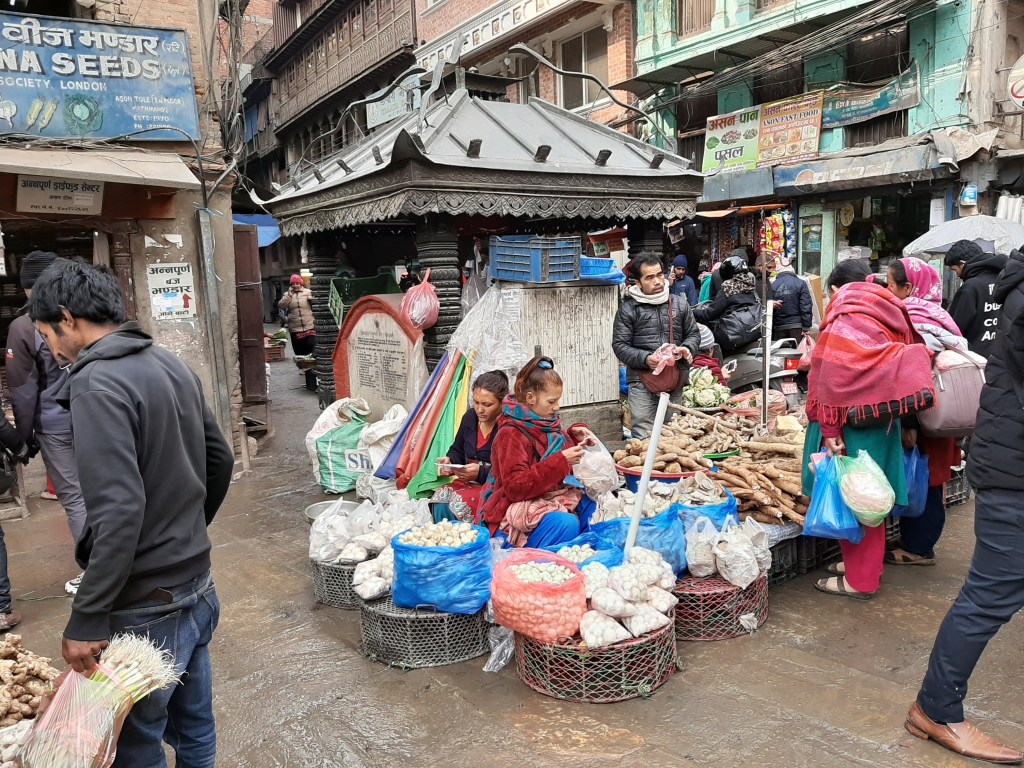
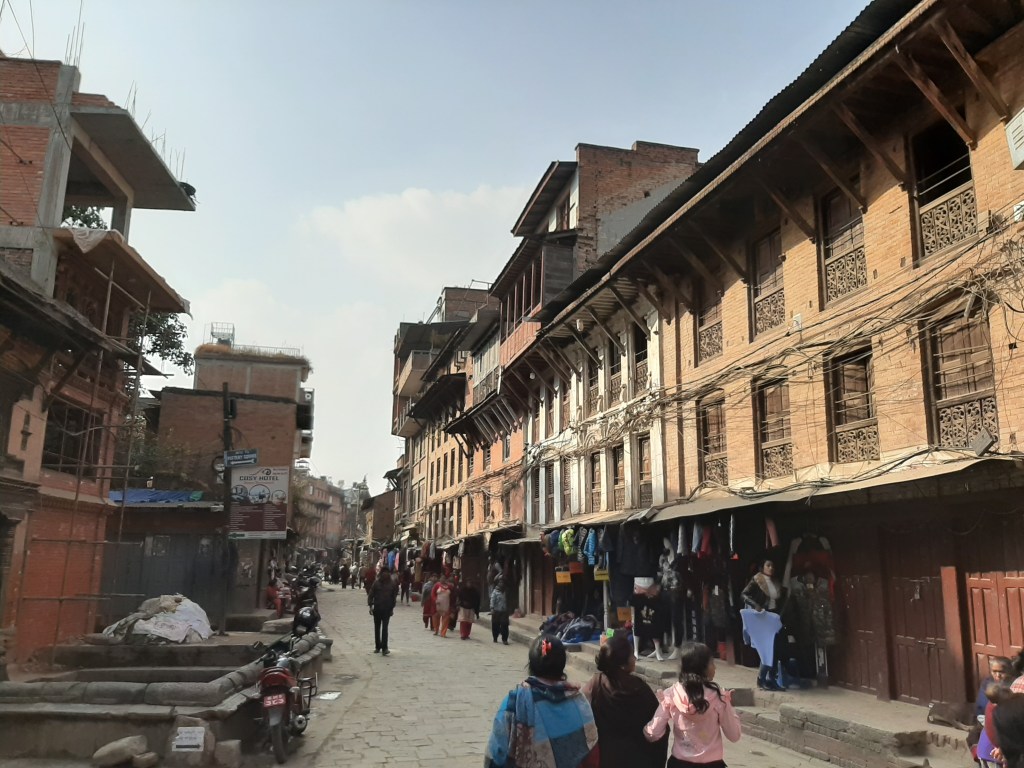
The next day (9th Jan) was our first proper sightseeing day in Nepal. We had breakfast and then headed on the Lonely Planet’s 3 hour walking tour from Thamel to Khatmandu’s old Durbar square. Walking south from Thamel we immediately began to stumble upon narrow but very busy streets, lined with seriously old houses with beautifully ornate wooden carved windows and doorways, stupas and pagodas in hidden courtyards covered in colourful prayer flaga in pretty much every block. The streets were filled with activity: motorbikes squeezing through the tiniest gaps in crouds, street-side vendors selling vegetables and spices, shops selling sarongs, Nepali head-gear or myriads of brass kitchenware. It really was an intoxicating attack on the senses.
Our DIY walking tour eventually finished at the old Durbar square. We had expected Nepal to be a culturally and historically rich country, but the stunning beauty of the temples and palaces within the medieval Nepali Kingdoms exceeded those expectations. The Kathmandu valley, nestled in the middle of the Himalayan foothills, was home to 3 great kingdoms in medieval and early-modern Nepal: Kathmandu, Bhaktapur and Patan. Each city had (and still does) it’s own Durbar square complete with royal palaces, temples, baths etc. They also each have their own Kumari: a living child pre-pubescent goddess. The Kumari lives in her own special house in each Durbar square and is chosen based on stringent criteria (looks, behaviours). She is worshipped as a living goddess until she reaches puberty and returns to being a mere mortal. How these girls return to any form of normalcy we cannot imagine – apparently it is considered bad luck to marry a former Kumari.
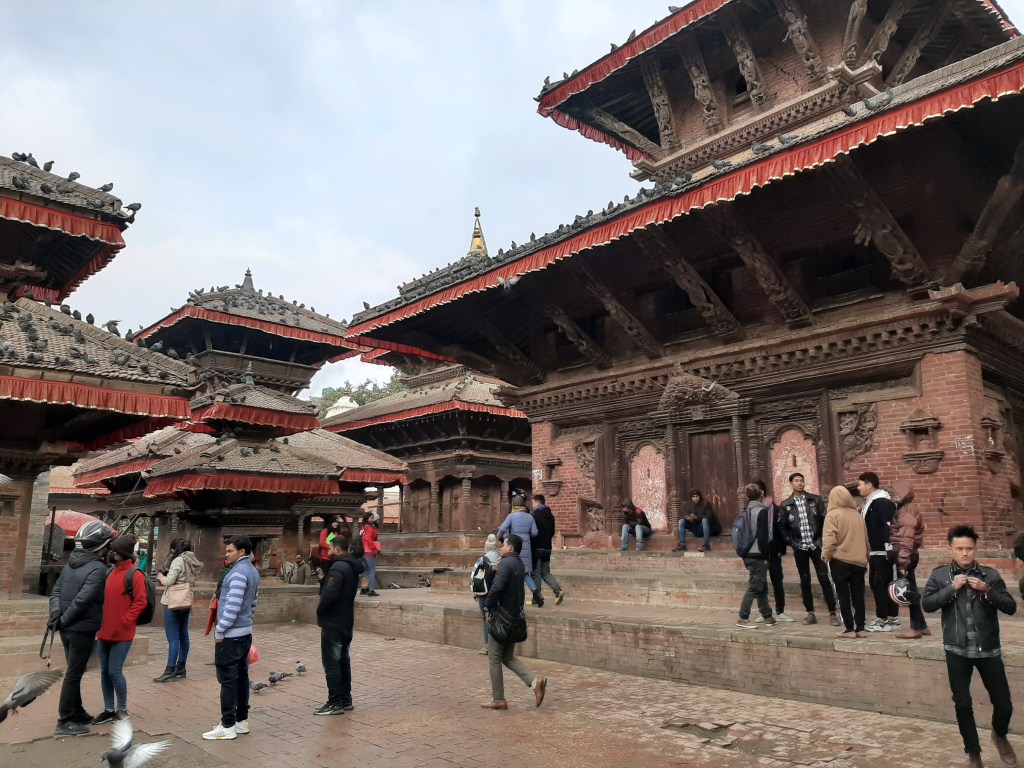
Walking into Kathmandu Durbar square, we paid the entrance fee and staved off a number incredibly persistent guides. It was slightly odd paying for a ticket to enter what is very much just part of the city; however we were happy, as tourists, to help subsidise the maintenance of the incredible, old buildings here, many of which suffered serious damage or collapsed during the 2015 earthquake. The square is dominated by a large, slightly out of place-looking, neo-classical white building that was the more recently constructed royal palace. The surrounding squares are covered in ornate, multi-storey brick and wood pagodas – ostly Hindu temples – but some Buddhist. Interestingly, we learnt that the pagoda-style that is so typically associated with China actually originated in Nepal and travelled to China via the monasteries in Tibet.
Feeling like we had walked through half of Kathmandu, we grabbed a taxi back to Thamel and Katharine went straight to the local spa for a very affordable and excellent 2.5 hour session including a full body massage, facial and reflexology foot massage. In search for proper local food, we headed to a restaurant primarily frequented by Thamel workers and were not disappointed. We had our first (of many it would prove) Thakali Dal Bhat – a thali-style meal served on a brass dish, revolving primarily on Dal and rice (bhat) with various additional vegetables and pickles (curry potato / alu was our favourite). Dal Bhat is also always bottomless…. they keep bringing more of everything until you stop them! We left suitably dal-ed up and couldn’t resist sampling more of the endless bars available in Thamel. We first had tasty cocktails (2 each given it was 2-for-1 happy hour) at a Mexican bar and then headed to the Everest Irish pub which, perhaps inevitably, was great craic.
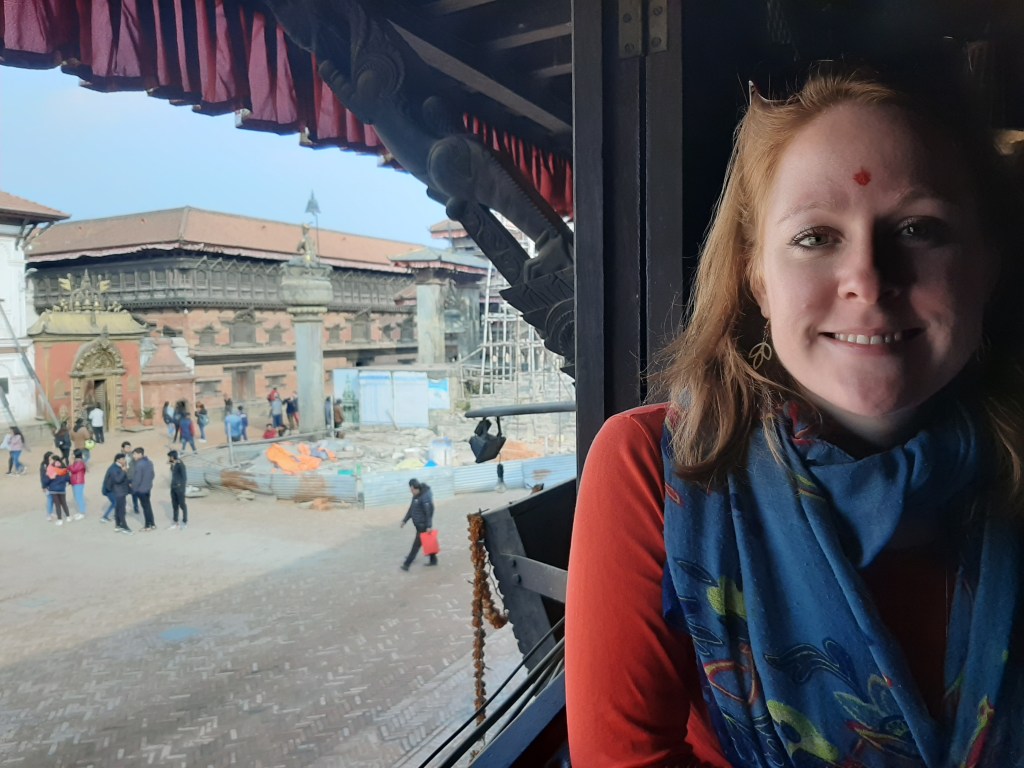
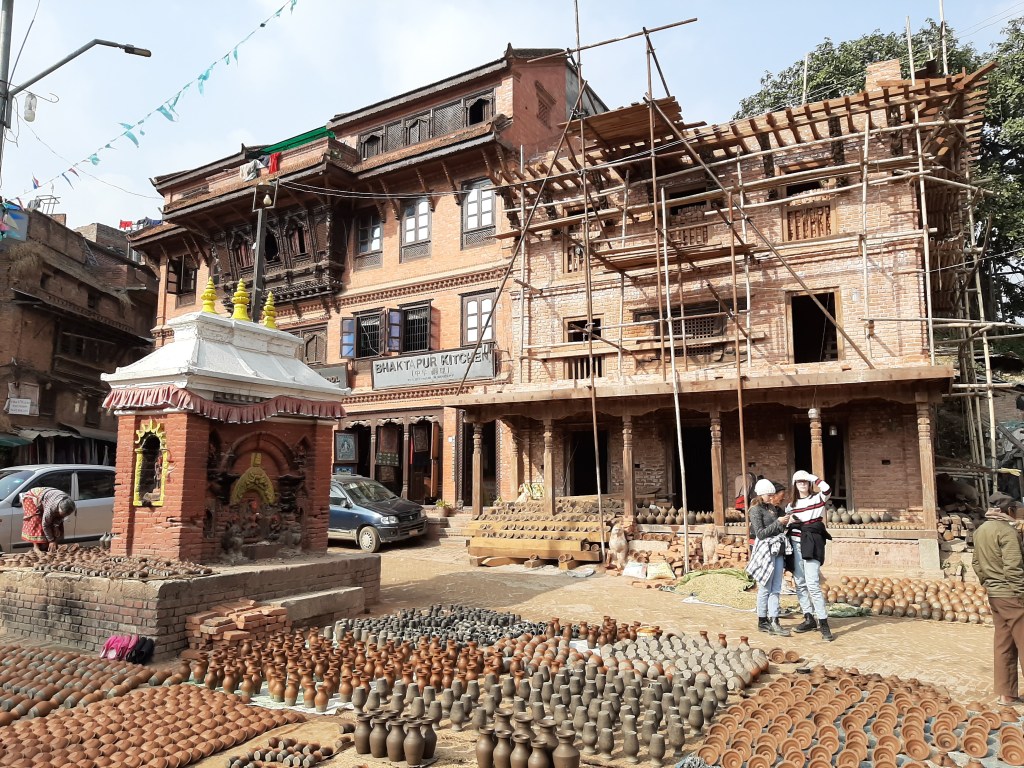
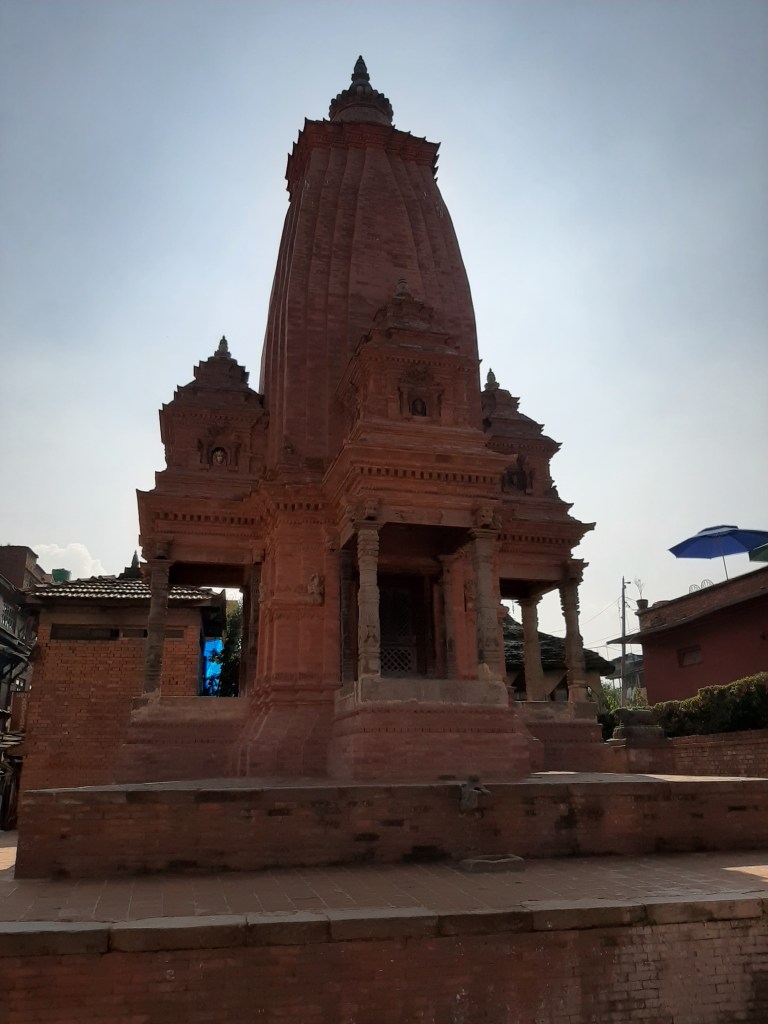
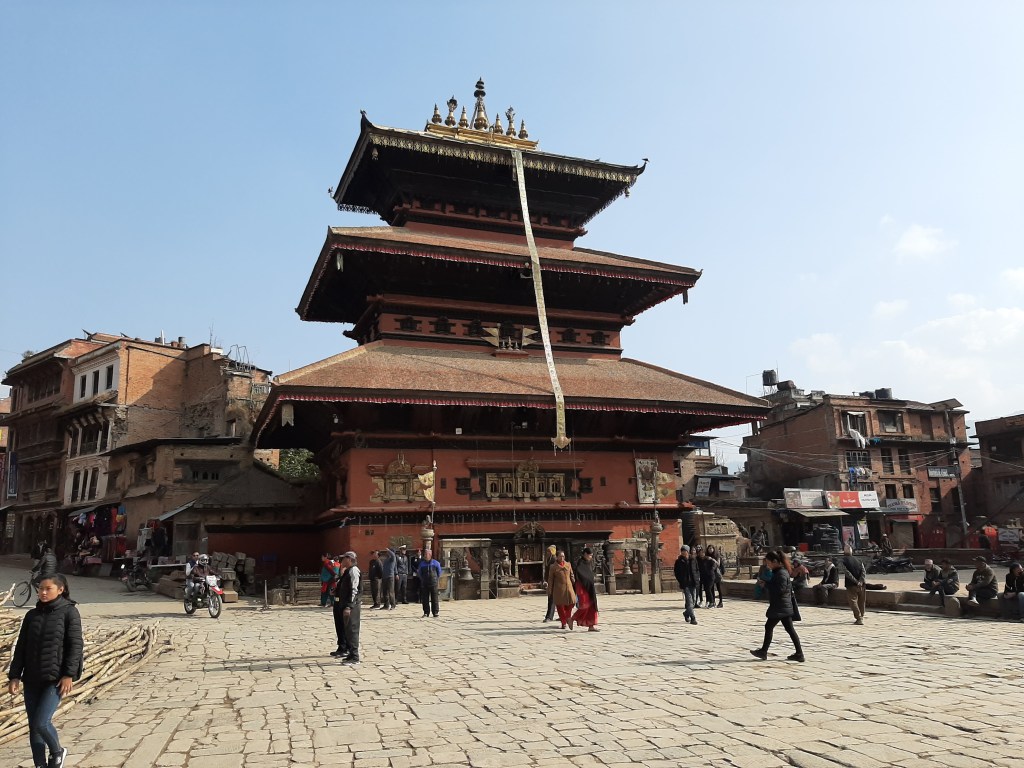
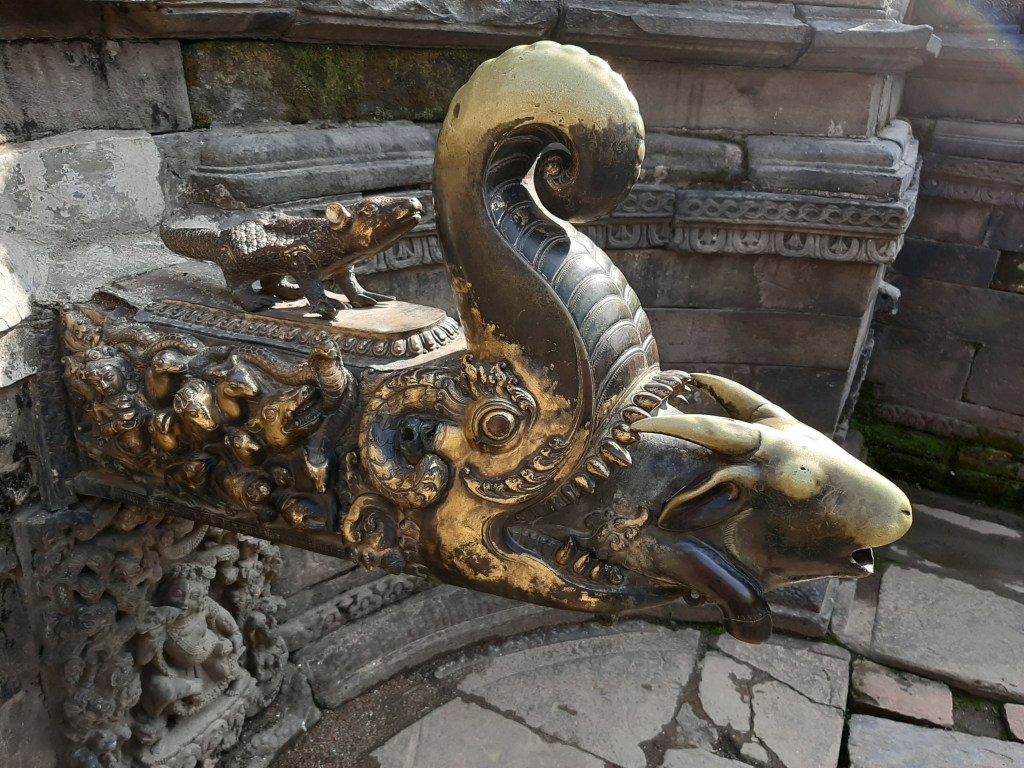
On 10th January we decided to make a day trip to Bhaktapur, one of the other medieval kingdoms in the valley. We found a local taxi driver to take us there and being us back and made the c. 50 minute journey. Bhaktapur was the original capital of the Nepali kingdom dominating the area, Khatmandu and Patan became neighbouring kingdoms when one of the rulers divided the valley between his three sons. Bhaktapur certainly eclipsed Khatmandu in terms of both scale and grandeur. We entered the historical area and immediately latched onto by an overenthusiastic guide who very quickly aggravated us by his apparent offense at our max price and pushiness. He eventually came down to our price but he had succeeded in aggravating us so much that we refused any price by that point… In the end a far humbler chap offered us a guided tour and we were not disappointed by his relaxed demeanor and great knowledge of the history of the various palace and temple structure and the fascinating, if often difficult to take in, stories and meaning surrounding the various depictions of deities beautifully carved into the buildings’ exterior. We walked around the main Durbar square and into the main palace building. Our tour continued to a second square a little further east and down by the “pottery square” where local ceramics still sit out in the sun drying, waiting to be placed on one of the seemingly ancient kilns on the side of the square.
We had lunch at a very local place that was literally a hole in the wall for one of the Buddhist temples. We then had some masala tea at a tea house that has set up in one of the medieval buildings in Durbar square – enjoying people watching from the narrow first floor of this historic building while making friends with two local girls who were clearly out spending pocket money and saw an opportunity to practice some English. After tea, we walked around the old town for another 45 minutes or so to yet another square, encountering beautiful red-brick old buildings, more pagodas and communal pools along the way. We finished our time in Bhaktapur with a local delicacy from one of the many street vendors – a small clay pot of “curd” – effectively sweet local (and tasty) yoghurt.
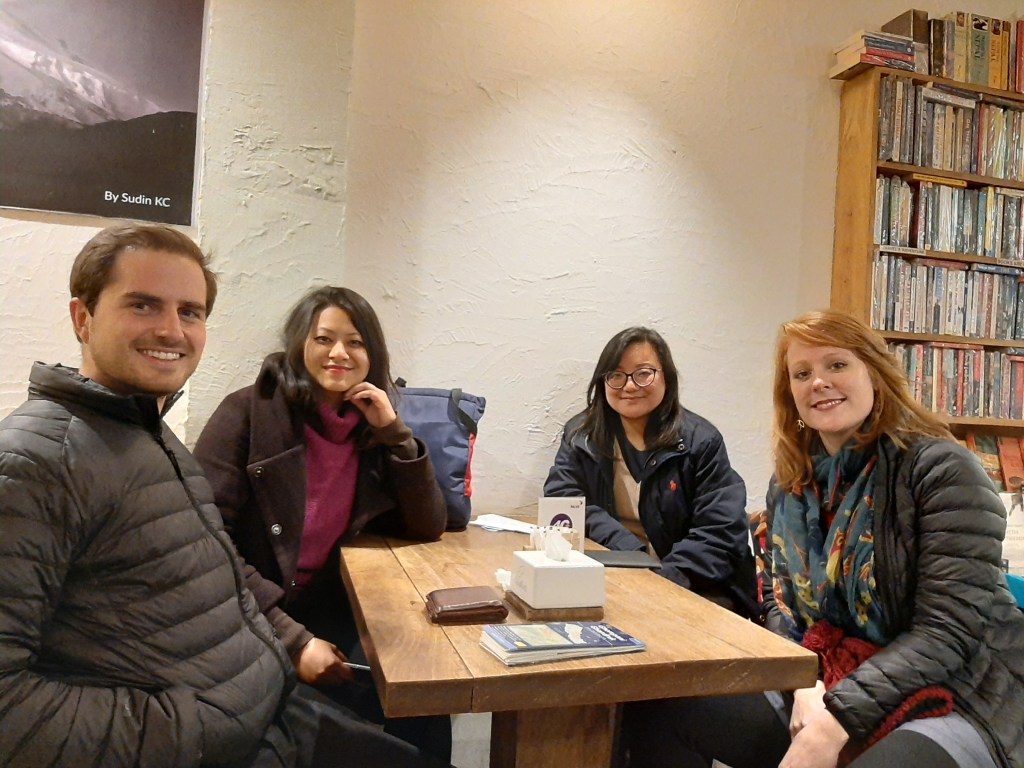
Over the last few days, we had been in touch with Katharine’s Nepali friends – also from Essex Uni. We ended up meeting Asmita and Sumina for coffee in Thamel that night, and agreeing to meet Rukamanee (Kat’s former housemate in Wivenhoe!) at her home. It was really nice to catch up with Asmita and Sumina who are individually lovely people but together are simply hilarious with complementing senses of humour. We were pleased to hear they are still inseparable, having only met at Essex themselves! Sumina, having spent some time working for Save the Children, including during the humanitarian crisis in the aftermath of the earthquake, is now a team lead for a global travel company customer service team. Asmita was at something of a transition in work, having just handed her notice with her editorial role for a Nepali English-language newspaper. We had a lovely couple of hours catching up and were also pleased they had introduced us to Himalayan Java Coffee – a local excellent coffee chain. After saying our goodbyes, we went for dinner at a decent but overpriced Indian restaurant and then hit the sack.
Our final full day in Kathmandu followed a similar pattern. We found our same local taxi-man who was a bit of a sweetie and reasonably priced, and resumed our touring. Today’s destinations were the Swayambunath stupa (aka “monkey temple” for tourises) and the third and final of the Kathmandu valley’s great medieval kingdoms: Patan.
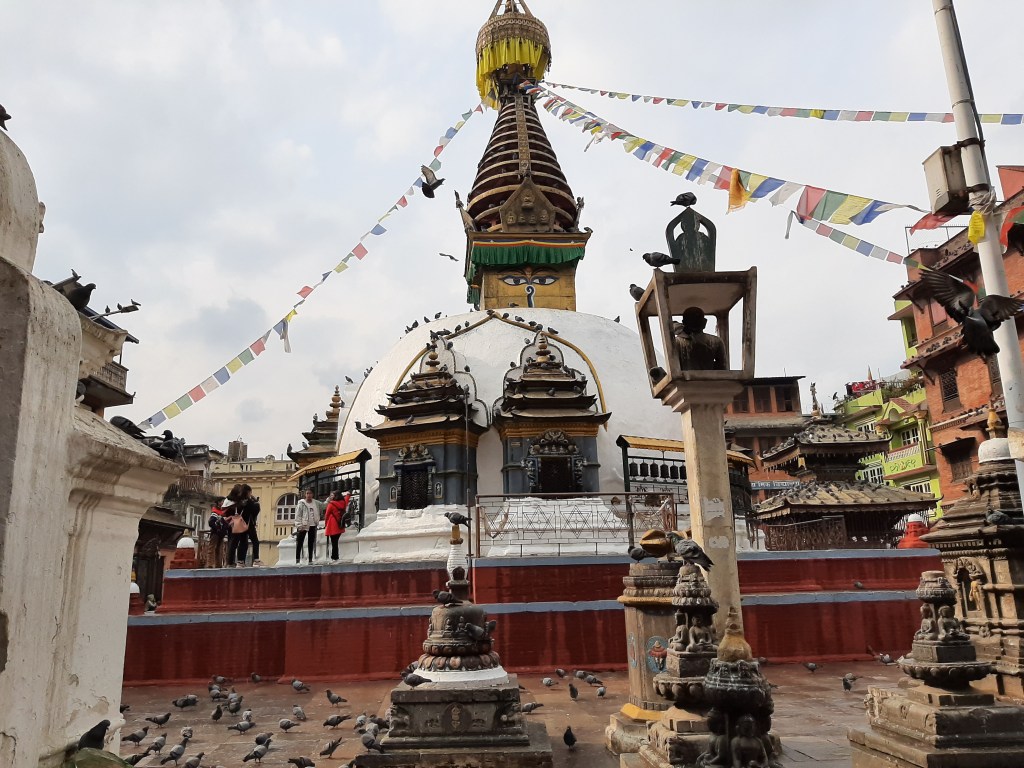
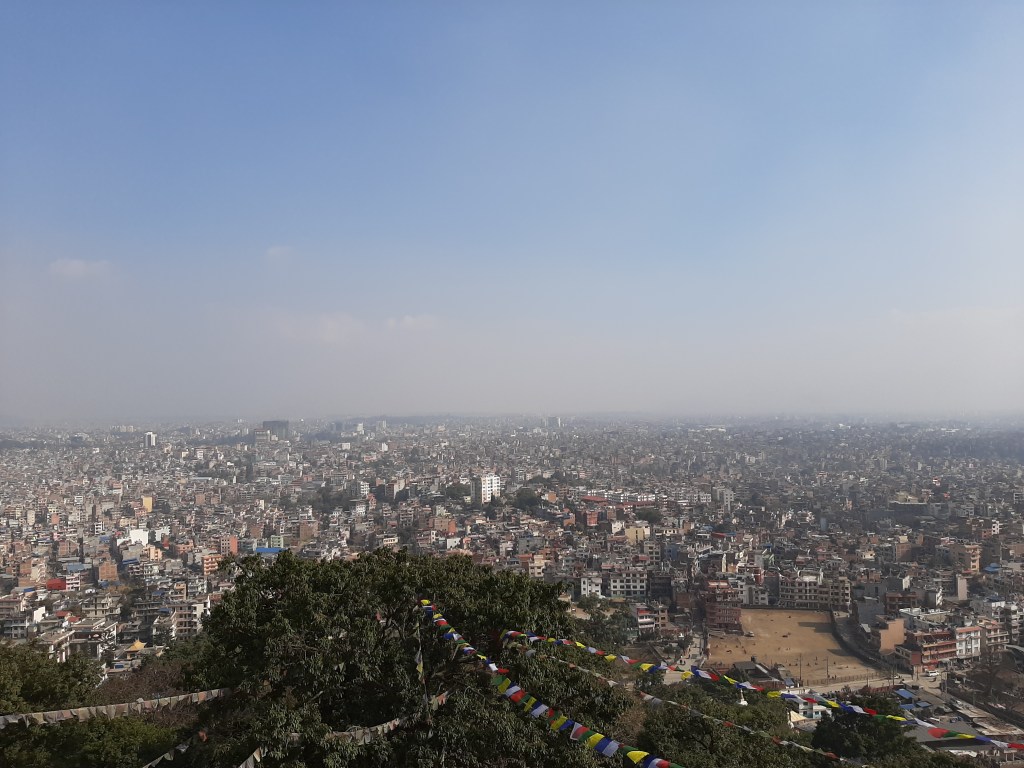
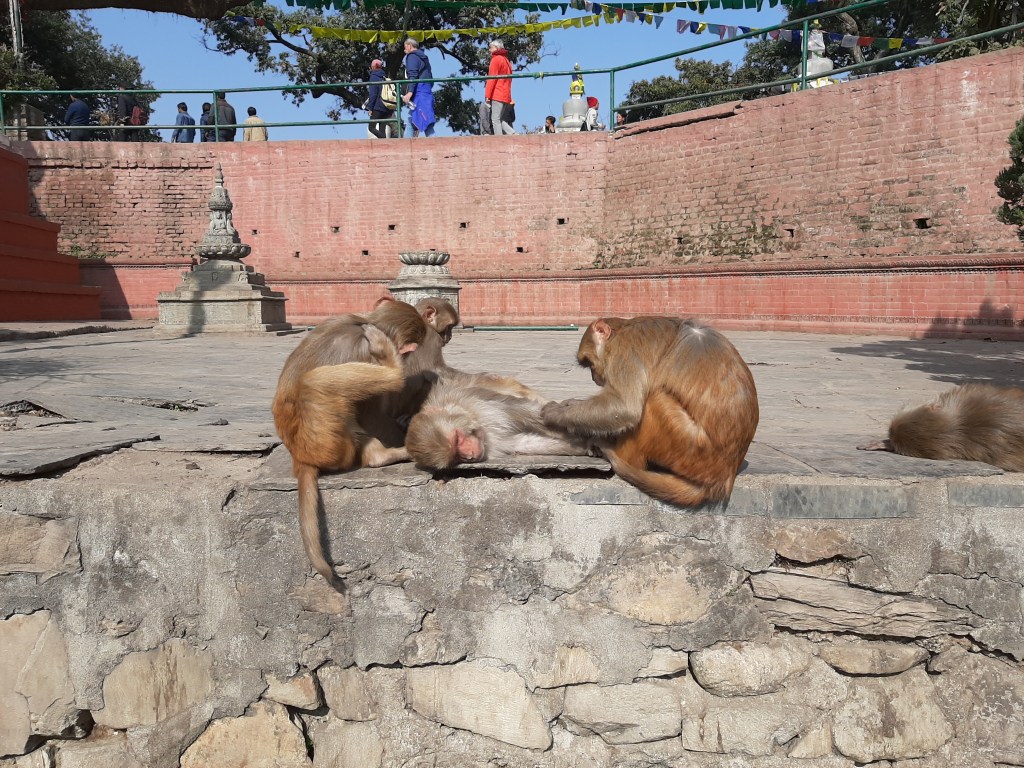
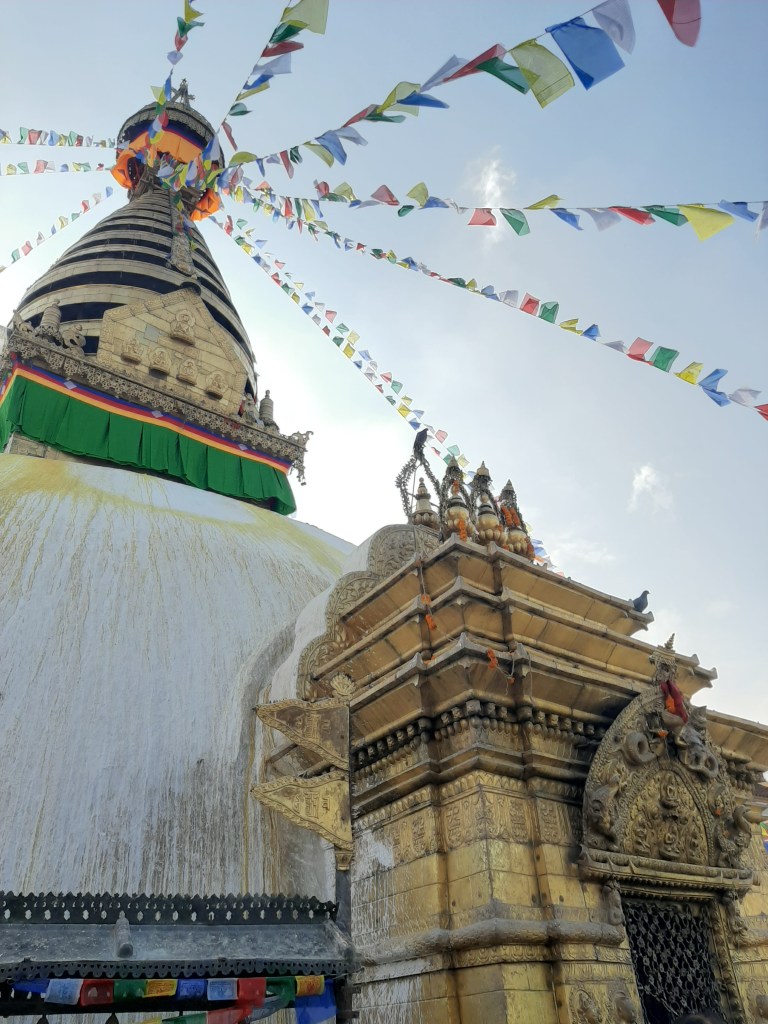
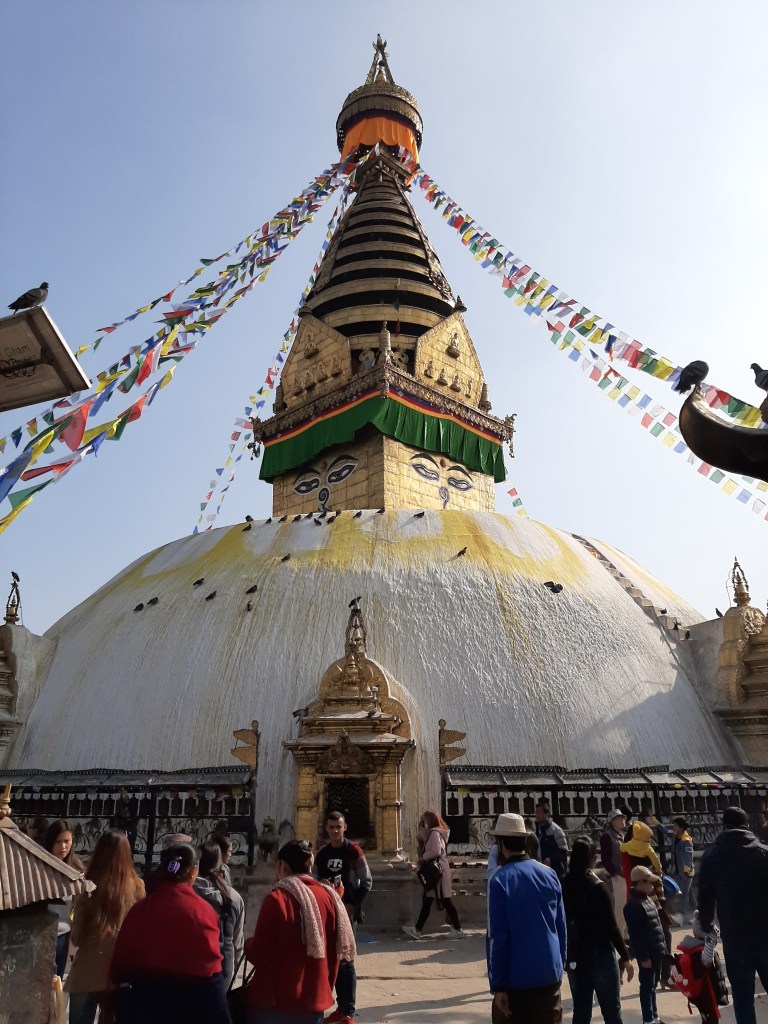
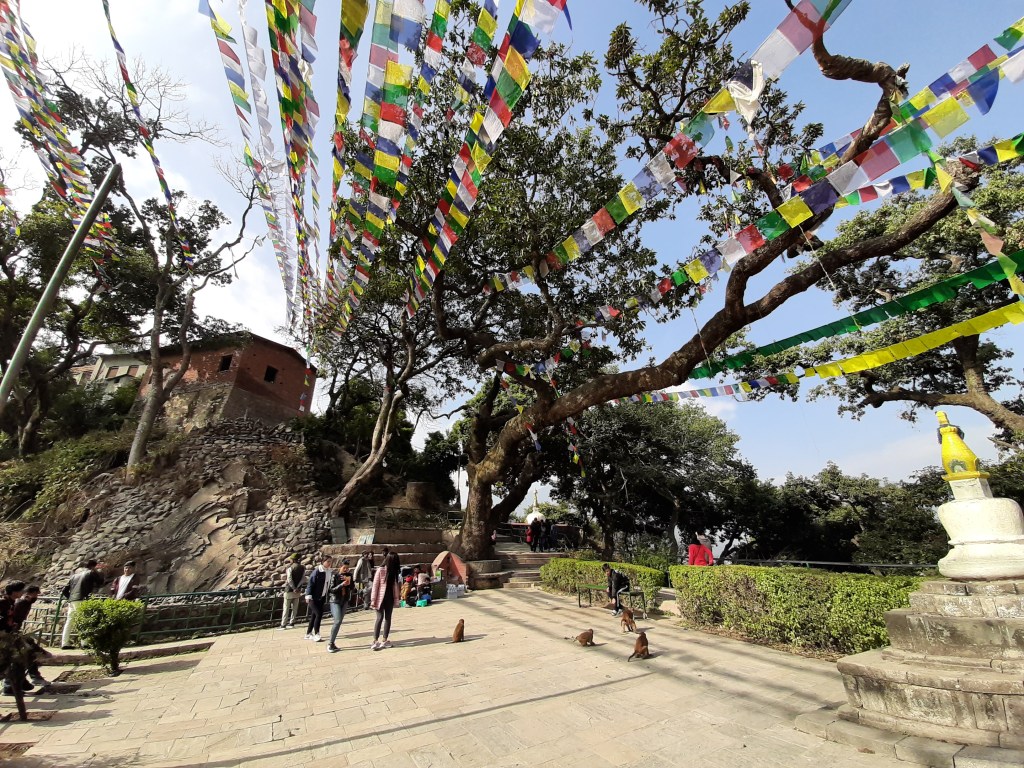
Local legends say that the entire Kathandu valley used to be a lake (this is also supported by geologists!), and the great hill rising up on which the white and gold stupa sits is said to have risen up from the waters (this is what “Swayambu” itself means apparently). While the hill is now in the middle of a manic and large city and is a huge tourist and pilgrim site visited by hoards of people every day, it still retains an ethereal and tranquil feel to it. The monkeys that inhabit the whole place are certainly opportunistic when it comes to food but otherwise, thankfully, pretty relaxed compared to other species we had seen elsewhere. We first walked up to the quieter north end of the hill where we found the pilgrim resting houses and a small Hindu temple covered in prayer wheels: beautiful bronze cylinder shapes that have prayer scrolls inside. You are meant to walk around the temple clockwise and spin the wheels clockwise to release the goodness fro the prayers. The paths were coverd with beautifull multicolored prayer flags and yielded incredible views of the vast city below. The Swayambunath stupa itself is really quite mesmerising with its white-wash colour and the eyes of the Buddha perched just below its golden spire. A great staircase goes straight down from the stupa to the city level on one end, providing certainly the most spiritual if knackering way to get there!
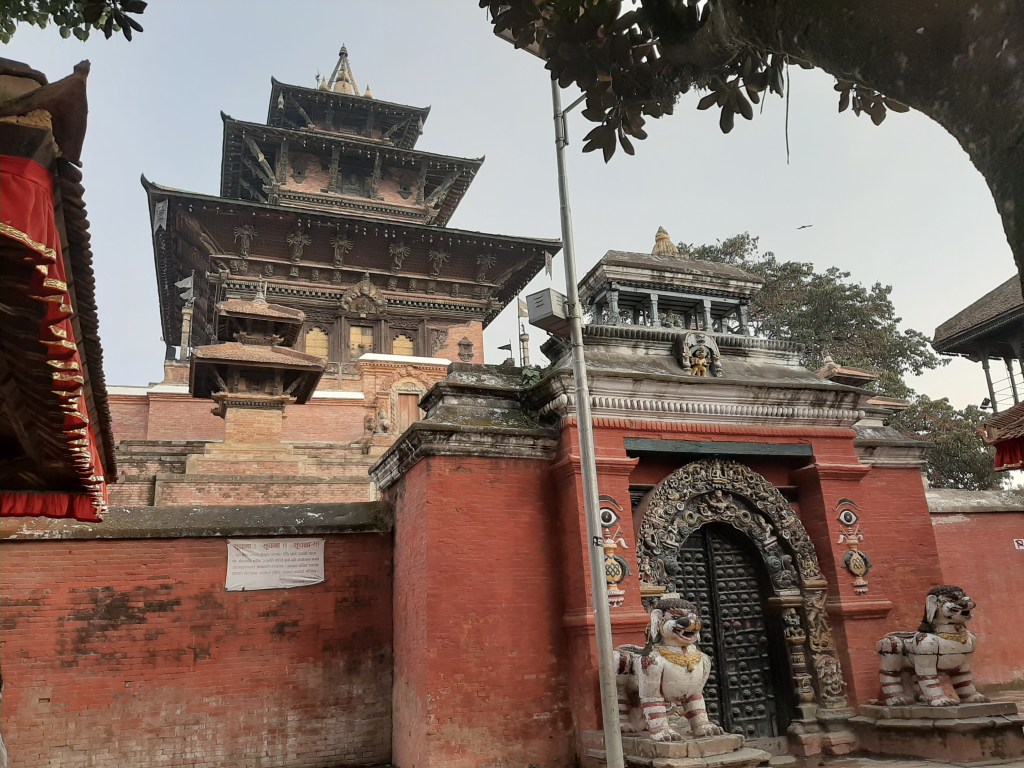
Our next stop was Patan. While this was once a grand city in it’s own right, the sprawling Kathmandu has effectively now swallowed it into one of its suburbs. Patan itself is the medieval Durbar square and rests in the broader town that is now called Lalithpur. While probably the smallest in terms of area of all the Durbars we went to, we agreed Patan was the most impressive. The concentration of temples on the square itself is breathtaking – some of which have been rebuilt since the earthquake of 2015. Unlike the other Durbars, Patan’s royal palace is open to visitors and provides an excellent museum with interesting insights into the city’s history, architectural techniques and art.
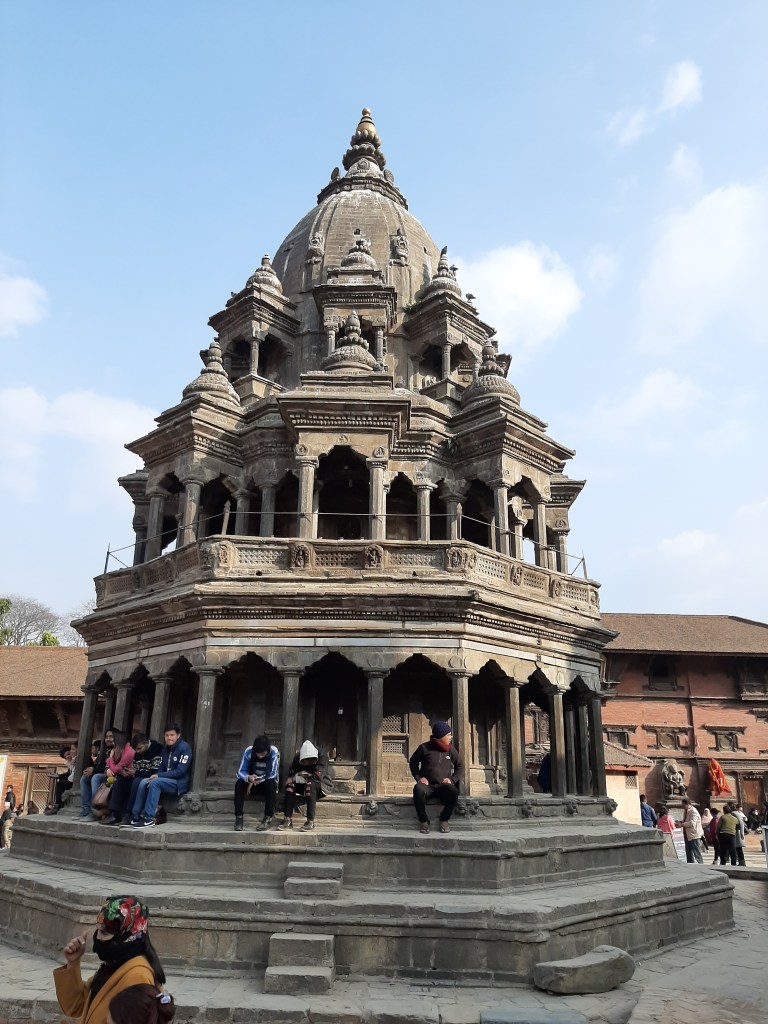
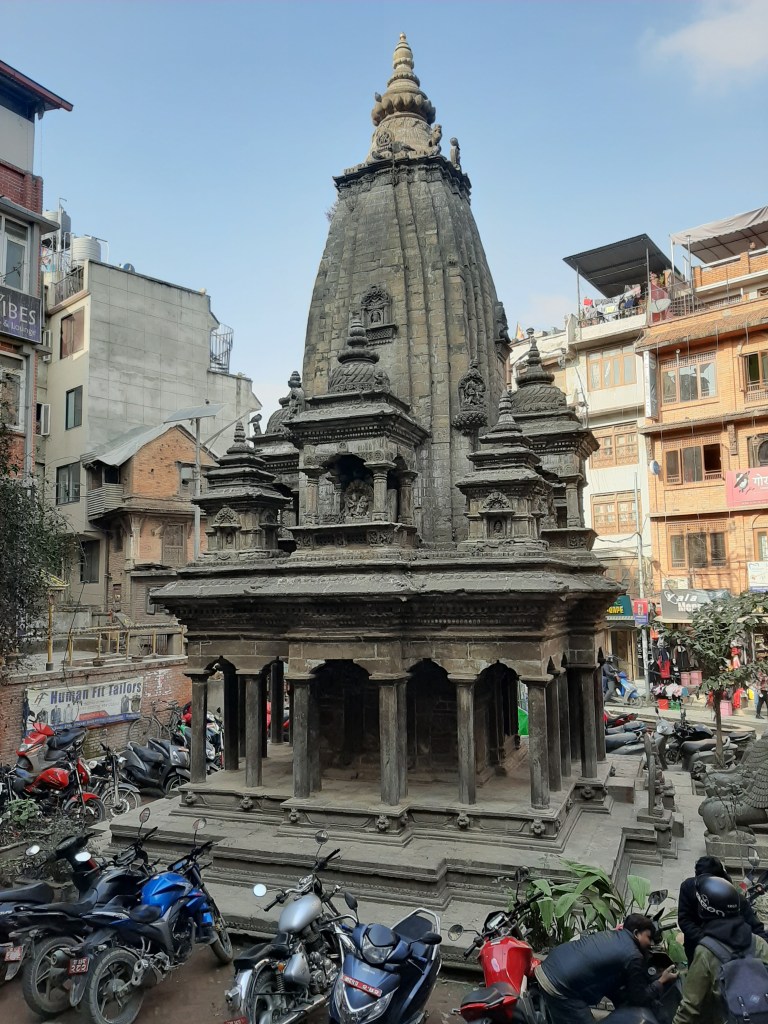
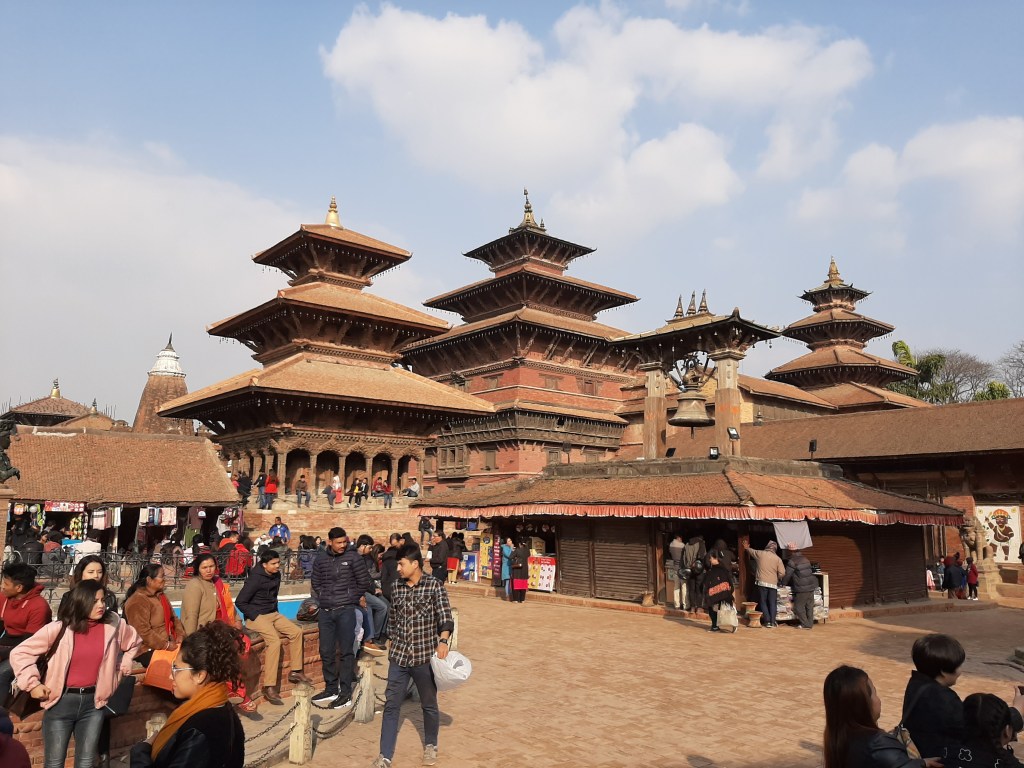
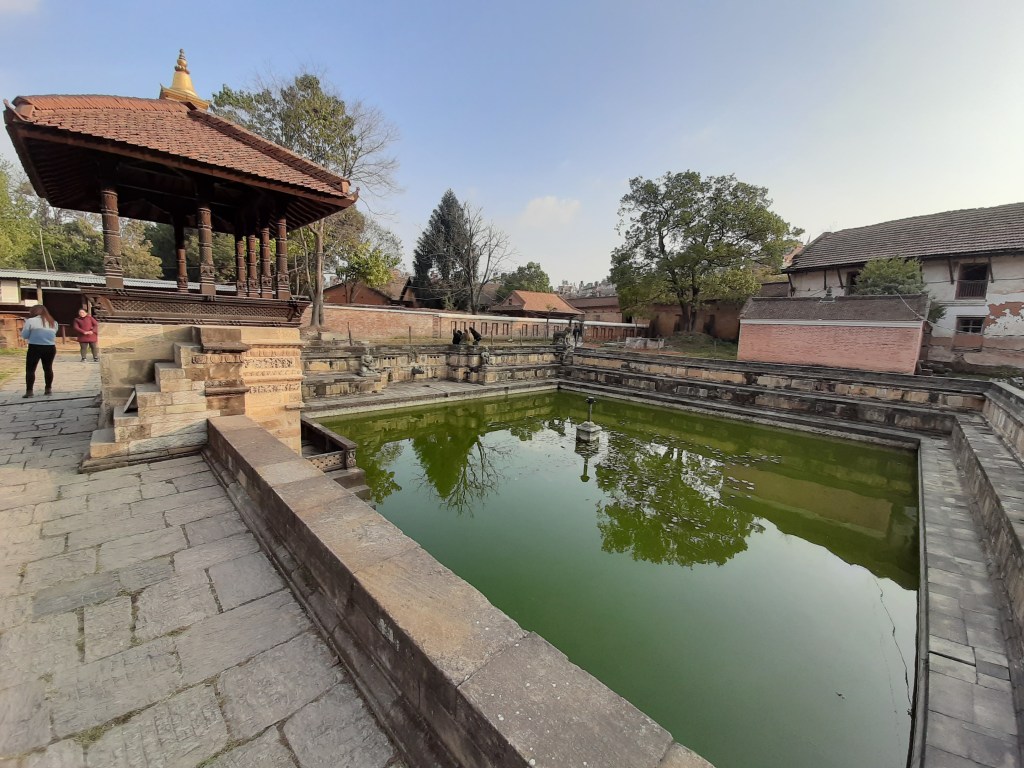
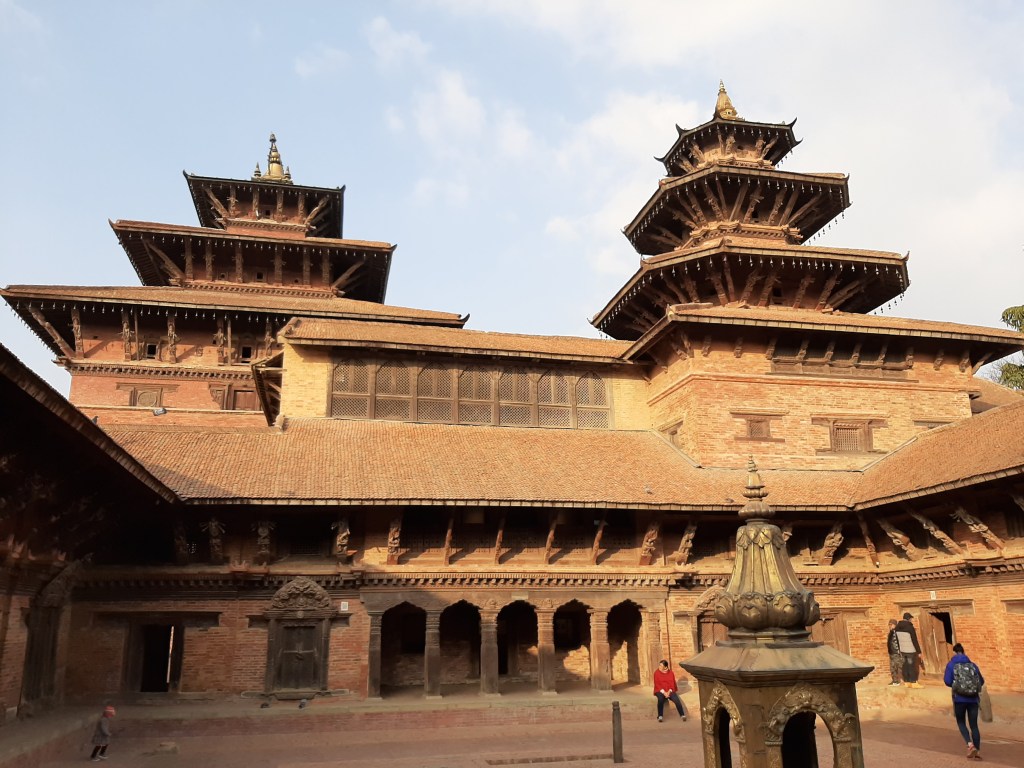
We had lunch in a quietish rooftop spot on the far end of the square. Katharine ordered an interesting sounding drink that looked like a smoothie but something in it – we agreed – tasted like poo. We know it was not durian fruit, and we know it had curry-like spices and unripened mango in it, but what gave it the turd-like taste is a mystery to us. Feeling Durbarred out we grabbed a taxi to Rukamanee’s house, in the quieter, western side of Lalithpur.
Seeing Ruku again was really lovely and we were very humbled with how welcome she made us feel. Since last seeing her, Ruku had married Suresh and they now have a toddler (boy), Rumen. Ruku served us snacks and then a delicious Dal Bhat meal and we caught up sharing news and photos from each of our respective weddings. Meanwhile, Rumen was being quite talkative and energetic and spent some time watching German cartoons on a smartphone! Ruku is working as a humanitarian law lecturer at one of the Kathmandu universities. She has also started taking her students to international moot court competitions.
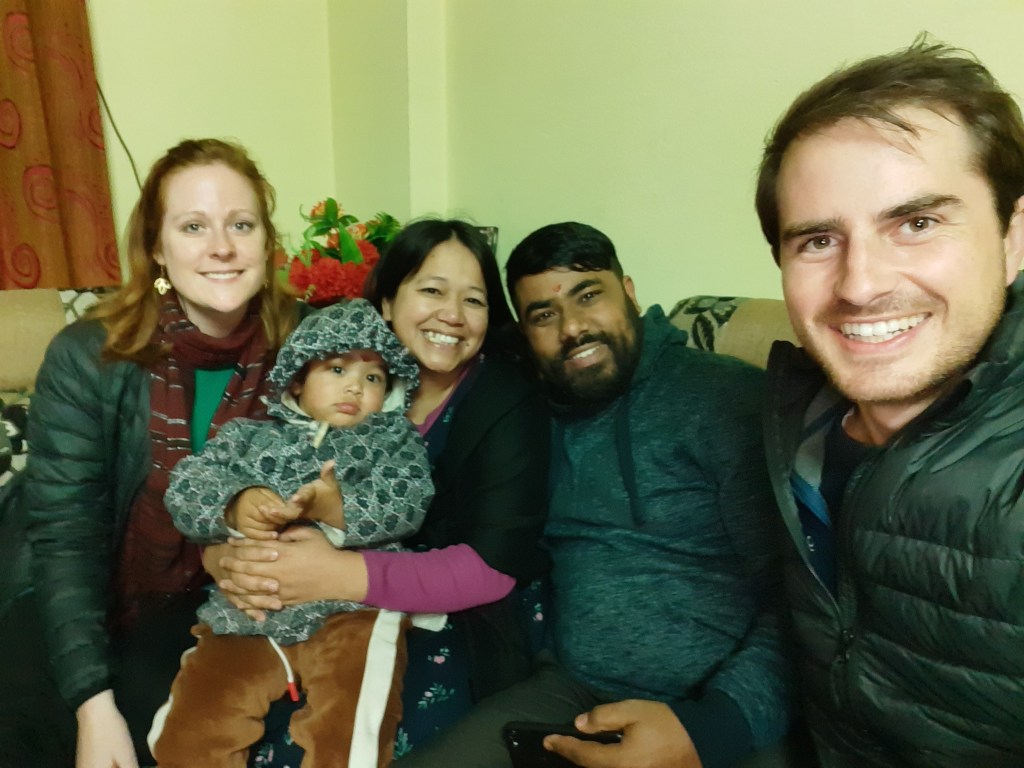
After what was a really warming and lovely evening, Suresh kindly walked us to the nearest main road and we found a taxi back to Thamel. Despite having read about Kathmandu as a crazy busy city, we were leaving feeling more refreshed and relaxed – it had been an amazing mix of rich culture and seeing friends, with a few good bars and a lot of sleep thrown in!
 tranetrottingthemegamoon.travel.blog