We were both excited by Laos. We had heard good things from other travellers we had met along the way and were keen to go somewhere that is far less trampled on by mass tourism than Thailand. The sleepy city of Luang Prabang did not only meet our expectations, it was, we both agree, the best all-round place we have thus far visited on our trip! As the seat of royalty within Lao kingdoms of old and a key spiritual centre with its dozens of venerable monasteries, Luang Prabang is clearly a town with rich history and heritage. However it is much more than that… used by the French as a key trading and administration centre for many years, the town has a distinctively gallic feel to the architecture and city planning. The town sits at the joining of the great Mekong river and the Khan river, adding a serious amount of charm to the place with scores of great eating, drinking and chilling spots lining the river fronts. The centre of town houses a simply incredible (and cheap) crafts and embroidery market every night. Add the fact that the culinary scene is outstanding with both awesome Lao cuisine and boutique fusion restaurants run by expats; oh, and there is tonnes to do and see in the surrounding stunning countryside, and the combination, for us at least, made for a simply outstanding destination.
We arrived in the afternoon of 1st February after our smooth and simple turbopropeller flight from Chaing Mai. We had initially intended to travel overland, but discovered the other options would have been pretty painful (and slow). The 40 hour bus just sounded horrible, while the 3 day boat option had a romantic appeal to it but was not actually that cheap and in the end, we figured we would rather have the extra time in Laos. Upon landing, we easily got a taxi to our guesthouse, with the catchy name “Lakanthong 2 Friendly House”. The place is an extension with the main hostel being next door. Crucially, however, we had the small walled pool that provided a great way to cool off after the day’s activities, chill out and meet people.
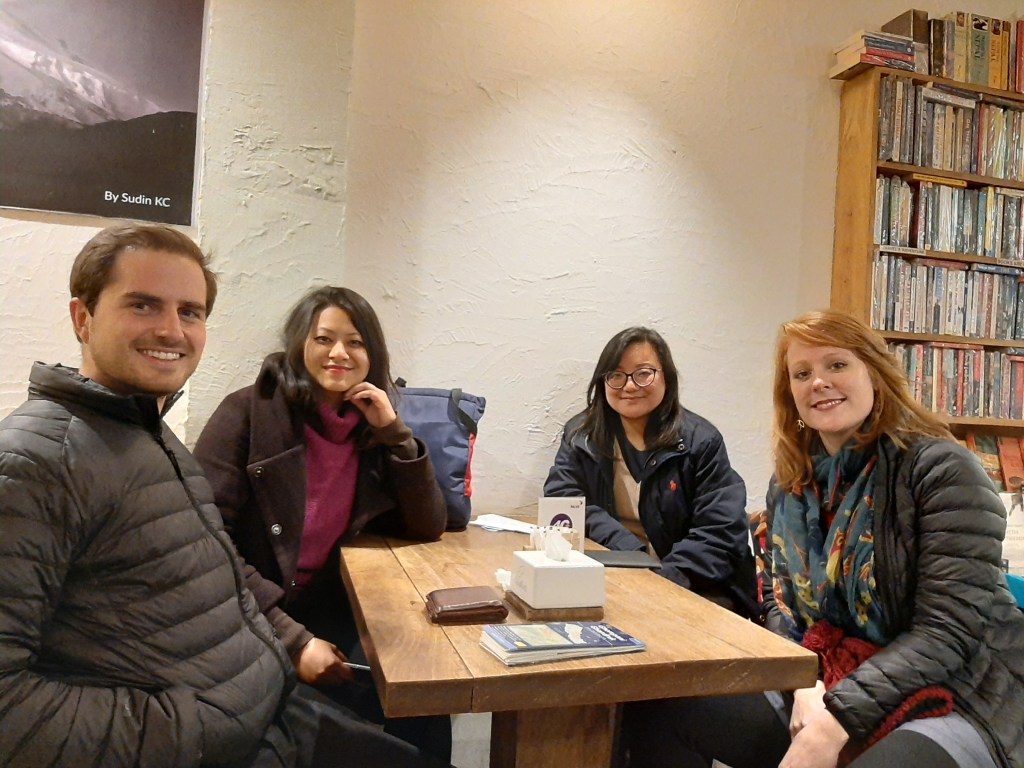
We didn’t get up to much on our first day. George got a Laos sim card from the local market and we spent some time just chilling by the pool. We met a couple of guys, Adam from Canada and Billy from New Zealand who were both nice and friendly and we ended up hanging out with them at a few points over the next few days. They were good fun and made great drinking companions, though they were very much of the laid back / joint smoking type of travelers which contrasted a little with our comparatively high speed itineraries!
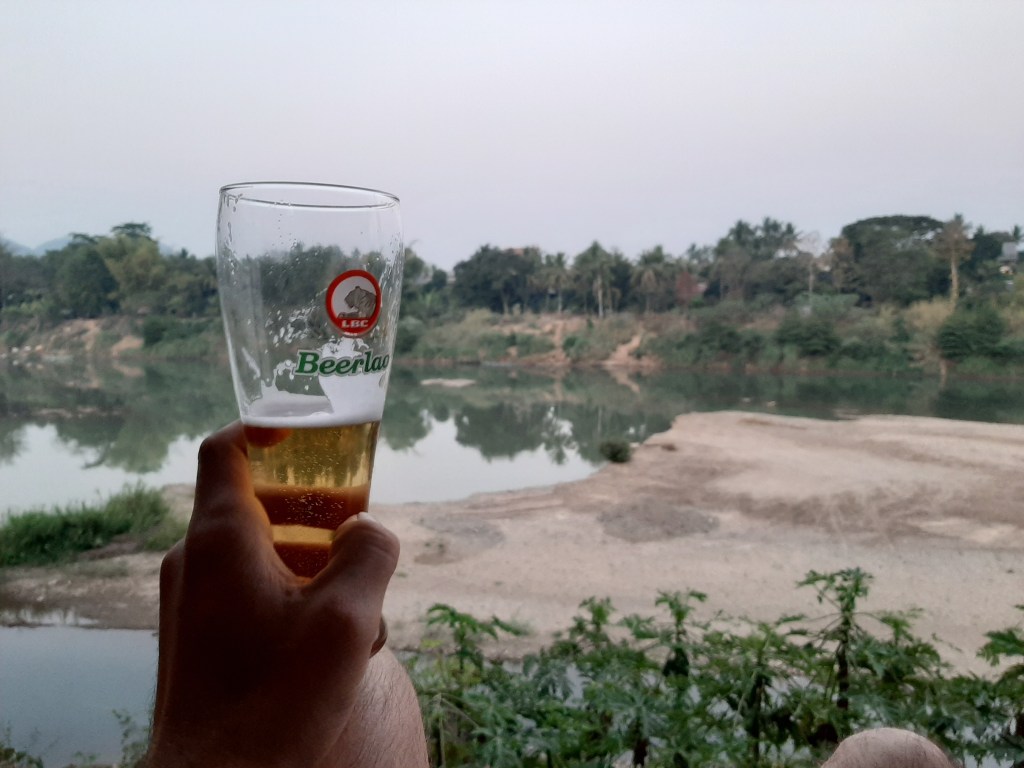
The most popular spot for backpackers in Luang Prabang is Utopia bar on the Nam Khan river, so we thought we would check out what the hype is about and headed there around 5.30, just before sunset. It turns out the hype is totally justified! We found a spot on the river front lying on cushions on a wooden platform stood on stilts above the river banks. It was a simply glorious spot to look out over the river and the countryside beyond, sampling our first taste of a cold Beer Lao (which, by the way, is the best South East Asian beer we have tried as well). The rest of the bar is divided into a few carefully thought through areas, a dining area in the garden just behind the river reclining spot; a chill out zone with fire pits; and the bar area itself that doubles as a dancefloor at late night and a floor filled with cushions for more chilling. They have also taken the mantle of educating their customers about the horrors of unexploded ordinance still littering most of the Lao countryside and claiming limbs and lives every year – via info sheets and the use of unexploded American bombs as ornaments and banisters throughout the bar.
After getting our first sense of the chilldness of Laos at Utopia, we walked through to the centre of town and what is effectively the Luang Prabang high street. We took in the charming French-feeling architecture indesperced with Buddhist temples and the view of the royal palaces (now empty of royalty with the abolition of the monarchy after the victory of Pathet Lao in the civil war). Some of the buildings look like they have been lifted and dropped straight out of the valleys of Haute Savoie in the French Alps. We also stumbled upon the crafts night market, which is, without exaggeration, the best and cheapest crafts and clothes market we have seen on our travels. We resisted the temptation to buy anything but walked through admiring the wealth of beautifully woven silk and cotton scarves, bags, dresses, wooden carved ornaments, paintings, and of course, tourist tshirts.
Descending down from the market to the mighty Mekong, we found a host of “barbeque” restaurants on the riverfront and enjoyed an incredibly tasty and exciting first dinner in Laos. The setup involved cooking your own meet and fish on a circular grill that sat on a coal fire, similar to an Alpine hot plate. Unlike the European version though, the barbeque has a trough round the grill, where you poach vegetables, eggs, noodles in a broth which, over time, gets tastier as meat juices drop in. If the method of eating and cooking alone was not enough, the setup was also an all you can eat buffet with a simply outrageous range of available meats and fish (squid, Mekong tilapia and catfish, king prawns, beef, pork, chicken) and an even bigger selection of vegetables, including some Lao classics like morning glory and banana flower. All for about 6 pounds each!
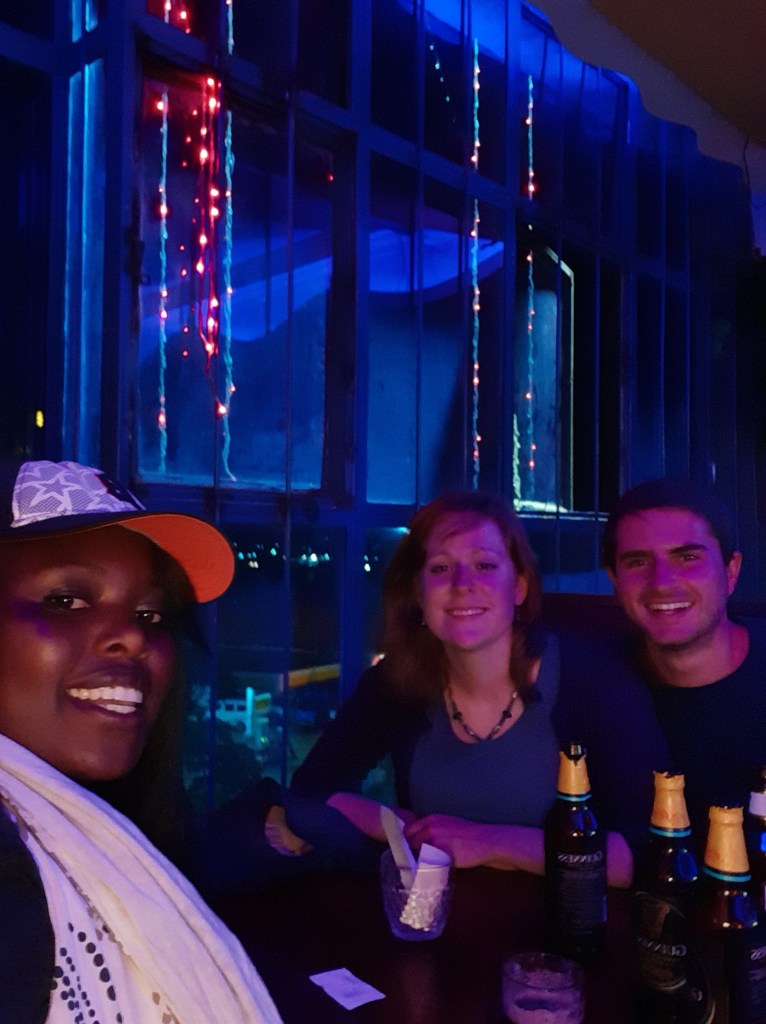
After our delicious and fun dinner by the Mekong, we walked back over the centre of town to Utopia to check out the vibe at night time. It was heaving but with so much space, we easily found some cushions in the main bar area to chill and people watch from. The music volume had notched up several levels and the place was filled with people across all levels on the liveliness / childness spectrum! We drank Lao Tiger (rice) whiskey mixed with coke which was very cheap and actually not too bad (certainly better when mixed we later found!), and set off back to our guesthouse as Utopia came to a close at around 11.30.
Luang Prabang has a strict curfew at 11.30pm (forcing bars to shut rather than forcing people into their homes). For whatever reason (bribery, oversight or other), there is one establishment in the outskirts of town that stays open until around 2am where the enthusiastic chasers of the night out continue on to after Utopia closes: the bowling alley! We were kind of keen to try the hilarity of drunk bowling in Laos out, but fate seemed to conspire against us as the folks we met (mainky Adam and Billy) were either not to be found or not keen when we saught it. It was probably for the best given how much we were planning to do and see in town and around! Getting back from Utopia, we instead just had a fee drinks and also met an interesting Spanish lady who was working at a university in Hubei province China – not too far from Wuhan and the epicentre of the coronavirus outbreak. It was fascinating hearing her take on China and about her various travels around the more remote and untrodden parts of the country. Despite being advised to return to Spain, she decided to return to China – what a strange situation and decision to have to make…
We had been keen on doing a cooking course in Chiang Mai but had not managed to squeeze it in. Reading about the culinary scene in Luang Prabang made us keen to prioritise this, and so we arranged to meet at Bamboo Tree restaurant in the morning of 2nd February. We were incredibly lucky as there were only 2 other people on the course, a Lao / America mother and daughter (the daughter around 40 years old and called Mai). They were both really warm and lovely and provided great company as perfect English speakers who also were very much native to Lao culture and cuisine. Mai lived in Hawaii having grown up in California where her mother still lived. Whe was also friends with the head chef of the restaurant (Linda). All together it made for a really fun and intimate feeling day (normally they have groups of 12+).
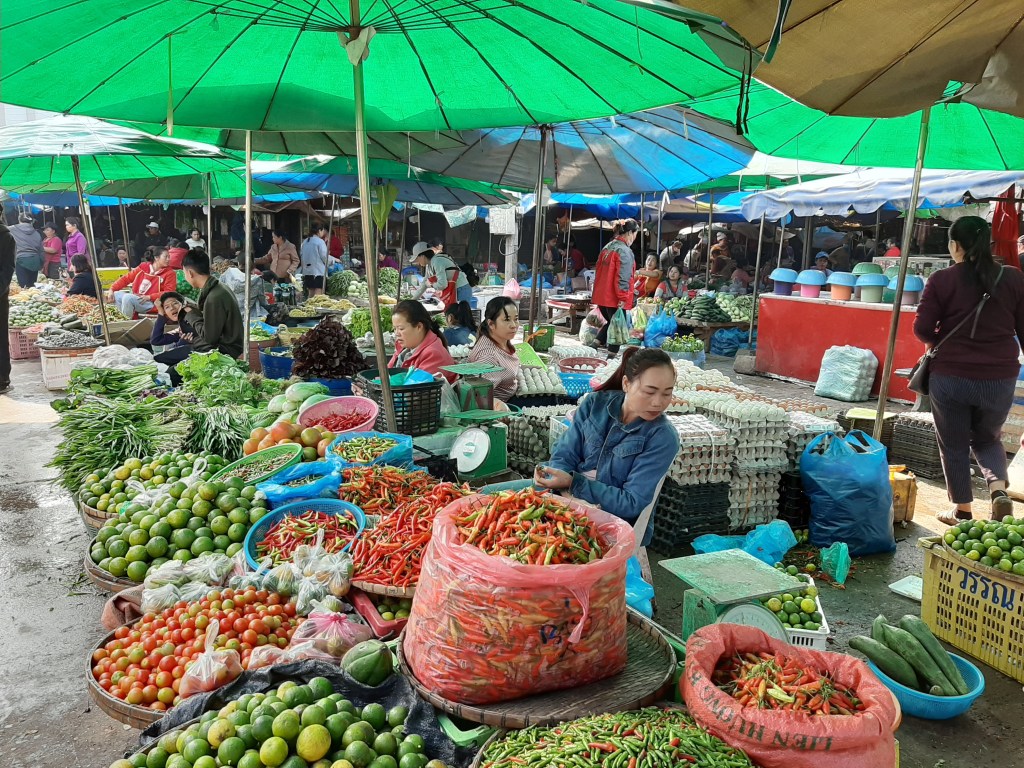
We started the day by picking our menu for the day. With a little advice from the locals, we chose fresh spring rolls, stuffed lemongrass, ginger steamed fish, coconut chicken steamed in banana leaf parcels, Luang Prabang beef stew and, of course, mango and sticky rice. With our menu chosen we went shopping for key ingredients / for a tour at the main market in the outskirts of town, led by the head chef’s sister who is primarily the procurement / stock manager for the business. The market was a fascinating display of colour and different spices and vegetables. It was great fun having a local point to the various wonderful produce that is so key in cuisine here but totally alien back in Europe (banana flowers, morning glory, cafe lime to name just a few).
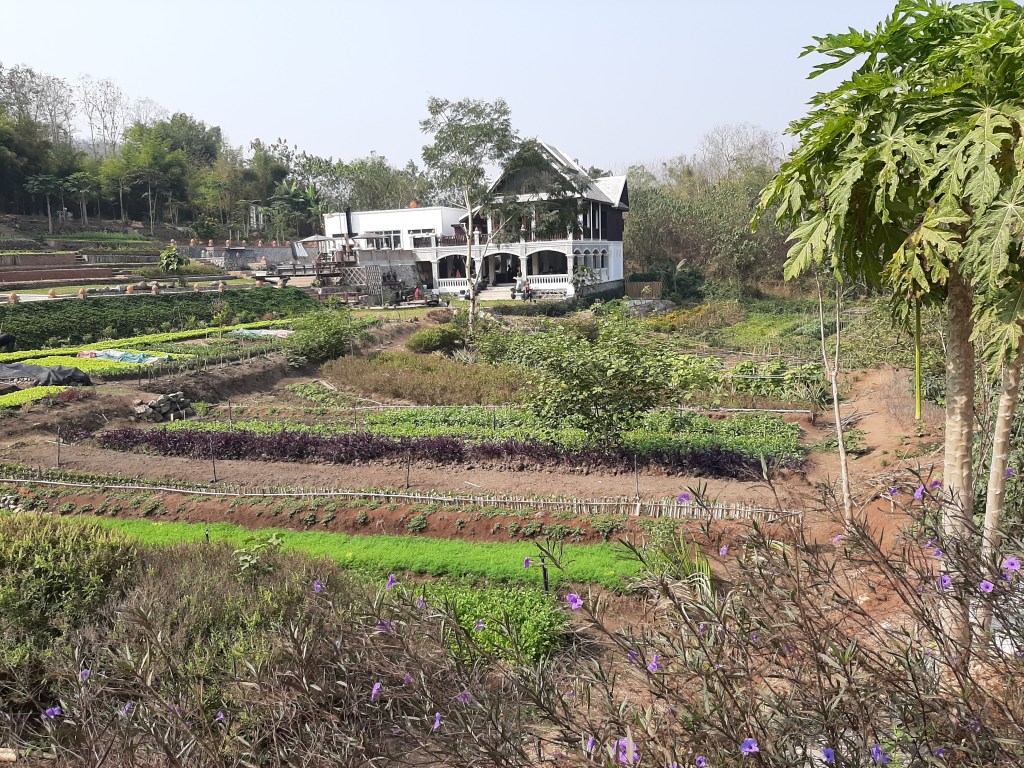
After our shopping tour we were driven to the organic farm / event space / cooking school which Linda has only recently built and opened in the countryside outside of Luang Prabang. The place is absolutely stunning: a beautiful building with a master chef style set up in the open downstairs and a bar, terrace and swimming pool upstairs, gorgeous organic gardens and vegetable plots that just looked perfect in terms of gardening aesthetic. They even had a boules playing ground at the top of the gardens. It just felt like luxury and far more beautiful and impressive than we had expected.
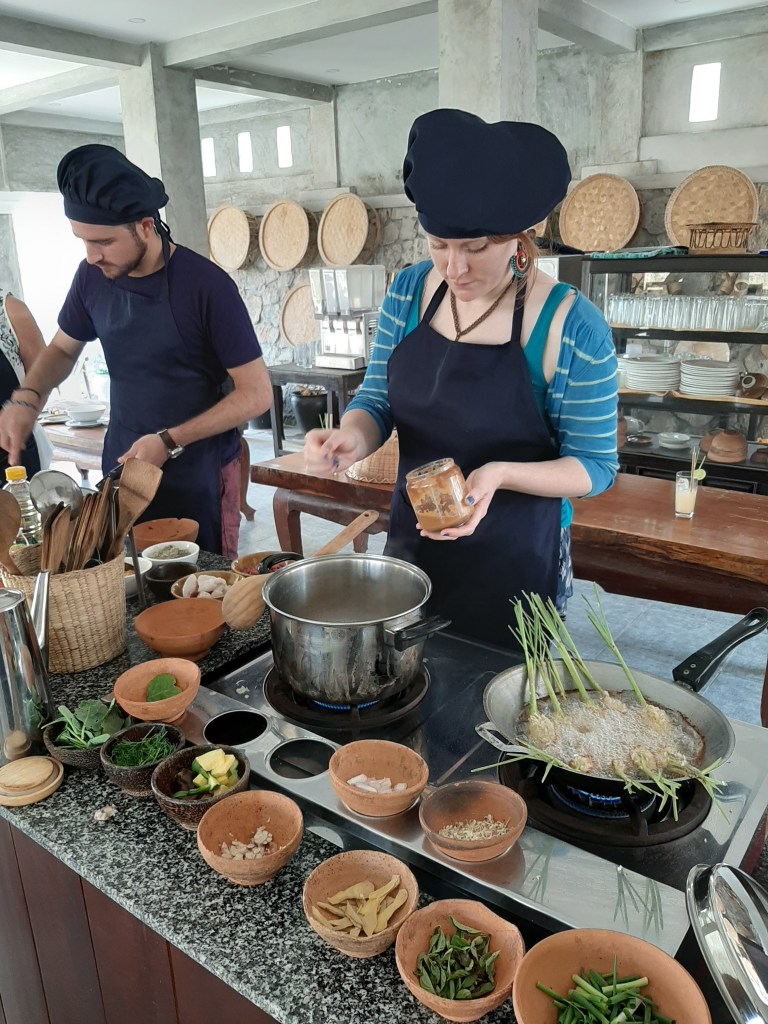
We met Linda the chef and our instructor for the day and after gearing up with aprons and hats got started! Cooking with such fresh ingredients in such different ways than we were used to was great fun and Mai and her mother (and Linda) were all great company. We learned how Mai, then living in Japan, somehow become the key protagonist in a viral video as she was desperately, frantically trying to keep her small papaya tree (not native to Japan) from being blown over during a taiphoon, as her friend watched on and filmed. Not only did the tree survive but whe also got several hundred of thousands of views from it! Creating little “baskets” from lemongrass and stuffing it with spiced, diced chicken was a particularly fun if challenging experience!
Once we had cooked, we sat down and were served the food we had bee making (plates up and beautifully presented by the staff). If getting a private lesson from the head chef wasn’t enough, she also sat down with the four of us to enjoy our lunch together. We were even taken for tour of the organic gardens by the chief gardener for the place who was a lovely man who clearly saw it as a good opportunity to practice his (already very good) English, but also showed such love for his work as he talked us through everything and picked off samples for us to taste! We finished our stay by enjoying our mango and sticky rice by the pool. It had been without a doubt one of the best experiences we have had on the megamoon. The food alone was so so tasty and just eating it at this stunning location felt like it gave us our money’s worth for the ~25 pounds each we had paid for the experience.
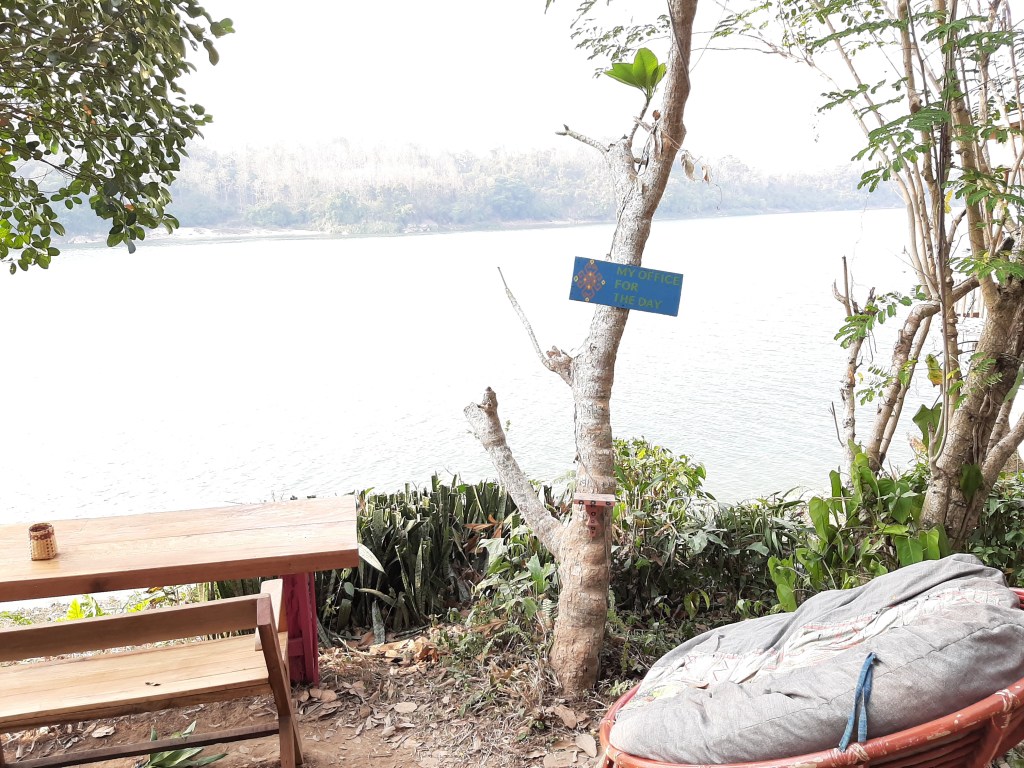
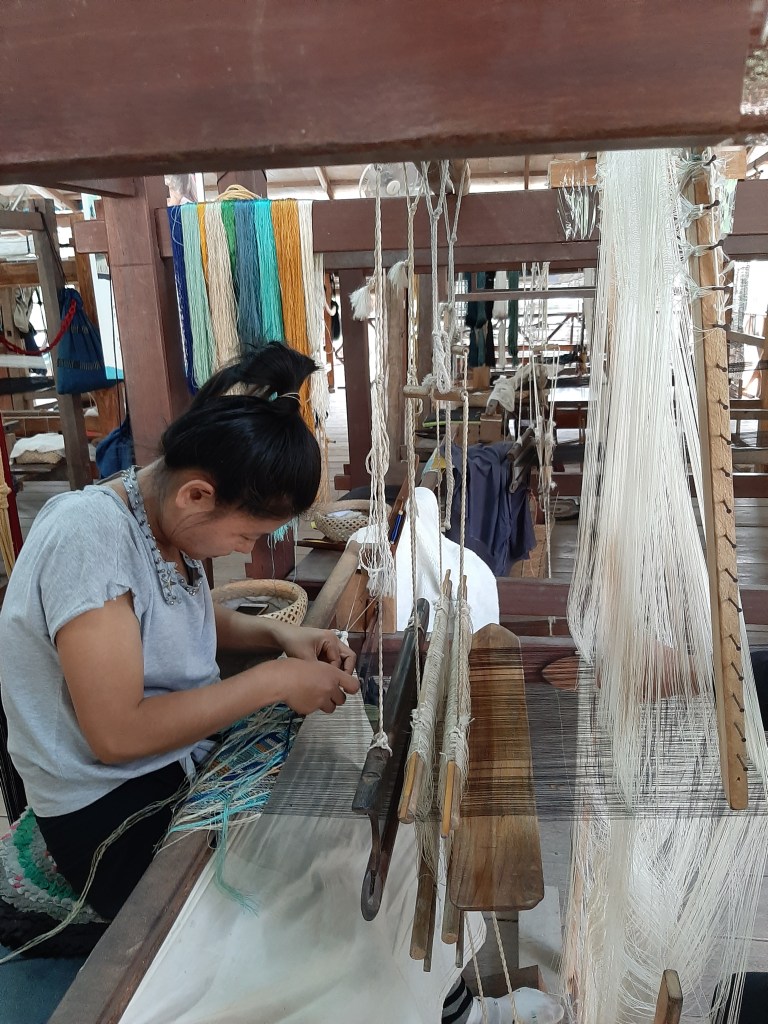
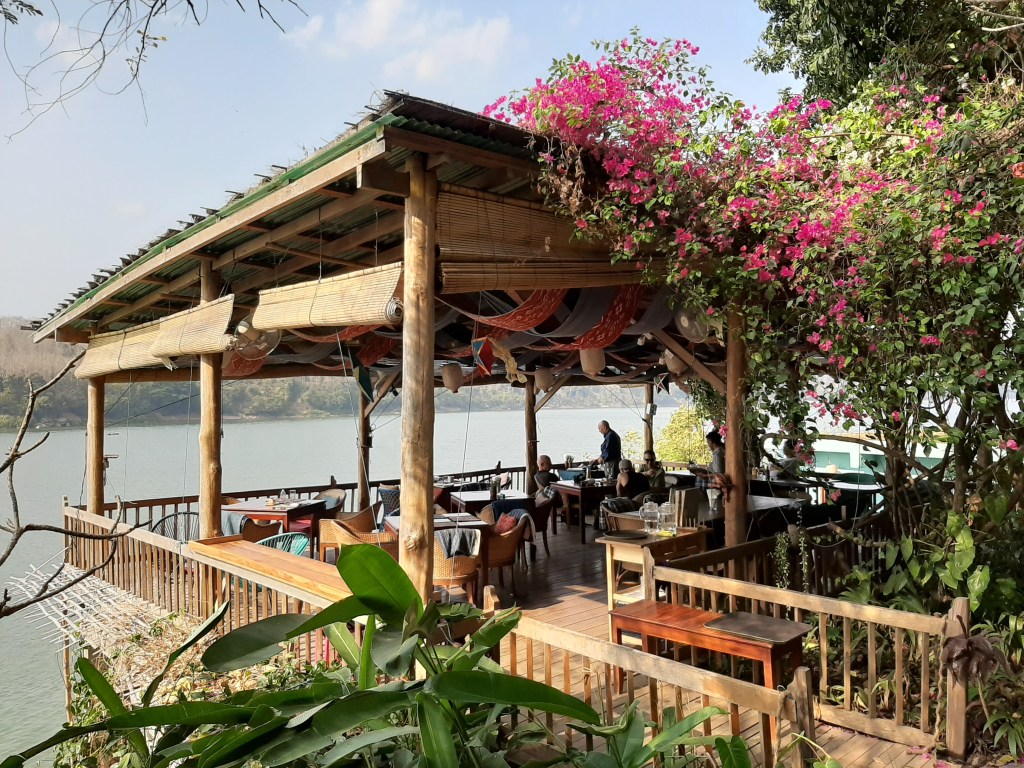
Heading back from Linda’s organic farm, we asked to be dropped off near the market we had visited earlier as we wanted to visit Ock Pop Tok, a women’s weaving cooperative that offered various classes and tours to experience traditional silk weaving in Laos. Their classes were very expensive for us but the free tour and visit of their beautiful site by the Mekong was really enjoyable. The setting itself was stunning: spacious gardens filled with colourful bougainvillea (we think Laos has the most bougainvillea from any of the countries we have visited!), a gorgeous wooden deck with a restaurant on the riverside and further to the left, 2 more open air but covered decks with 30 or so weaving looms. On our tour, we saw silk worms wriggling around – white caterpillars effectively – and stopped by a number of women working on looms. The machines themselves are mind boggling, each one being “set up” with a specific template for a specific pattern, thereby reusable. How you go about the actual setting up with the template we have no clue.
We got back to Luang Prabang in the late afternoon feeling both tired and fulfilled from an excellent day. After some resting and a dip in the pool, we went for a cocktail and snack dinner at 529 Cocktail Bar, an upmarket spot that happened to be just across the road from our guesthouse.
The seemingly dozens of elephant sanctuaries in Chiang Mai had made us (and Katharine in particular) keen to spend some time with these amazing enormous mammals. We had seen dozens of African elephants in the wild during our Serengeti safari, but this part of the world provided opportunities for closer encounters with their Asian cousins (domesticated ones of course). We had been keen to try and visit the Elephant Conservation Centre, a few hours southwest of Luang Prabang: an organisation truly focused on conservation efforts and supporting a herd living in natural conditions. Unfortunately their prices were just too high for us and we would also have had to devote 2-3 full days given how out of the way from our route they were. In the end, we somewhat sceptically signed up for a half day visit to the “Elephant Village” about 30 minutes from Luang Prabang.
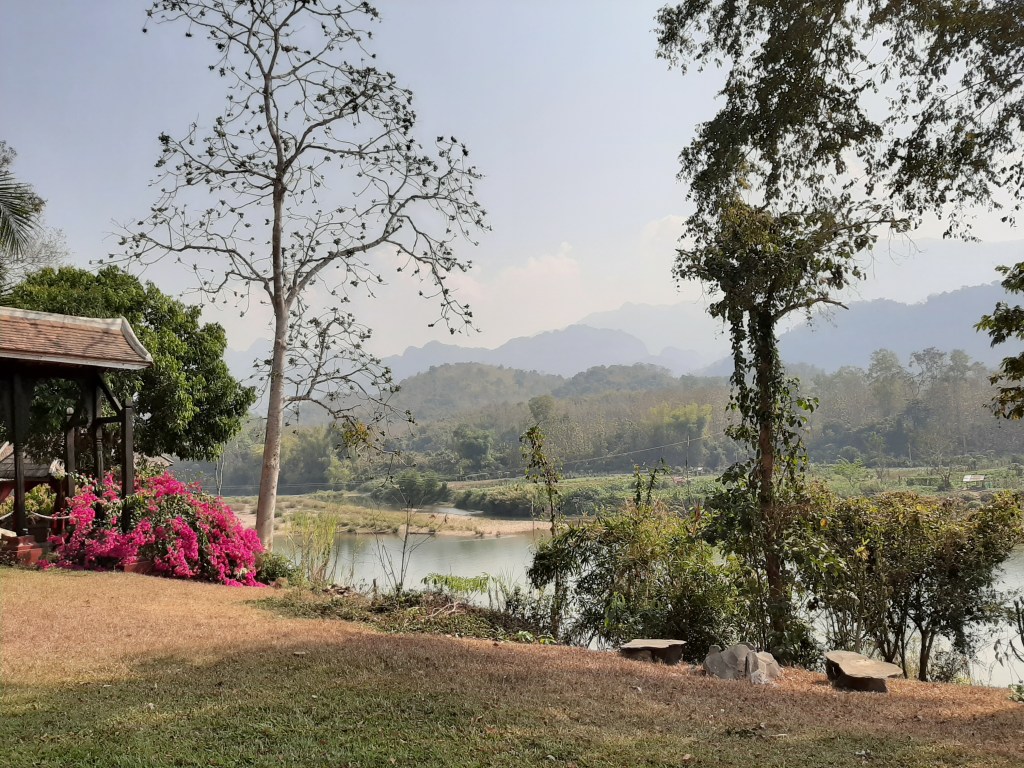
We were picked up from our guest house in the morning of day 3 in Laos and joined a minibus of largely older tourists for the journey over. The place itself was gorgeous. Beautiful gardens, bougainvillea and a restaurant overlooking the Khan river. Our first hour or so at the centre however felt incredibly chaotic, confusing and gave us a very poor first impression of the organisation. On arriving we were just given a bunch of bananas each and told to go and feed any of the elephants. In the corner, there was one elephant chained by the ankle. There was no talk of what was going on, what we would be doing and why throughout the day and, more importantly, nothing about the organisation’s purpose, and what the story of these elephants and where and how we fitted into their day. It felt more like a petting zoo with at least 30 tourists (seemingly mostly American) standing around about 9 elephants feeding them and taking photos.
Then it got weirder… for what felt like an eternity but may have been around 30 minutes, we were all sat on chairs to listen to the ramblings of the deputy manager – a lady from the Philippines – in a setup that felt like a school assembly. The talk was totally incoherent, with very vague and confusing information. She even came out with some seemingly pretty racist remarks about how poorly clothed local Laotians were, until the centre had “helped tbem” and were now “normal”. We just wanted to know what this organisation was about, what their mission was and what they did, but instead got repeat callous about how amazing they are and pre-empting criticism: how they do not do elephant rides any more, why the mahouts have to ride them when in the water, why they keep them chained when eating in the forest on a 100m span each. We were deeply unimpressed.
By asking specific questions to our guide shortly after the “talk”, we managed to decipher what was happening here. Elephant Village is a sanctuary for elephants that have been used in the logging industry but for various reasons are no longer useful to their owners. One of the older elephants had trodden on an unexploded bomb and lost one of her three toes for example. By “rescued” what they actually meant was bought or rented from their owners to provide them with some sort of retirement home, while at the same time creating a tourism destination to help fund their initiatives. This made sense and, really all we needed was an explanation rather than trying to hide behind shady pretensions of being some kind of elephant conservation haven. It was understandable that they needed some method to stop the elephants going beyond the boundaries of the sanctuary an into local villages (thereby needing to compensate farmers) but we did not buy that they could not achieve the same with an electric fence and, therefore, had to have them chained by the ankle. The fact they have a permanent elephant vet however, on site is clearly a good sign that the animals are at least medically looked after.
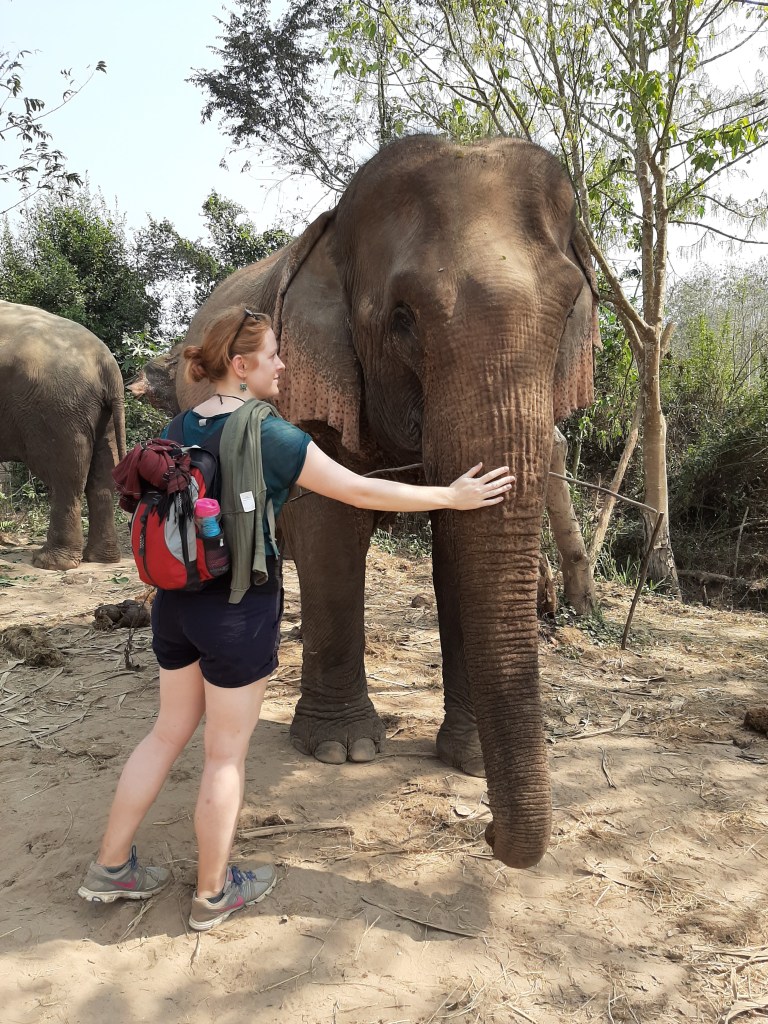
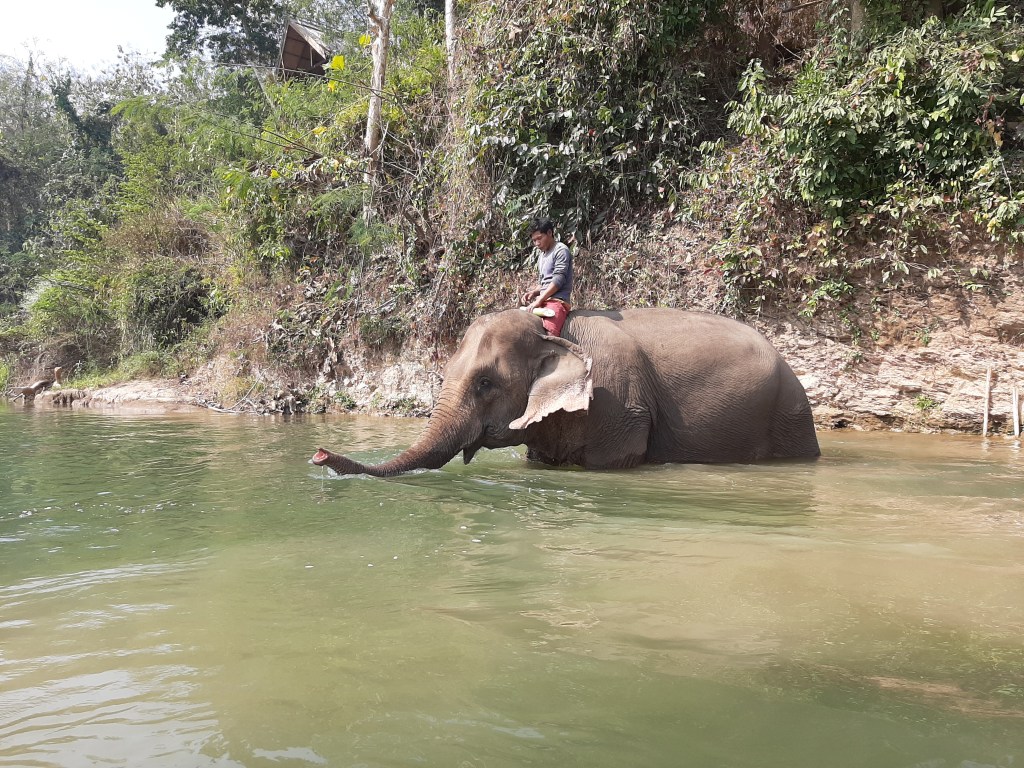
Our visit continued with a tour of the elephant “museum” which had some information on their evolution and differences with African elephants. We then were shown how they use elephant poo to make paper, largely for post cards or souvenirs, as an additional way to make some money to support the running of the centre. We then went for our elephant trek with two elephants led by mahouts (they have been trained to understand a key set of “steering” commands). The elephants showered and walked across while mounted by their mahouts and we crossed the river in a boat. We then walked for about an hour or so into the dry forest where the elephants spent time comically rubbing their skin on a particular tree (for exfoliation) and sprinkled themselves in dust as a sun screen. It was a really enjoyable walk (albeit hot!), during which we were able to get really up and close with these amazing creatures.
Next up, we were given the option to take a boat trip twenty minutes up river to a waterfall (albeit a dry one this time of year) or head back to the restaurant area to relax. We were the only two from our group who opted for the trip so we had a private mini excursion! It was really cool to experience the river in our own long tail boat and the waterfall area, despite being dry, was still fascinating. You could clearly see the cascades where pools of water form and it was good fun scrambling over them. We returned fo elephant HQ, enjoyed our lunch that was included in the ticket, and headed off back to Luang Prabang.
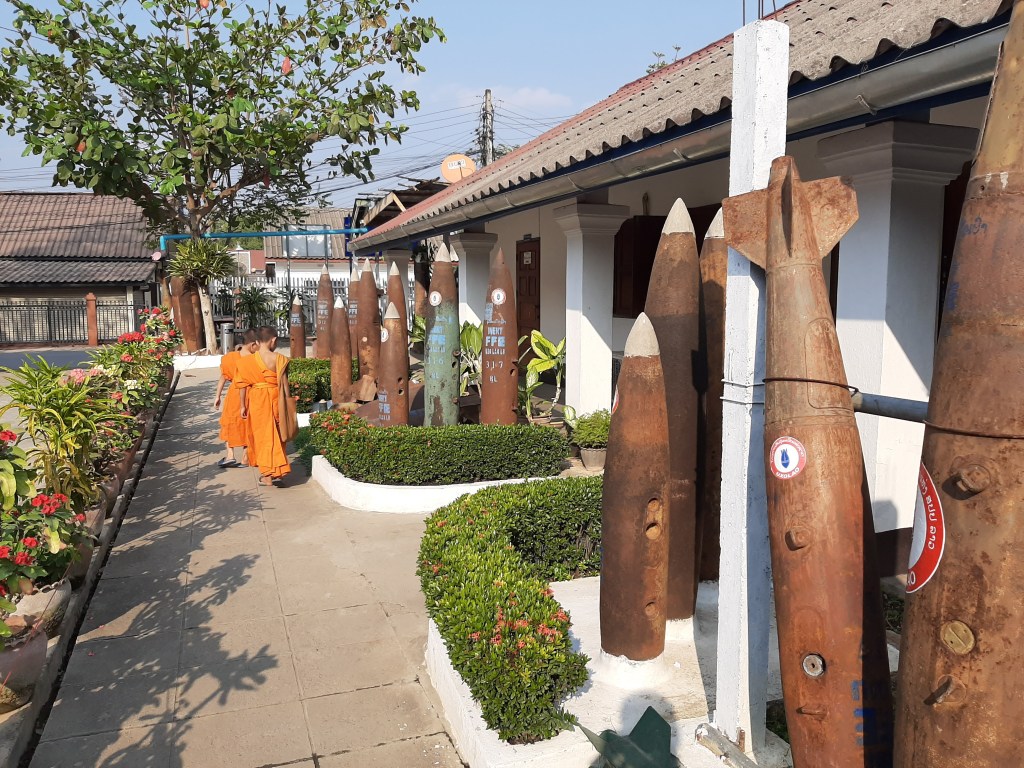
In the afternoon, we visited the UXO (unexploded ordinance) museum which provided a really interesting if depressing account of how bombs dropped by the Americans during the Vietnam war (referred to as “Indochina War” here and for good reason given it was certainly not confined to Vietnam). The biggest killers and maimers are “bombies” from cluster bombs – small metal balls that children often see as a plaything given their shape – millions of these death traps are still littered over the Laotian countryside today. The particularly horrifying statistic is that more bombs in terms of tonnes of explosive were dropped on Laos than in Europe over the entirity of World War 2… The prevalence of UXO in Laos has been a genuine blocker for development as large swathes of the countryside remain as yet uncleared and not exploitable. This does have the up side that Laos remains very much a jungle nation, with so much forest compared to its neighbours, though this is probably also likely due to the simple fact that this large country only has 7 million people (tiny compared to 95 million in neighbouring Vietnam!). Locals have also been using bombs for scrap metal which can pay well but is incredibly risky and dangerous business with many losing limbs and eyesight in doing so…
We had what was probably the quintessential Luang Prabang evening that day. We spent some time wondering the night market, where we picked up a scarf for Katharine and 2 really cool (and cheap) paintings of Buddhist monks, painted on elephant poo paper. We then had dinner at a fusion restaurant: gnocchi green curry and peppers stuffed with spiced pork mince at Bouang restaurant, before dropping in for some very tasty negronis at Icon bar, just around the corner. Icon is a very arty and cool little bar run by a lovely Hungarian lady who, to our amazement and jealousy, has lived in Luang Prabang for 20 years! She said not much has changed in the last 10 years, but during her first 10, the town underwent a huge transformation. Next stop was, of course, Utopia, where we had a couple of rice whiskey and cokes and got chatting to an Italian bloke who has been travelling on the cheap for 2 years, having hitchhiked all the way from Europe via central Asia… and a girl working in a resort on the southern beaches of Cambodia but travelling up in Laos for some R&R. It was a great evening and a great day, although we regrettably did not make it to bowling after Utopia…
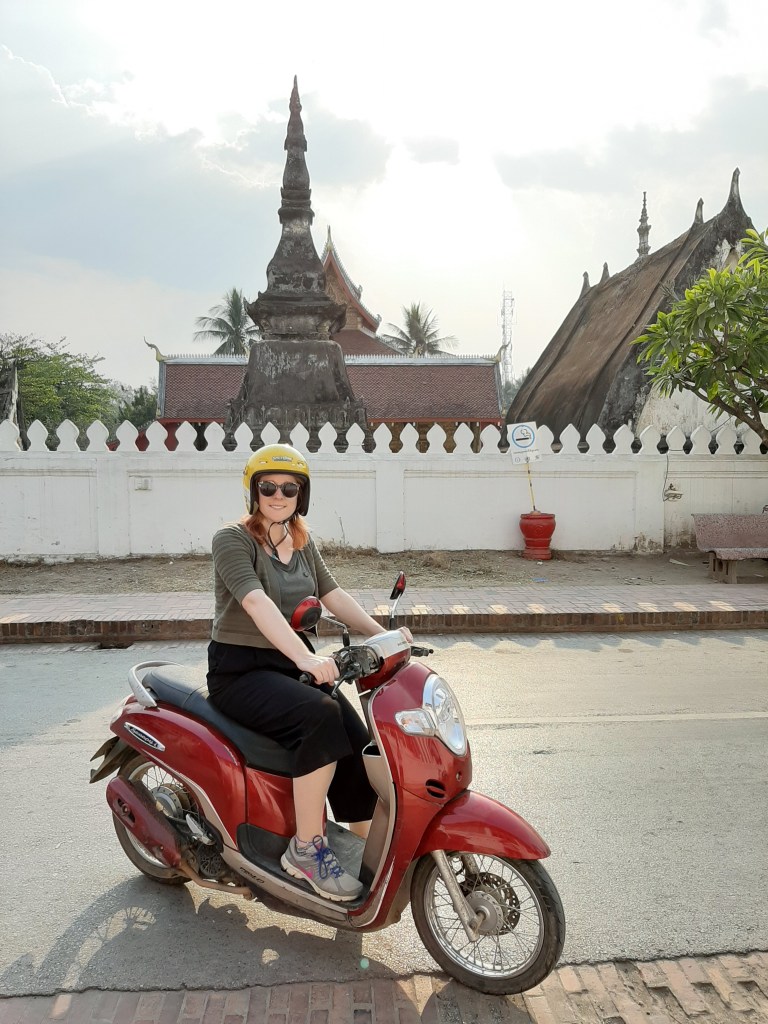
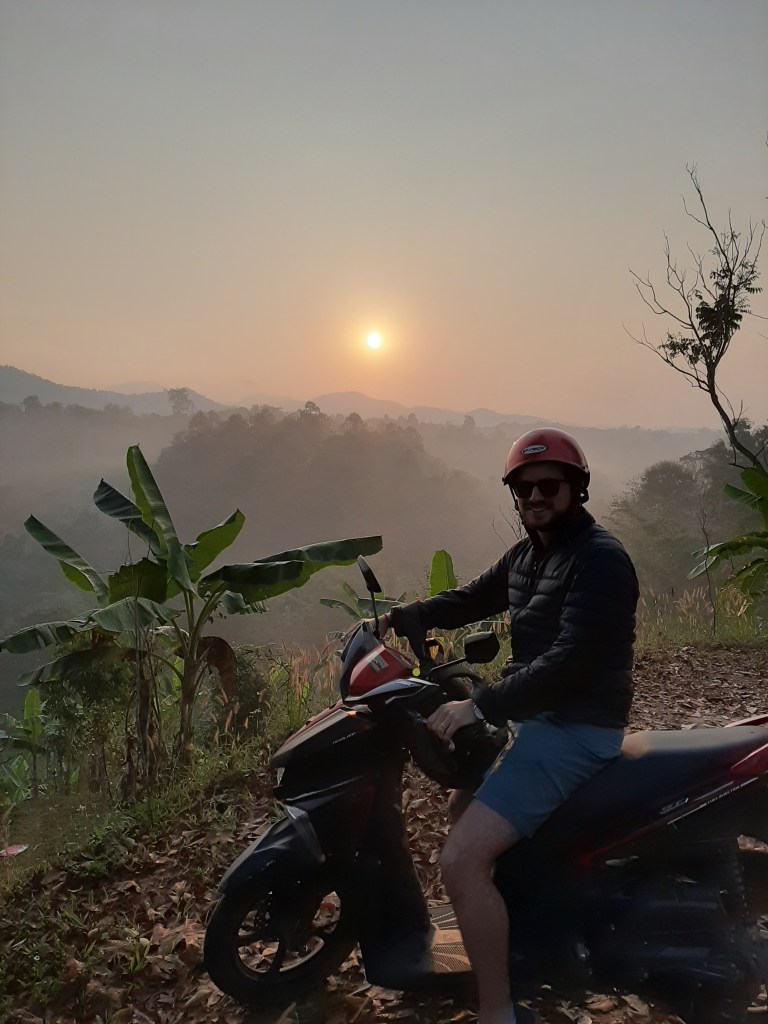
On our final day in this incredible town (4th Feb) we hired scooters for a trip to see the fabled Kuang Si waterfall, about 1 hour south of Luang Prabang. Having only experienced motorbikes as a passenger so far, Katharine was keen to get a sense of the “freedom” and see what all the fuss is about by getting her own bike! So we hired two in the morning and George spent some time giving a bit of a lesson and sharing top tips. After successfully navigating a couple of loops around our block, we set off, agreeing to take it slow of course!
And she did admirably well! We made it to the waterfall in one piece only for us to fall at the last hurdle (only metaphorically thankfully). Spotting the turn for the parking quite late, George hit the breaks quite suddenly, and Katharine, unable to stop or fully swerve in time, clipped the back of George’s bike and almost fell off. It could have been a lot worse, but we were both undamaged and Katherine’s scooter had suffered only a minor knock as part of the plastic front had come unclipped. Feeling a little rattled, we took some time to gather ourselves and reflect that this was really not a bad motorcycle accident, before heading up towards the waterfalls.
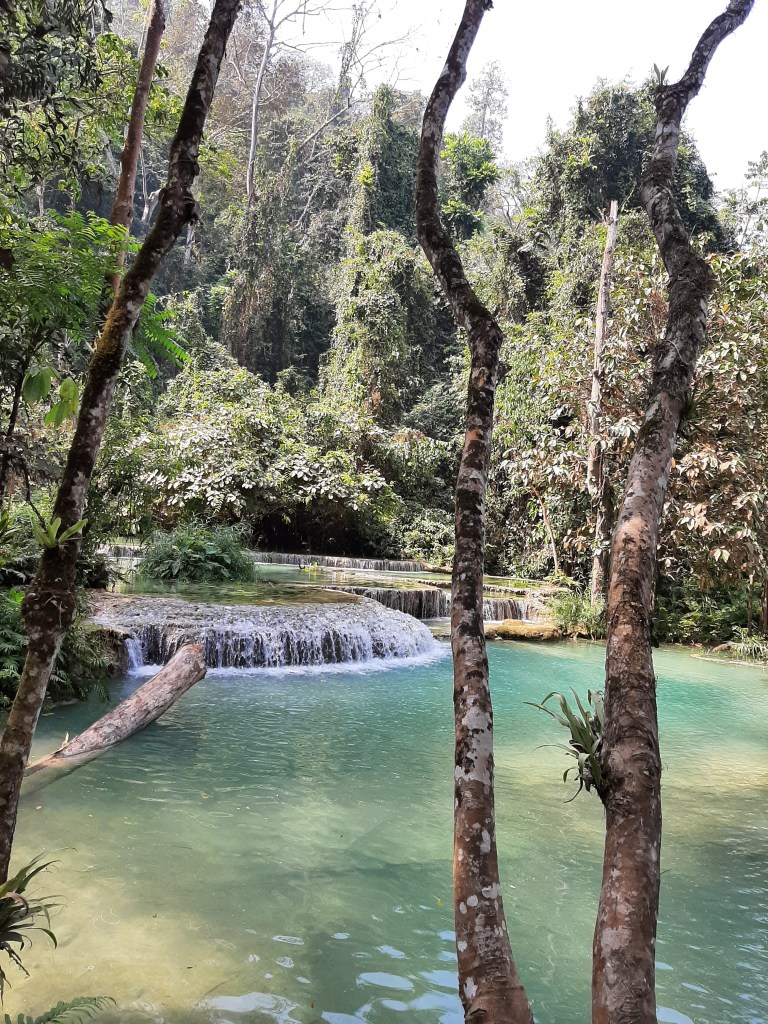
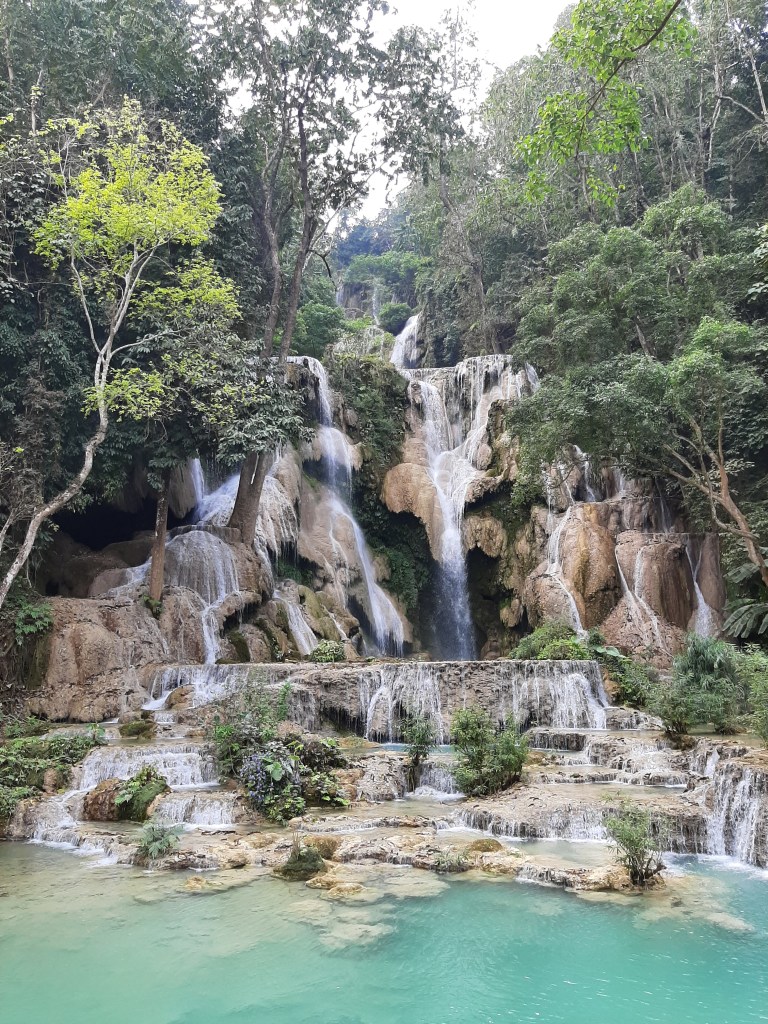
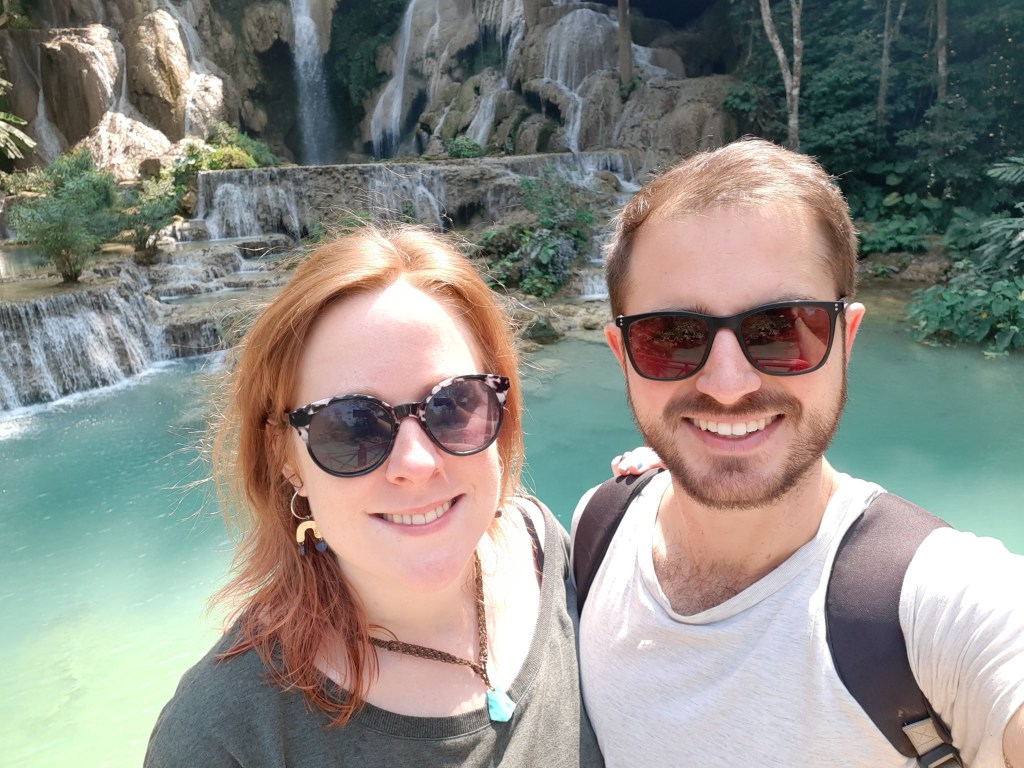
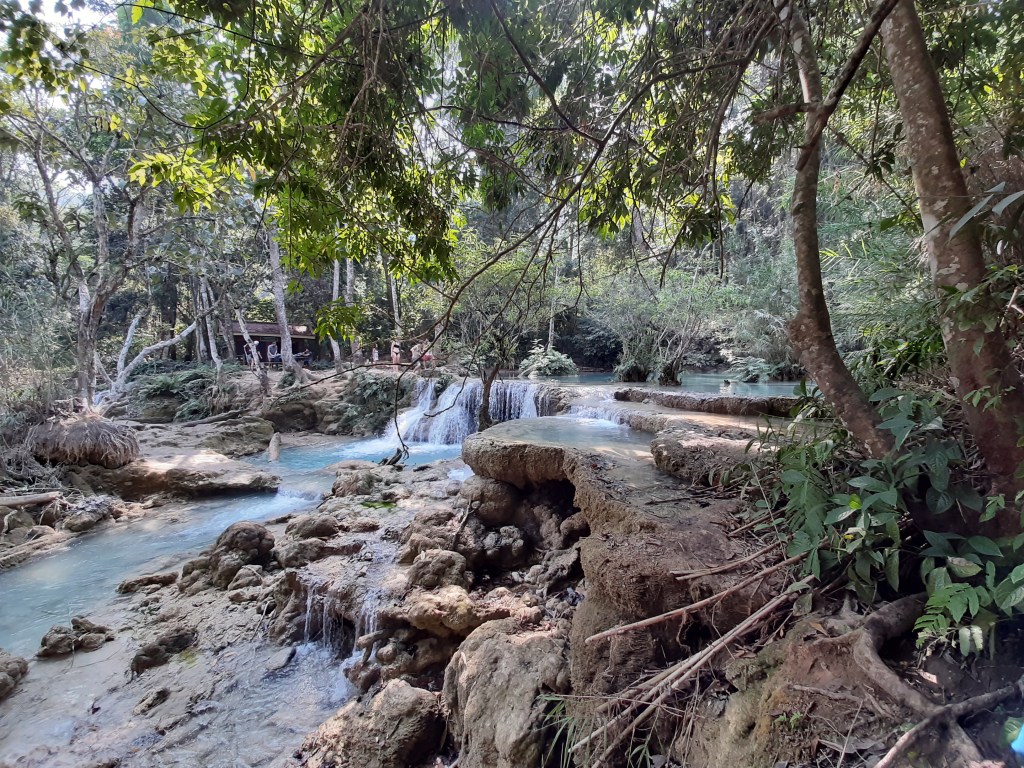
The Lonely Planet describes Tat Kuang Si as “Edenic”, and boy are they right: it is the epitome of everything you imagine of what the garden of Eden story tells us about. Simply stunning cascades creating pools of the most beautiful and appealing looking turquoise blue waters you can ever see, all surrounded by green jungle. It is absolutely gorgeous and is one of those places where you just marvel at how nature has managed to create something so stunningly beautiful! We swam in one of the many natural pools – the water was cool and very refreshing. We then walked a little further up to the bih waterfall, a 20 metre or so drop where water pours down into this little paradise.
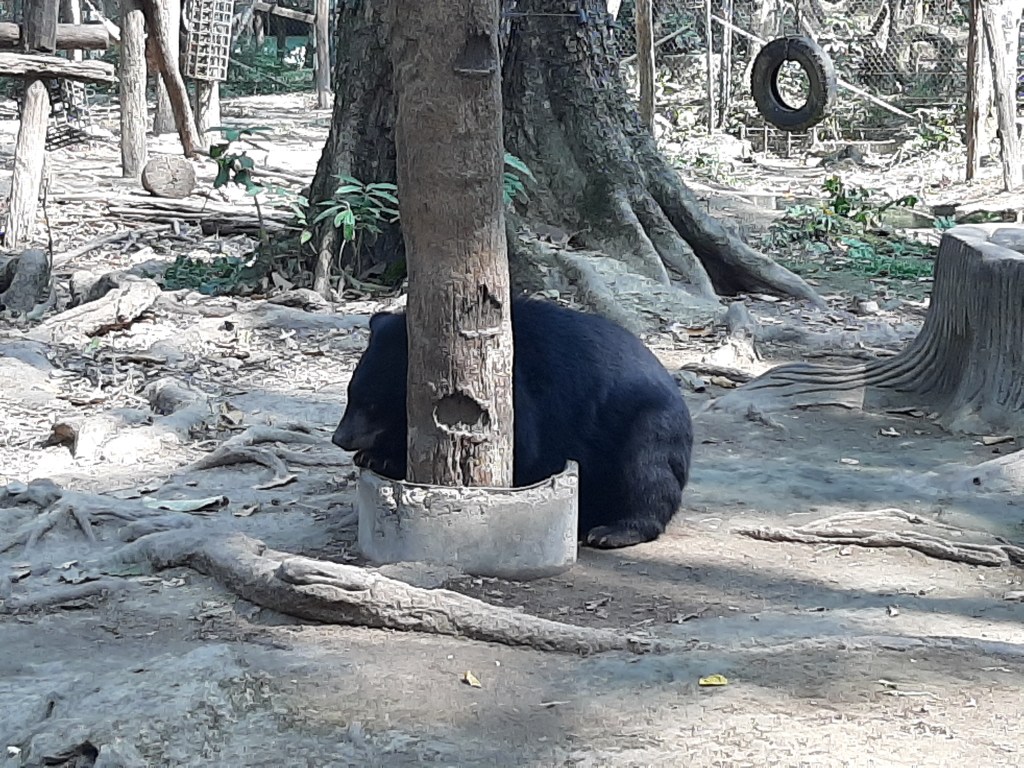
But this place has more than just a garden of Eden, it also has bears! Walking back down from the waterfall, we stopped at the sanctuary that has been created for a small group of Asian Moon Bears. These are small black bears who love honey and are simply adorably cute. We sat watching some cubs play-fighting for a good while. These bears are endangered, largely due to being hunted and poached – bear stomach bile is apparently used in Chinese traditional medicine…
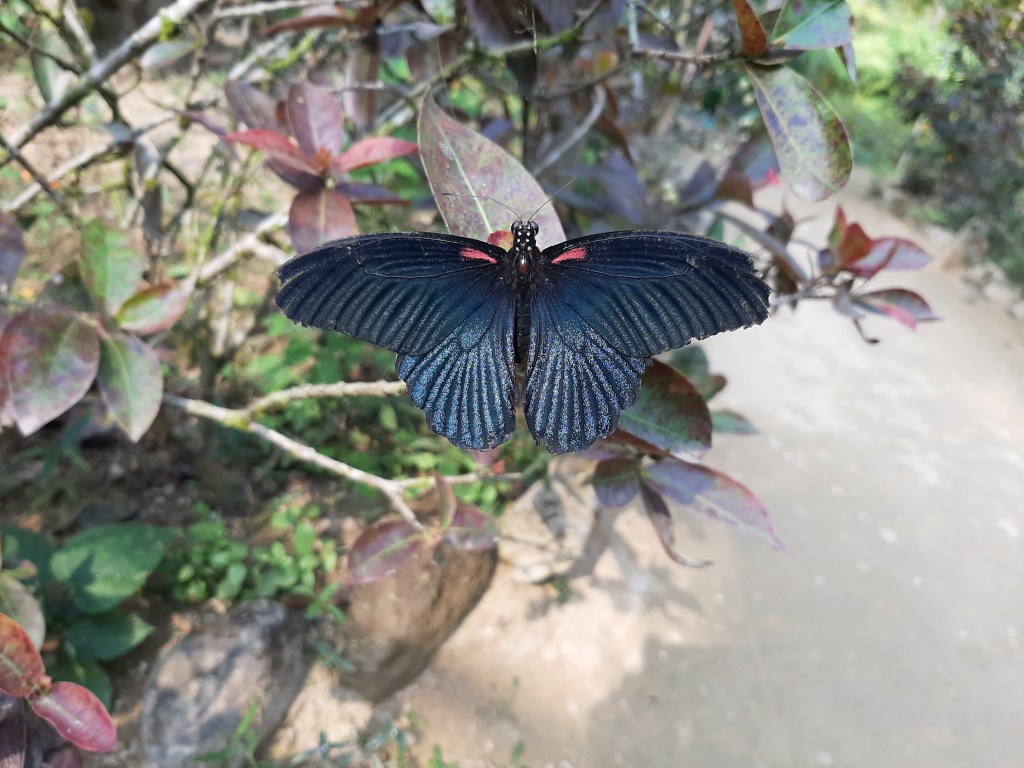
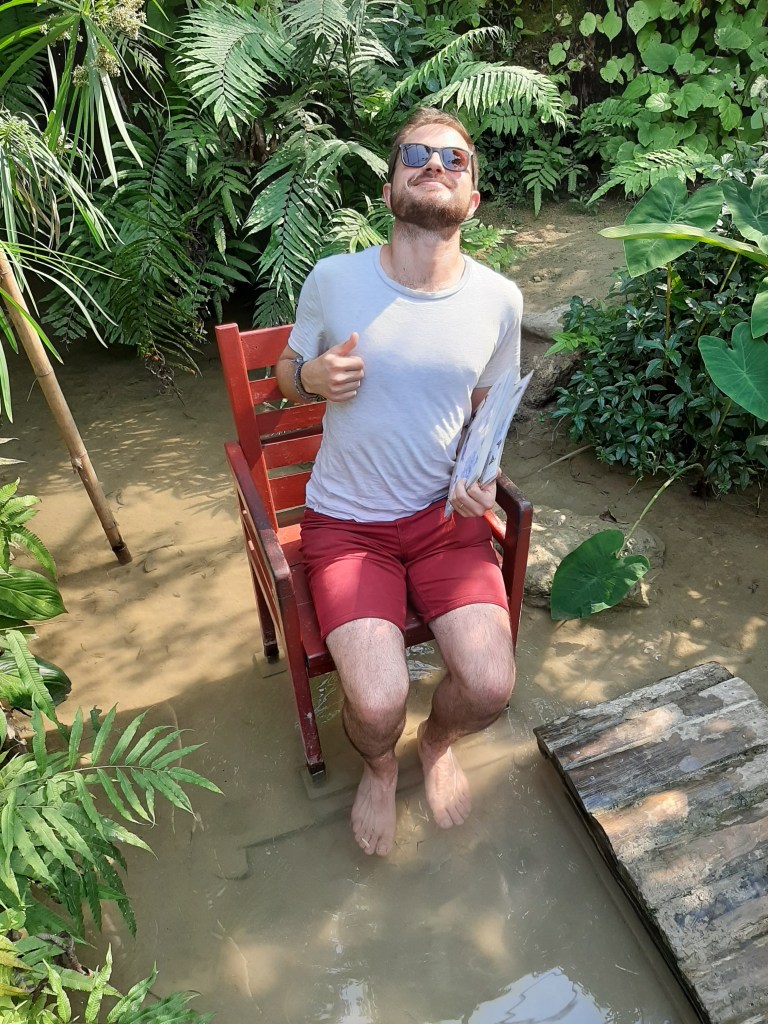
We had some lunch at the entrance to the falls, got back on our bikes and stopped at a butterfly museum just a few hundred metres away. Walking into the “butterfly house” was good fun with the highlight being sitting on chairs with our feet in a pond being nibbled on by little fish, all the while beautiful butterflies gliding gracefully around us. The feet nibbling was a little strange and we both agreed we were glad we have never paid for this “spa treatment” elsewhere! We had a brief chat with the expert there who showed us various caterpillars and cocoons. We also spotted a butterfly which, when it had its wings shut, looked incredibly like a leaf!
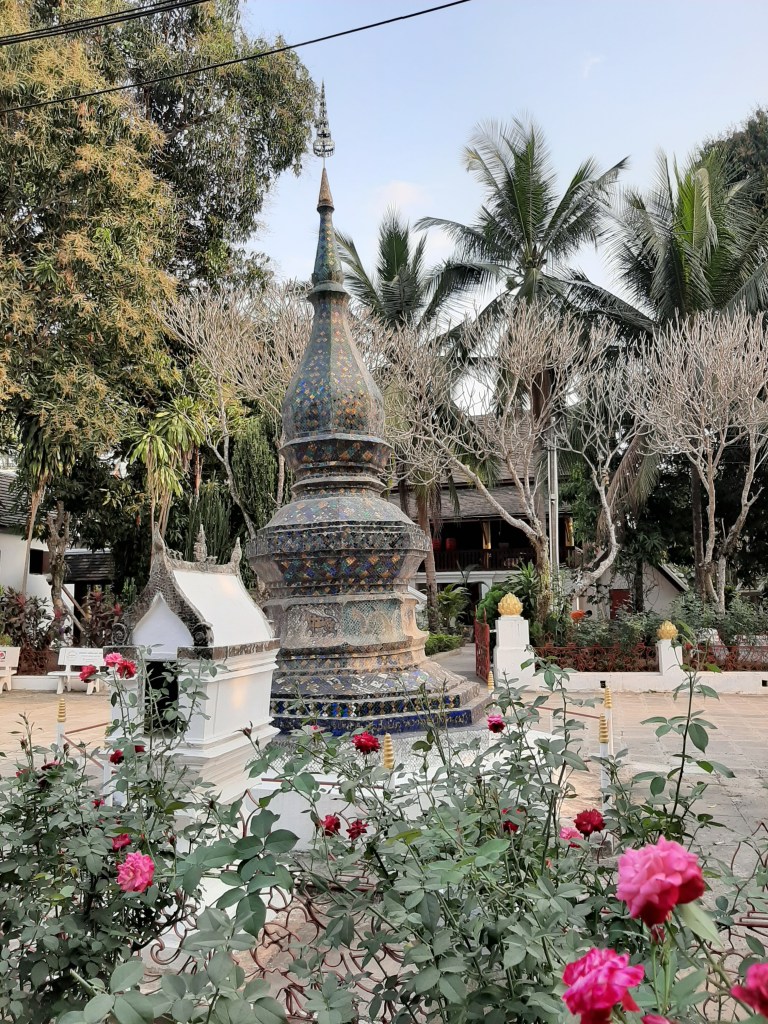
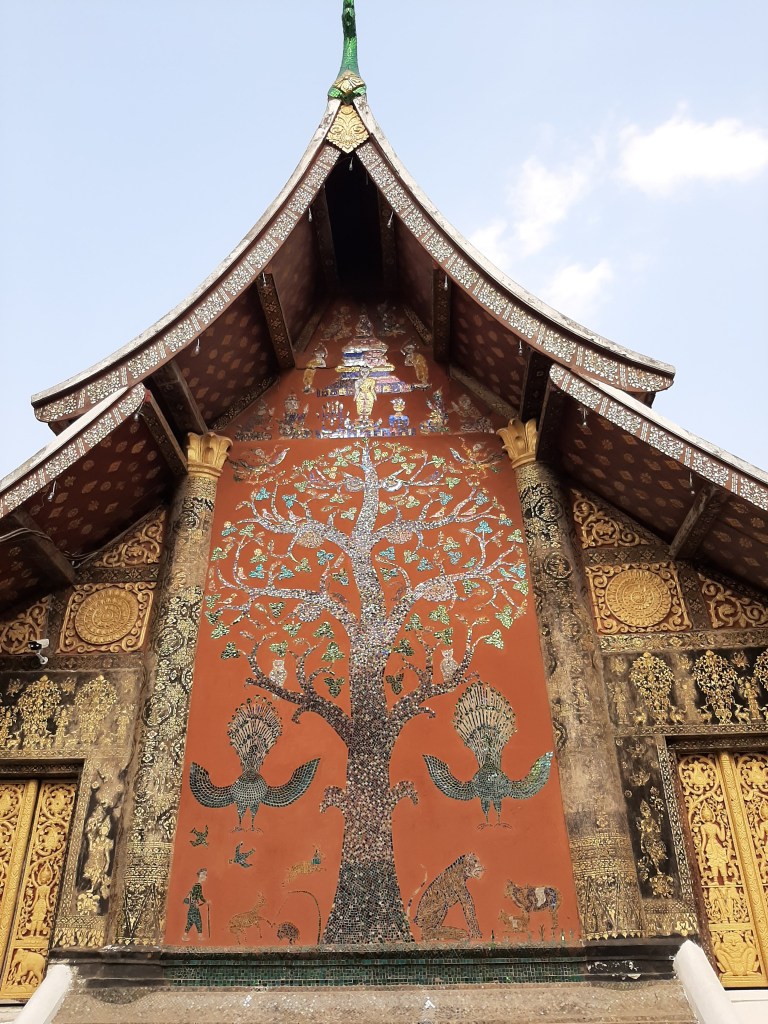
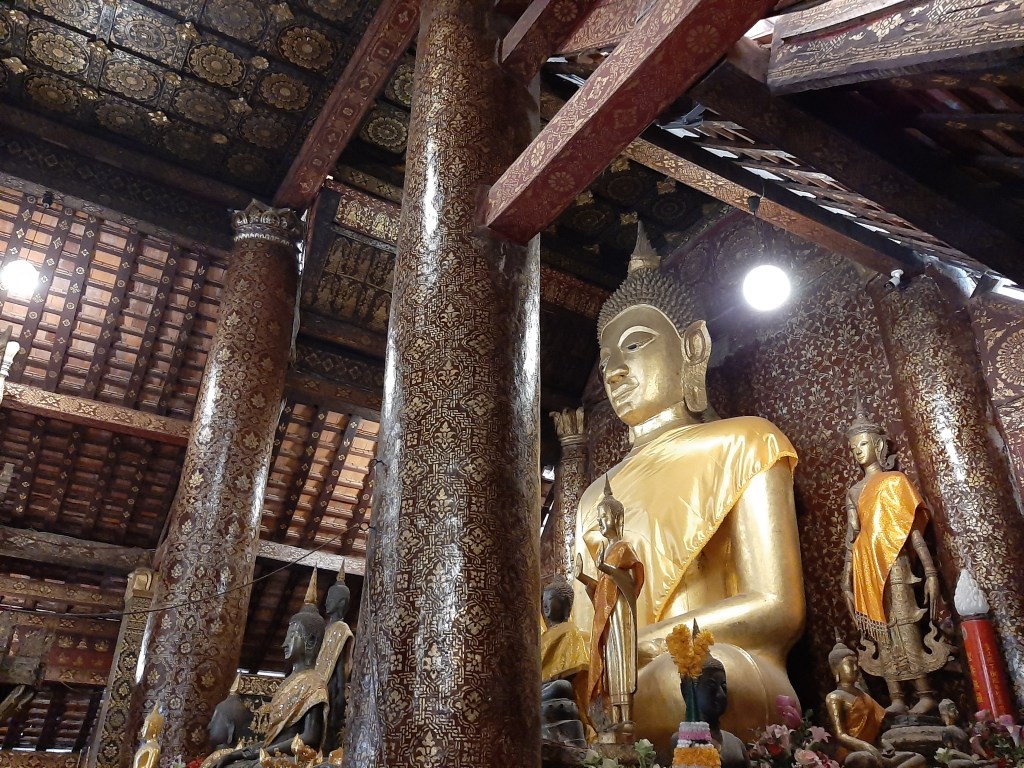
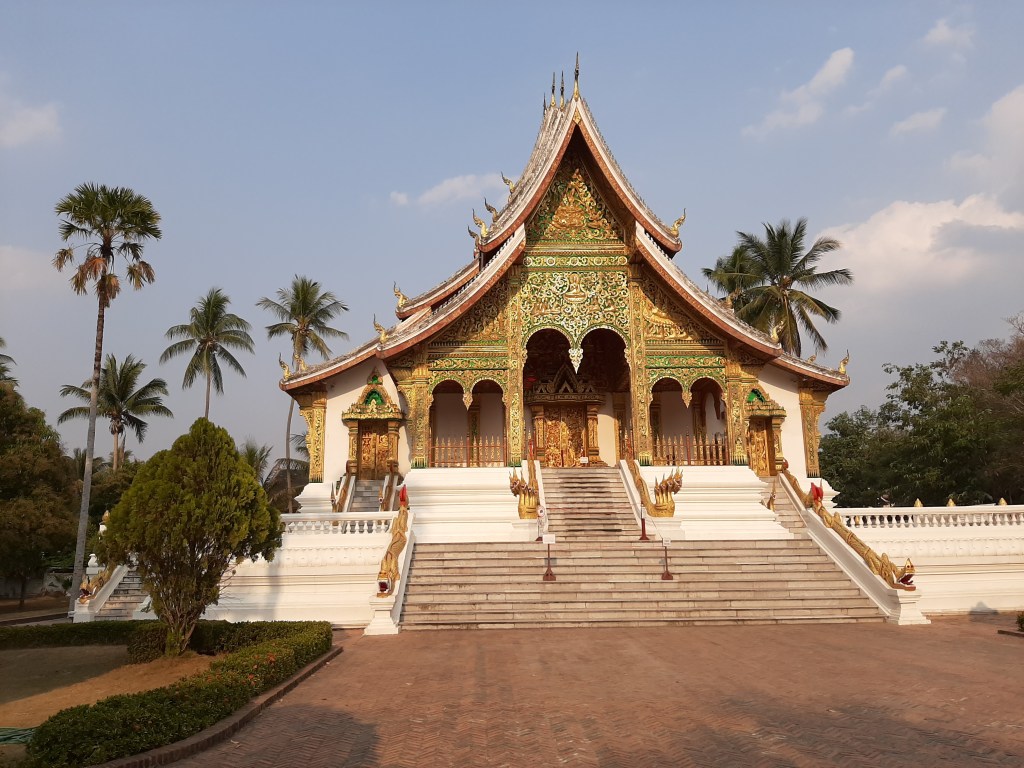
We made our hour scooter journey back to Luang Prabang without any hiccups and headed straight for the royal palace in the centre of town. With all the touring and experiences we were having in and around Luang Prabang, we had somehow not actually seen much of the sites around the town itself, so we were determined to see what we could that evening given it was our last day! We managed to sneak into the palace complex without paying, given the place was shutting down. The palace itself was an interesting fusion of Lao pagoda mixed with European neoclassical, while other temples lined the outer grounds. We only managed a glimpse into the strangely European feeling interior of this no longer inhabited palace, before being informed it was closed. We then scooted across town and down to the Mekong and stopped at Wat Xieng Thong, the town’s biggest and most important monastary. We walked around the beautiful grounds, taking in the various small temples, stupas and monk quarters that make up the complex. The main temple itself, while small, was constructed of beautiful dark teak wood and has a fascinating depiction of the “tree of life” on the outside rear wall.
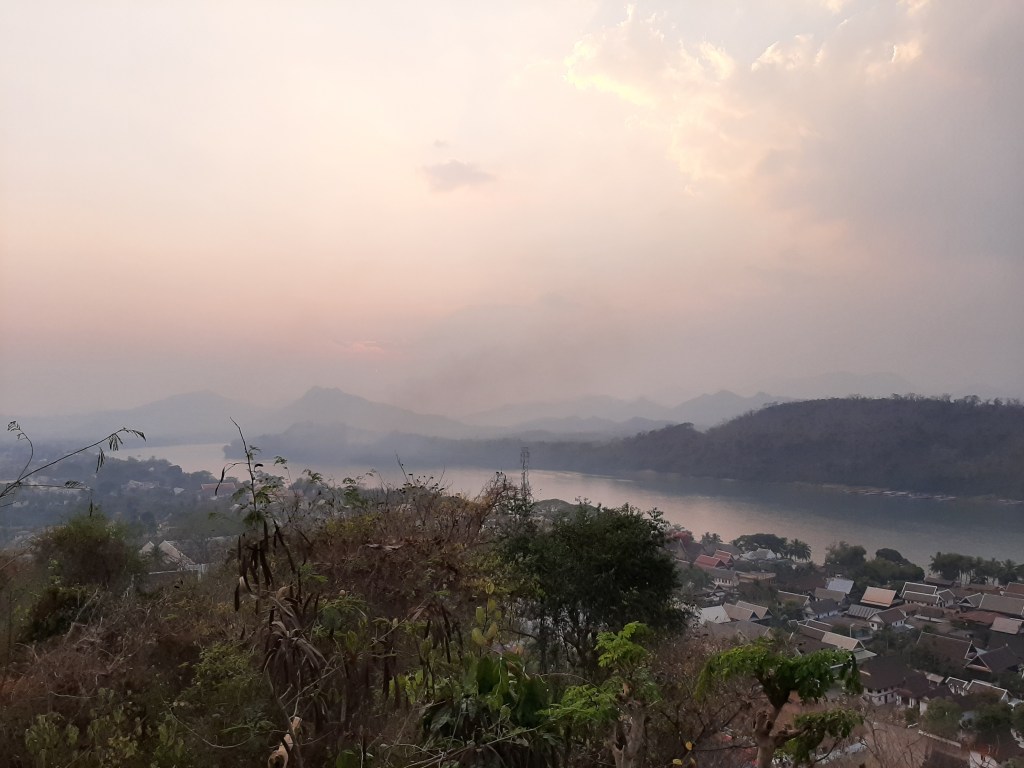
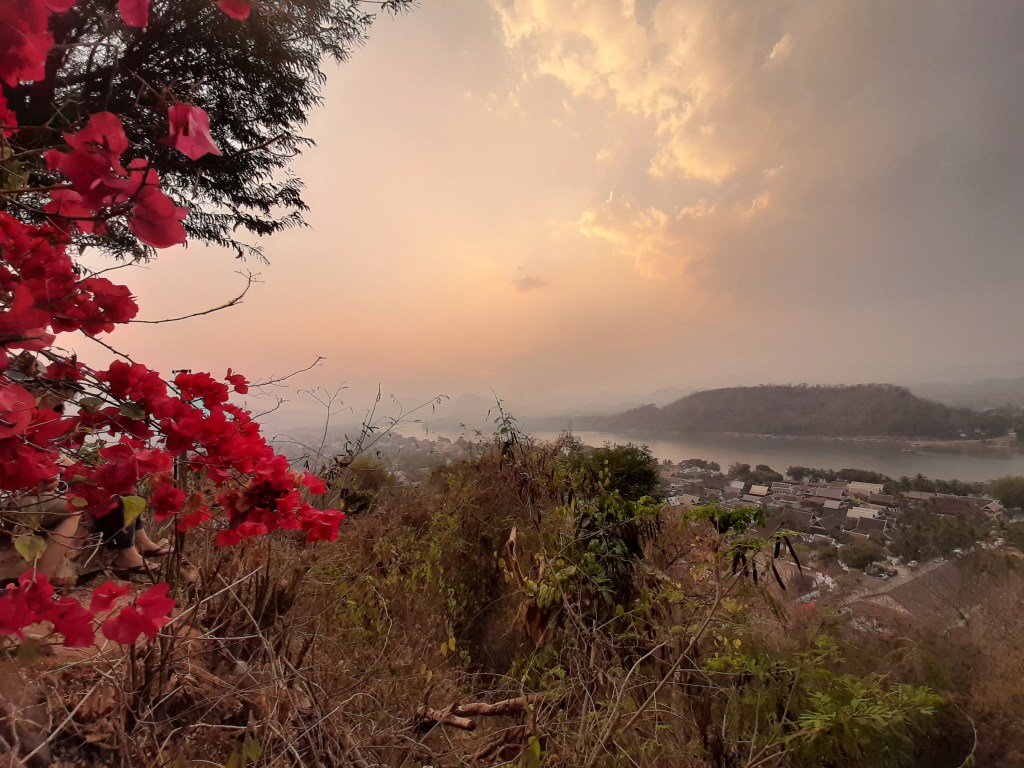
Feeling quite tired now, we decided to scoot over for one last drink at Utopia both to give us a bit of energy and to see this phenomenal bar one last time! We then made the steep climb up Phou Xi hill for sunset. The hill is right in the middle of the town and has a plethora of religious buildings, temples and monks quarters. Walking up the forested slopes, with the views of the town and the rivers looking stunning and the sound of monks chanting was such a memorable way to soak in the real spiritual essence of this amazing town. The views from the top were breathtaking, and it was not hard for us to find a quiet spot a little further back and away from the crowds of sunset viewers.
We finally scooted back to our guesthouse after what had been a long day. But we had one more appointment for that night… We decided to treat ourselves to one posh dinner of Lao haute cuisine that night, booking a table at Paste restaurant, the recently opened Luang Prabang branch of a Bangkok restaurant who’s chef has been awarded a Michelin star and as also won a “best female chef of Asia” award. We went for the 8 course tasting menu and, as always with these sorts of culinary experiences, the dishes individually range from small to tiny, but in whole it was a really fascinating blend of unique flavours that left us happily satisfied and about 80 pounds poorer… Highlights included various pork salads, a watermelon concoction, an amazing smoked coconut cream noodle puddingc and opting to share a large bottle of beerlao as our thirst-quenching option, which sat in an ice bucket next to our table, because it was cheaper than their water!
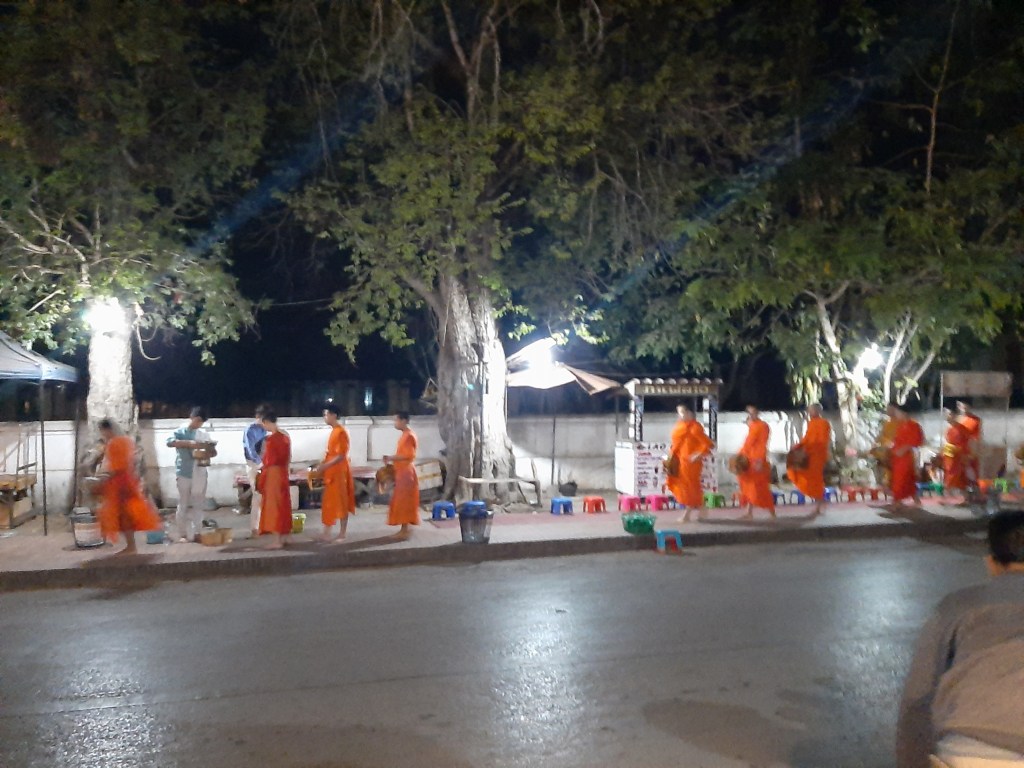
Our four days in Luang Prabang were simply sensational and we were just so excited to be in Laos. Se decided we would soak up this country by heading all the way south overland through to Cambodia, before likely snaking back up through Vietnam. Our final, and fitting, sightseeing item was at dawn on the 5th February. We used our scooter one last time to get to the centre of town, where every morning before sunrise, the monks (and there are hundreds of them) go on their call to alms. Locals (and now also tourists) line the street and give a bit of sticky rice to each monk who passes. This is daily procession has been happening for centuries and, while also giving the monks some food to eat, also Carrie’s deep symbolic and spiritual meaning. There was clearly a spot where the tourists favour to stand and take photos like paparazzi (not very respectful or tasteful…) but we found it very easy to just walk a little further up the road where we could quietly observe for a few minutes away from the camera clicking. It was a memorable way to end our time in Luang Prabang before getting the bus later in the morning to our next stop: Vang Vieng.
 tranetrottingthemegamoon.travel.blog